

Dark floors: how to use dark wood and panels in a modern interior
A dark floor of natural wood or panels is one of the strongest interior trends of recent years. Dark shades of oak, walnut and wenge dominate both…

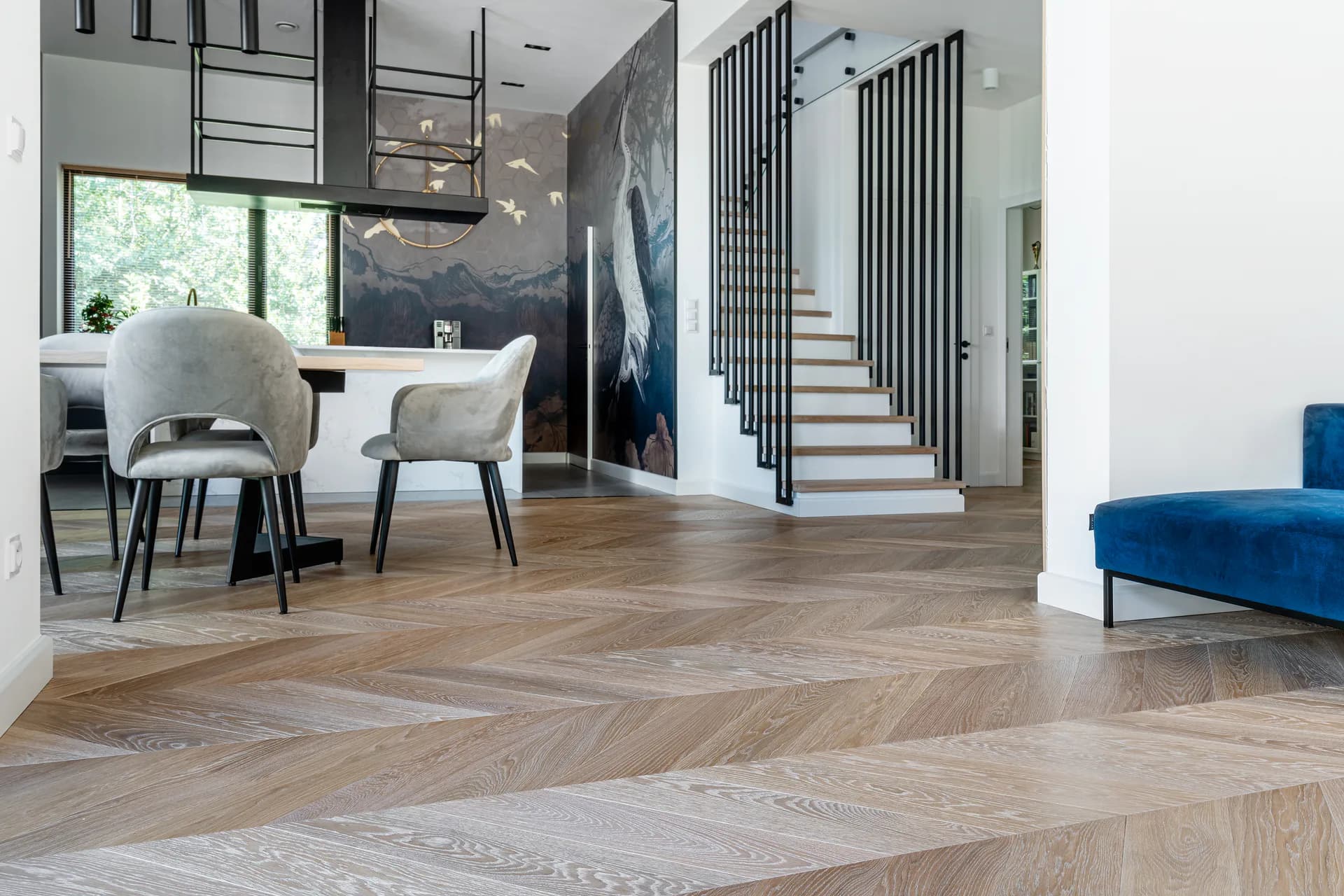
Grey floor panels are laminate or vinyl floor coverings in shades of grey that work well in modern, minimalist, Scandinavian, loft and classic interiors. They are among the most frequently chosen colours, because they are versatile and easy to combine with a wide range of interior styles.
This guide explains what grey floor panels are, what types are available on the market, which technical parameters to pay attention to, and where these products will be a perfect fit in your home. The article is intended for owners of flats and houses who are planning a renovation, replacing a floor, or choosing a material for the living room, kitchen, bedroom, hallway or bathroom.
In short: grey panels are neutral floor panels in light, medium or dark shades, made as laminate or vinyl. Their greatest advantage is that grey as a floor panel colour brings calm and balance to an interior scheme without dominating the other elements of the décor.
By choosing grey panels, you gain above all:
Grey floor panels most often come as laminate panels or vinyl panels. Both solutions can offer beautiful designs and an appearance reminiscent of wood, concrete or stone, but they differ in construction, moisture resistance, the way they behave on the subfloor and comfort in use.
Laminate floor panels are usually based on an HDF board, a decorative layer and a protective coating. Vinyl panels are made from synthetic materials, and SPC models with a mineral core are completely waterproof, quiet and perfectly smooth. As a result, grey floor panels can be installed in a variety of rooms, including kitchens and bathrooms, provided they are moisture-resistant.
Grey laminate panels have a multi-layer construction: an HDF core, a decorative layer with a printed design, and a top coating that protects against abrasion and scratches. This is the most frequently chosen type when good looks, durability, an attractive price and ease of matching to the interior all matter.
Laminate floor panels are resistant to everyday mechanical damage, particularly when they have a higher abrasion class. Grey laminate panels are notable for their high scratch resistance and ease of care, which makes them an ideal choice for heavily used rooms.
Modern premium laminates feature advanced hydrophobic coatings, which allows them to be laid in areas exposed to moisture. The matt HydroSeal coating on these panels protects against water, but with laminate, proper care remains particularly important, along with promptly wiping up spilt water and checking the manufacturer's recommendations.
Grey vinyl panels are made from synthetic materials, so they cope with contact with moisture better than standard laminate. They are a good alternative for the kitchen, bathroom, hallway and other spaces where the floor may be washed more often or exposed to splashes.
Vinyl is usually warmer and more flexible to the touch than laminate panels, and the SPC version with a mineral core is additionally stable, quiet and water-resistant. Such models will prove their worth wherever traditional panels might be difficult to maintain or too susceptible to moisture.
In practice, the choice between laminate and vinyl depends on the room. For the living room and bedroom, good laminate panels are often enough, whereas for the bathroom, kitchen and entrance hallway it is worth choosing products resistant to water and moisture.
Grey floor panels are available in a range of shades, from light tones, through warm silvery greys, to dark greys, which allows them to be matched to a variety of interior styles. The same shade can look different in daylight, under warm LED light and in cool lighting, so before buying it is worth viewing samples in the room they are intended for.
Light panels visually enlarge a space, while dark, graphite panels bring elegance and depth to an interior. Grey floors pair best with white, black or wooden furniture and with walls in shades of off-white, beige or gentle sage.
Light grey panels help to visually brighten an interior and reduce any sense of the space feeling overwhelming, which is why they are often chosen for smaller rooms.
Dove-grey panels with a smooth texture work best in modern and minimalist schemes. They look good with white walls, beige textiles, light wood and simple furniture.
In the living room and the bedroom, this shade makes interiors feel lighter, calmer and more orderly. If you are after a soft minimalism effect, choose a matt finish, a subtle wood grain and an absence of strong contrasts.
Graphite and anthracite panels give an interior a bold, modern character. They suit offices, flats in industrial and loft styles, and spaces featuring metal, glass, black details and simple, clean-lined furniture.
Darker grey panels conceal certain kinds of dirt and minor scratches better than very light, uniform floors. Bear in mind, however, that streaks left after mopping, dust and light-coloured fluff can be more visible on a graphite surface.
In larger rooms, a dark shade adds depth and elegance. In small spaces, it is worth balancing it with light walls, large mirrors, glass and lighting, so that the floor does not overwhelm the scheme.
Grey panels imitating oak combine a natural grain pattern with a contemporary colour palette. They are a solution for those who want to keep the warm, welcoming look of wood while avoiding yellow, ginger or very classic tones.
A four-sided V-groove makes the panels look like real floorboards, which counteracts the plastic-floor effect. It is also worth looking out for a synchronised texture, delicate brushing and a matt finish, because they make grey panels look more natural.
Panels laid in a classic herringbone pattern are an elegant choice for minimalism in the modern classic or soft minimalism style. The variety of patterns, formats and colours makes grey floor panels versatile and suited to many styles, such as Scandinavian, industrial, boho and modern, which makes them a popular choice in interior design.
When choosing panels, it is not enough to look at the colour alone. When selecting grey floor panels, it is worth paying attention to their abrasion class, because the higher the class, the more resistant the panels are to mechanical damage.
Panel thickness is one of the parameters that affect comfort in use. Equally important, however, are the type of underlay, the quality of the locking system and correct preparation of the subfloor.
The Click system allows panels to be joined without glue, so the installation can be carried out by yourself, often within a single day in a typical room. The elements snap together on their locks, and the floor works as a floating surface.
During installation, an expansion gap of 8-10 mm must be kept at walls, thresholds, pipes and fixed built-in elements. The gap is later covered with a skirting board, but it is technically essential, because panels change their dimensions under the influence of temperature and moisture.
On a concrete subfloor, a vapour barrier film is used, topped with a suitable underlay chosen to match the type of panels and the conditions in the room. In the kitchen, the hallway and the bathroom, moisture resistance and compliance with what the manufacturer permits are particularly important.
The abrasion class indicates how well the top layer withstands everyday use. With laminate panels, the abrasion class is a factor affecting their durability; panels rated AC5 are recommended for rooms with heavy traffic.
| Criterion | AC3 | AC4 | AC5 |
| Durability | For quieter residential rooms | For most flats and houses | For heavy traffic and some commercial spaces |
| Typical use | Bedroom, study, a rarely used room | Living room, kitchen, hallway, family room | Hallway, office, commercial premises, a heavily used living room |
| Resistance to mechanical damage | Basic | Enhanced | Very high |
| Guarantee and longevity | Depends on the manufacturer and on care | Usually a good balance of price and durability | A higher price, but greater resistance to abrasion |
For a typical flat, AC4 panels are usually sufficient, especially in the living room, kitchen and hallway. AC5 is worth considering where traffic is heavy, furniture is moved often, and the floor is expected to keep its good looks for a long time despite intensive use.
This technical knowledge helps combine aesthetics with practicality. Grey floor panels are versatile and easy to match to a variety of interior styles, from minimalist through boho and Scandinavian to loft, but it is the right class, thickness and installation that determine how long the floor will look good.
The most common doubts concern the shade, the visibility of dirt, moisture resistance and compatibility with underfloor heating. Grey panels are easy to style, but a poorly chosen tone can look too cold, too dark, or out of keeping with the walls and furniture.
It is worth comparing not only the look but also the performance parameters. Particularly important are abrasion resistance, water resistance, the type of surface, the groove, the underlay and the recommendations the manufacturer gives for specific rooms.
The best approach is to order samples and test them in different lighting conditions for 48 hours. Place the sample next to your furniture, skirting boards, doors and walls, because a shade of grey can change depending on the time of day and the type of light.
Take into account the colour temperature of the LED lighting in the room. Warm light warms up grey panels, while cool light can bring out the graphite, steely or bluish character of the floor.
Grey floors pair best with white, black or wooden furniture and with walls in shades of off-white, beige or gentle sage. Whatever the style, a sample in the actual interior gives a more reliable assessment than a photograph in a shop listing.
If you are worried about dust, streaks and fine scratches, choose panels with a matt or semi-matt surface and a wood texture. Such a look masks minor dirt better than a uniform, smooth and glossy surface.
Regular vacuuming is safer than frequent wet cleaning, especially with laminate panels. Excess water can increase the risk of the edges swelling, so the mop should be wrung out well and spilt liquids wiped up straight away.
Grey laminate panels are easy to care for, but they require sensible contact with moisture. In heavily used rooms, scratch-resistant models with a more pronounced texture and a higher abrasion class will work well.
With underfloor heating, you need to check the maximum floor surface temperature permitted by the manufacturer of the panels and of the underlay. This information should appear in the product's technical data sheet, not just in the styling description.
Use a suitable thermal underlay 3-5 mm thick, compatible with the type of heating and panels. An underlay that is too thick or unsuitable can impair heat conduction, put more strain on the locks and reduce comfort in use.
Some laminate panels can be used in kitchens or bathrooms, provided the manufacturer explicitly permits such use in the product's technical data sheet. In wet areas, SPC vinyl panels with a mineral core are the safer choice; they offer very high water resistance, good dimensional stability and a high level of comfort in use.
Grey floor panels are versatile, neutral in colour and easy to match to a variety of interior styles. They suit minimalist, boho, Scandinavian, industrial, loft and modern classic interiors, and the wide choice of shades means you can select a floor for a bright flat just as easily as for an elegant, darker space.
Their practicality depends on the parameters. For the living room and hallway, pay attention to abrasion resistance and resistance to mechanical damage; for the kitchen and bathroom, to moisture resistance; and for smaller rooms, to light shades that will visually enlarge the interior.
Before buying, take the following steps:
It is worth planning the choice of finishing trims, underlays and transition profiles at the same time. These are details, but they affect the durability, appearance and overall impression of the floor.
When installing grey panels, the conditions in the room matter. The relative air humidity should be below 60%, because excessive moisture can affect the stability of the panels, the behaviour of the locks and the appearance of the floor later on.
The optimum installation temperature is between 15-25°C, to preserve the properties of the material. A room that is too cold or overheated can make Click installation more difficult, increase stresses and impair the fit of the elements.
The panels should acclimatise in the room for a minimum of 24 hours before installation. The packs are best laid flat in the place where they will be installed, without direct contact with a damp subfloor.
In addition, pay attention to the thickness, the groove, water resistance, compatibility with underfloor heating and the manufacturer's recommendations. This way, grey panels will keep their looks, durability and comfort in use regardless of whether they end up in the living room, kitchen, bedroom, hallway or bathroom.
Grey floor panels stand out for their versatility and the ease with which they fit different interior schemes. They bring calm and balance while not dominating the other elements of the décor, which makes them a practical and attractive choice.
Yes, floor panels in shades of grey complement classic interiors beautifully, underlining their character and adding a modern accent. Their neutrality makes them a timeless solution.
When choosing floor panels, it is worth considering not only the colour but also the technical parameters, such as the abrasion class, moisture resistance and installation method. This ensures the floors will be durable and functional.
Yes, the market offers a wide choice of floor panels in a variety of colours and patterns, allowing you to match the floor to your individual needs and the style of the interior, from natural wood to modern imitations of concrete.
The look of floor panels is of key importance, because it shapes the perception of the whole room. Well-chosen panels underline the character of the interior and harmonise with the furniture and accessories, creating a coherent and attractive space.
We will advise and prepare an individual quote matched to your interior.
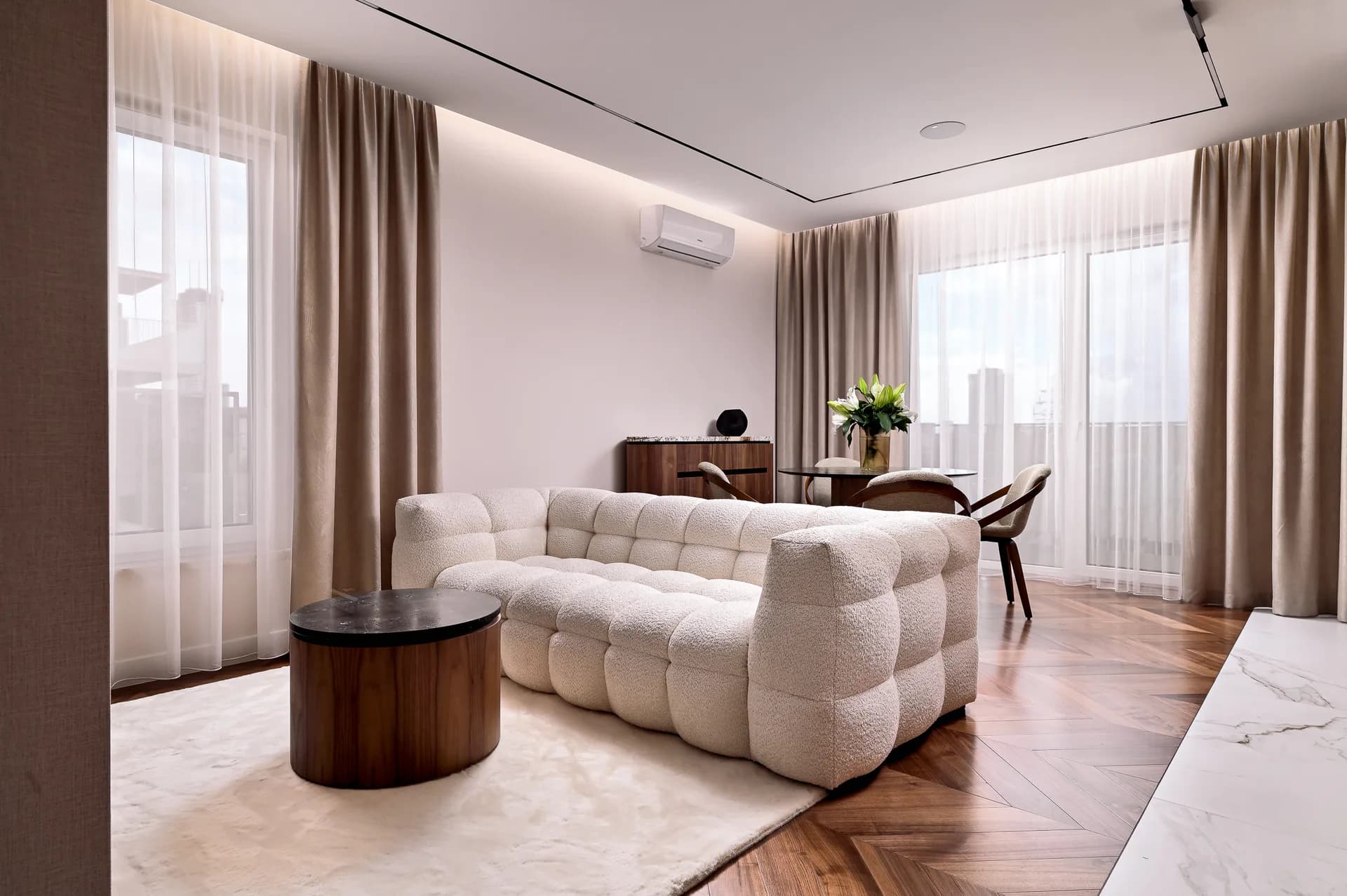
A dark floor of natural wood or panels is one of the strongest interior trends of recent years. Dark shades of oak, walnut and wenge dominate both…
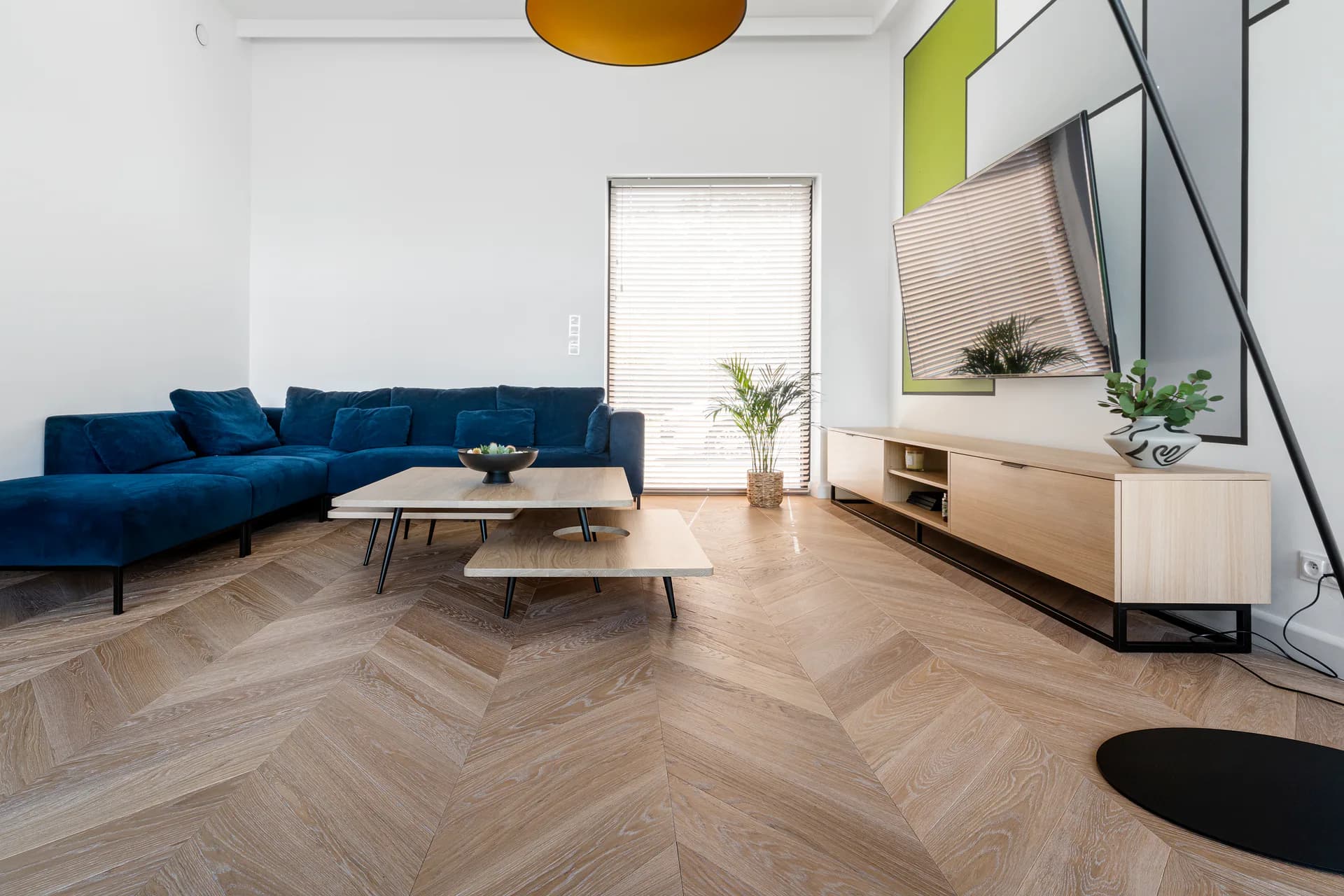
A light floor is one of the most effective ways to change an interior's character without a full renovation. As a designer, I see how a well-chosen light surface…
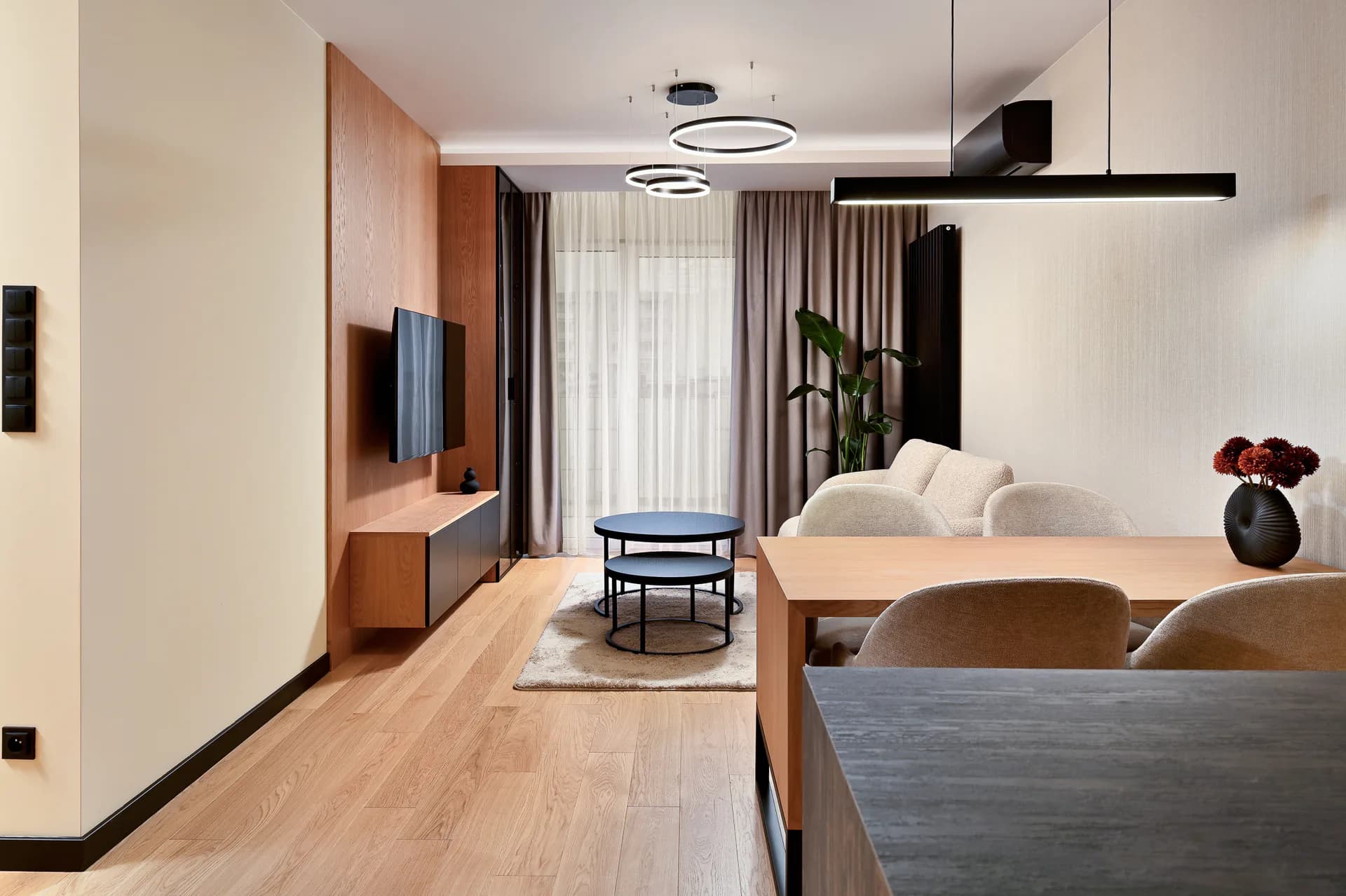
Choosing a floor is a decision that affects daily life at home for many years. Arbiton vinyl panels with an HD Mineral Core combine aesthetics…