

White skirting boards: selection and use
White skirting boards are one of the most versatile interior finishing elements. They suit modern arrangements as well as classic spaces, and additionally…


White skirting boards solve three common finishing problems: they mask expansion gaps, protect walls from dirt and mechanical damage, and tidy up the line where the wall meets the floor. If you are searching for white skirting boards, the key decision is this: in a dry living room, MDF skirting boards will usually serve you well, while in a kitchen, bathroom or utility room, PVC skirting boards, polyurethane skirting boards or other water-resistant polymer skirting boards are the safer bet.
This article covers the functions and types of skirting boards, material selection, their use in different rooms, the most common problems, and practical rules for fitting and care. Fitting instructions for individual product systems and detailed wall acoustics calculations are beyond its scope. The content is intended for owners of houses and flats, people carrying out renovations, interior designers and anyone who wants to match their finishing details to the style of the interior, the floor and the conditions in each room.
The short answer is simple: white skirting boards mask the natural expansion gaps and protect walls from damage during cleaning, which adds to their practicality. At the same time, white skirting boards bring harmony and a sense of space to an interior, reflecting light and making the room feel brighter and visually larger.
After reading, it will be easier to:
A white skirting board is a profile fitted where the wall meets the floor. In practice these floor profiles, also known as plinths, conceal the technical gap left along the edge of the floor, protect the lower part of the wall and play a decorative role.
The importance of skirting becomes particularly clear once a renovation is finished. Even well-laid floor panels, tiles, vinyl or wooden floorboards look incomplete if the line along the wall is uneven. A well-chosen skirting board lets you match the finish to the style of the scheme and makes the room look polished, rather than merely “technically closed off”.
Expansion gaps are deliberately left along the walls so that floors can move with changes in temperature and moisture. Skirting boards cover these gaps without restricting the floor's natural movement, which makes them especially important with panels, engineered boards and wooden floors.
White skirting boards protect walls from knocks from the vacuum cleaner, furniture being moved, shoes and mops. A well-chosen material limits soiling of the lower part of the wall, and on models coloured all the way through, minor scratches are less visible than on a thin coating over a dark core.
White plinths work differently on the eye than skirting in the colour of the floor. A light colour reflects light, brings order to the composition and can visually heighten or widen an interior, especially when the walls are light too. Against a dark floor, white skirting boards create an elegant, contrast-based look, while against a light floor they give a subtle finish.
The decorative role depends on the profile, the height and the shade of white. Plain white skirting boards sit well in modern schemes, moulded models feel at home in classic interiors, and smooth MDF boards can be painted any colour if the white needs to match the wall. Since function and appearance go hand in hand, the next step is matching the skirting to specific rooms.
The choice of skirting depends on how the room is used. A dry bedroom needs one solution, a bathroom with its moisture another, and an office, where skirting takes daily knocks from chairs and frequent cleaning, yet another.
White skirting boards are versatile and can be fitted alongside many types of flooring and interior styles, which makes them a universal finishing solution. That does not mean, however, that a single material will work in every interior.
In living rooms, bedrooms, studies and hallways, MDF skirting boards are the most popular choice, because they combine elegant looks, high durability and the option of painting. MDF skirting boards look their best in dry living rooms, bedrooms and studies, where moisture is not a constant threat to the core.
In modern flats, boards 7–8 cm high are a frequent choice, while in tall interiors and period townhouses 10–12 cm models are popular. The market offers models in a range of heights, from plain to decorative, so you can easily match the skirting to the style of your interior.
Kitchens, bathrooms and utility rooms call for greater moisture resistance than dry living spaces. Skirting boards made of polyurethane and PVC are an ideal solution for rooms exposed to moisture, such as kitchens and bathrooms. Polyurethane skirting boards are light, durable and moisture-resistant, which makes them the best option for moisture-prone rooms of this kind.
Most polymer skirting boards offer high resistance to moisture and good long-term durability. MDF skirting with enhanced moisture resistance can be used in kitchens, but in places in frequent contact with water, polymer or PVC boards remain the safer choice.
In offices, service premises and commercial spaces, skirting must be easy to clean, scratch-resistant and simple to service. PVC skirting boards and polyurethane skirting boards work well wherever resistance to frequent washing and accidental knocks matters. Fixing with mounting clips makes it easier to replace sections, especially when cables are run inside the boards.
Skirting boards with cable channels allow wiring to be hidden discreetly, which matters at workstations, in meeting rooms and in home offices. Modern interiors also feature aluminium and stainless-steel skirting boards; they are often chosen for contemporary schemes, offering high scratch resistance and a variety of finishes, including silver. If the goal is a clean white finish, however, aluminium tends to serve as a technical alternative rather than the first choice.
In short:
That leads to the most important technical question: what material should the skirting boards be made of.
The market offers a wide variety of skirting boards, differing in material, resistance, appearance and fitting method. Skirting boards come in materials such as MDF, PVC, polyurethane, polystyrene, wood and aluminium, which shapes their properties and applications.
Choosing the best white skirting boards depends on the user's aesthetic and functional expectations. An investor after an exceptionally elegant line along the living-room floor may go for MDF boards. Someone finishing a bathroom should first check whether the material is waterproof and can withstand frequent cleaning.
Material selection is best started with an assessment of the room. Consider moisture, sunlight, intensity of use, the type of floor, how the room will be cleaned and the visual effect you are after. In dry rooms, elegance and the option of painting matter more; in kitchens and bathrooms, water resistance comes first.
Next, match the skirting to the floor. Plain white boards pair well with panels and vinyl, MDF or wooden skirting is often chosen for wooden floors, and aluminium skirting is worth considering in technical, modern interiors. If the joinery or the floor is oak-toned, white can create a contrast or be swapped for an off-white shade.
The third factor is intensity of use. In a home with children or pets, or in a hallway, scratch-resistant models with hard-wearing surfaces are the better pick. In a showpiece living room you can opt for a decorative profile that underlines the style of the interior more strongly.
Finally, settle the budget and the desired look. The wide choice on sale includes plain PVC boards, white MDF skirting boards ready for painting, decorative polyurethane boards and wooden skirting boards. Mardom Decor and Orac Decor are brands known for high-quality polymer skirting and superb precision of manufacture, so when comparing offers it is worth checking not just the price but also the quality of the edges, the coating and the consistency of the profile from proven manufacturers.
| Criterion | MDF | PVC | Polyurethane |
| Moisture resistance | Standard MDF boards are intended mainly for dry rooms; moisture-resistant versions require several coats of UV-cured polyurethane lacquer. | PVC skirting boards are moisture-resistant and perform well in kitchens, bathrooms and utility areas. | Polyurethane and polymer boards are waterproof, light, durable and safe in moisture-prone zones. |
| Ease of installation | They require precise cutting, an even wall and sealed edges; rigid MDF copes poorly with uneven walls. | They are light, often available with system accessories, and can be fitted with adhesive, clips or double-sided tape. | Flexible polymer boards handle uneven walls better than rigid MDF; flex versions help with curves. |
| Paintability | MDF boards offer an elegant look and high durability, and being paintable they can be matched to different wall colours. | Paintability depends on the surface; a ready-made colour and texture is the more common choice. | Many polyurethane models can be painted any colour, making it easy to match the wall or the joinery. |
Beyond that, it is worth knowing the alternatives. Aluminium skirting boards offer high durability and complete resistance to moisture. Aluminium and stainless-steel boards are chosen mainly for modern and commercial interiors, but they do not always give as soft and decorative a finish as white MDF or polymer skirting. Wooden skirting boards are natural and refined, but their surfaces need more care, especially as moisture levels change.
Fitting white skirting boards requires proper surface preparation and the right fixing method for the material. Skirting boards are fitted with assembly adhesive, clips or double-sided tape, choosing the method to suit the type of board and the effect you want. Proper surface preparation, precise cutting and accurate fitting at the corners are decisive for an attractive, long-lasting skirting installation.
Most problems with skirting arise not when choosing the colour, but when the design meets the real wall, floor and lighting. Even the best material can look poor if the surface has not been prepared, the corners are badly cut and the shade of white clashes with the wall.
In practice, it pays to treat skirting boards as precision finishing elements, not an afterthought fitted at the end without a plan. This matters all the more when the interior is meant to have an elegant look and a durable finish.
On uneven walls, rigid MDF boards can stand proud, creating gaps and visible shadows. The answer is flexible veneered MDF boards, PVC skirting or flex profiles, because they hug an uneven surface better and adapt more easily to deviations.
If you still want to use MDF, the walls need preparing, the right assembly adhesive must be used and the board pressed home at several points. With larger irregularities it is better to avoid very tall, rigid profiles, as they will highlight the problem rather than hide it.
Corners are where an attractive finish is most easily lost. An error of a few millimetres in a mitre cut can leave a visible gap, particularly with white skirting on a dark floor.
The best results come from careful measurement, a precise mitre saw, a trial fit of the pieces and sealing the cut edges. Systems with prefabricated corner pieces reduce the risk of error, but you need to check that the pieces match the height and profile of the chosen board.
White is not a single colour. Snow white, soft white and warm off-white can look completely different against the same floor, especially in natural versus artificial light. That is why it is worth comparing samples against the wall, the doors and the floor before you buy.
If the skirting is meant to disappear from view, it is usually matched to the wall colour. If it is meant to frame the floor, it can contrast with the panels, wood or tiles. In classic schemes a tall white skirting board builds a sense of elegance, while in minimalist interiors a plain, low board gives a subtle finish. With material, fitting and shade resolved, you can move on to a practical plan of action.
White skirting boards are one of those details that genuinely shape how an interior functions and how it is perceived. They mask expansion gaps, protect the lower part of the wall, tidy the floor line and add elegance. The best result comes not from choosing white as such, but from matching the material to the moisture levels, the intensity of use, the style of the scheme and the quality of the walls.
Next steps:
If the topic needs further refinement, it is worth looking separately at skirting for wooden floors, floor profiles with cable channels, boards for painting, and the finishing of junctions at doors and stairs. These are the areas that decide whether white skirting boards remain a mere add-on or become a coherent part of the whole project.
A quick material shortlist:
| Situation | Usually the right choice | Technical note |
| Dry living room, bedroom, study | MDF skirting boards | Elegant look, paintable, good durability in dry conditions. |
| Kitchen, bathroom, utility room | PVC skirting boards, polyurethane skirting boards, polymer | The material should be waterproof and stand up to frequent cleaning. |
| Uneven walls | Flexible polymer skirting boards | They follow the surface better than rigid MDF. |
| Office with cabling | Skirting boards with cable channels | They hide wiring and make it easier to keep things tidy. |
| Modern technical schemes | Aluminium or steel skirting boards | High resistance to scratching, moisture and heavy use. |
The practical minimum before fitting:
Handled this way, white skirting boards will not only round off a renovation visually, but will also protect the walls, bring order to the space and remain a lasting element of the finish in any interior.
White skirting boards bring brightness and a sense of space to an interior, reflecting light and visually enlarging the room. They are versatile and work beautifully across a wide range of interior schemes.
The market offers various types of skirting boards, made of MDF, PVC, polyurethane, wood or aluminium. Each material has its own strengths and is intended for different conditions of use.
Finishing trims underline the character of a room, tidy the line where the wall meets the floor and can be an important element of the interior scheme, harmonising with the colour of the walls and the floor.
Yes, white plinths protect walls from mechanical damage such as knocks from the vacuum cleaner, furniture being moved or scuffs during cleaning.
The choice of skirting should take the type of floor into account – with floor panels, MDF or PVC boards work superbly, masking expansion gaps and providing an attractive finish.
Not all models resist dirt equally well. In high-traffic rooms it is worth choosing models made of materials that are easy to clean and resistant to soiling.
White polymer skirting boards are waterproof and durable, which often makes them the best choice for damp rooms such as kitchens and bathrooms.
Yes, white skirting boards are versatile enough to work beautifully in any interior – from modern, minimalist spaces to classic, elegant schemes.
The key finishing elements are precise cutting, accurate fitting at the corners, the right choice of fixing method and protecting the edges against moisture and damage.
White plinths work superbly with floor panels, because they mask expansion gaps and create a bright, attractive finish that underlines the lightness and modernity of the scheme.
We will advise and prepare an individual quote matched to your interior.
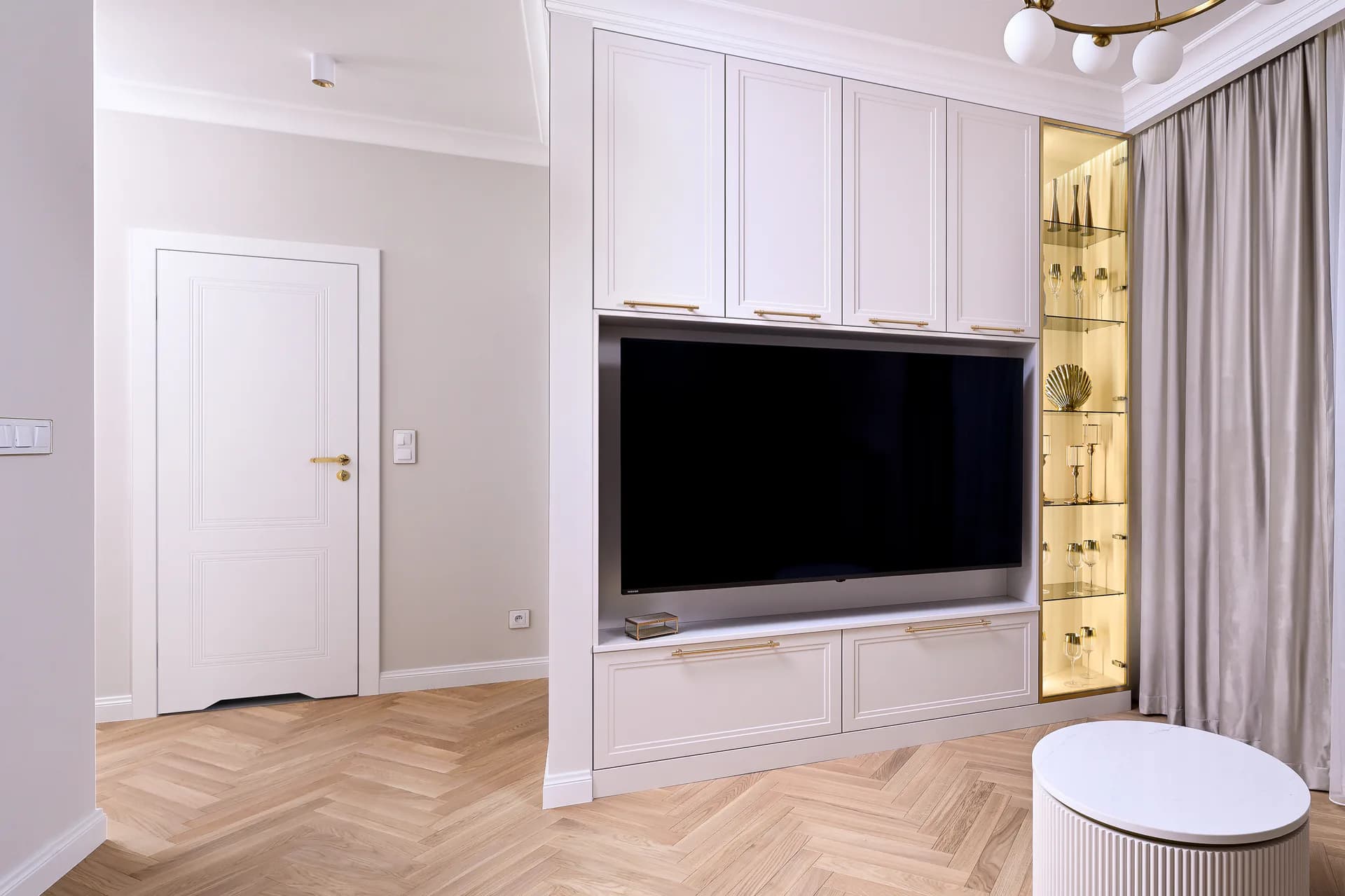
White skirting boards are one of the most versatile interior finishing elements. They suit modern arrangements as well as classic spaces, and additionally…
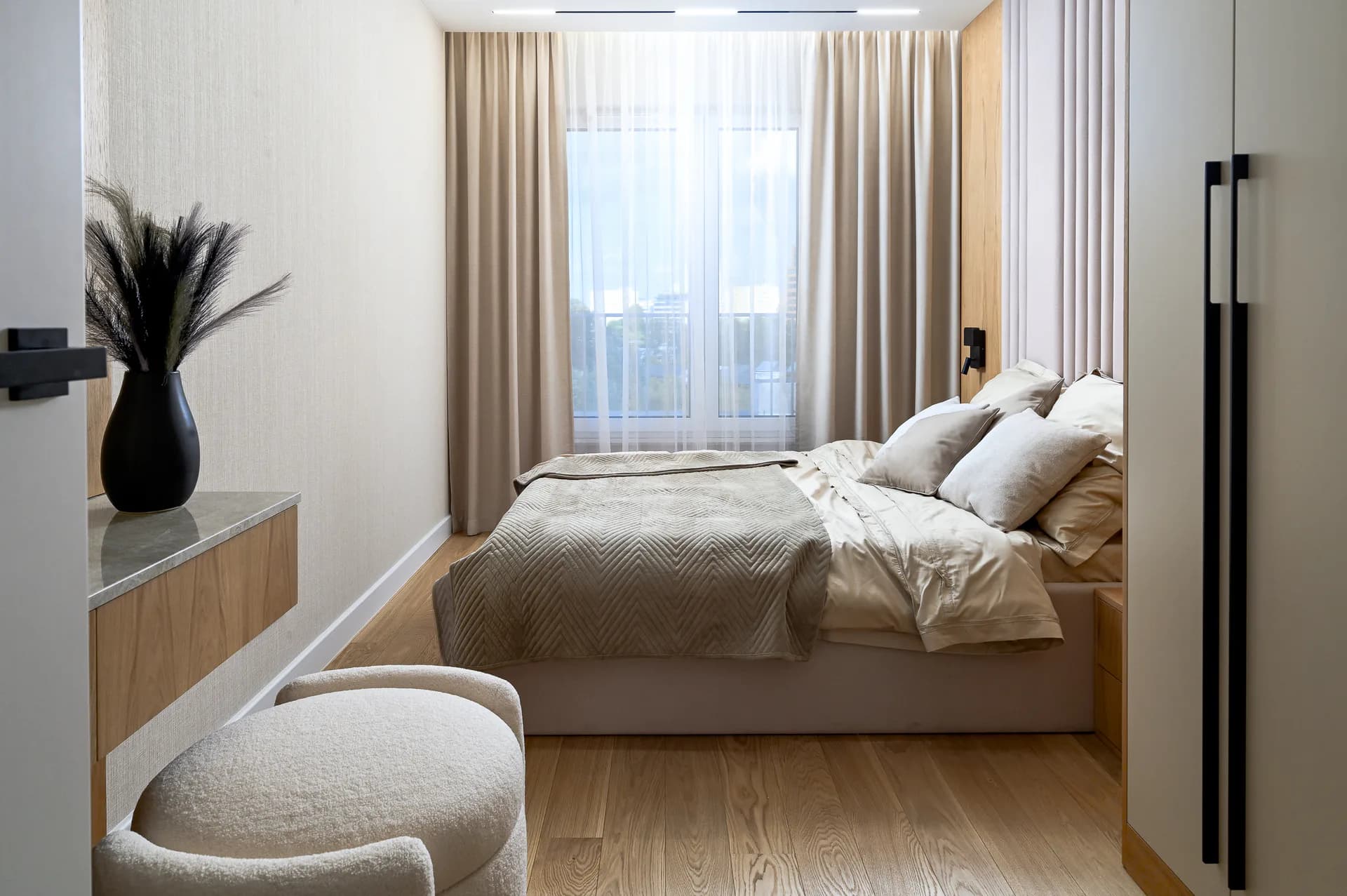
Floorboards are an inseparable element of every stylish, functional interior. Wooden floors have enjoyed unwavering popularity for years thanks to their natural…
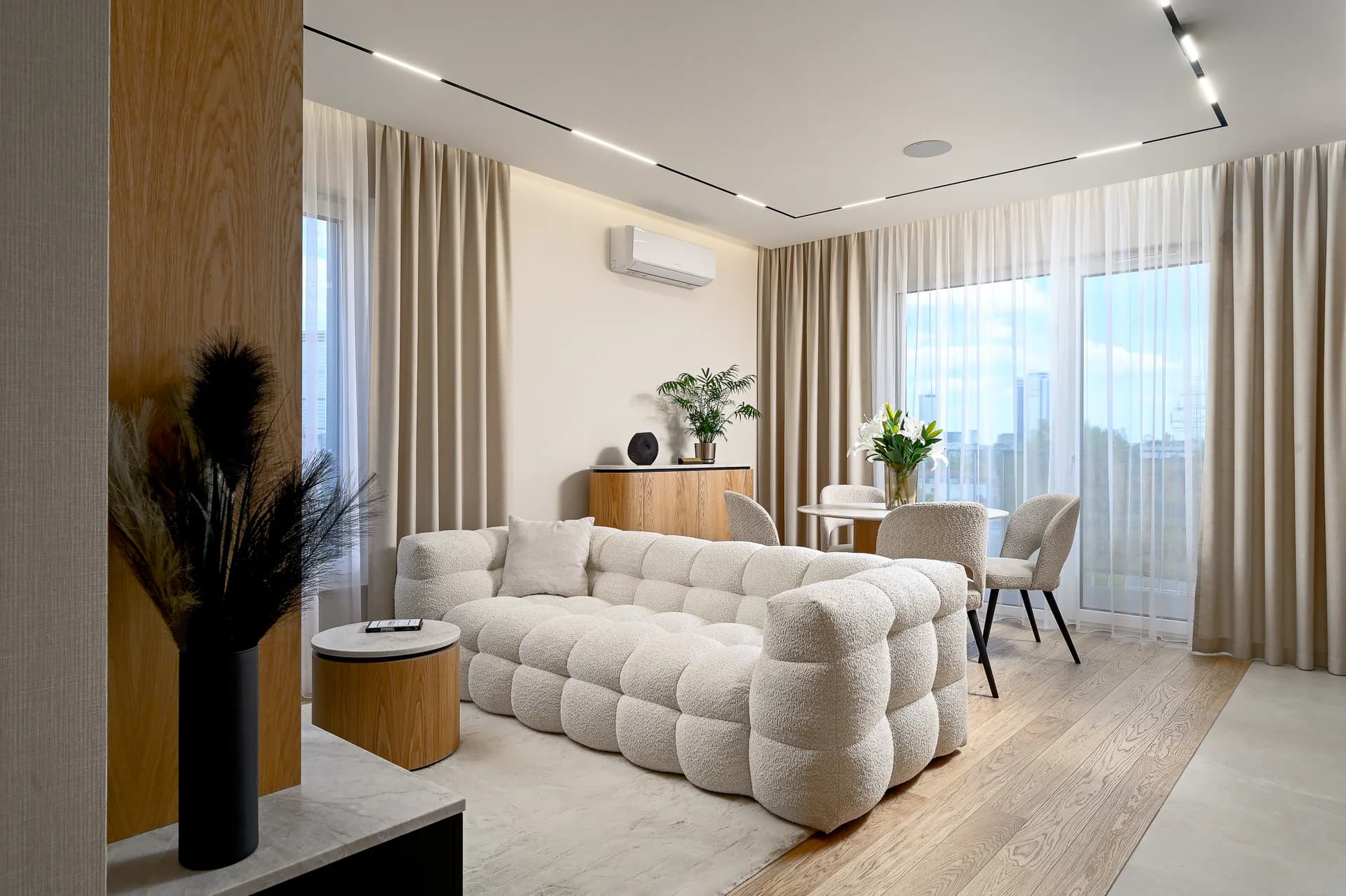
Oak floorboards are a synonym of durability and natural beauty in interior design. Boards made of this noble wood resist damage and…