

Three-layer floorboards: a stable wooden floor without warping problems
Floorboards are an inseparable element of every stylish, functional interior. Wooden floors have enjoyed unwavering popularity for years thanks to their natural…

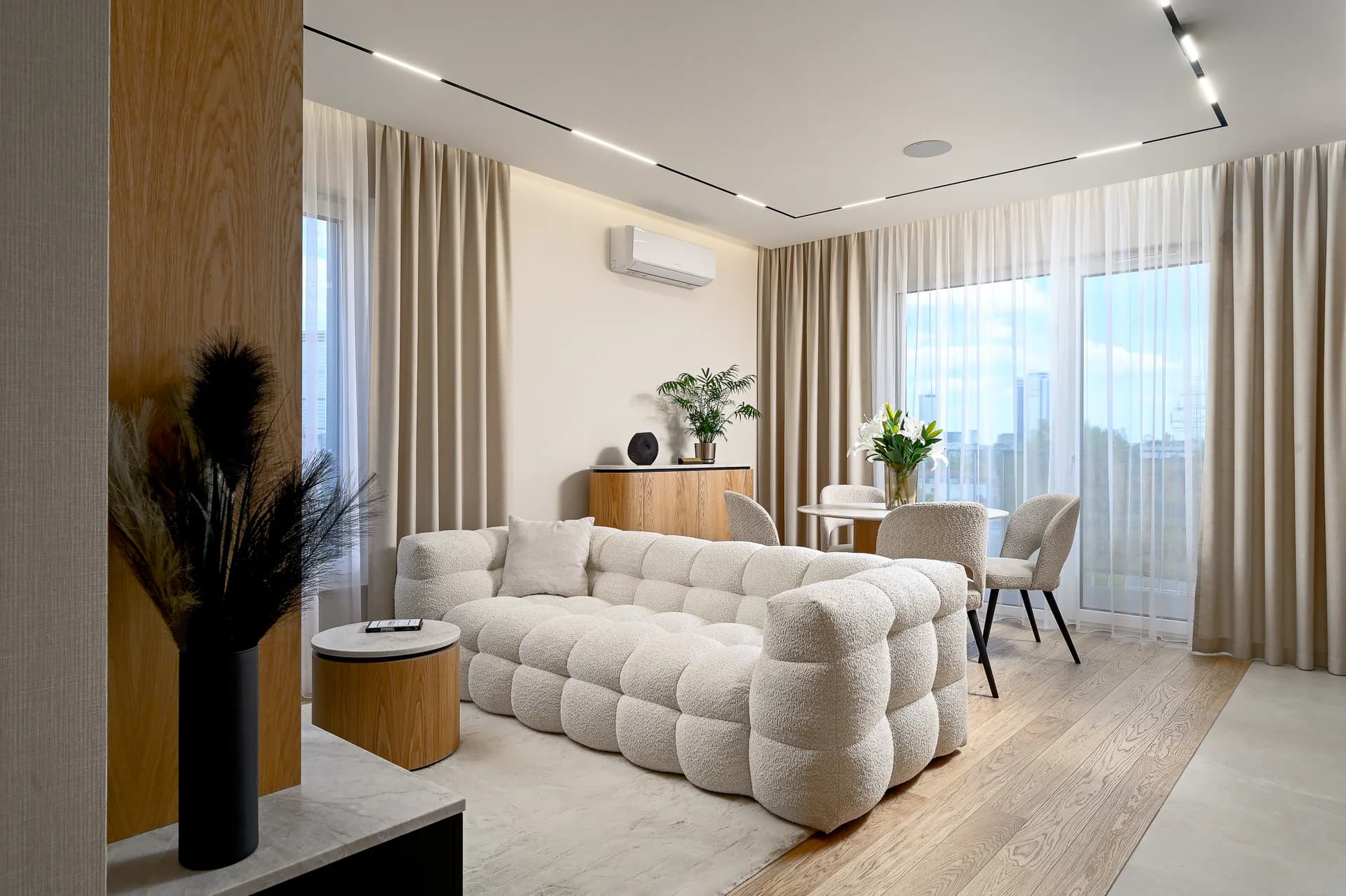
The oak floorboard is a byword for durability and natural beauty in interior design. Floorboards made from this noble wood are resistant to damage and have an attractive surface that gives every room a distinctive character. Thanks to its strength and versatility, the oak floorboard is the ideal choice for anyone looking for a solid, elegant floor that will last for years.
The oak floorboard is one of the most versatile and durable flooring materials on the market in 2026 – with proper care it can serve for 50+ years.
Oak works just as well in modern lofts and Scandinavian arrangements as in classic interiors – one material, many stylistic possibilities.
An investment in a properly installed oak floorboard pays for itself thanks to the possibility of repeated renovation (as many as 6–8 sanding cycles for solid boards).
The right choice of floor finish (oil, lacquer, brushing) lets you match the floor to the lifestyle of those who value functionality and good looks.
Oak wood is characterised by exceptional strength and density, surpassing most of the species used for flooring. On the Janka scale, oak reaches 1290–1360 pounds per square inch – by comparison, pine manages a mere 380–510. This difference makes oak floorboards resistant to mechanical damage and denting, even under heavy traffic.
As a native species, oak is well adapted to the Polish climate, with its temperature swings and seasonal changes in moisture. What is more, the wood naturally regulates the indoor microclimate – absorbing excess moisture in summer and releasing it in winter. A long-lived product with hardness of this class is the ideal choice for any arrangement.
In 2026, the key selection criterion is compatibility with underfloor heating. Here is a comparison:
| Feature | Solid board | Engineered board |
| Thickness | 18–22 mm | 12–15 mm |
| Sanding | 6–8 times | 2–3 times |
| Dimensional stability | Medium (0,2–0,3%) | High (<0,1%) |
| Underfloor heating | Limited | Recommended |
A solid board made from solid wood offers maximum scope for renovation and exceptional durability. It is worth remembering, however, that over poorly insulated underfloor heating it can move excessively.
Engineered floorboards with a top layer of oak on a plywood base, such as Kaczkan Baltic Seaside – a lacquered engineered floorboard, provide stability and faster installation thanks to click locking systems. It is the solution for modern builds and flats from 2015–2025.
Modern arrangements require the floor to tie in coherently with the whole space. Oak offers visual qualities to suit a range of styles:
Natural wood colour with pronounced grain
Knots and colour variations add character
A V-groove emphasises the traditional look
Shades of grey and beige, whitewashed finishes
Bevelled edges for subtle depth
The "select" grade with a limited number of knots
Dark oaks: espresso, smoked, cappuccino
Thermal ageing for a rustic effect
Wider boards (180–220 mm) create a sense of luxury
Beyond colour, the parameters that affect durability and functionality also matter:
Thickness 14–15 mm (engineered) – optimal for UFH
Thickness 20–22 mm (solid) – maximum sanding allowance
Width 180–220 mm – a luxurious effect in large spaces
Width 120–160 mm – a proven option for smaller rooms
| Type | Advantages | Care |
| Oil | Accentuates the grain structure, allows spot repairs | Every 12–24 months |
| Lacquer | A sealed coating, easy cleaning | Refreshing every 2 years |
Additional finishes such as brushing (removing the soft wood), ageing or bevelling lend an individual character and add elegance to any interior, especially if you choose the Pure Forest Kaczkan oak floor with its natural, harmonious grain pattern.
Correct installation determines durability just as much as the quality of the board itself. Before work begins, the standards require the following checks:
Screed moisture: <2% CM (with UFH <1,8%)
Levelling: deviation max 2 mm/2 m
Warm-up procedure with underfloor heating: 1°C/day
Floating – click locks, 2–3 mm underlay, 8–15 mm expansion gap
Glue-down – MS polymer adhesive, noise reduction of ~20 dB, preferred with heavy furniture
Depending on the floor area and the type of rooms, it is worth consulting a specialist.
With regular care, oak floors keep their attractive appearance for decades:
Vacuuming with a brush attachment
Cleaning with a damp mop (pH 7–9)
Felt pads 3–5 mm thick under furniture legs
Oil: refreshing every 1–2 years
Lacquer: sanding for deeper damage
Yes – oak floorboards work well in both houses and flats. In small spaces, choose a medium width (approx. 150 mm) and lighter shades, which visually enlarge the space by 10–15%. An engineered floorboard is the better choice where underfloor heating is already in place.
The frequency depends on the intensity of use. With normal traffic in a living room, a full renovation may be needed after 15–25 years. Oiled finishes need refreshing every 1–2 years. Minor scratches can often be removed locally without sanding the entire wooden floor.
Natural oak develops a gentle patina under the influence of light – these changes are a normal process. UV lacquers reduce this effect by ~70%. Even exposure to sunlight and periodically moving the furniture around help avoid noticeable differences in the colour of the floor surface.
We will advise and prepare an individual quote matched to your interior.
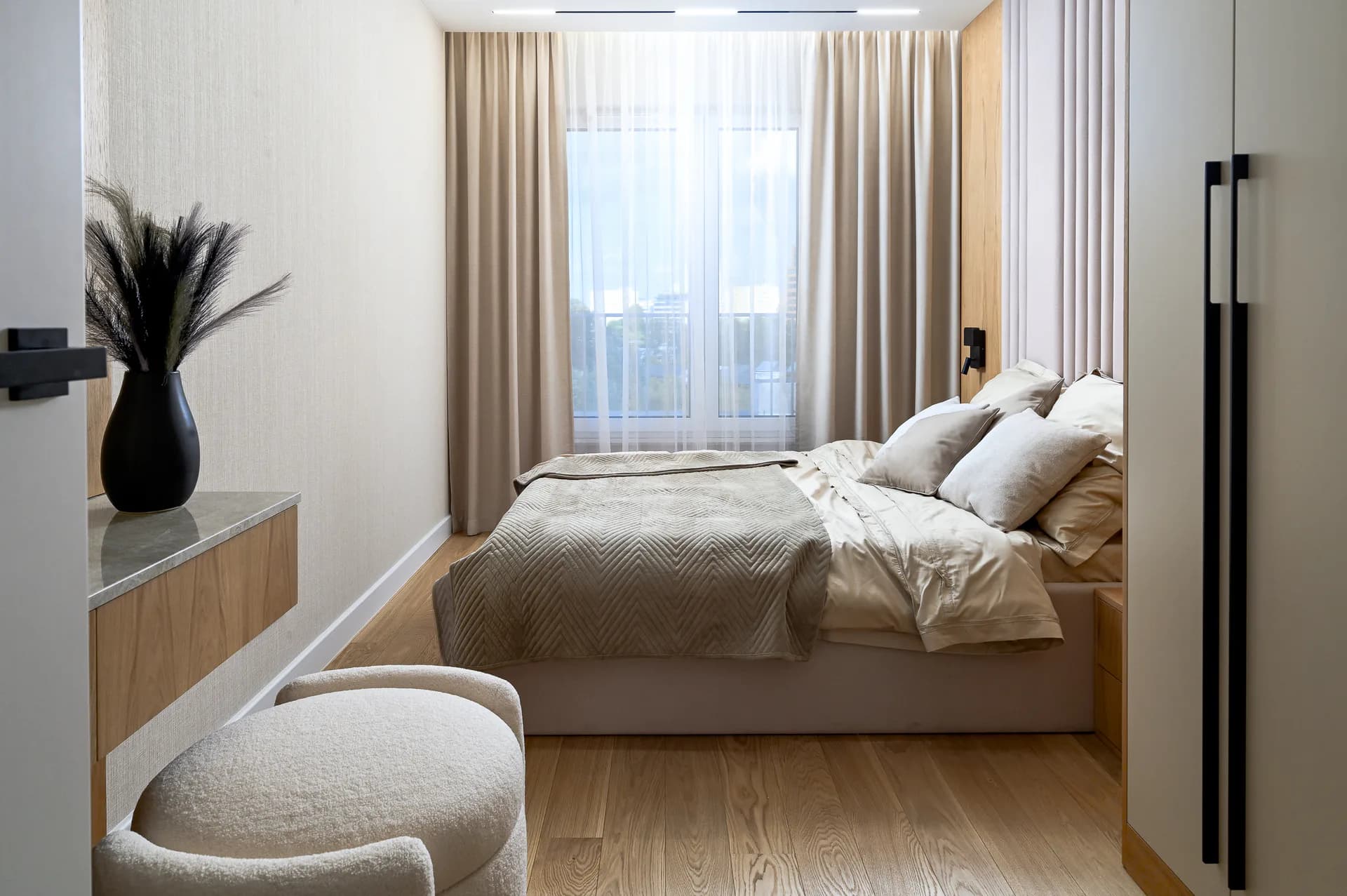
Floorboards are an inseparable element of every stylish, functional interior. Wooden floors have enjoyed unwavering popularity for years thanks to their natural…
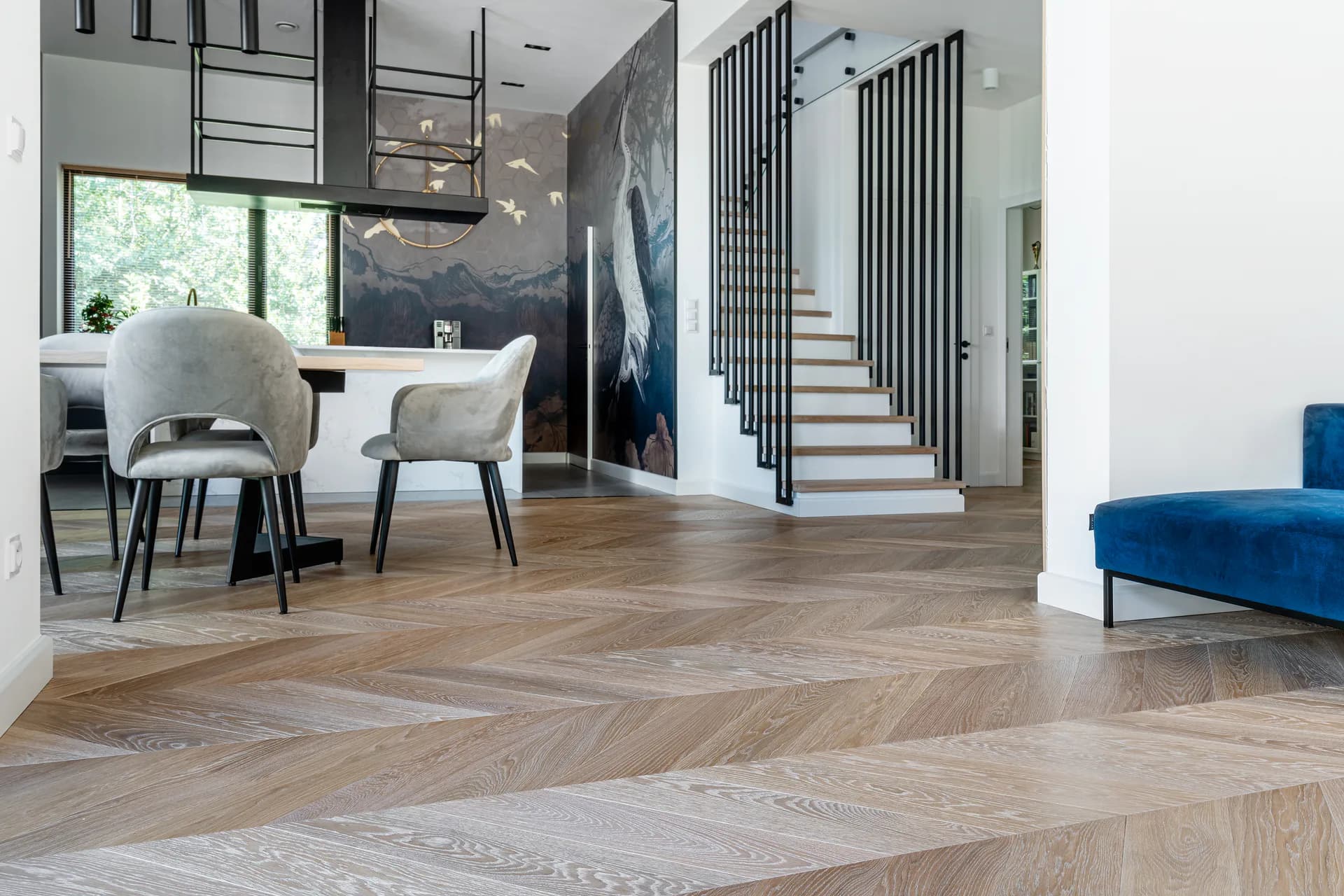
Grey floor panels are laminate or vinyl flooring in shades of grey that works well in modern, minimalist, Scandinavian and loft interiors…
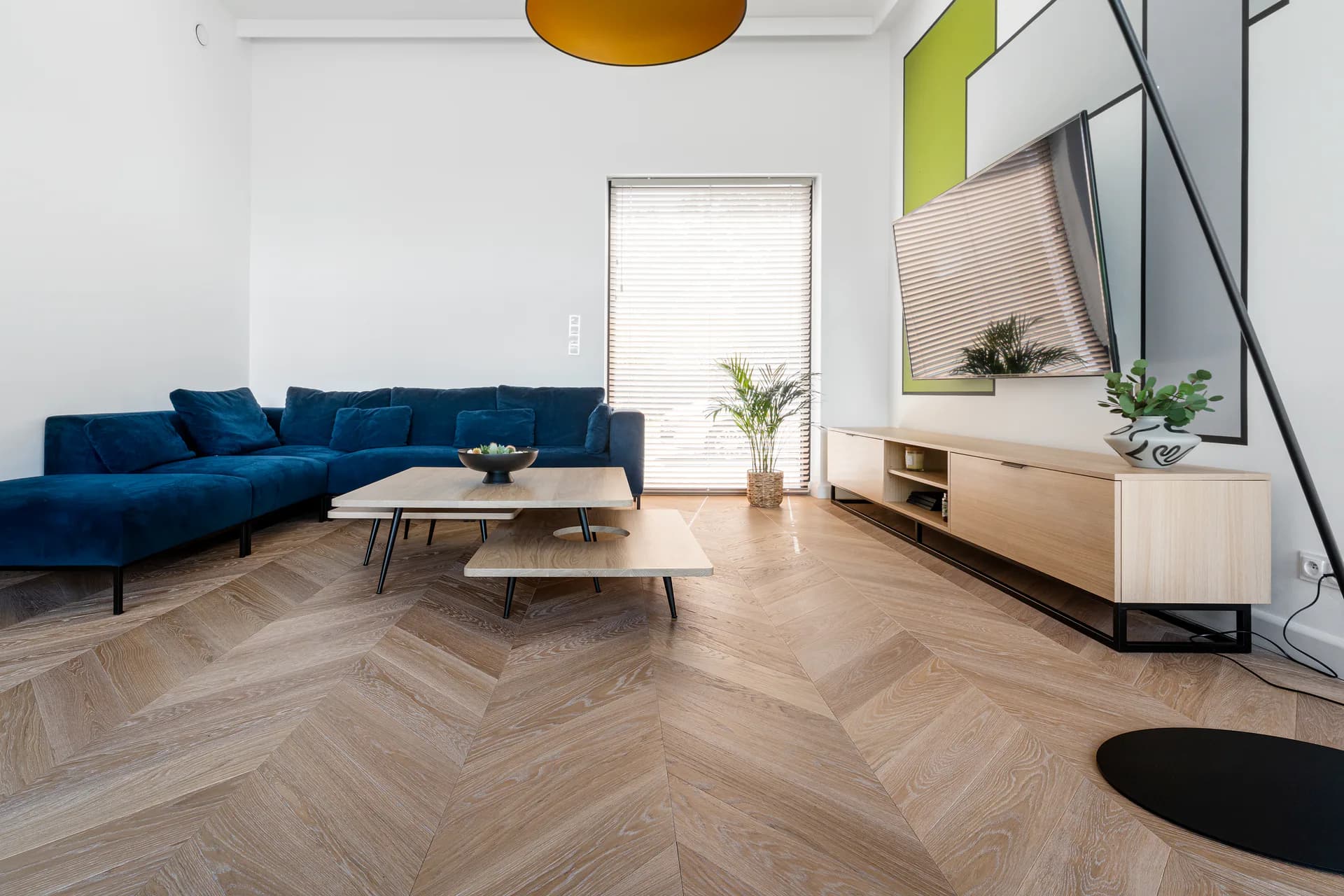
A light floor is one of the most effective ways to change an interior's character without a full renovation. As a designer, I see how a well-chosen light surface…