

Solid and engineered floorboards: advantages and uses in the home
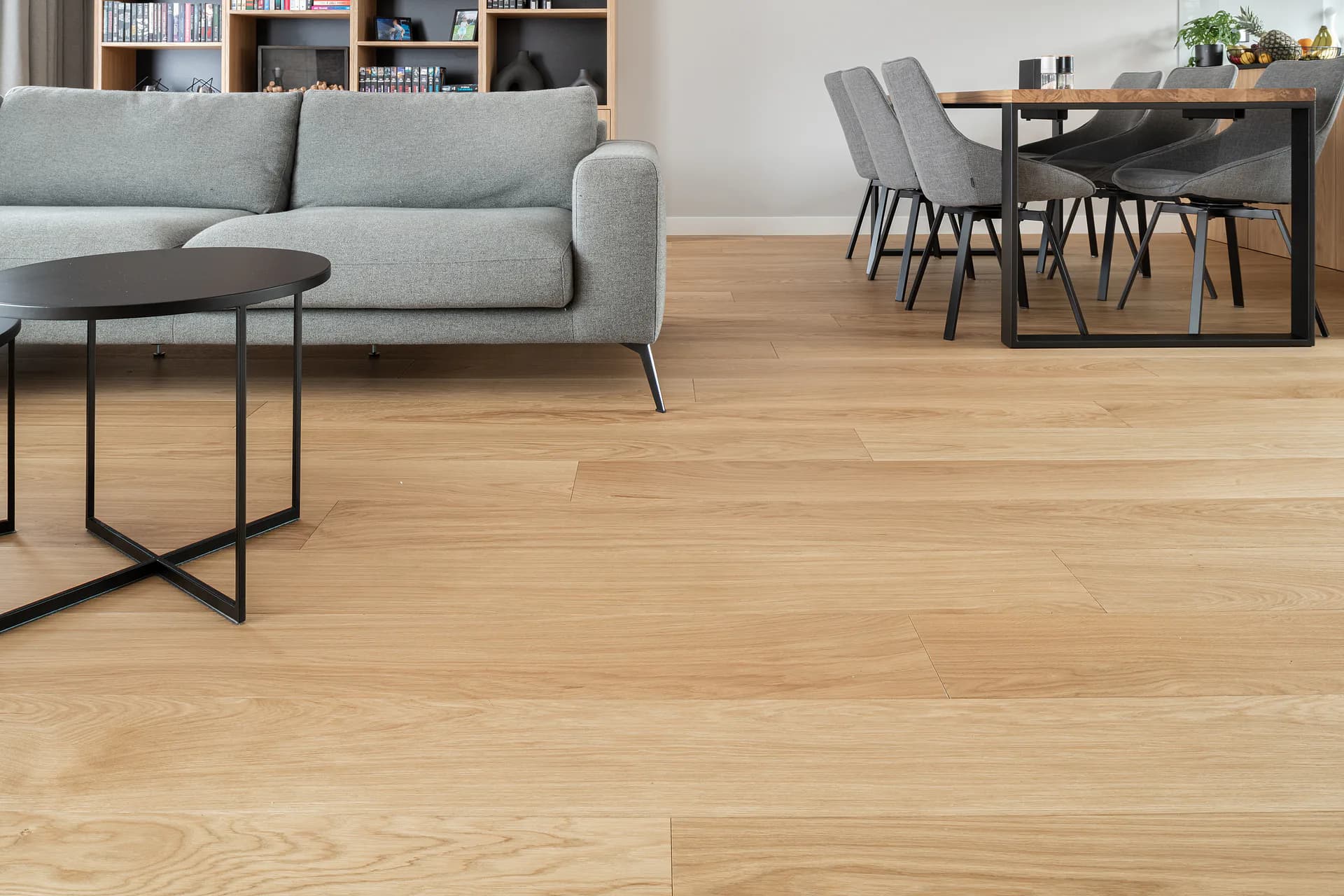
Choosing between solid and engineered floorboards is a key decision for anyone planning a wooden floor at home. A solid board, made from a single piece of wood…

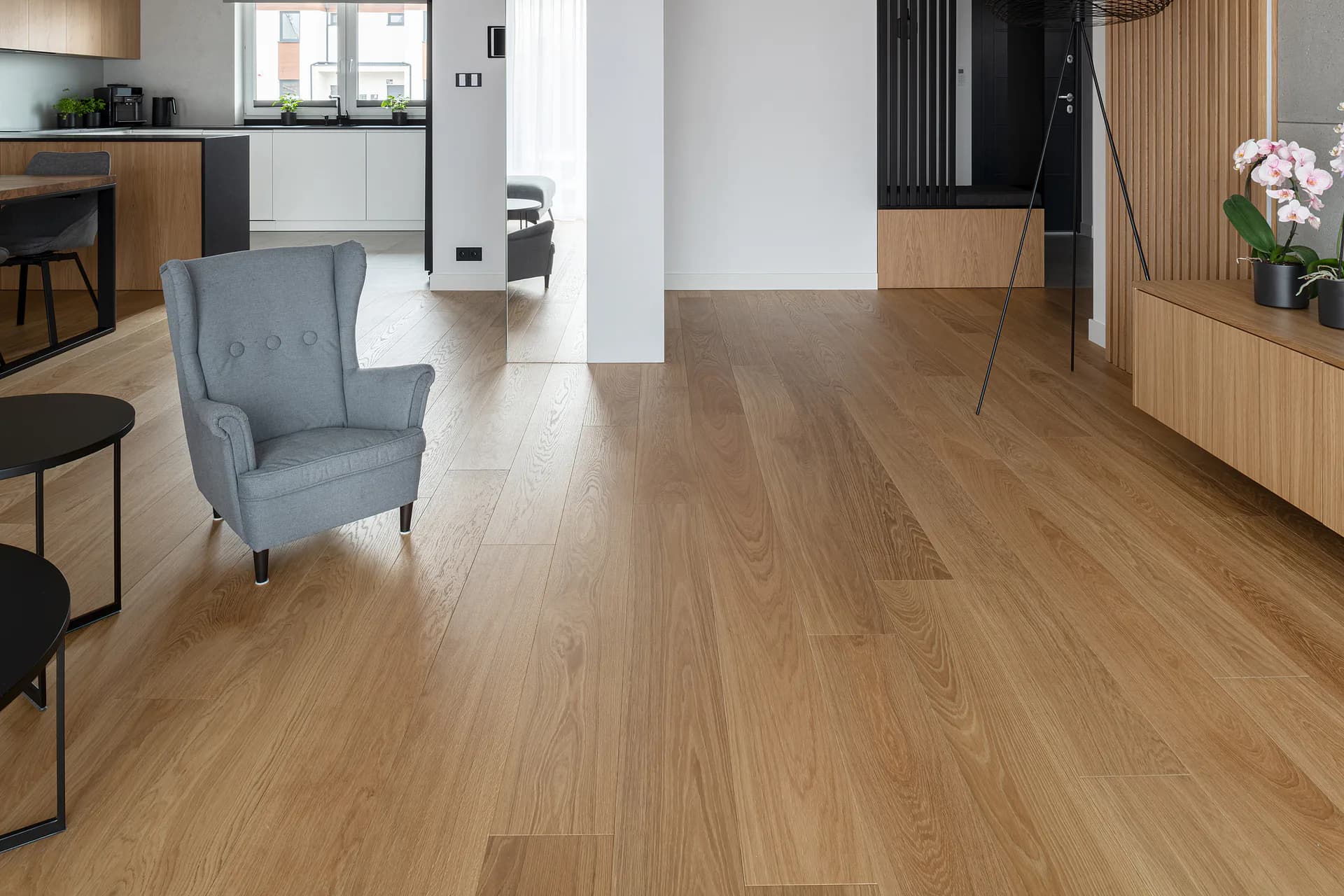
A solid wood floorboard is a floor made from a single piece of natural wood, prized for its durability, its capacity for repeated renovation and its timeless look. Correctly installed and properly cared for, it can serve for several decades while retaining its practical and aesthetic qualities.
The solid wood floorboard is the choice for those who value durability and the natural look of wood. Unlike an engineered floor, solid floorboards are made from a single piece of wood, which allows repeated sanding and gives them a timeless character.
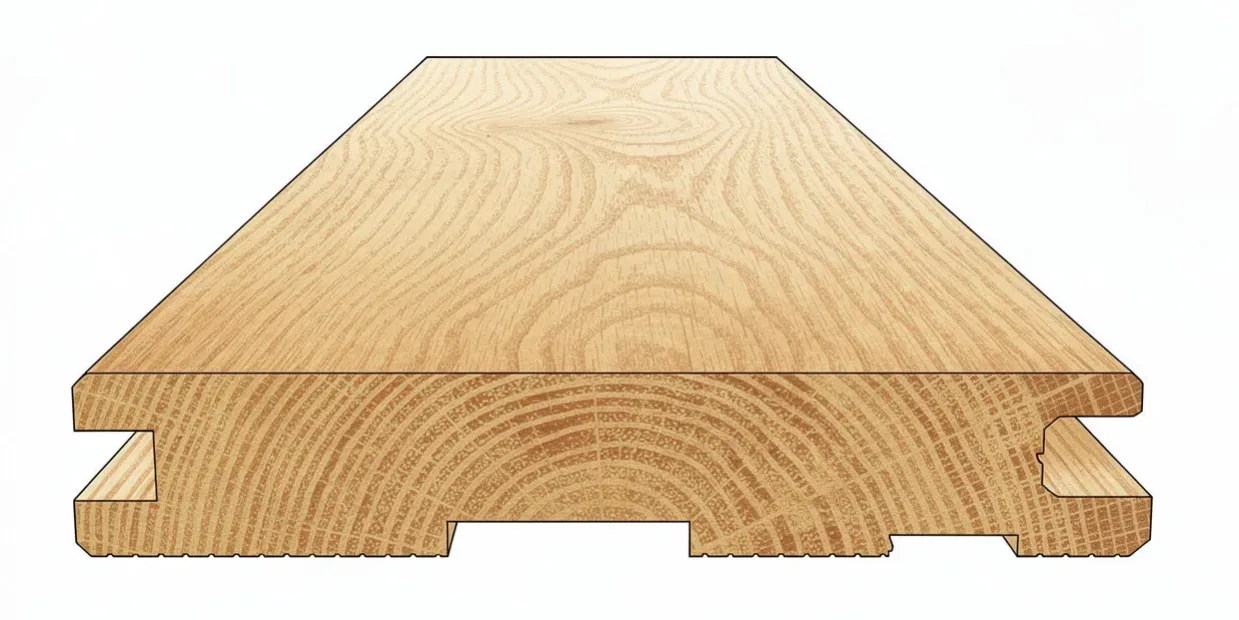
A solid wood floorboard is an element made from a single piece of wood (European oak, ash, strand-woven bamboo, teak) with a thickness of 15–22 mm, allowing repeated renovation – the number of sanding cycles depends on the board’s thickness and how it is used.
Durability depends on technical parameters: wood moisture content (7–9%), grading class, installation method (full-surface adhesive bonding) and the choice of finish.
With underfloor heating, a limited thickness (14–18 mm), control of the surface temperature (max 27–29°C) and a suitable wood species are required.
A lifespan of 20–80 years with proper use makes solid boards cost-effective over the life of a building, despite the higher initial outlay.
Solid boards are flooring elements made from a single piece of wood through their full thickness, with no glued layers or veneers. A typical oak board measures 20 mm × 140 mm with lengths of 600–2200 mm.
Density: European oak 680–750 kg/m³, strand-woven bamboo above 1000 kg/m³
Janka hardness: oak 1290–1360, ash 1320–1440, strand-woven bamboo over 3000
Volumetric shrinkage coefficient: 10–12% with changes in moisture
Profiling: tongue-and-groove system on the long and short edges, or square-edged boards
With engineered boards, such as the Kaczkan Baltic Seaside engineered oak floor, the wear layer is usually 3–4 mm, which limits the number of renovations. Solid floors offer the full thickness of premium material.
The choice of species affects the floor’s stability, its resistance to mechanical damage and the aesthetics of the interior.
European oak – the market standard, with a hardness of 6,5–7 on the Brinell scale. Oak stands out for its dimensional stability (radial shrinkage 5,2%, tangential 10,2%) and is available in Select, Natur and Rustic grades. Solid oak boards are an excellent choice for showpiece rooms.
Ash – an alternative with greater elasticity and an expressive grain pattern. Well suited to modern schemes in industrial and Scandinavian styles.
Strand-woven bamboo – a material of extreme density, exceeding 1000 kg/m³. Resistant to moisture and intensive use, strand-woven bamboo products differ from horizontal and vertical bamboo in their production method.
Exotic species (teak, merbau) – their natural oiliness gives high moisture resistance, but they require compatible oils or lacquers.
Softwood species (pine, spruce) – a Janka hardness of 380–510 makes them prone to scratches and dents. Recommended for bedrooms or a holiday home.
The dimensions available from manufacturers allow the board to be matched to the character of the interior and the technical capabilities of the substrate.
15 mm – the entry level, 3–4 sanding cycles
18–20 mm – the standard, 5–7 renovation cycles
22 mm – maximum durability
80–100 mm – classic, more thermally stable
120–160 mm – the modern standard
180–220 mm – wide boards requiring a substrate with deviations below 2 mm/2 m
Lengths: from 400 mm (short boards) to 2200 mm (showpiece elements). Mixed-length boards (mix length) keep installation waste below 5%.
Profiling: bevelling on 2 or 4 edges (micro-bevel 0,5–1 mm) masks slight differences in height. Relief cuts on the underside (transverse, every 30–50 cm) increase flexibility by 15–20%.
Using solid boards over underfloor heating was once a contentious subject, but by 2026 trade practice has clarified the rules.
Maximum surface temperature: 27–29°C
Wood moisture content: 7–9%
Screed moisture: below 2% CM (cement) or 0,5% CM (anhydrite)
Recommended board thickness: 14–18 mm
Evenness of heating: deviations below 1°C/m²
Denser wood conducts heat more effectively than a light material such as pine. Manufacturers use underside relief cuts and polyurethane adhesives with low moisture emission. It is worth entrusting the installation to an experienced parquet fitter working to a screed heat-up protocol.
The finish determines abrasion resistance and gives a natural floor its unique character.
Water-borne polyurethane and polyurethane-acrylic lacquers
3–7 factory coats (0,1–0,15 mm thick)
Taber abrasion resistance below 200 mg/1000 cycles
Open vapour diffusion, a matt look and natural feel
Oil renewal every 12–24 months in heavily used zones
Structural treatments: brushing and hand-scraping increase resistance to micro-scratches.
A natural solid wood floor is most often installed by full-surface adhesive bonding to the substrate.
Cement screed: strength min. C20/C25, residual moisture below 2% CM
Anhydrite: moisture below 0,5% CM
Flatness: tolerance of 2–3 mm over a 2 m straightedge
Polyurethane, silane or MS hybrid adhesives
Avoid adhesives with a high water content
Acclimatisation: store the boards in the destination room for 3–7 days at 18–22°C and 40–60% relative humidity (this may vary by manufacturer).
A perimeter expansion gap of 8–15 mm depends on the width of the board.
The lifespan of a solid floor is measured in decades – provided the right climatic conditions are maintained.
Temperature: 18–24°C
Air humidity: 40–60%
Use of humidifiers during the heating season
Teflon felt pads under furniture (a 70% reduction in dents)
Entrance mats
Pads under furniture legs of min. 4 cm²
We invite you to explore the high-quality products available in our shop – choose a solution that will serve for generations.
In flats of 40–60 m², solid boards are feasible provided humidity remains stable throughout the year. Widths of 120–150 mm in oak or ash are recommended. The quality of the screed, correct expansion gaps and acoustic insulation between storeys are all important.
In bathrooms with sharp swings in humidity, tiles or vinyl are the better option. In the kitchen, solid floors require hard-wearing lacquers and protection of the sink area.
Combining them with tiles, stone or vinyl requires the layer heights to be levelled. Transition profiles and flexible sealants are used at the junctions, allowing the wood to move naturally. In areas exposed to water, careful sealing is essential.
A natural solid wood floor is most often installed by full-surface adhesive bonding to the substrate.
Cement screed: strength min. C20/C25, residual moisture below 2% CM
Anhydrite: moisture below 0,5% CM
Flatness: tolerance of 2–3 mm over a 2 m straightedge
Polyurethane, silane or MS hybrid adhesives
Avoid adhesives with a high water content
Acclimatisation: store the boards in the destination room for 3–7 days at 18–22°C and 40–60% relative humidity (this may vary by manufacturer).
A perimeter expansion gap of 8–15 mm depends on the width of the board.
The lifespan of a solid floor is measured in decades – provided the right climatic conditions are maintained.
Temperature: 18–24°C
Air humidity: 40–60%
Use of humidifiers during the heating season
Teflon felt pads under furniture (a 70% reduction in dents)
Entrance mats
Pads under furniture legs of min. 4 cm²
We invite you to explore the high-quality products available in our shop – choose a solution that will serve for generations.
In flats of 40–60 m², solid boards are feasible provided humidity remains stable throughout the year. Widths of 120–150 mm in oak or ash are recommended. The quality of the screed, correct expansion gaps and acoustic insulation between storeys are all important.
In bathrooms with sharp swings in humidity, tiles or vinyl are the better option. In the kitchen, solid floors require hard-wearing lacquers and protection of the sink area.
Combining them with tiles, stone or vinyl requires the layer heights to be levelled. Transition profiles and flexible sealants are used at the junctions, allowing the wood to move naturally. In areas exposed to water, careful sealing is essential.
We will advise and prepare an individual quote matched to your interior.
Choosing between solid and engineered floorboards is a key decision for anyone planning a wooden floor at home. A solid board, made from a single piece of wood…
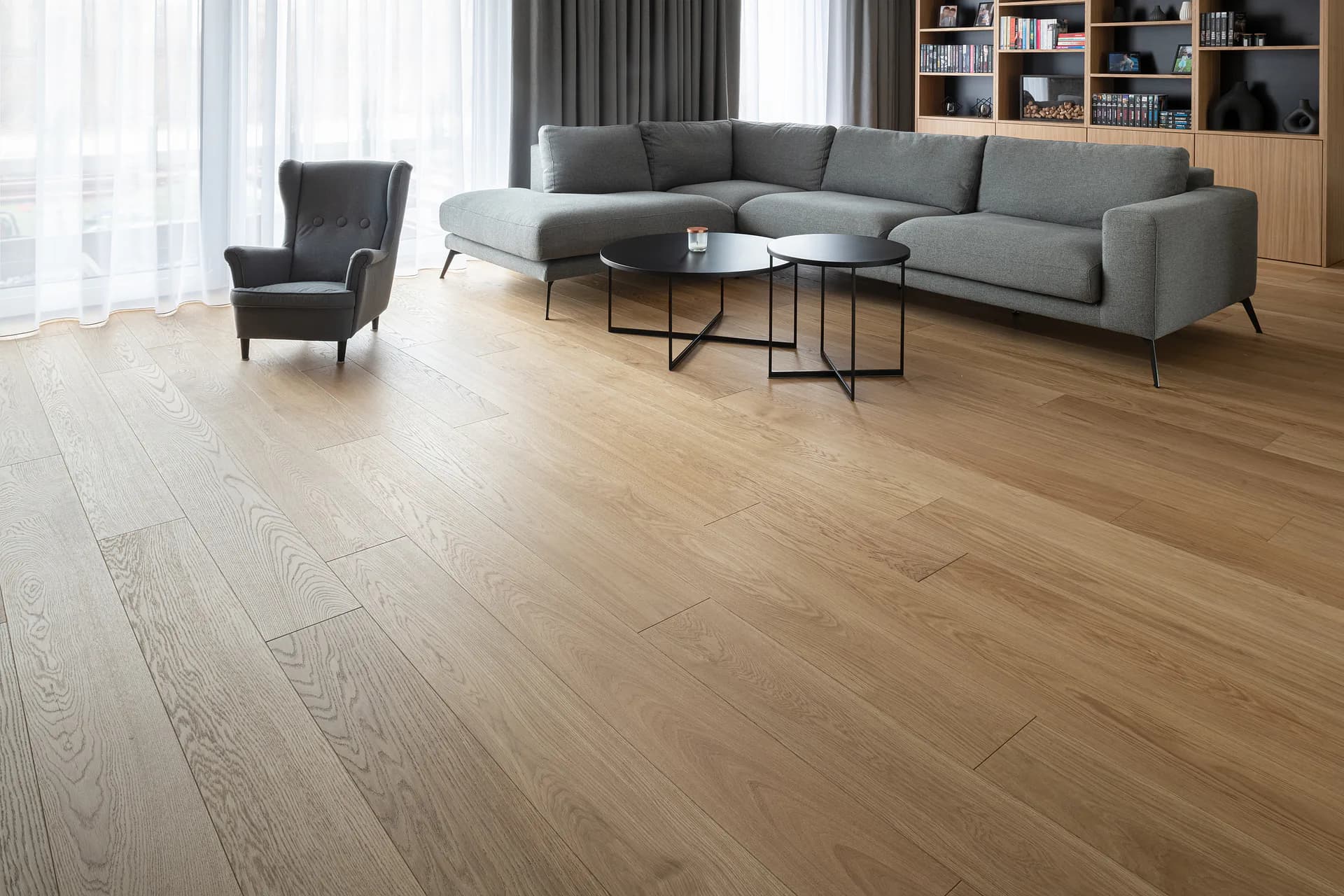
A brushed floorboard is a wooden floor whose surface has been mechanically treated to bring out the natural grain. This finish creates a tangible…
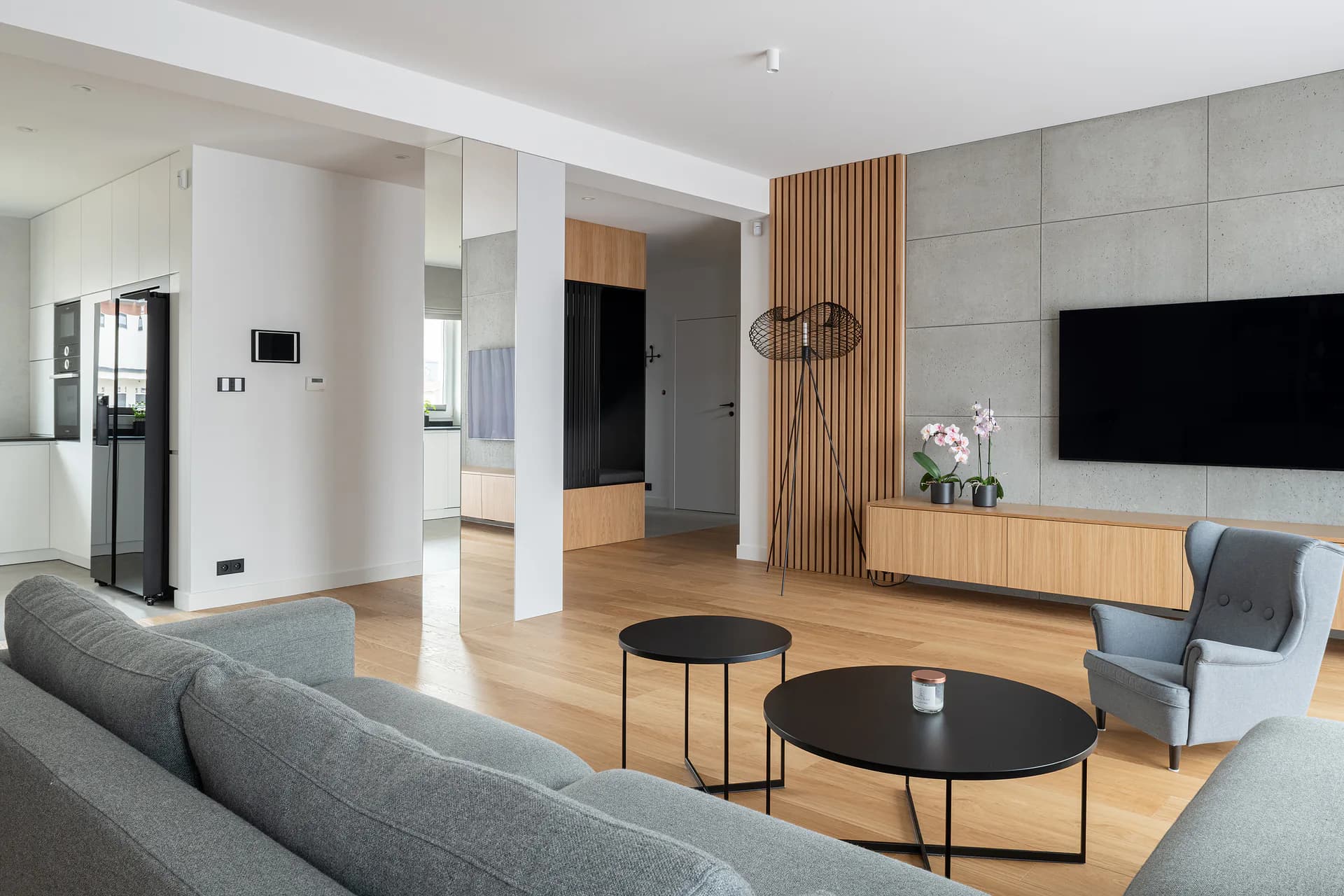
Floorboards are the better choice when real wood, long-term durability, the option of renovation and a natural interior character are your priorities. Panels win when…