

Oak floorboards: a modern, durable wooden floor for any interior style
Oak floorboards are a synonym of durability and natural beauty in interior design. Boards made of this noble wood resist damage and…

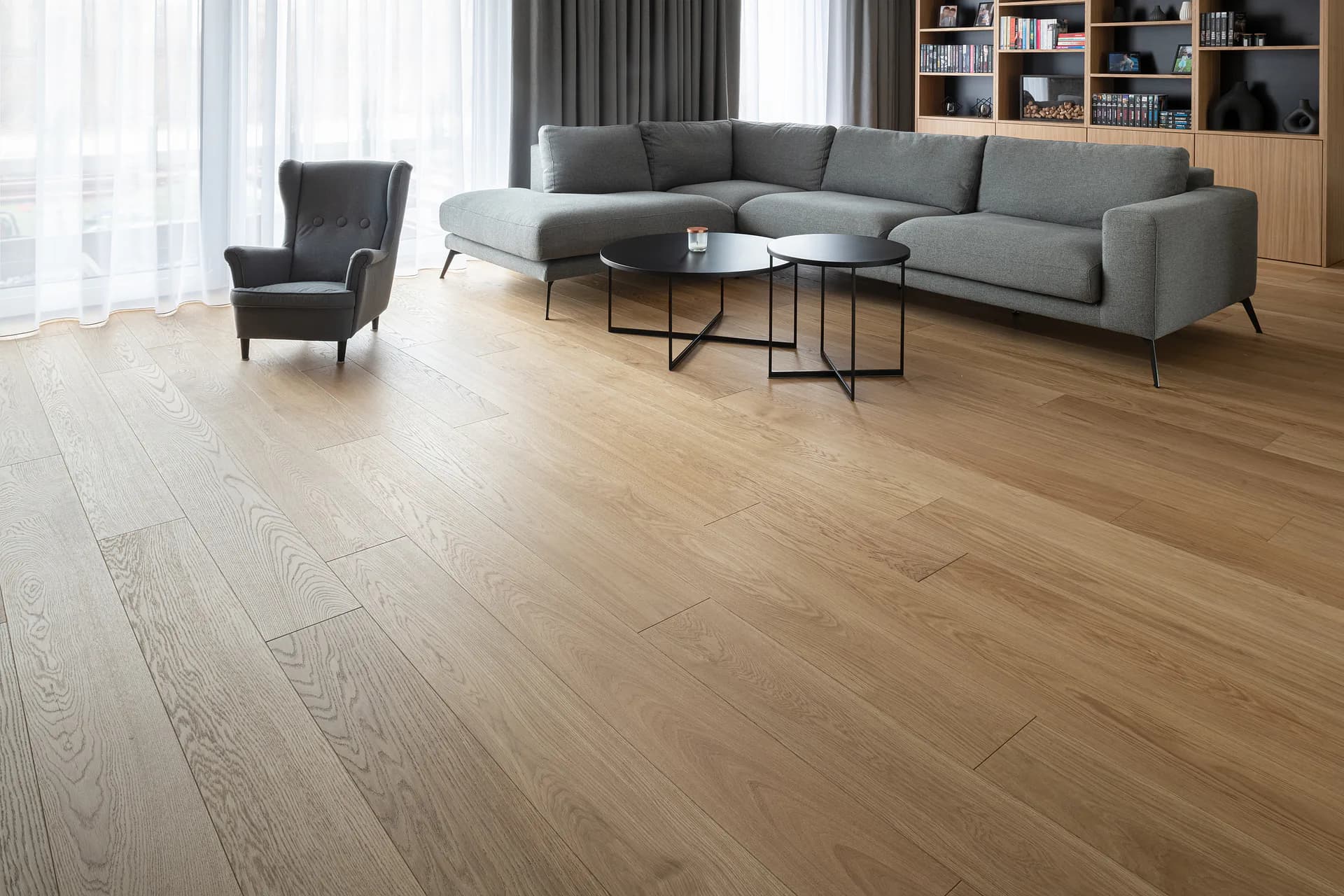
A brushed board is a wooden floor whose surface has been mechanically worked to accentuate the natural grain of the wood. This type of finish creates a three-dimensional texture you can feel under your hand and an effect of refined ageing that gives rooms a character all of their own.
This article covers everything worth knowing about brushed boards – from the production process, through the available wood species and finishes, to the practical aspects of installation and care. It is written for homeowners planning to replace a floor, architects looking for durable solutions and interior designers who want to bring the warmth of natural wood into their schemes.
A brushed board is a floor with a mechanically worked surface from which the soft wood fibres have been removed, leaving the hard growth rings – the result is pronounced visible graining, a better ability to mask minor scratches and a rustic aesthetic.
By choosing brushed boards, you gain:
Brushing wood is a process that draws out the natural beauty of the material by accentuating its inherent structure. The technique answers the needs of those who value an authentic, rustic-looking floor that is also practical in everyday use. In the ranges of manufacturers such as Kaczkan you will find brushed boards that combine elegance with functionality.
Brushing involves mechanically removing the soft wood fibres – mainly the early wood of the spring growth – using special brushes with metal or synthetic bristles. The brushing is carried out along the grain of the wood, which means a one-of-a-kind pattern on every element.
Steel or synthetic bristles, spinning at high speed on specialist machines, selectively remove the softer parts of the wood. The hard, oldest growth rings remain, which does not weaken the structure of the material – quite the opposite, it increases its mechanical resistance. This kind of treatment calls for craft experience and precision.
Brushed oak, and other species treated in this way, gain a characteristic depth that can be not only seen but also felt to the touch.
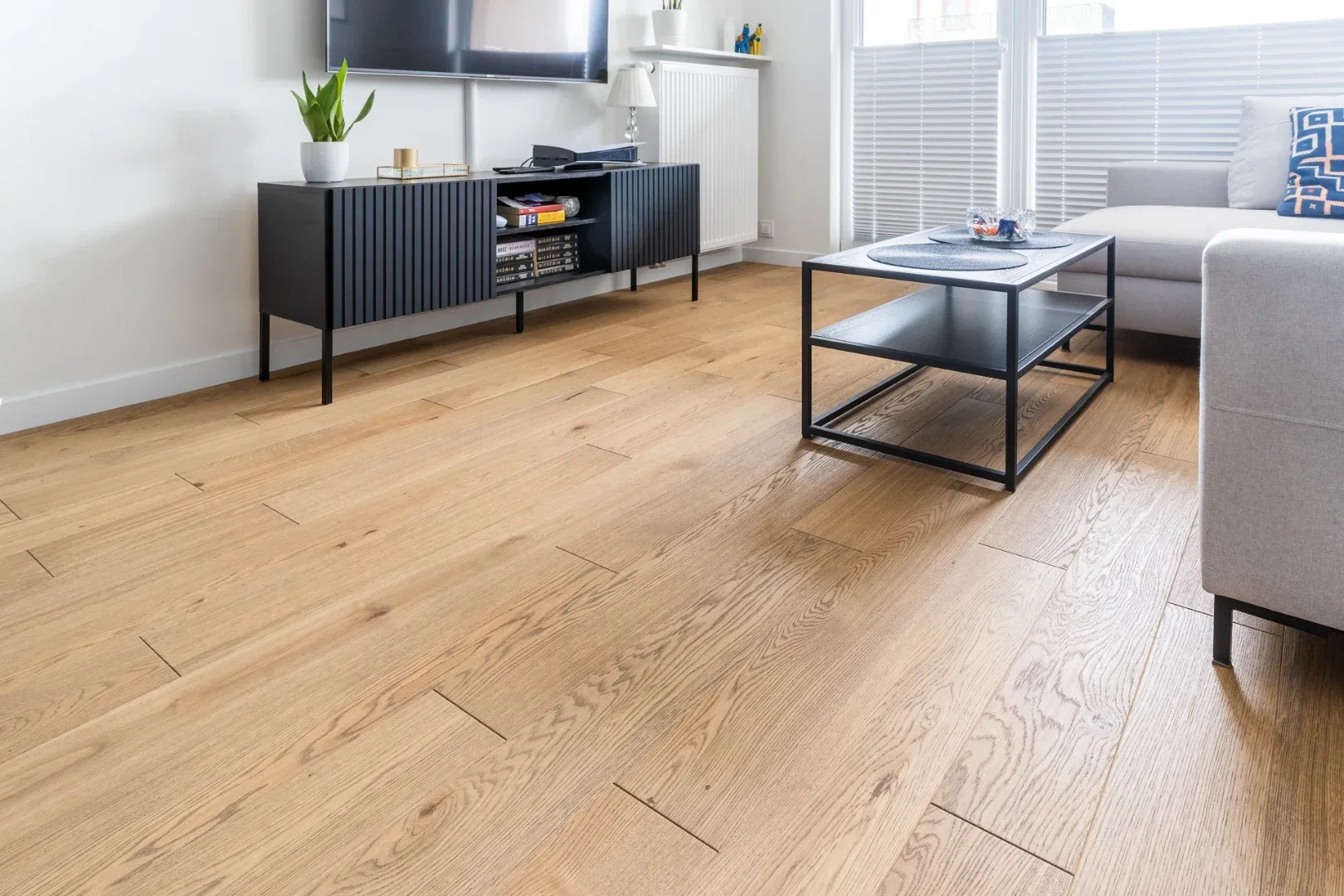
The surface of a brushed board is three-dimensional – the hard growth rings stand proud, while the areas where the soft fibres were removed form subtle hollows. The effect is visible to the naked eye and changes with the angle of the light, producing shifting visual effects throughout the day.
To the touch, a brushed board is distinctly textured but not rough – the final finish of wax, oil or lacquer smooths the knots and ensures comfort in use. This texture gives the floor a natural look with the noble patina of time, recalling traditional, hand-worked boards.
Thanks to the raised grain, brushed boards have anti-slip properties – even after washing and polishing, the surface prevents slipping, making them safe in homes with children.
The market offers a wide choice of brushed boards differing in wood species, finish and dimensions. Each combination of these features produces a different visual and practical effect, allowing the floor to be matched to any style of interior.
Oak – the most popular choice among brushed boards. After brushing, oak boards take on a refined, tangible textured pattern. Oak is notable for its high stability and strength, making it well suited to intensive use. In the Kaczkan collection you will find a range of brushed oak variants.
Larch – brushing brings out the expressive grain of this wood, creating an effect of elegant ageing. Larch is naturally resistant to moisture, which serves it well in all manner of interiors.
Pine – a species that takes on a pronounced three-dimensionality after brushing. Softer wood means a deeper textured effect, adding warmth and rustic character to a room.
Ash – like oak, ash has expressive graining that looks beautiful after brushing. It is a notably hard wood, resistant to mechanical damage.
Spruce – an economical alternative that also takes brushing well, although the effect is subtler than with hardwoods.
The choice of finish affects the final appearance of a brushed board and how it can be cared for.
Oiling – oil penetrates the structure of the wood, highlighting its natural pattern and texture. An oiled surface stays matt or satin, preserving an authentic look. It needs periodic maintenance, but allows localised repair of damage. Oil also bonds better to the raised, brushed surface.
Lacquering – creates a durable protective coat on the surface of the board. Lacquer increases scratch resistance and makes daily care easier. Pairing lacquer with a brushed texture delivers an elegant effect with the practical benefit of easy cleaning.
Waxing – a traditional method that gives the surface a natural sheen and a pleasant warmth to the touch. Wax highlights the beauty of the wood's structure and gives the surface added grip.
Standard brushed boards come in a range of formats, which shape the final effect of the floor.
Width – narrow boards (90-120 mm) create a classic floor pattern, while wide formats (150-200 mm) show off the beauty of the individual boards and visually enlarge the interior.
Length – boards are available from around 60 cm to over 2 metres. Longer elements reduce the number of joints and create a more uniform surface.
Thickness – standard products are 13-22 mm thick. Thicker boards offer greater stability and can be sanded several times over. Kaczkan offers boards in a variety of dimensions to suit different needs.
Bevelled edges further emphasise the structure and pattern of each board, drawing crisp lines between the elements.
Brushed boards are equally at home in modern lofts, where the accentuated grain adds authenticity, and in classic interiors seeking the warmth of natural wood. Before installation begins, it is worth knowing the subfloor requirements and the laying methods available.
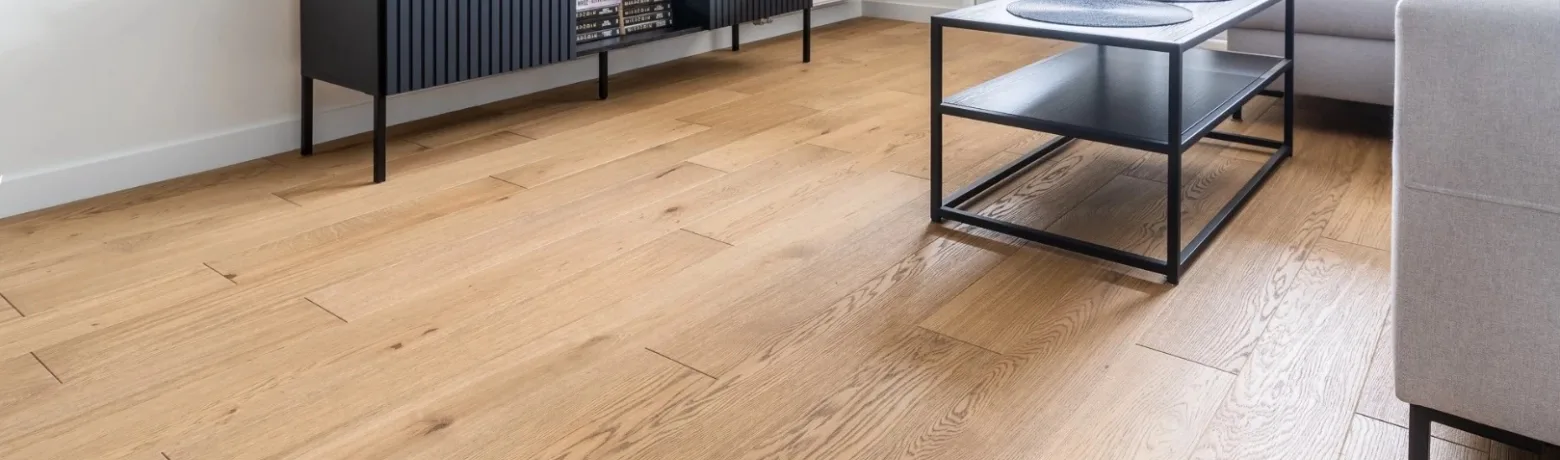
Proper preparation of the subfloor determines the durability and looks of the finished floor. Brushed boards need a stable, level and dry base.
| Method | Installation time | Difficulty | Durability of the fixing |
| Floating (click-lock) | Fast – 15-20 m²/day | Low – DIY installation possible | Good – easy to take up and replace |
| Gluing to the subfloor | Medium – 10-15 m²/day | Medium – requires experience | Very high – a permanent bond |
| On joists | Slow – 8-12 m²/day | High – requires specialist skills | Very high – ideal for old buildings |
The floating method is the most common choice in family homes – the boards click together with a locking system, without being fixed to the subfloor. This solution works with underfloor heating and allows a quick installation.
Full-surface gluing provides the best stability and is recommended for heavily used rooms. It does, however, demand precision during laying and rules out later removal without damaging the boards.
Installation on joists comes into its own in old buildings with an uneven base, or where additional thermal insulation is required.
As brushed boards are lived with, challenges related to their distinctive texture can arise. Below you will find practical solutions to the most common problems.
If differences in level between boards are visible after laying, the cause is usually a subfloor that was not levelled sufficiently, or faulty boards. The solution is to lift the problem boards, check and level the subfloor with a self-levelling compound, and refit them. When buying, it is worth checking the boards for bowing and cracks.
A brushed texture can gather dust in its hollows. For regular cleaning, use a vacuum cleaner with a soft nozzle that reaches into the structure of the wood. From time to time, wipe with a slightly damp cloth and a neutral wood cleaner. Avoid excess water, which could seep into the hollows.
Soft wood species such as pine will not stand up to hallways or kitchens with heavy foot traffic – scratches and dents will soon appear. For such rooms, choose hard oak boards or ash, which resist mechanical damage. In a bedroom or study you can freely use softer species, where what counts above all is the look and warmth of the material.
A brushed board combines the beauty of natural wood with practical advantages – the accentuated texture masks minor scratches, improves safety thanks to its anti-slip properties and keeps its looks through years of use. In the ranges of manufacturers such as Kaczkan you will find boards to suit different needs and budgets.
Before you make your choice:
If wooden floors interest you, it is also worth learning the differences between engineered and solid boards, and exploring what can be done to restore old parquet.
Caring for brushed boards – oiled surfaces need refreshing with oil every 1-2 years, depending on how intensively they are used. Lacquered boards need re-lacquering every 5-10 years. Daily care comes down to vacuuming and the occasional wipe with a damp cloth.
Installation accessories – floating installation calls for a vapour-barrier film, an acoustic underlay and spacer wedges to maintain the expansion gap. Gluing requires a flexible wood adhesive and a notched trowel.
The price of brushed boards – because of the additional processing involved, brushed boards are somewhat more expensive than their smooth counterparts. The difference in price is offset, however, by their greater durability and ability to mask the traces of use.
Thanks to its mechanical treatment, a brushed board accentuates the natural graining and knots, showcasing the unique pattern and texture of the wood and giving the floor a distinctive character.
Yes, many brushed boards are compatible with underfloor heating, letting you enjoy the floor in comfort without worrying about damage.
A brushed board brings natural warmth and elegance into an interior, creating a welcoming atmosphere that sits beautifully alongside a wide range of schemes.
Knots are a natural feature of wood and lend it authenticity and character, recalling traditional working techniques and emphasising the board's natural pattern.
A brushed board is made of natural wood that has undergone a special brushing treatment to bring out its character and durability.
Brushed boards are durable, attractive and easy to care for, which makes them an ideal choice across interior styles and trends.
Thanks to its universal pattern and natural look, a brushed board sits comfortably in all manner of styles, from classic to modern, offering broad design possibilities.
Brushed boards make it possible to create unique, durable and attractive floor surfaces that highlight the beauty of the wood and add elegance and character to interiors.
We will advise and prepare an individual quote matched to your interior.
Oak floorboards are a synonym of durability and natural beauty in interior design. Boards made of this noble wood resist damage and…
A solid floorboard is a floor made from a single piece of natural wood, valued for durability, repeated renovation potential and a timeless look…
Floorboards are the better choice when real wood, long-term durability, the option of renovation and a natural interior character are your priorities. Panels win when…