

Parquet laying patterns: an overview of wood floor installation layouts
Parquet laying patterns decide whether the floor becomes a calm backdrop for the arrangement or the interior's main decorative element…

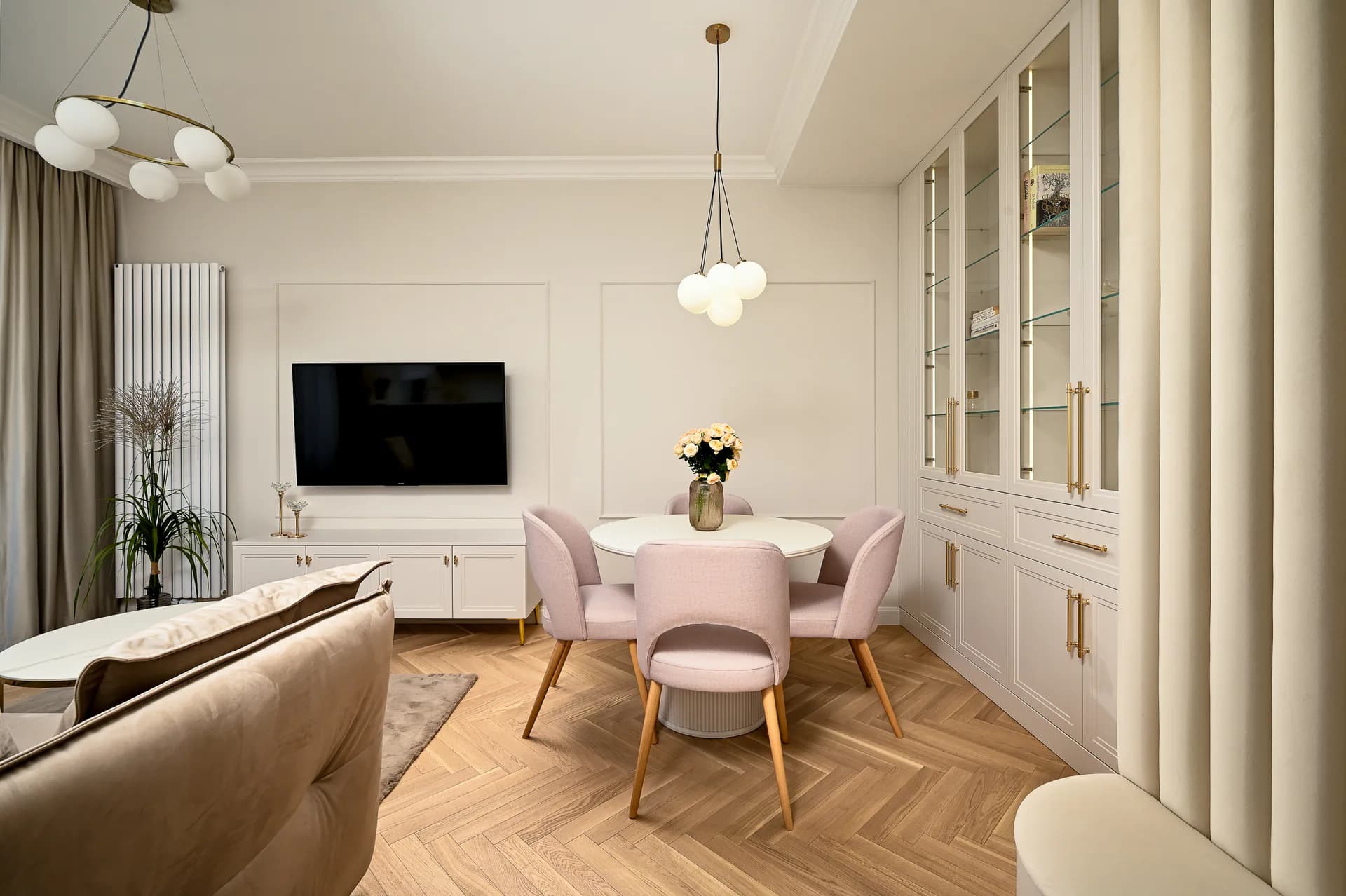
Oak parquet should first be cleaned dry with a vacuum cleaner fitted with a soft-bristled brush, and then with a well-wrung mop or a damp cloth and a neutral cleaner matched to the lacquer or oil. Renovating oak parquet involves assessing the finish, removing dirt and repairing scratches and, where wear is more advanced, sanding and fine sanding the floor and re-lacquering or re-oiling the surface.
This article covers daily cleaning, deep cleaning, minor repairs and fuller renovation of oak floors. It applies both to solid wood parquet and to engineered boards with an oak top layer. It is no substitute for an individual assessment by a flooring specialist in cases of serious flooding, boards coming away from the subfloor, adhesive problems or major structural deformation, but it will help you safely establish what you can do yourself.
The most important rule is this: oak parquet needs sand removed regularly, water kept to a minimum and products that match the type of finish. Avoiding excess water and vacuuming regularly are key to preserving the beautiful appearance of oak parquet.
In this article you will learn:
Well chosen and properly cared for, oak parquet can serve for decades, which makes it the more economical solution in the long run compared with floor panels. High-quality oak floors are an investment for generations, capable of being sanded and refinished many times over, and the possibility of repeated sanding and lacquering or oiling means the floor can be used for decades.
Oak parquet is wooden parquet made of oak: it can be produced from solid wood or have a layered construction in which the top layer is oak. Solid wood boards, made from a single piece of timber, are usually more expensive than engineered boards, which consist of several layers of wood. Solid oak parquet offers the greatest wear-layer thickness, which allows the highest number of sanding cycles.
Oak is one of the most popular wood species used in flooring production, characterised by high hardness and attractive grain. Oak is a byword for longevity and outstanding performance. Oak wood, with its impressive hardness and beautiful grain, is regarded as a solid, long-term investment, which makes it a popular choice among wooden floors.
Oak wood shows enormous resistance to abrasion and to everyday loads. Oak is considerably harder and more resistant to dents and mechanical damage than other types of wood. Oak wood is characterised by impressive hardness, making it an ideal choice for heavily used rooms such as the living room, hallway, dining room or home office.
Oak is considered a species with relatively good dimensional stability, but like any wood it responds to changes in temperature and air humidity. Moisture can be harmful to wood; parquet should only ever be washed with a well-wrung mop.
Natural wood such as oak has excellent insulating and acoustic properties, which increases comfort and can contribute to energy savings indoors. Oak wood provides far greater thermal comfort than ceramic tiles and muffles footsteps much better than cheap floor panels. The natural properties of oak wood deliver excellent insulation and acoustics, which adds to the comfort of everyday use.
Wooden floors do not attract dust to the same degree as some synthetic materials. Oak wood is a 100% natural, ecological material and, with the right care, combines elegance, functionality and durability.
Prices of wooden floors depend on the wood species, construction, grading class and surface finish. Oak parquet usually costs more to buy than panels, but when weighing up value for money it is worth also considering the floor's durability, the option of renovation, and the costs of installation and subsequent maintenance.
Oak floors come in a wide range of patterns and shades, so they can be matched to interior styles from classic to modern. Every block has a unique grain pattern, and the material takes extremely well to staining, to the whitening of oak floorboards and to darkening. Each oak block has a one-of-a-kind grain figure, and oak ages with class. The golden colour, dense structure and beautifully patterned, accentuated grain mean that natural wood still presents an elegant, unique look after many years.
The choice of finish determines how you clean the parquet, which products to use and how often maintenance is needed. A lacquered floor forms a sealed coating, so it is easier to look after. Lacquer limits the penetration of dirt and moisture into the wood, which is why it works well in heavily used rooms where abrasion resistance and quick cleaning matter.
Oiled parquet looks more natural, because the oil penetrates the wood instead of forming a thick layer on the surface. The wood "breathes" in oiled floors, which calls for periodic refreshing with a coat of maintenance oil. Such parquet is easier to repair locally: a dulled area can be cleaned, lightly sanded and re-oiled without redoing the whole room.
Oak boards come in different constructions, such as solid wood boards and engineered boards, which affects their stability and their suitability for different climatic conditions. Engineered boards are more often chosen where dimensional stability matters, for example with underfloor heating, provided the manufacturer approves such use. Solid wood boards are prized for their thickness, the possibility of repeated renovation and the prestige of the material.
The practical difference in care is simple:
Everyday dirt on oak parquet means dust, sand, shoe marks, greasy kitchen stains, detergent residue and localised dulling along walkways. These problems usually affect only the surface and can be removed without sanding, provided you act quickly and the cleaning product matches the finish.
Deeper stains are left by wine, coffee, water, dyes or chemicals. Oak contains tannins, so it can darken on contact with moisture and certain substances. White water stains often remain within the lacquer or oil layer, whereas black discolouration usually means moisture has reached the wood.
Mechanical damage includes scratches, dents, chips, gouges, cracked coatings and localised deformation of boards. Oak is a material resistant to damage, chipping and a wide range of external factors, which makes oak floors durable and easy to maintain, but no wooden parquet is entirely impervious to sand, stiletto heels, furniture being dragged or prolonged damp.
Parquet needs renovating when you can see dull streaks, a worn-through top layer, locally exposed wood, cracked lacquer, a dried-out oiled surface, deep scratches or gouges. In that situation washing alone will only partly improve its appearance; spot sanding, touch-ups, oiling, lacquering or full sanding will be needed.
The purpose of daily cleaning of oak parquet is to remove grime before it starts scratching the surface. The greatest threat is not ordinary dust but sand and particles of hard dirt carried in from outside. They act as an abrasive, especially at the entrance, in the hallway and under chairs.
In regular care, floors are cleaned dry first and only then damp. The vacuum cleaner should have an attachment for wooden floors, with no sharp edges and with soft bristles. The mop should be damp, not wet; after wiping, the surface should dry quickly, with no puddles or streaks.
Well cared for oak parquet keeps its natural beauty for a long time, and it does not require aggressive methods. The gentler and more regular the care, the lower the risk of costly renovation in the future.
For lacquered parquet, use pH-neutral products designed for lacquered wooden floors. Such a product removes dirt but should neither dull the coating nor leave a sticky layer. Do not apply random oils, waxes or polishes to lacquer, as they can impair the adhesion of any future refinishing.
For oiled parquet, use products for oiled wood, often described as wood soaps, care concentrates or cleaners with nourishing ingredients. An oiled surface must be treated in a way that does not wash out its protection. Too strong a detergent can dry the wood out and accelerate dulling.
Dilution should always follow the instructions of the product's manufacturer, but in practice many concentrates are used in a small dose per bucket of water — for example one capful to a dozen or so litres of water, if that is what the label says. The water should be lukewarm, not hot. Before using a new product, it is worth testing it in an inconspicuous spot, especially on a stained, whitened or darkened floor.
Avoid:
First remove loose dirt. Vacuum the parquet with a soft-bristled brush, paying attention to entrances, the space under the table, the area around the sofa and the spots along the skirting. If you use a broom, it should have gentle fibres that will not scratch lacquer or oil.
Then go over the floor with a well-wrung mop. Work along the direction of the boards or blocks to limit streaking and lift dirt out of the micro-gaps. After washing, the parquet must not be wet; if you can see damp marks, wipe the surface with a dry, soft cloth.
Deal with stains straight away. Grease is best blotted up with a paper towel, then the spot washed with a product matched to the finish. Rubber shoe marks can be removed with a soft cloth and a wood cleaner, without scrubbing with a hard pad. White water stains can sometimes be polished out with a soft cloth or a very mild coating refresher, but black discolouration often requires sanding back to bare wood.
When cleaning, avoid rough sponges, sharp scrapers and random scouring powders. Oak parquet is tough and stands up to everyday loads, but the lacquer or oil surface can be damaged more quickly than the wood itself.
In heavily used rooms it is worth vacuuming daily or every other day. In bedrooms and less busy rooms, vacuuming a few times a week is usually enough. At entrances, doormats help by limiting the amount of sand.
Damp mopping is for when vacuuming is not enough: usually once a week in living areas and less often in rooms used only occasionally. The kitchen, dining room and hallway need checking more often, because greasy stains, water and sand appear there more readily.
Oiled parquet needs periodic refreshing with maintenance oil. How often depends on the level of traffic, the colour of the floor and the degree of dulling. Lacquered parquet needs less frequent attention, but you should watch whether the coating is worn, cracked or exposing wood in places.
Seasonally, it is worth checking the air humidity, the state of the gaps, the skirting boards, the areas by balcony doors and around radiators. Oak is more stable than many other species, such as ash or pine, but it still moves with changes in moisture.
Deep cleaning is used when ordinary washing does not remove a greasy film, streaks, dried-on dirt, discolouration or residue left by unsuitable products. Renovation is needed when the finish has stopped protecting the wood or when the damage goes deeper than the surface layer of lacquer or oil.
Renovation can be local or complete. Locally, individual scratches, stains and gouges are removed. A complete renovation means sanding the parquet, fine sanding it and applying a new finish when wear covers a large area or the floor's appearance is uneven.
It is worth investing in an assessment of the parquet's condition if the floor is valuable, has a thick wear layer, has been sanded before or sits in a showpiece interior. A high-quality renovation translates into durability, resistance and the final look of the whole scheme.
Start deep cleaning by preparing the room. Remove the furniture, protect the skirting boards, thresholds and metal elements, then vacuum the floor thoroughly. The surface must be dry, because intensive cleaning on damp wood increases the risk of stains and deformation.
Use a product intended for the finish in question. For lacquer, choose a preparation that degreases and removes residues but does not attack the coating. For oil, choose a cleaner for oiled surfaces, and once the floor is dry consider topping up the maintenance oil.
For stubborn dirt you can use a soft brush, a white pad or very gentle non-woven pads approved for wooden floors. Do not use aggressive pads or rub hard in one spot, as this can leave a lighter patch or a worn mark. Take particular care with stained, whitened and darkened surfaces.
After cleaning, remove any product residue as the manufacturer recommends, usually with a clean, slightly damp cloth. Then leave the parquet to dry completely with good ventilation. Only a dry surface is ready for oiling, touch-ups or an assessment of whether sanding is needed.
Shallow scratches that have only affected the lacquer or oil can be corrected locally. Touch-up markers, retouching pastes, repair waxes or gentle polishing with a very fine abrasive are used. The aim is to even out the appearance, not to remove a lot of wood.
Deeper scratches and holes require cleaning out the damaged area, matching the colour, filling with parquet filler or hard wax, and then sealing with lacquer or oil. Where the colour differences are significant, a stain may be needed, because oak has a pronounced grain and any botched patch will show in daylight.
Dents can sometimes be reduced by carefully lifting the wood fibres with steam, but only when the finish and the condition of the surface allow it. With lacquer there is a risk of damaging the coating, so this method should be used very judiciously.
Individual damaged elements can be replaced. A new block should match the existing floor in wood species, timber grade, colouring, thickness and finish. Bear in mind, too, that older oak may have changed shade under the influence of light, so fresh material may need staining or darkening.
| Criterion | DIY renovation | Professional renovation |
| Scope of work | Minor scratches, localised stains, oil refreshing, light touch-ups | Sanding, fine sanding of the entire surface, repairing gouges, lacquering or oiling large areas |
| Time required | Depends on experience; simple jobs can be spread over stages | Shorter for large areas thanks to specialist machines |
| Cost | Lower material costs, but a greater risk of having to redo work | Higher service cost, but better control of dust, evenness and coating quality |
| Tools | Mop, pad, fine sandpaper, wood filler, touch-up oil or lacquer | Floor sanders, edge sanders, vacuum extractors, professional lacquers and oils |
| Durability of results | Good for small areas of damage and correct application | Usually much higher on a worn surface or under heavy traffic |
| Risk | Discolouration, streaks, uneven dulling, over-sanding | Lower technical risk when the work is carried out by an experienced specialist |
Doing the work yourself is a good choice when the damage is shallow, covers a small area and does not require removing the entire coating. It is also an economical solution for the routine maintenance of oiled parquet.
Professional renovation is worth choosing when the parquet has extensive scratching, patches worn through to bare wood, dark water stains, an uneven finish or visible differences in sheen across a large area. Expert renovation is particularly justified for a solid wood floor, where the thickness of the wear layer allows sanding to be carried out safely.
It is worth adding that oak is a rewarding material to renovate: it takes machining, staining and resealing well. As a result, even older parquet can regain its elegant character and high aesthetic value without the whole floor having to be replaced.
The most common problems with oak parquet stem from three causes: abrasion by grains of sand, excess moisture and wear of the protective layer. The repair method depends on whether only the coating is damaged or the wood as well.
Oak wood is durable, resistant and structurally very sound, but it needs proper care. A mop that is too wet, an aggressive detergent or a lack of vacuuming can weaken even a high-quality finish. Acting quickly usually limits the scope of the repairs and protects you from high costs.
First assess the depth of the scratch. If all you can see is a mark in the sheen, cleaning, gentle polishing or a touch-up product for lacquer or oil will suffice. If the scratch has a groove you can feel, it needs to be filled and sealed so that dirt and moisture cannot penetrate any deeper.
Surface scratches can be masked with a paste, a touch-up marker or a repair oil. With lacquered parquet, match the sheen level, because matt, semi-matt and gloss reflect light differently. With oiled parquet it is usually easier to achieve a consistent local result.
Deeper mechanical damage requires spot sanding, filling with wood filler and refinishing. Dents left by heavy objects can sometimes be reduced, but if the wood fibres are severed, swelling alone will not restore a perfect surface.
If parquet gets flooded, remove the water immediately, wipe the surface dry and provide airflow. Do not force-dry the wood rapidly with very high temperatures, as this can cause additional stresses. Also check the areas along the walls, under furniture and by the skirting boards.
White stains often indicate moisture trapped in the finish layer. You can try gentle polishing or a localised refresh of the coating. Black stains are more serious, because they usually indicate that moisture has reacted with the wood and its tannins; sanding, bleaching and resealing may then be needed.
If after flooding the boards have lifted, come away, creak or gaps have appeared, the subfloor and the moisture levels must be assessed. Permanent warping may require replacing individual elements or a larger section of the parquet. With a glued-down floor it is also important to check whether the bond is still holding the material.
You will recognise a worn finish by dull streaks, loss of sheen, patches that absorb water, peeling lacquer, a greasy film or roughness underfoot. If the top protective layer is damaged only in places, a touch-up is often enough. If the problem covers the whole room, a full refinish will be the better option.
With oiled parquet, the surface should be thoroughly cleaned, degreased in line with the recommendations for the oil, lightly keyed and given a coat of maintenance or renovation oil. The oil should soak into the wood, and any excess must be removed so that no sticky layer forms.
With lacquered parquet, a full renovation usually involves sanding, fine sanding, dust removal and the application of new coats of lacquer. Good surface preparation determines the adhesion, appearance and durability of the coating. If the thickness of the board or of the wear layer is too small, the extent of the sanding must be limited.
Effective care of oak parquet rests on a simple rhythm: remove sand frequently, mop damp less often, refresh the finish periodically and keep an eye on the conditions in your rooms. That way the parquet keeps its resilience, colour and natural beauty without excessive intervention.
| Frequency | Action | Purpose |
| Daily or every other day | Vacuuming with a soft brush in high-traffic zones | Removing the sand that scratches the surface |
| Once a week or as needed | Washing with a well-wrung mop and a product matched to the finish | Removing dirt without wetting the wood |
| Monthly | Checking for stains and scratches, and inspecting the areas by entrances and under chairs | Detecting damage early |
| Seasonally | Checking the moisture, gaps, skirting and the condition of the coating | Limiting wood movement and deformation |
| Periodically | Refreshing the oil or assessing the lacquer | Maintaining the surface protection |
| With heavy wear | Sanding and refinishing | Restoring an even, durable surface |
In rooms with oak parquet it is worth maintaining stable humidity and avoiding extreme temperature swings. Wood moves naturally, so air that is too dry encourages gaps, while excess moisture encourages swelling. Mats at entrances, felt pads under furniture and prompt mopping-up of spilt liquids significantly reduce the risk of damage.
Practical preventive measures:
Oak parquet combines durability, elegance and the ability to be renewed many times. Compared with floor panels the purchase cost may be higher, but oak wood offers greater comfort, better acoustics, a natural look and the option of renovation rather than replacement. If you want a floor that will keep its high quality for a long time and still look refined years later, it is worth investing in good material, careful installation and consistent maintenance.
Yes, engineered boards with an oak top layer in particular perform well with underfloor heating, as they are more dimensionally stable than solid wood boards.
Wooden parquet stands out for its natural beauty, its durability and the possibility of repeated renovation, which ensures a long life and timeless appeal.
Yes, the choice of wood species determines the strength and durability of the floor. Oak is one of the most durable species, ideal for heavily used interiors.
Removing dirt regularly, limiting moisture and using the right care products will keep parquet looking elegant and lasting well.
Yes, thanks to the wide range of shades and patterns, oak parquet works beautifully in modern schemes, enhancing their aesthetics and elegance.
Solid wood boards are made from a single piece of timber and offer a thicker wear layer, whereas engineered boards are more stable and better suited to underfloor heating.
Yes, oak offers high resistance to abrasion and mechanical damage and resists denting, which makes it an ideal choice for heavily used rooms.
Lacquering provides a sealed, easy-care surface, while oiling brings out the natural beauty of the wood and makes local repairs easier, shaping both the look and the durability of the floor.
Wood provides a high level of comfort thanks to its pleasant surface temperature and good acoustic properties.
With its combination of elegance, durability and the possibility of repeated renovation, oak parquet is an investment that delivers lasting aesthetic and practical benefits.
We will advise and prepare an individual quote matched to your interior.
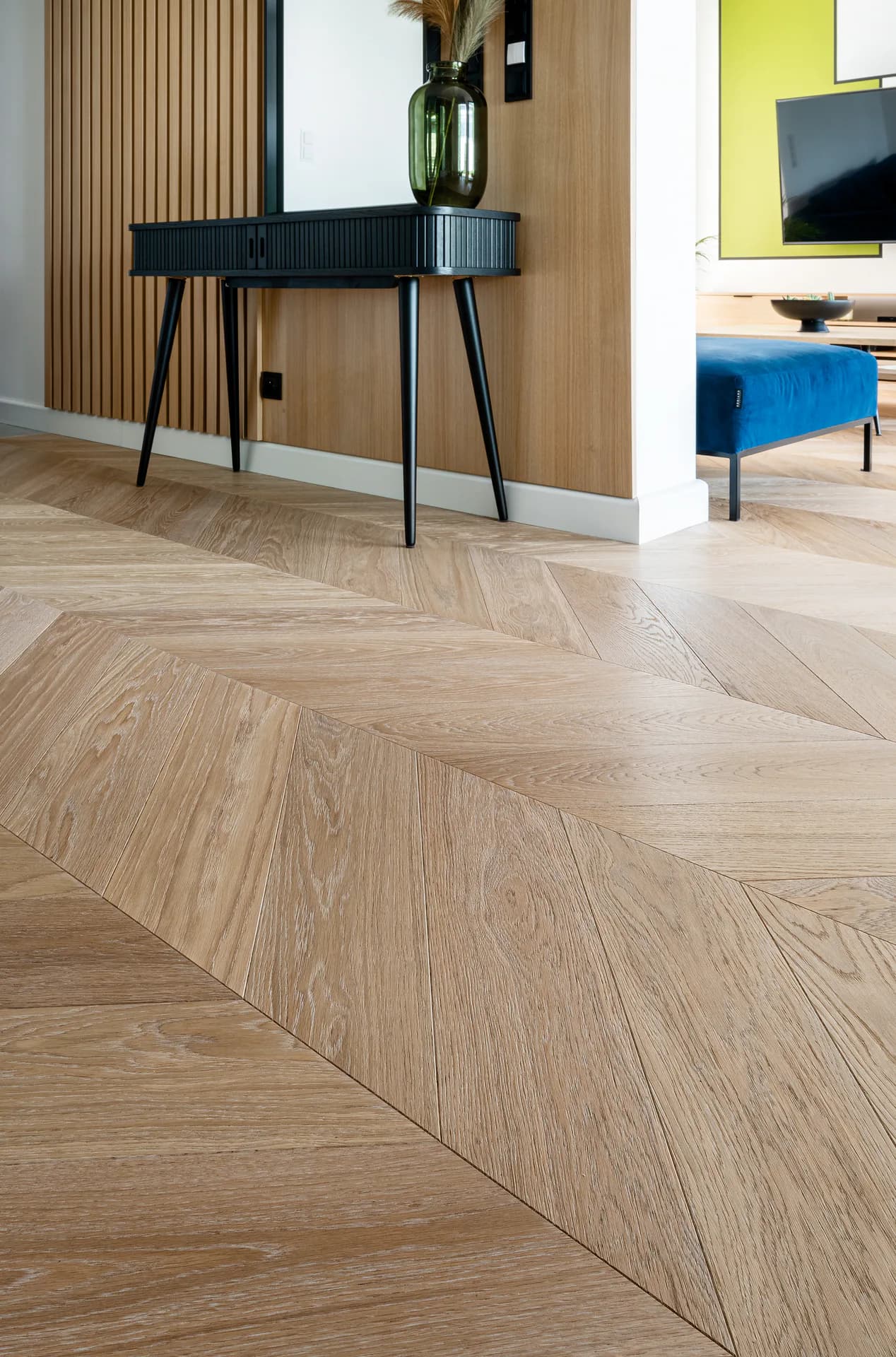
Parquet laying patterns decide whether the floor becomes a calm backdrop for the arrangement or the interior's main decorative element…
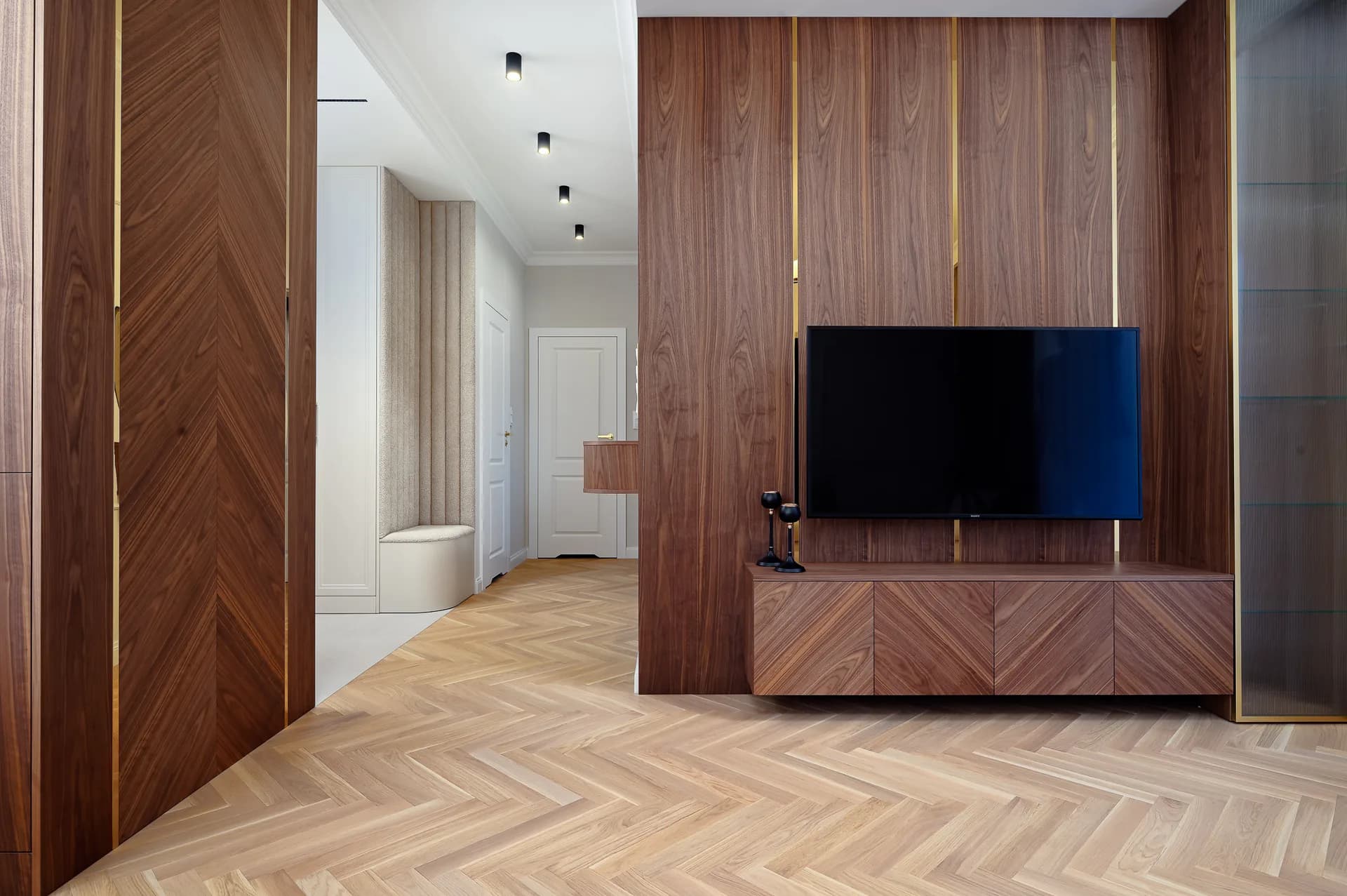
Wooden parquet and engineered boards can be used successfully with underfloor heating, provided the material, construction and installation method are chosen correctly…
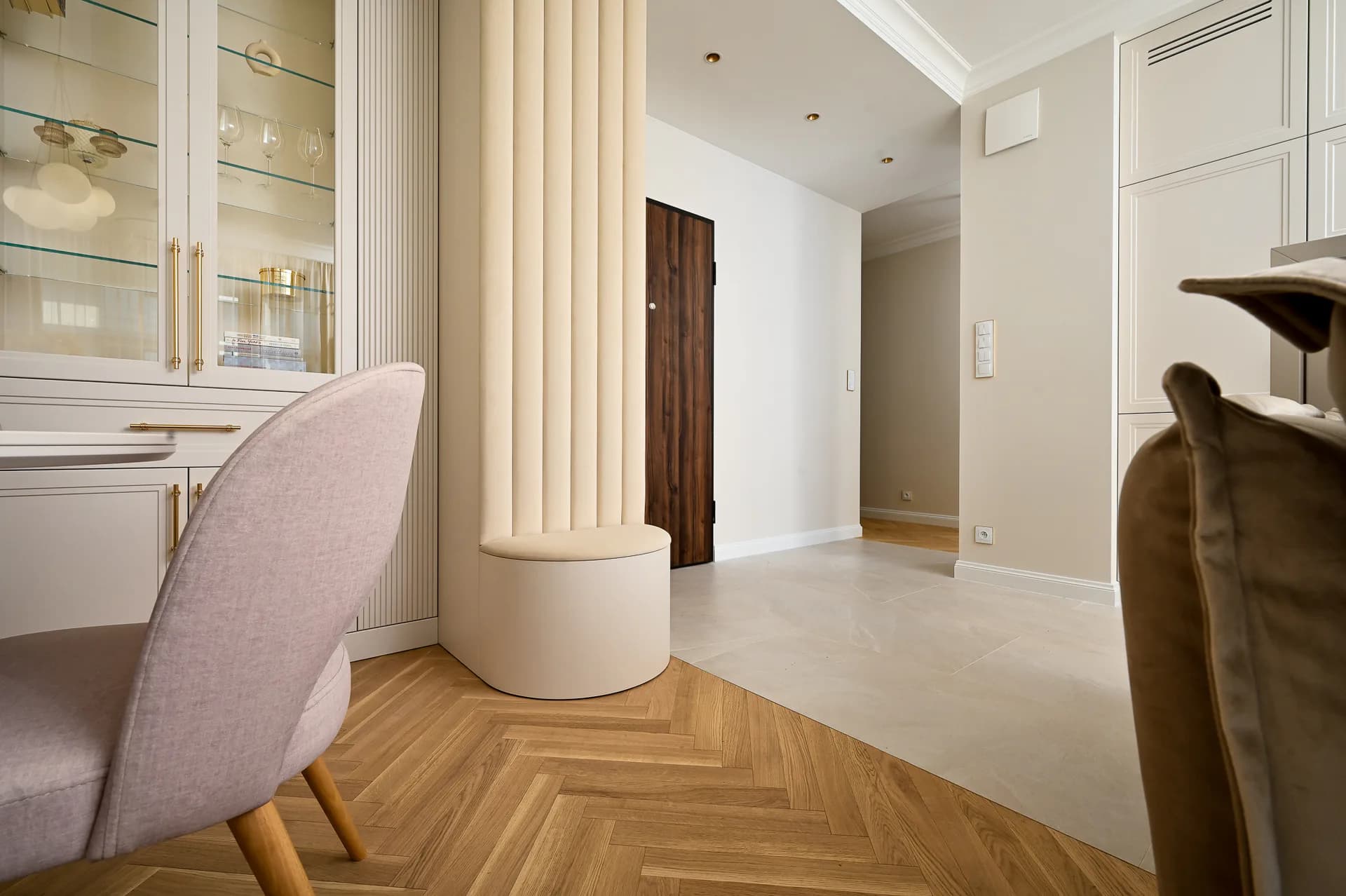
Oak parquet is a floor made of solid oak, most often in the form of blocks up to 70 mm wide and 450 mm long…