

Panels for underfloor heating: selection and use in 2026
Panels for underfloor heating are specialist floor coverings designed to work with heating systems installed beneath the floor surface…

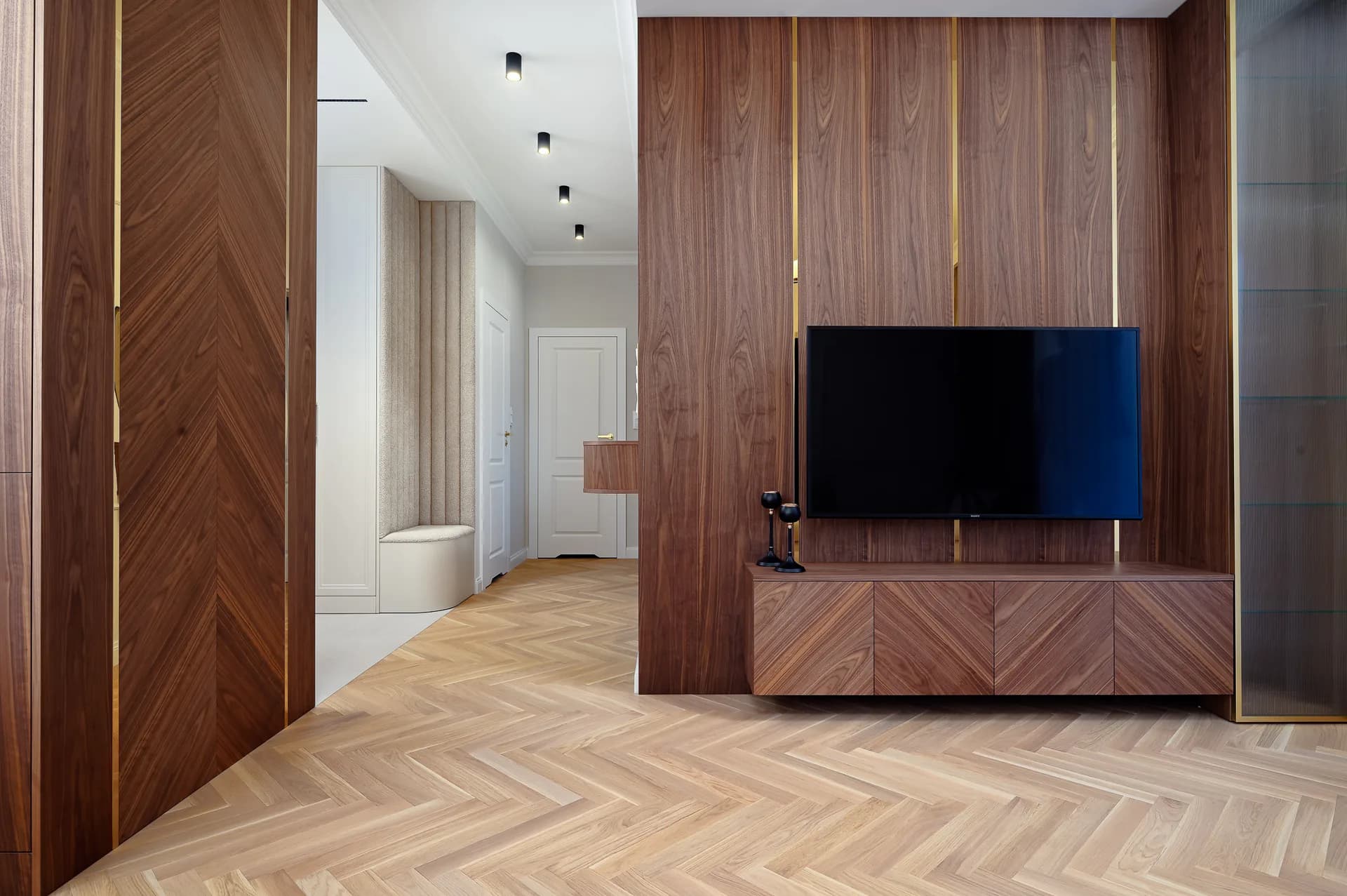
Wooden parquet and engineered boards can be used successfully with underfloor heating, provided the material, construction and installation method are chosen correctly. Contrary to the fears of many homeowners, a wooden floor not only works well with a heating system but also brings natural thermal comfort and elegance to an interior.
This article focuses exclusively on wooden parquet floors and engineered boards – two-layer and three-layer – intended for use with water-based and electric underfloor heating. It does not cover other types of floor finish. It is written for owners of houses and flats planning to fit a new floor or modernise an existing heating installation, as well as for interior designers and fitters looking for detailed technical parameters.
Yes – parquet is suitable for underfloor heating when the following conditions are met: the total thermal resistance of the parquet layer and underlay does not exceed 0.15 m²K/W, the floor surface temperature is kept within 25-27°C, the moisture content of the wood is 7-9%, and the floor is installed by gluing across the entire surface.
In an underfloor heating system, heat passes through successive structural layers before it reaches the room as a whole. Choosing a wooden floor means weighing up two fundamental properties: the material's ability to conduct heat and its response to changes in temperature and moisture.
The thermal conductivity coefficient (λ) describes how effectively a material conducts heat through its structure. For wood, values fall within the range of 0.12-0.18 W/(m·K), which means wooden boards conduct heat more slowly than ceramic or porcelain tiles. The higher the λ value, the better the layer of material conducts heat.
For a wooden floor, the key figure is the total thermal resistance (R), calculated as the thickness of the layer divided by the λ coefficient. Technical standards state that the combined thermal resistance of the parquet and underlay should not exceed around 0.15 m²K/W. At higher values the heating system has to run at higher temperatures, which reduces its efficiency and increases running costs.
Compared with traditional radiators, underfloor heating needs to distribute heat evenly across the entire floor area. The thickness of the boards and the conductive properties of the chosen wood species therefore have a direct bearing on thermal comfort in the room.
Wood is a hygroscopic material – it changes its dimensions in response to shifts in temperature and moisture. During the heating season, when relative air humidity falls below 45%, wood releases moisture and shrinks. In summer, with higher humidity, it swells.
The shrinkage coefficient describes the percentage change in the dimensions of wood as its moisture content falls by a given amount. Species with a low shrinkage coefficient – such as oak or merbau – keep their dimensions stable even with humidity fluctuations of ±10%. Woods with a high coefficient, such as beech or maple, react more strongly and are more prone to gaps and warping.
With underfloor heating, particular care should be taken to keep relative air humidity within the 45-55% range and to monitor humidity levels throughout the room. This limits the movement of the wood and preserves the floor's good looks over years of use.
The construction of the parquet has a decisive influence on how it behaves over underfloor heating. A multi-layer build offers better dimensional stability than solid wood, because layers laid at right angles to one another compensate for the stresses generated by heat.
Three-layer boards consist of three layers: a top layer of fine hardwood (e.g. oak or ash), a middle layer of softwood or plywood, and a bottom layer laid in the opposite direction to the middle one. This construction effectively reduces stresses and limits any tendency to warp.
Technical parameters that matter for the heating system:
A thinner top layer combined with the multi-layer construction ensures even heat distribution at lower system supply temperatures. Board width should not exceed 180-190 mm – narrower elements cope better with changes in moisture.
The two-layer construction comprises a top layer of fine hardwood bonded to a carrier material (plywood, HDF or softwood). The absence of a middle layer means a lower overall thickness, and with it lower thermal resistance and better heat transfer to the whole floor surface.
Compared with three-layer parquet, two-layer boards offer:
Two-layer parquet comes into its own in renovation work, where the height available for the floor build-up is limited.
Solid wood parquet 18-22 mm thick significantly slows the heating system's response and calls for higher supply temperatures. Its high thermal resistance and uniform structure, with no layers to compensate for stresses, mean solid wood is generally advised against over underfloor heating.
In exceptional cases, solid wood can be used when:
The best choice, however, remains engineered boards – three-layer or two-layer – which combine the beauty of natural wood with the dimensional stability that underfloor heating demands.
Resilient wood species combined with the right installation method determine how durable and efficient a floor over underfloor heating will be. The choice of wood should take into account both the physical properties of the material and the conditions in the room.
When choosing wood for underfloor heating, three parameters deserve attention: the shrinkage coefficient, thermal conductivity and overall dimensional stability. Domestic and exotic species differ significantly in these respects.
| Wood species | Shrinkage coefficient | Conductivity λ (W/m·K) | Dimensional stability |
| European oak | Low (10-12%) | ~0.14 | Very good |
| Ash | Medium (11-13%) | ~0.17-0.18 | Good |
| Merbau, Teak | Very low | ~0.15-0.17 | Very good |
| Doussie | Low | ~0.16 | Very good |
European oak is the most frequently chosen wood thanks to its ideal balance of stability, good looks and availability. It tolerates relative humidity fluctuations of ±5-10% without significant warping. Exotic species such as merbau and teak contain natural oils that improve their resistance to changes in moisture, though they call for particular care when choosing an adhesive because of their tannin content.
The species best avoided are above all beech, birch and maple – their high equilibrium moisture content and large shrinkage coefficient cause problems over underfloor heating.
Floating installation involves laying the boards without fixing them permanently to the subfloor. A layer of underlay remains between the parquet and the screed, which can add thermal resistance.
With this method:
Glued installation across the entire surface ensures direct contact with the subfloor and the best heat transfer. The choice of adhesive is especially important here – flexible adhesives (polyurethane or hybrid) that withstand heat and accommodate the movement of the wood are recommended.
Preparing the subfloor before laying the parquet involves:
With electric underfloor heating, the heating cables must be fully embedded in the screed and the heating installation tested before the wooden floor is laid.
Knowing the potential problems allows you to prevent them at the design and installation stage. Most faults stem from poor moisture control, excessive temperature or mistakes in preparing the subfloor.
Gaps appear when wood shrinks in response to temperature changes and reduced humidity. During the heating season, once relative air humidity drops below 40%, dust gathers between the blocks and the gaps become visible.
Remedies: filling with flexible wood-toned fillers, adjusting the heating system settings and, in extreme cases, replacing warped boards.
An excessively high surface temperature or abrupt changes to the system settings cause boards to crack and cup. Wood exposed to heat loses moisture unevenly, which creates internal stresses.
Setting the heating system correctly: the heating installation should run at a stable supply temperature, with automatic control that responds to outdoor conditions. Water-based systems and electric heating alike need limiters to hold the optimum temperature.
When the floor fails to deliver enough thermal comfort even though the installation is working properly, the problem usually lies in too thick a layer of wood or unfavourable conductive properties.
Choosing the right parquet thickness: the total thermal resistance of the finishing layer and underlay should not exceed 0.15 m²K/W. For a 10 mm board the resistance is around 0.071 m²K/W – almost half that of a 14 mm board.
A properly designed and fitted system produces no noise and takes up none of the space needed for traditional radiators, delivering a favourable temperature distribution throughout the room.
Wooden parquet is a fully viable choice over underfloor heating as long as the technical rules are respected: engineered boards up to 15 mm thick, resilient wood species (ideally oak or exotic woods), glued installation, screed moisture checked before fitting and a surface temperature no higher than 27°C.
Underfloor heating also goes hand in hand with the day-to-day care of a wooden floor – proper cleaning, renewing the oiled or lacquered finish and regular servicing of the heating system. The wear layer of engineered parquet allows for 2-3 rounds of sanding over its lifetime, extending the life of the floor by decades.
Yes, parquet over underfloor heating can be an excellent solution, provided the wood species, board construction and installation method are chosen correctly. A wooden floor then delivers natural thermal comfort and an elegant interior.
Underfloor heating spreads warmth evenly across the entire floor surface, heating the room comfortably from below. With a wooden floor, it is important that the wood offers suitable thermal conductivity and dimensional stability.
Electric underfloor heating can be used beneath wooden boards, but it requires precise temperature control and correct installation to prevent damage to the wood and ensure it lasts.
Laying a wooden floor over underfloor heating calls for the right wood moisture content, proper preparation of the subfloor, an adhesive that withstands temperature changes and control of the floor surface temperature.
The key factors are a stable floor surface temperature, even heat distribution and the right air humidity in the room. Neglecting these aspects can lead to warping and damage to the wooden boards.
Choosing wood for underfloor heating means looking for species with a low shrinkage coefficient and good thermal conductivity, such as oak, which provide dimensional stability and thermal comfort.
We will advise and prepare an individual quote matched to your interior.
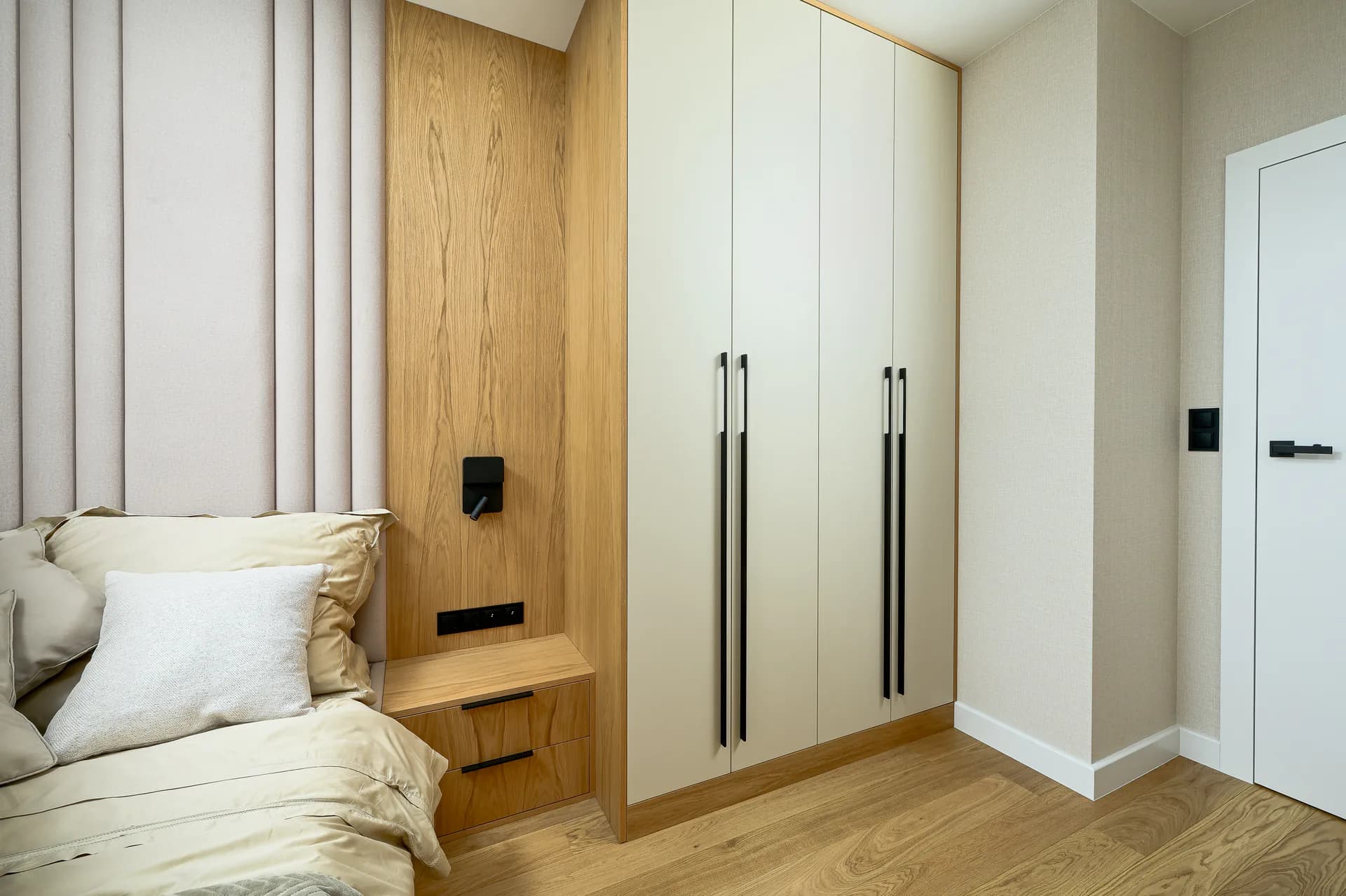
Panels for underfloor heating are specialist floor coverings designed to work with heating systems installed beneath the floor surface…
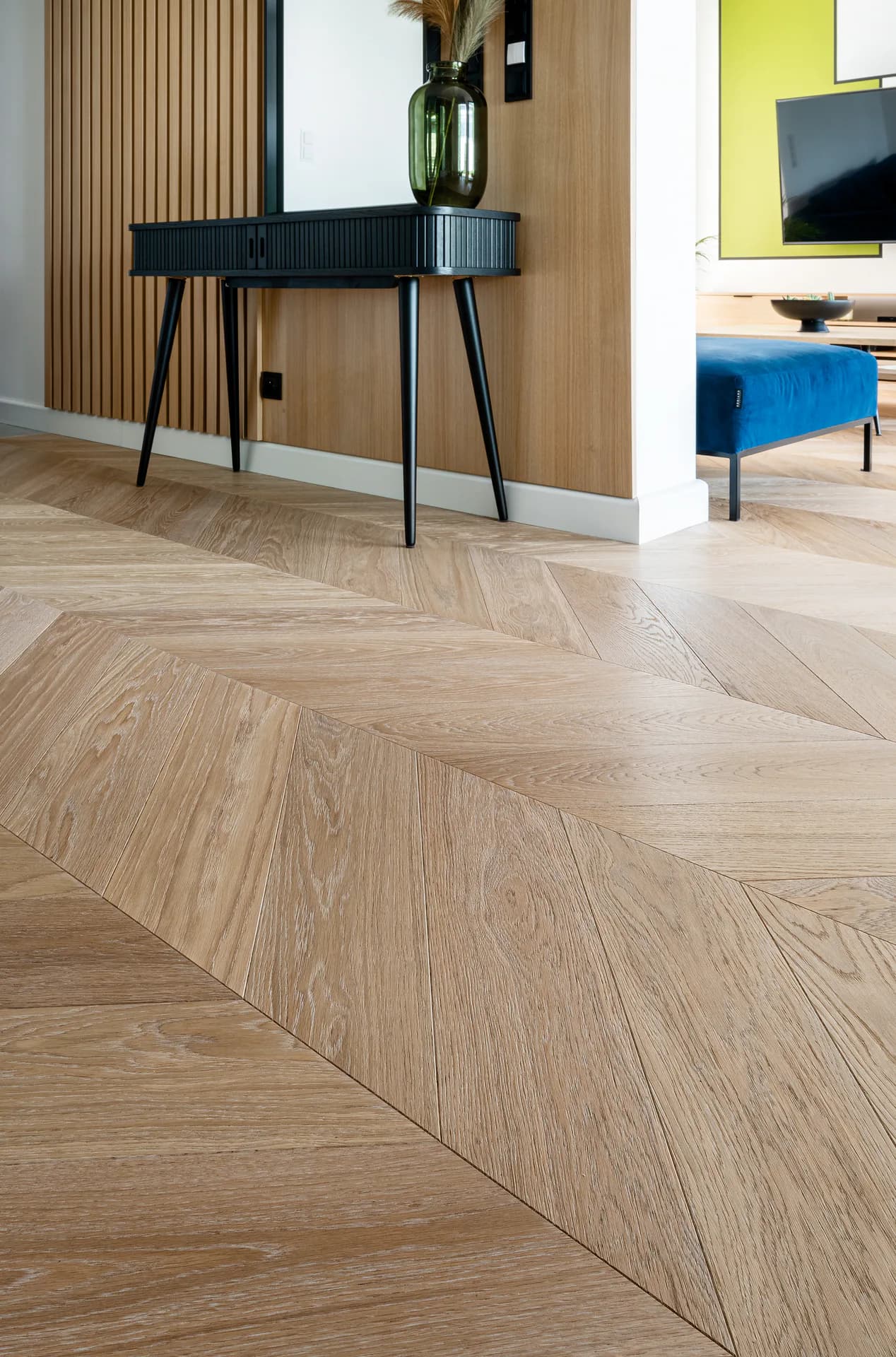
Parquet laying patterns decide whether the floor becomes a calm backdrop for the arrangement or the interior's main decorative element…
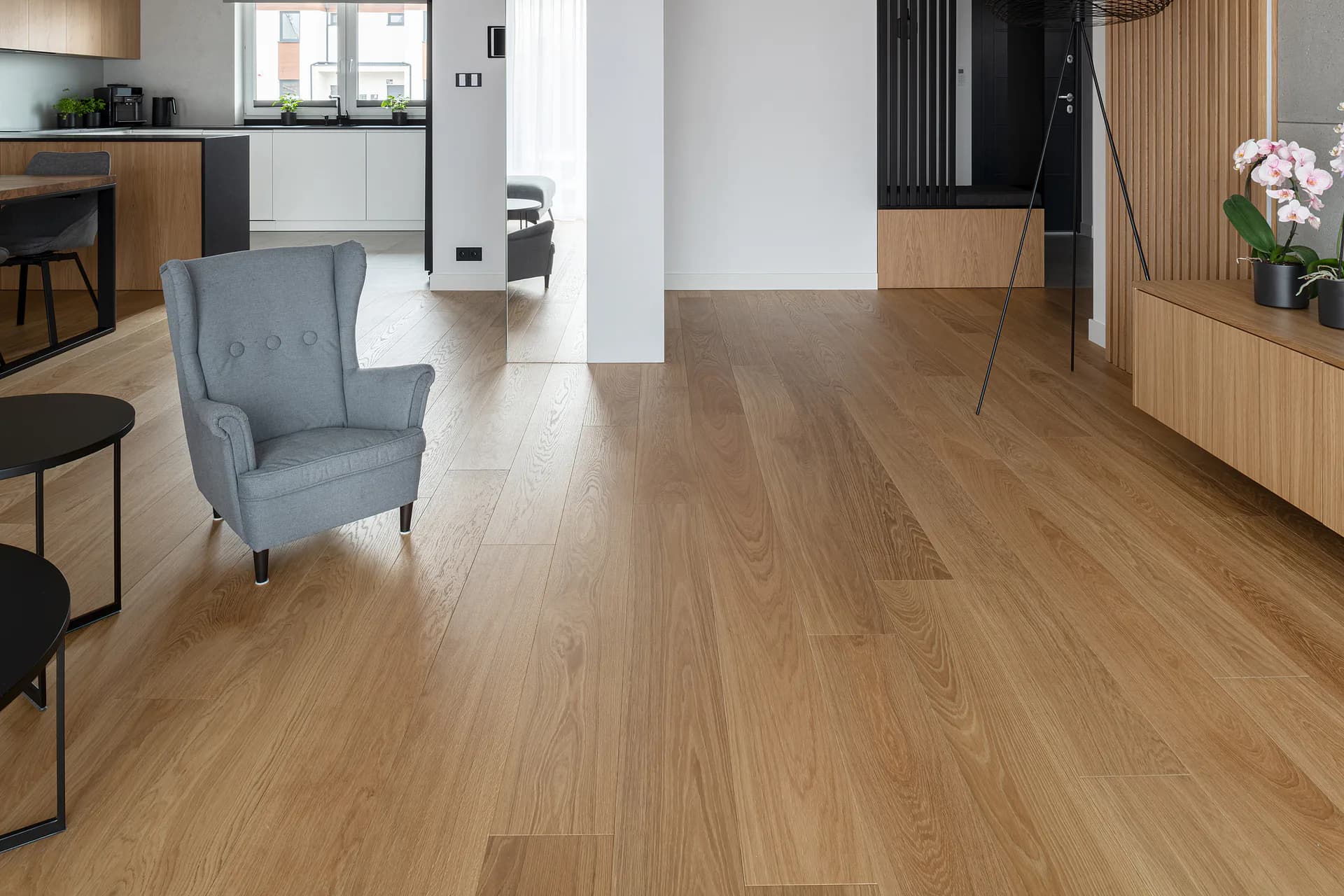
A solid floorboard is a floor made from a single piece of natural wood, valued for durability, repeated renovation potential and a timeless look…