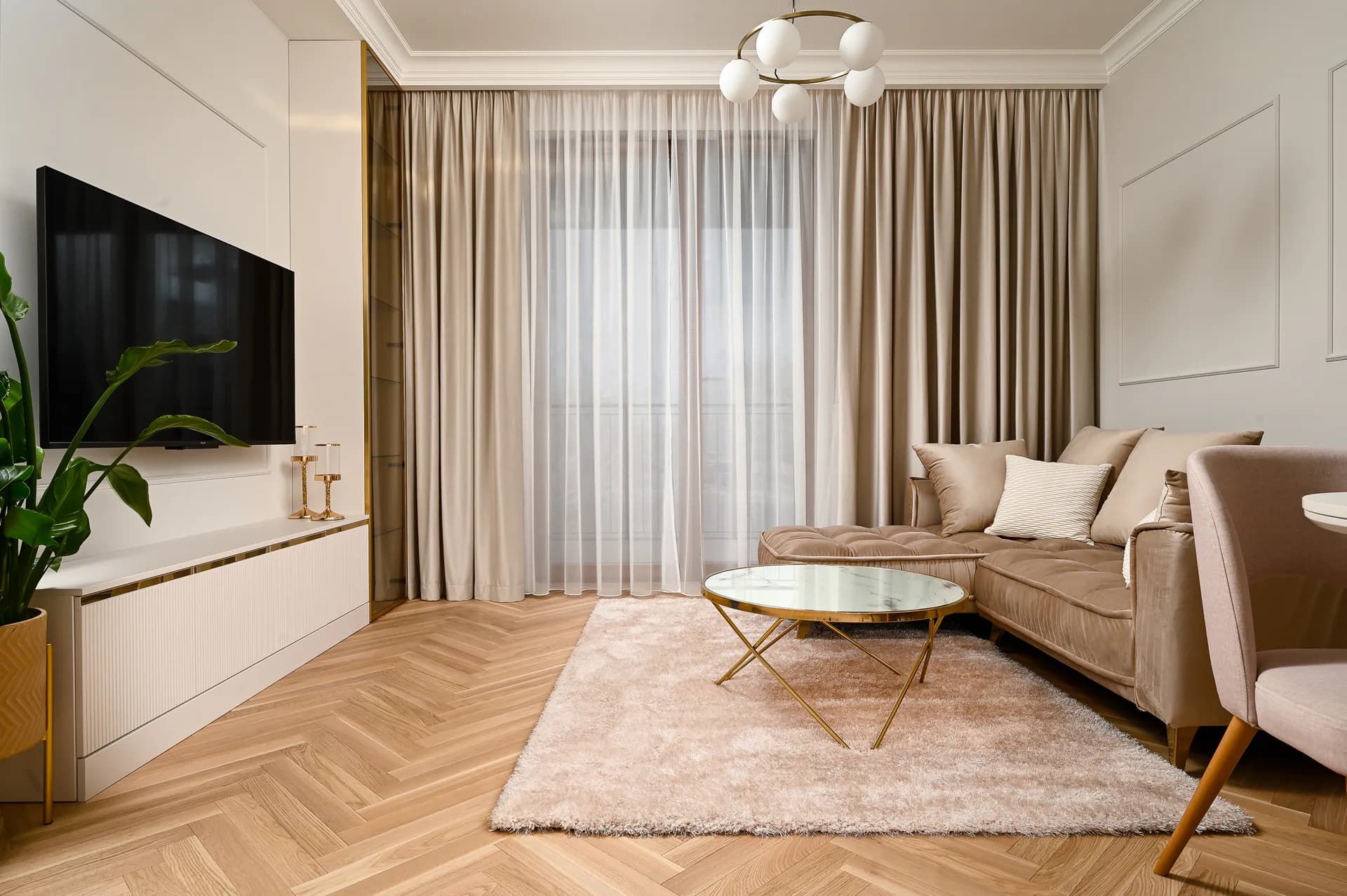
French herringbone – an elegant floor pattern for contemporary interiors
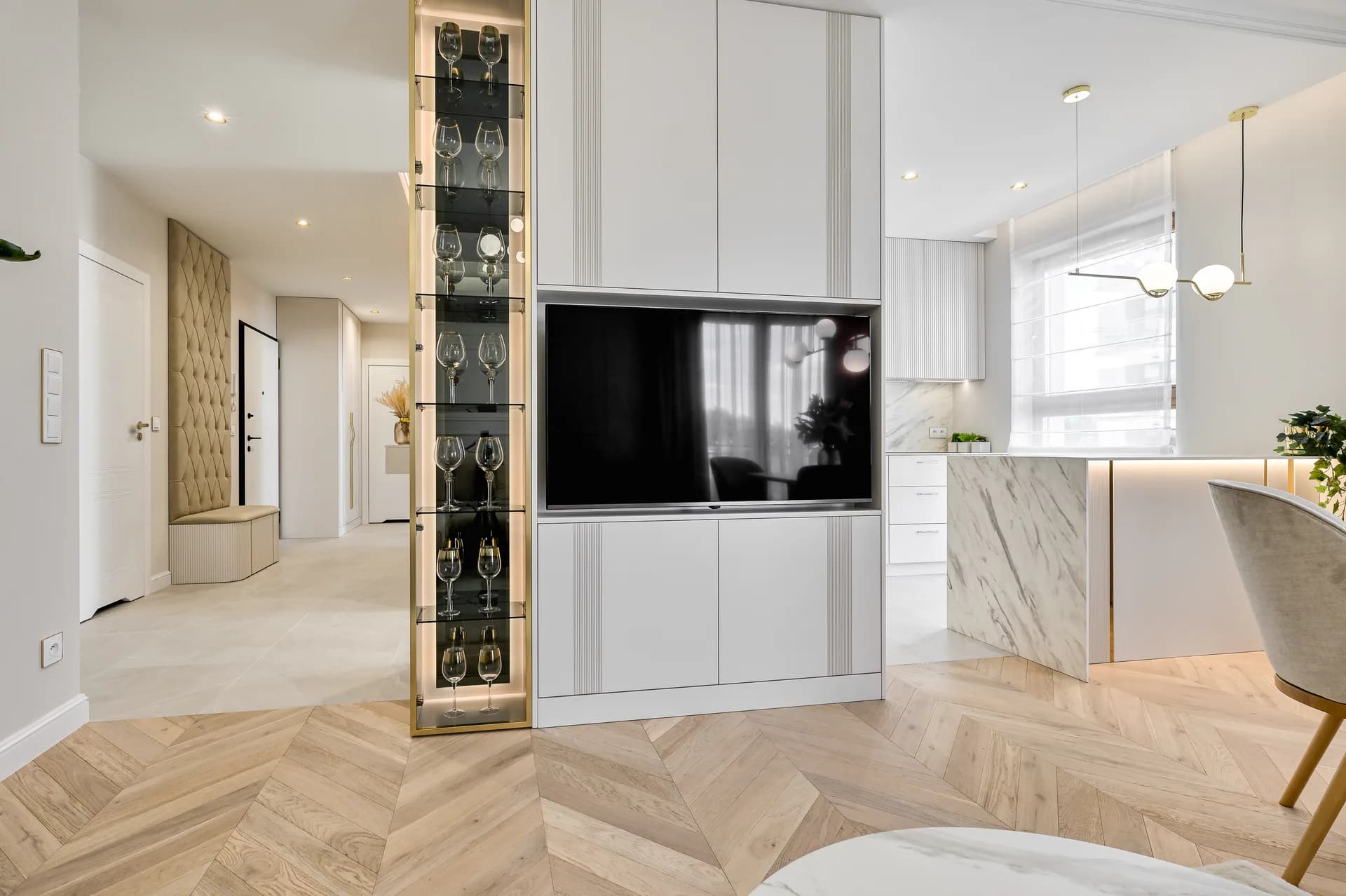
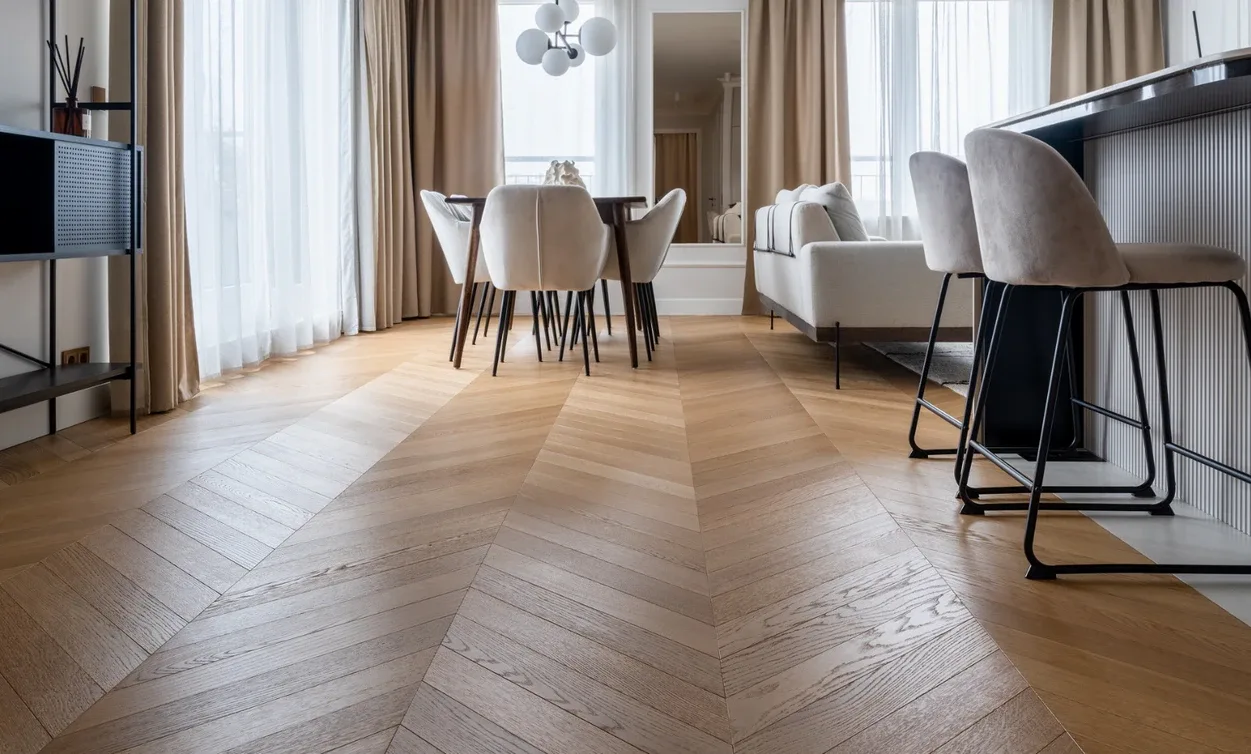
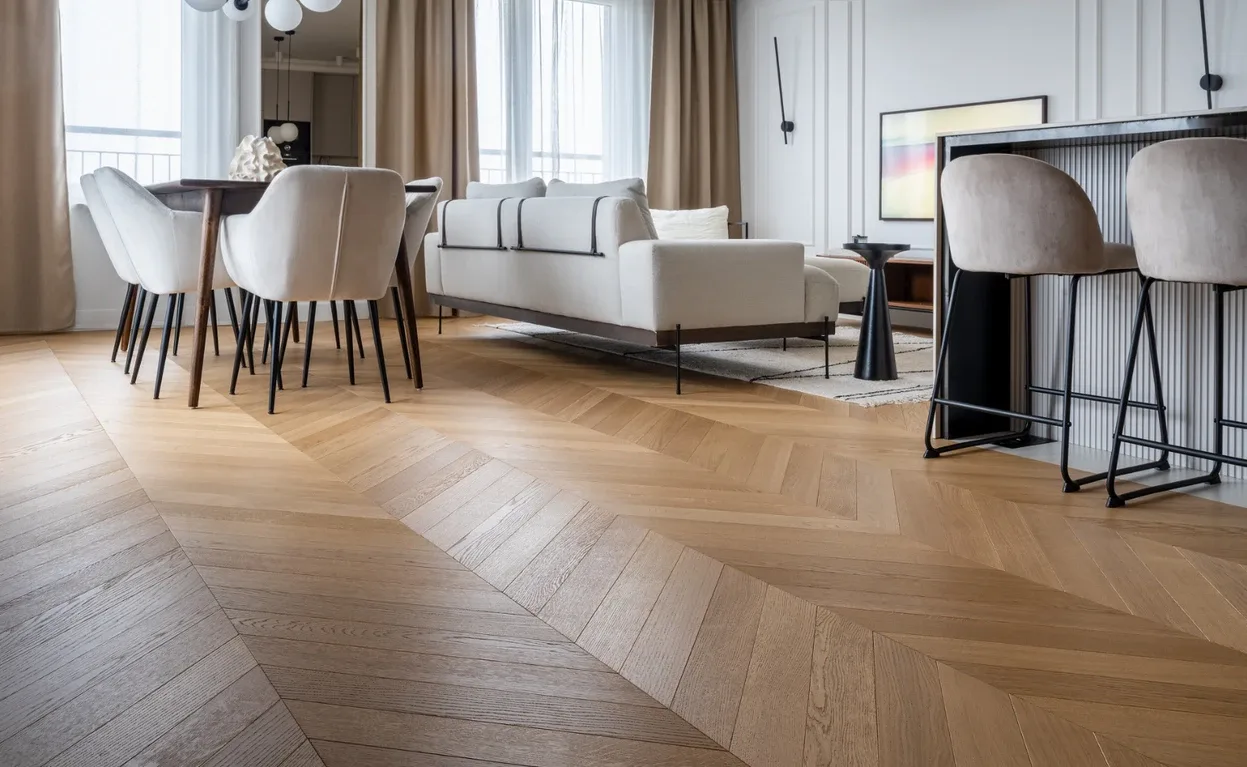
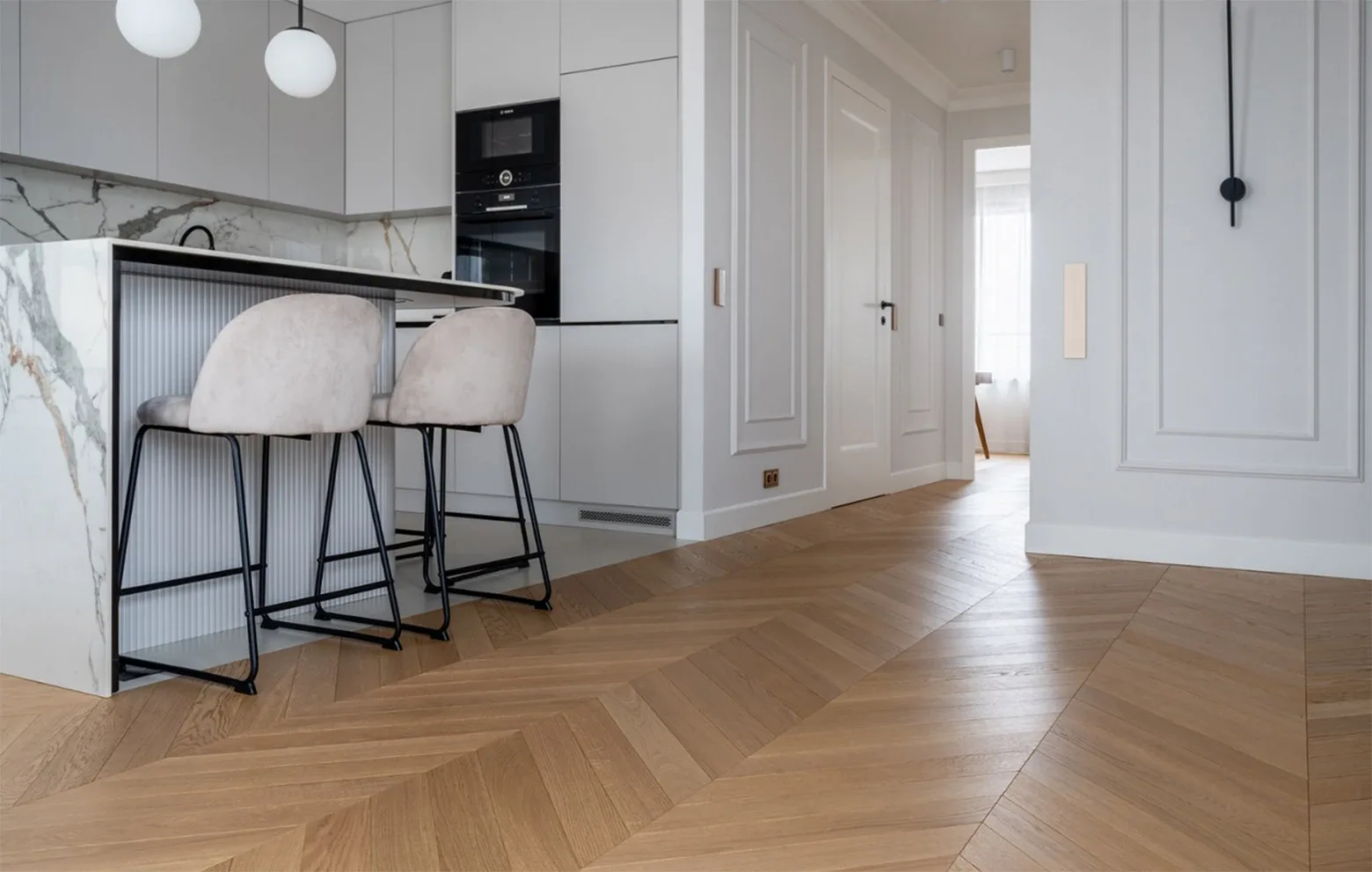
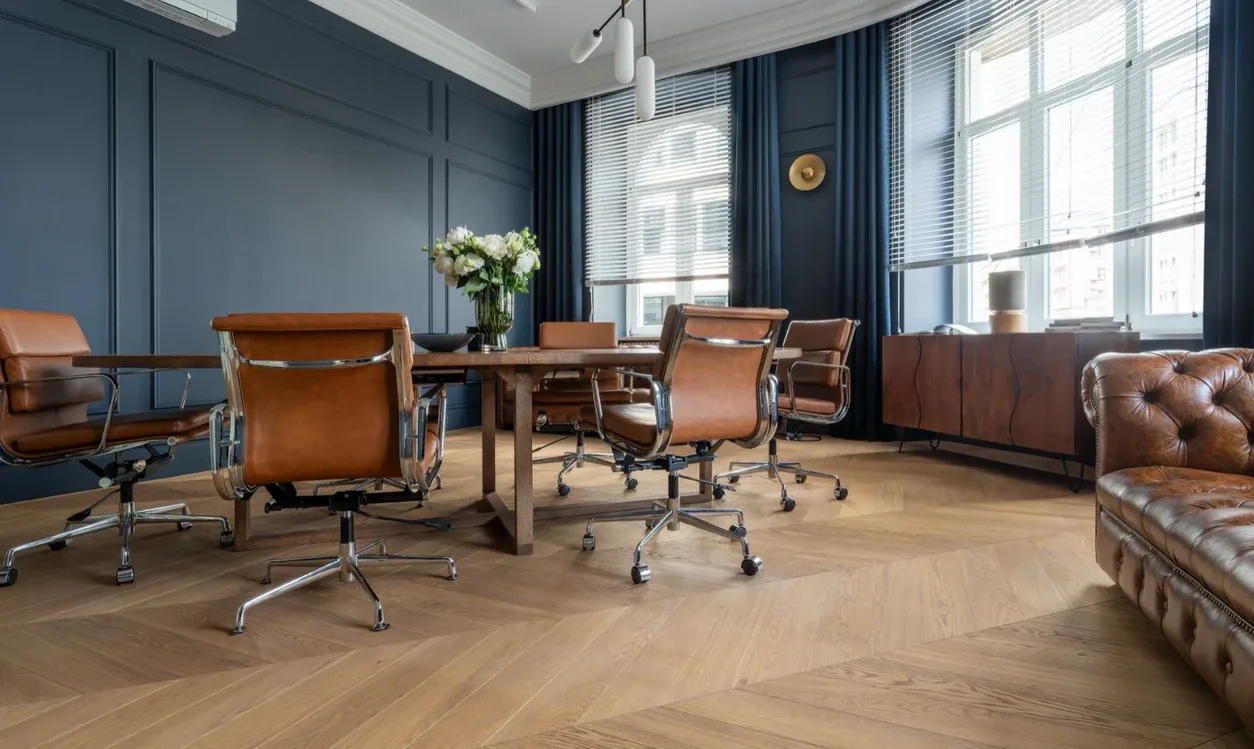
French herringbone is one of the most distinctive patterns of all, one that has graced grand interiors for centuries. Boards cut at a 45-degree angle are laid in an arrowhead formation, creating a rhythmic, geometric layout reminiscent of palace floors. Today this classic pattern is enjoying a renaissance – you will find it in luxurious oak parquet as well as in affordable laminate and vinyl panels.
Key facts
Before we get into the detail, it is worth knowing the essentials about French herringbone:
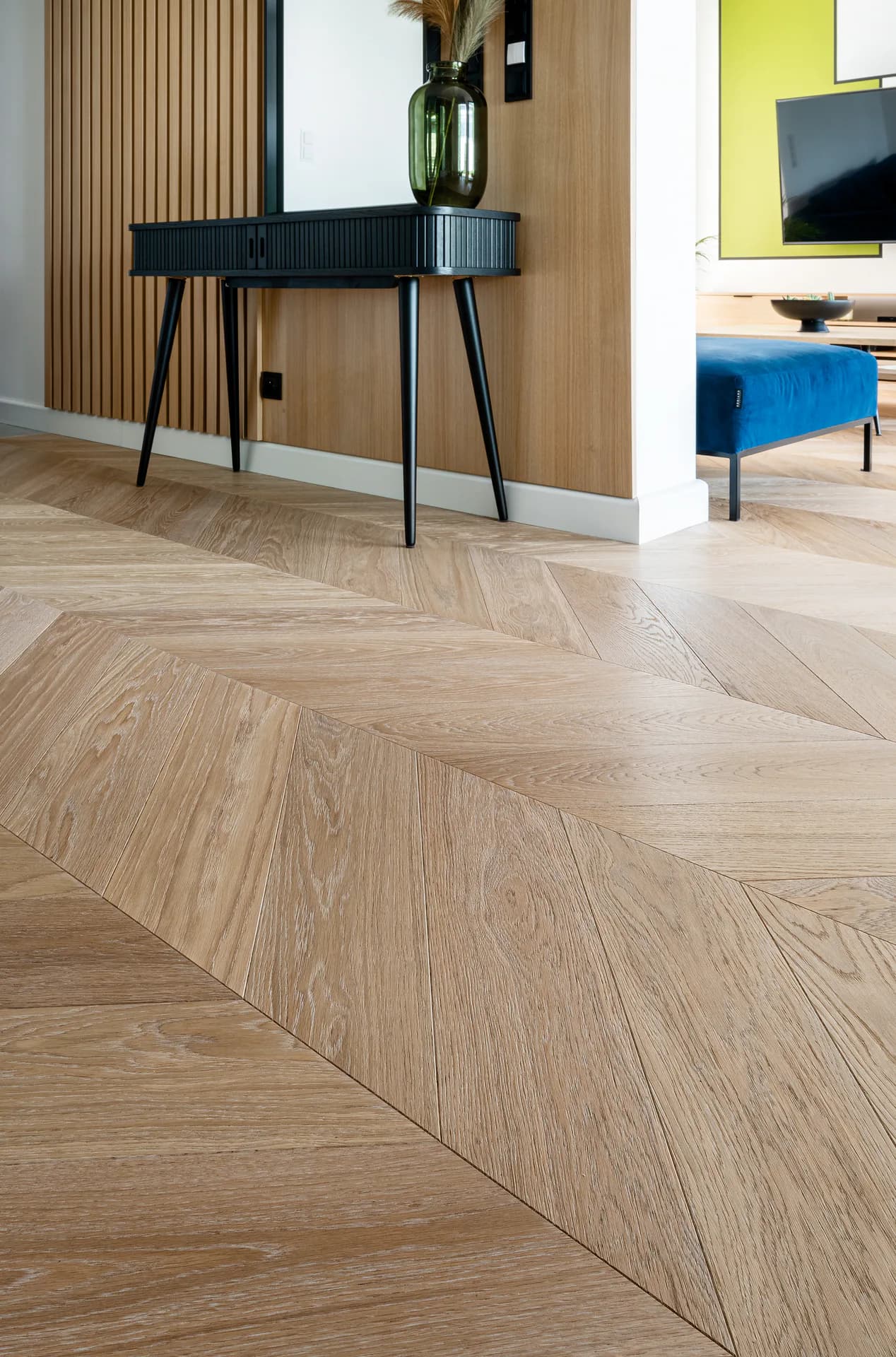
The Chevron pattern is a layout in which the shorter ends of the individual boards are cut at an angle (45° as standard), and once joined they form a continuous line resembling an arrowhead
Herringbone works in solid-wood parquet as well as in engineered boards, laminate panels and vinyl panels designed for the Chevron layout
The pattern looks its best in larger, well-lit living rooms, hallways and daytime zones – especially in Parisian, modern classic, glamour or art deco styles
Material and labour costs are higher than for a straight-laid floor, but the investment visibly raises the prestige of any interior
The choice of oak colour (natural, whitewashed, or the warm beiges and light browns popular in the 2024/2026 seasons) lets you match French herringbone to classic schemes and modern interiors alike
What is French herringbone and how does it differ from classic herringbone?
French herringbone, also known as Chevron, is one of the most recognisable parquet layouts in the history of interior architecture. Its elegant character has made it the choice for grand rooms for centuries.
Key characteristics of French herringbone:
The boards or blocks have their shorter ends cut at an angle – 45° as standard,
Once the pieces are assembled, a distinctive arrowhead line emerges, running the full length of the room
Each board meets the next at exactly the same angle, creating a smooth, unbroken “V”
Differences compared with classic herringbone:
Feature
French herringbone (Chevron)
Classic herringbone
Cutting angle
45°
None – rectangular boards
How the pieces join
Short end to short end at an angle
The short end of one block against the long side of the next, at a right angle
Visual effect
Geometric, orderly, “palatial”
Zigzagging, more dynamic, evoking the retro style of the 1950s and 1960s
Material wastage
Higher (angled cuts)
Lower
In product descriptions you will often come across the names “Chevron 45°”, “Hungarian Point” or “Herringbone French” – they all refer to French herringbone.
The history of French herringbone and its journey into today's homes
The Chevron pattern has several centuries of history behind it and originates from Europe's most prestigious residences. Its journey into today's homes is a fascinating story of evolving taste and material availability.
16th century, France – the first documented use of the pattern appears in the Galerie François Ier at the Palace of Fontainebleau (around 1539), where chevron parquet adorned the grand royal halls
17th–18th centuries – French herringbone becomes a symbol of luxury in the palaces of the aristocracy, including Versailles; producing it required wood to be worked by hand and was extraordinarily time-consuming
19th century, the rebuilding of Paris – under Prefect Haussmann the chevron pattern makes its way into bourgeois townhouses and apartments, becoming a byword for Parisian chic
The motif in other fields – the zigzag (chevron) found its way into heraldry, textiles and architecture, and today it also appears on ceramic tiles, wallpaper and furniture fronts
After 2015 – a revival of popularity alongside the fashion for Parisian and modern classic styles; manufacturers of laminate, vinyl and engineered boards launch Chevron collections on a large scale
What does a French herringbone board look like? Construction and types
A French herringbone floorboard differs from standard floorboards above all in the shape of its ends. Understanding how it is built helps you choose the right product with confidence.
Typical dimensions of French herringbone boards:
Parameter
Typical range
Length
500–800 mm (most common: 600 mm)
Width
90–150 mm (most common: 100–120 mm)
Total thickness
10–15 mm (parquet), 12–14 mm (engineered boards)
Wear layer
3–4 mm (engineered), 6–7 mm (solid)
Types of construction:
Solid boards – the whole element is made from a single piece of wood (most often oak); a 6–7 mm wear layer allows repeated sanding; requires a very stable subfloor
Engineered floors – a top layer of oak (3–4 mm) over a birch plywood or HDF core; better dimensional stability and suitability for underfloor heating
Floor panels (laminate) – a wood-effect decor on an HDF board with a protective layer; cannot be sanded, but offers higher scratch resistance
Vinyl panels (LVT/SPC) – fully waterproof, ideal for kitchens and bathrooms
Available finishes:
Matt or ultra-matt lacquer (popular in the 2024–2025 trends)
Natural oil or hardwax oil (the natural beauty of wood, requiring regular maintenance)
A smooth or brushed surface
Bevelled edges – for example a four-sided V-groove to emphasise the herringbone pattern
Where does French herringbone work best? Uses around the house and flat
A wooden herringbone floor is a solution that needs the right amount of space to show its remarkable look in full. Not every room will exploit the pattern's potential to the same degree.
Living room and daytime zone:
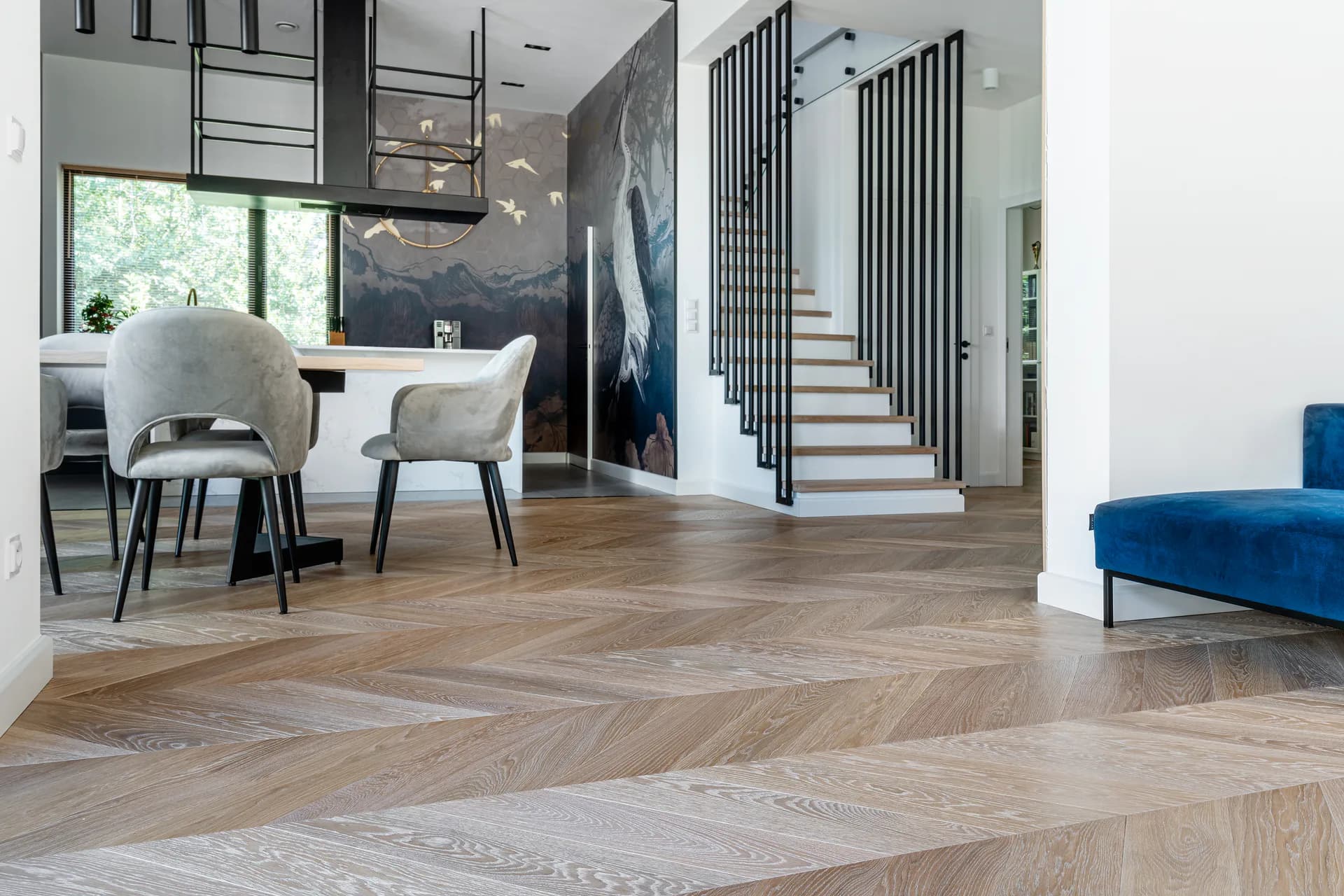
The most common and most spectacular setting. Open-plan spaces combining the living room, dining area and a kitchen with an island gain a coherent, stately character from French herringbone. The pattern works especially well with high ceilings and large expanses of glazing.
Corridor and hallway:
The dynamic run of arrows can visually lengthen long hallways – typical of townhouse flats from the 1930s to the 1960s. Bear in mind, though, that in very narrow corridors a strong pattern can overwhelm the space.
Bedroom:
A matt finish in light oak (lightly whitewashed, for example) gives the room a calm, hotel-like feel. In a bedroom, boards with a subtler grain and a quieter tone work best.
Kitchen open to the living room:
In the kitchen zone a wooden floor needs proper protection against moisture and dirt. Vinyl panels in a Chevron layout are an alternative – they combine a natural look with practicality.
Study and home office:
French herringbone underlines the stately character of the space, especially when paired with veneered cabinetry, a library wall and solid-wood furniture.
Interior style and French herringbone
The Chevron pattern is versatile enough to be worked into a wide range of styles – from Parisian classicism to austere minimalism. It all comes down to the choice of floor colour, finish and the furnishings around it.
Parisian style:
Oak in a natural or lightly smoked shade
White decorative mouldings and ceiling roses
Tall skirting boards (10–12 cm) in the colour of the walls
Furniture on slender gold or brass legs
Large mirrors in simple frames
Modern classic:
Beige walls and a muted colour palette
A velvet sofa in shades of grey or dusky pink
Coffee tables with metal accents (brass, brushed gold)
A timeless style free of unnecessary ornament
Glamour:
The contrast of light herringbone with black lacquered elements
Crystal chandeliers and lamps with shades
Gold or chrome details
Darker oak shades for a dramatic effect
Minimalism and japandi:
Light, matt herringbone (whitewashed or natural oak)
A minimal amount of simply shaped furniture
Natural fabrics: linen, cotton, wool
Neutral wall colours (white, light grey, beige)
Townhouses and interiors with history:
Recreating the original character of flats from the turn of the 20th century
Pairing French herringbone with restored double doors
Tall windows with glazing bars
Preserving original architectural details
French herringbone and the choice of material: parquet, laminate panels, vinyl
The choice of material determines not only the price but also the floor's durability, the scope for renovation and where it can be used. Each option has its advantages and its limitations.
Solid oak parquet:
A lifespan of several decades with proper care
Can be sanded repeatedly (as many as 5–7 times with a 6–7 mm wear layer)
A higher cost of material and installation
Requires a very even subfloor and controlled moisture conditions
A natural look and character impossible to reproduce in laminate
Engineered board:
Good dimensional stability thanks to the multi-layer construction
Suitable for use over underfloor heating
A factory finish (lacquer, oil) shortens the finishing work
A 3–4 mm wear layer allows 1–2 rounds of sanding
A wide choice of colours and finishes in oiled or lacquered versions
Laminate panels in a herringbone pattern:
Resistance to scratching and abrasion (AC4–AC5 classes)
A comparatively lower purchase cost
A broad range of decors: oak, ash, even concrete and stone effects
No possibility of sanding – once worn, the whole floor must be replaced
Greater moisture resistance than solid wood, but not suitable for bathrooms
Vinyl panels (LVT/SPC) in a Chevron layout:
The highest level of moisture resistance – they can be used in kitchens and bathrooms
Work well with underfloor heating
Usage classes 23/33 for domestic rooms and light commercial use
Example: AFIRMAX Chevron Hartford Oak – 4.5 mm thick, with a 0.55 mm wear layer
Easy to keep clean
Underfloor heating and French herringbone
Combining French herringbone with underfloor heating is a frequent question among people planning a renovation. The good news: the pattern itself is no obstacle.
The facts about heating and herringbone:
The pattern (French, classic or Hungarian herringbone) does not impair heat transfer – what matters is the thickness and type of material
Engineered boards and vinyl panels perform better over water-fed underfloor heating than solid wood – they show smaller moisture-related movement and have better thermal properties
Thanks to its moderate shrinkage, oak copes better than beech, for instance, under fluctuating temperatures
Technical requirements:
Parameter
Recommended value
Wood moisture content
7–9% (±2%)
Screed moisture content
max. 2% CM (cement), max. 0.5% CM (anhydrite)
Thermal resistance of the floor
max. 0.15 m²K/W
Surface temperature
max. 27°C
Use the adhesives and underlays recommended by the board manufacturer
Before the floor is laid, the underfloor heating must go through a full commissioning and screed heat-up cycle (a minimum of 21 days for concrete)
Avoid covering large areas of the floor with rugs, which block the flow of heat
The French herringbone pattern beyond the floor
Chevron need not be confined to floor coverings. The zigzag motif appears ever more often on other surfaces, creating coherent, well-considered schemes.
Ceramic tiles in a Chevron format:
Used in bathrooms and kitchens – on the floor or on the wall above the worktop
Available in a range of sizes and colours (white, grey, brick red)
An alternative to wood in wet rooms
Wall panels and slats:
Wooden or veneered slats laid at an angle
A striking feature wall in the living room or behind the bed in the bedroom
You can use the same material as on the floor for complete harmony
Furniture fronts:
Kitchen cabinetry with chevron-patterned fronts
Hallway wardrobes echoing the pattern on the floor
Veneered chests of drawers and sideboards
Note: Repeating French herringbone across several furnishing elements calls for a sure touch. Apply the rule of restraint – one dominant element (the floor) and at most one or two supporting ones (a wall or furniture fronts, say). Overloading a room with the pattern can produce chaos instead of elegance.
Durability and care of a French herringbone floor
A floor's durability depends above all on the type of material and the quality of the surface finish. Proper day-to-day care lets you enjoy the floor of your dreams for many years.
Daily upkeep:
Regular vacuuming with a soft brush, or sweeping – this removes sand and grit that can scratch the surface
Cleaning with a well-wrung mop and products designed for the specific type of wooden floor
Avoiding excess water – particularly important with wood and laminate
Protection against damage:
Felt pads under furniture legs – they prevent scratches when furniture is moved
Doormats at the entrance – they limit the sand and moisture carried indoors
For chairs on castors – use protective mats
Surface renewal cycle:
Type of finish
Maintenance frequency
Natural oil
Maintenance oiling every 6–12 months
Matt lacquer
Re-lacquering after 8–15 years of intensive use
Vinyl
No special maintenance; regular cleaning is enough
Protection from the sun: In strongly sunlit spots (large south-facing glazing) it is worth using curtains, blinds or UV film. Uneven exposure to sunlight can cause discolouration – part of the floor fades or darkens faster than the rest.
Summary: who is French herringbone the best choice for?
French herringbone is an excellent way to create an interior with character and timeless elegance. It is not a solution for everyone, but rather for those who value expressive detail and a stately style.
French herringbone will be a good choice if:
You are looking for a floor with a strong character that will become the centrepiece of the scheme
You are planning to furnish showpiece rooms – a living room, an entrance hall or a dining room
Your interior has spatial potential: higher ceilings (min. 2.7 m), a larger floor area (from 15–20 m² upwards), good natural light
You value classic schemes inspired by the Parisian, modern classic or glamour styles
You want to invest in a solution that will raise the value of the property
Options for different budgets:
Premium: Solid oak parquet or an engineered board with a 4 mm wear layer
Mid-range: Engineered boards with a 3 mm wear layer and UV lacquer
Budget: Laminate or vinyl panels in a Chevron layout
With the right colour, board format and finish, French herringbone suits flats in townhouses from the early twentieth century just as well as the modern interiors of apartments completed after 2020. It is a pattern that has enjoyed great popularity for centuries – and everything suggests it will stay that way.
FAQ – questions about French herringbone
Is French herringbone suitable for small flats in blocks?
Yes, but it calls for a considered approach. In smaller interiors, light wood colours (natural oak, whitewashed oak), a matt lacquered finish and a limited number of patterned accessories work best. Avoid very narrow boards and strongly contrasting colours, which can visually “chop up” the space. A board format of 100×600 mm or 120×600 mm will be friendlier than very small elements.
What should you look at when choosing the colour of French herringbone?
The choice of colour depends on the light exposure (north-facing – cooler shades, south-facing – warmer), the size of the room and the planned colours of the walls and furniture. Light oak shades are safer and more versatile – they brighten the interior and work with most styles. Dark boards (smoked or walnut-toned, for example) deliver a powerful sense of elegance but demand more attention to cleanliness – dust and scratches show up on them more readily.
Does the French herringbone pattern make furniture placement harder?
The layout itself does not restrict how furniture can be arranged, but the visual rhythm of the arrows “leads the eye” in a particular direction. It is worth thinking through which way the rows of boards will point – they are most often laid towards the main source of light or along the longer axis of the room. Simply shaped furniture that does not compete with the floor's striking pattern looks best.
Is French herringbone more expensive than straight-laid boards?
Usually yes – material and labour costs are higher because the boards are cut at an angle (more wastage) and the parquet installation is more complex and demands precision. The price difference depends on the material: with solid oak parquet it can be 30–50% more, while with laminate or vinyl panels the difference is smaller (10–20%). For engineered boards, manufacturers offer ready-made “left/right” systems, which brings the installation cost down somewhat.
Which skirting boards go best with French herringbone?
In classic schemes and Parisian-style interiors, taller white skirting boards (10–12 cm) work well, echoing traditional townhouses. In modern interiors, plain low skirting (4–6 cm) in the colour of the floor or the wall is the better option – it creates a discreet transition and does not interrupt the line of the pattern. The skirting should be sized to suit the height of the room and the character of the door joinery.
About the author
Paweł Dąbrowski
Właściciel marki Świat Podłóg, twórca marki Europarkiet
Ekspert w dziedzinie podłóg drewnianych i nowoczesnych systemów podłogowych. Od ponad 22 lat zawodowo związany z branżą, łącząc doświadczenie w doradztwie technicznym, sprzedaży oraz realizacji inwestycji mieszkaniowych i komercyjnych.
Jest właścicielem marki Świat Podłóg – firmy z ponad 30-letnią historią – oraz twórcą marki Europarkiet, specjalizującej się w podłogach drewnianych klasy premium. Na co dzień współpracuje z architektami wnętrz, wykonawcami i inwestorami, pomagając dobrać rozwiązania, które łączą estetykę, trwałość i najwyższą jakość wykonania.
W swoich publikacjach stawia na rzetelną wiedzę, praktyczne doświadczenie i prosty język. Na blogu Europarkiet wyjaśnia technologie, obala popularne mity i pokazuje rozwiązania, które sprawdzają się w rzeczywistych realizacjach – od wyboru podłogi, przez montaż, aż po pielęgnację drewna.