

How to care for a wooden floor: effective cleaning and protection methods
To care for a wooden floor properly, vacuum it regularly, clean it with a small amount of water and use products matched to the finish: lacquer, oil or hardwax oil…

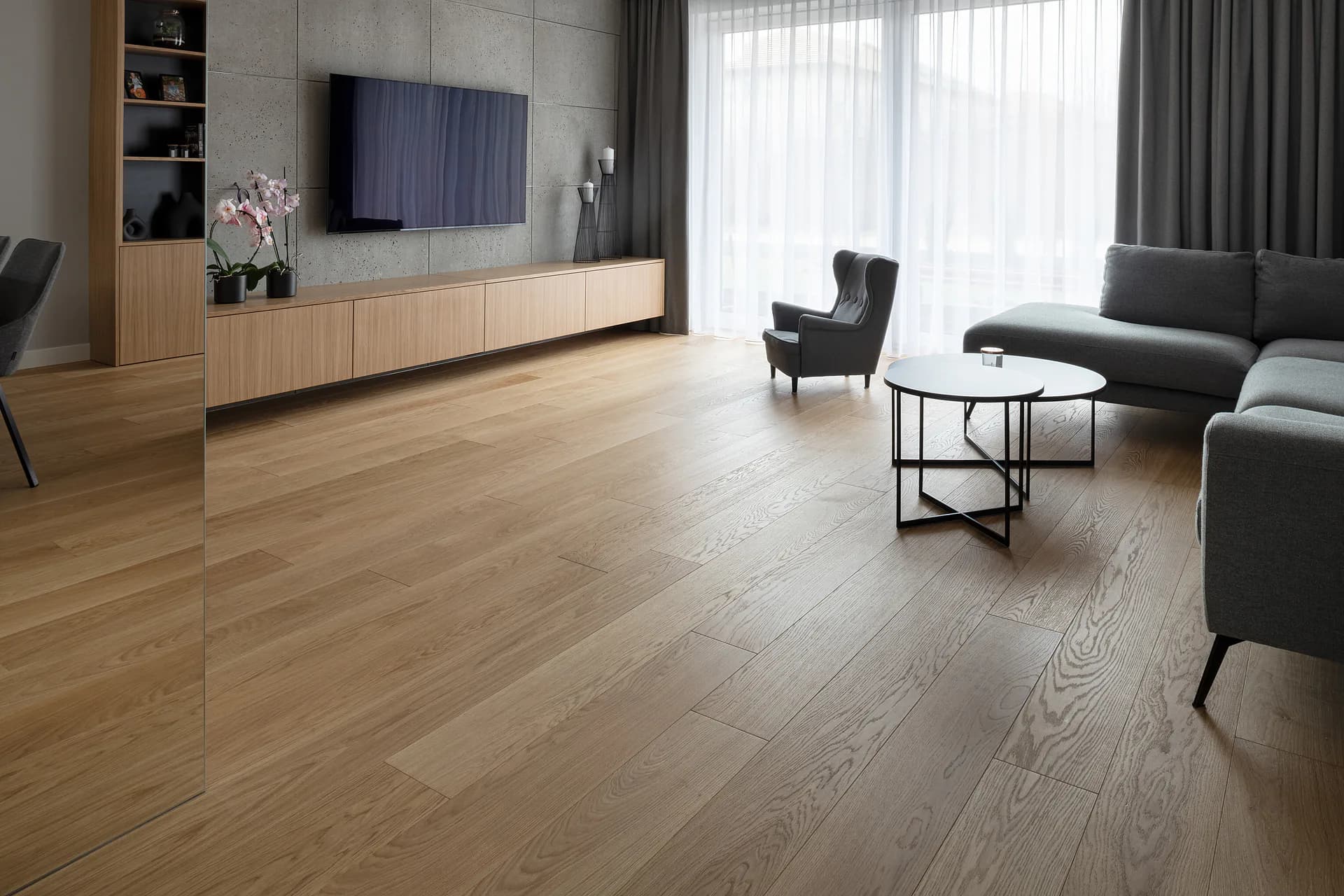
Hardwax oil is a natural or semi-natural finish combining vegetable oils and waxes. It penetrates deep into the wood, protecting the timber against moisture and dirt while preserving its natural appearance and breathable structure. Unlike lacquer, hardwax oil does not form a sealed coating – it penetrates the fibres of the wooden floor, creating protection from within and a delicate, microporous protective layer on the surface.
Hardwax oil is a hybrid product, created from a blend of liquid vegetable oils and natural hard or soft waxes. Its unique formula combines two complementary functions: the oil penetrates the structure of the wood, impregnating it from within, while the wax forms a delicate protective layer on the surface of the board. The result is a finish that does not seal the pores of the wood – the floor remains breathable, which matters greatly for a healthy indoor microclimate.
Unlike lacquer, which forms a hard, impermeable coating, hardwax oil leaves the wood in a state close to its natural one. The matt surface or gentle velvety sheen that hardwax oil imparts accentuates the structure of the wood and its natural colour - an effect that cannot be achieved with conventional lacquers.
It accentuates the structure and grain of the wood, lending it a natural colour and a velvety sheen.
It provides lasting protection against the ingress of moisture and dirt, and against staining.
Hardwax oil allows spot renovation of the floor without the need to sand the entire surface.
Hardwax oil is resistant to moisture and reduces the settling of dust
Hardwax-oiled floors are less slippery than lacquered floors, which makes everyday use safer.
It stands up well to everyday use with regular care.
The basis of hardwax oil is drying vegetable oils, which cure by absorbing oxygen from the air. The most commonly used are tung oil (prized for its ability to form a hard film and its high water resistance once cured), linseed oil, soybean oil and sunflower oil. It is thanks to these that the oil penetrates deep into the wood, stabilising its structure and reducing its hygroscopicity – that is, its tendency to absorb and release moisture.
Natural waxes divide into hard and soft. The hard ones include carnauba wax (one of the hardest natural waxes) and candelilla wax, while the soft ones include beeswax. Carnauba wax gives the surface high hardness and durability, while beeswax provides flexibility and a delicate, warm sheen. The combination of these ingredients is one of the things that make these products exceptionally durable.
Technological additives include resins that increase surface hardness, colouring pigments (for tinted versions) and curing agents. High-quality products meet safety standards such as DIN EN 71-3 (toy safety), EC No. 1935/2004 (food contact) and ECARF certification for allergy sufferers. WX-1 products are fully natural oils with an addition of soft wax – they contain 100% natural oils and waxes, while HS-1 class hardwax oils have a solids content of at least around 90%.
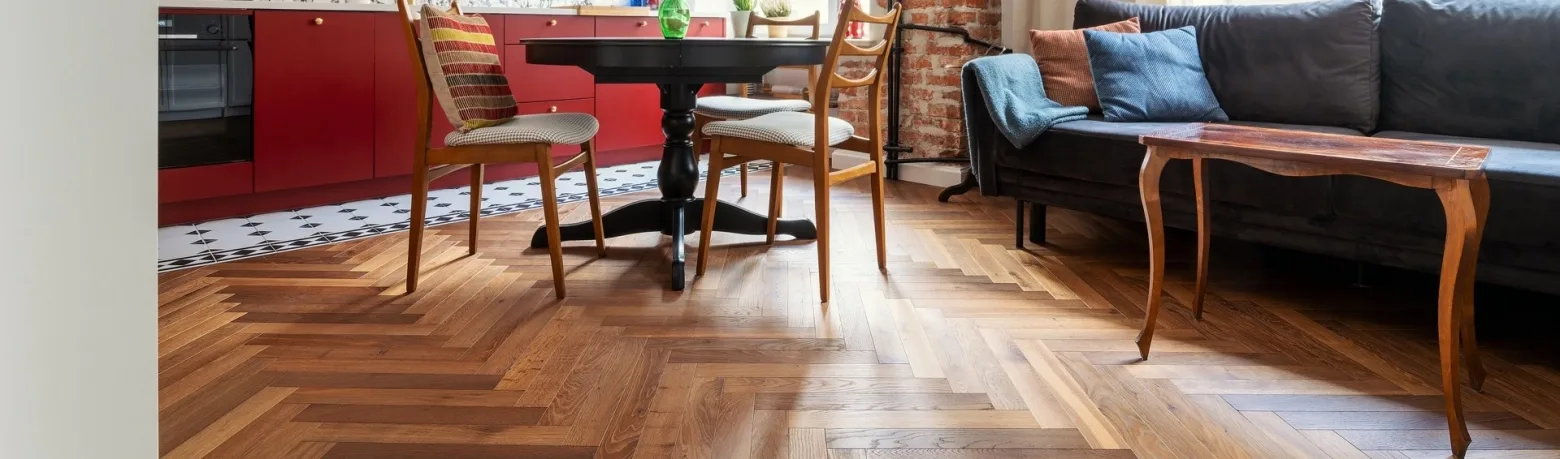
The way hardwax oil works rests on three levels of protection. First, the oil penetrates the pores of the wood, reduces its hygroscopicity and stabilises the movement of the timber – limiting the shrinking and swelling caused by changes in moisture. Wood is a natural material that responds to its surroundings, and hardwax oil helps keep these processes under control.
Second, the wax and resins in the surface layer form a microporous coating that protects against water penetration, dirt and, to some extent, mechanical damage. This layer does not seal the wood tightly - it lets it breathe, which is what distinguishes hardwax oil from lacquer.
Third, the interplay between the oil protecting the fibres from within and the wax reducing surface friction makes the surface more resistant to wear. Hardwax oil accentuates the natural structure of the wood and reduces slipperiness, which makes it an exceptionally practical solution both aesthetically and functionally.
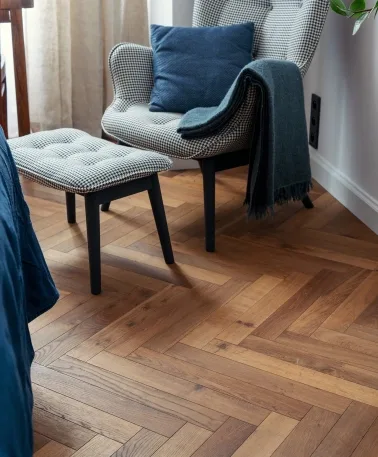
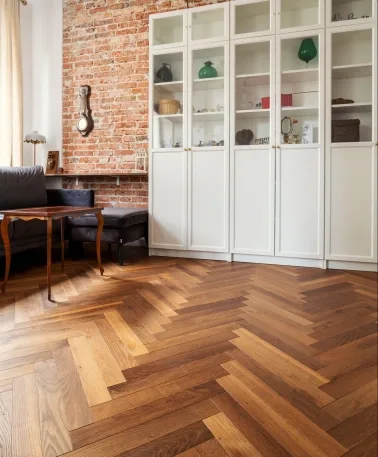
The choice between hardwax oil and lacquer is one of the most important decisions when finishing a wooden floor. Each of these finishes has distinct characteristics that affect the appearance, durability and everyday use of a wooden floor.
Lacquer forms a hard coating on the surface of the wood - sealed, and resistant to moisture and abrasion. With lacquered floors, however, any damage to the coating requires complete sanding and re-lacquering of the entire surface, because a localised repair on lacquer is practically impossible without visible differences.
With more extensive damage to a lacquered coating, the repair often requires sanding down and refinishing a larger section or the entire surface. Lacquered floors are available in various sheen levels and can be protected with as many as eight coats of UV lacquer, which ensures high mechanical resistance, while finishes based on eco-friendly lacquers reduce the emission of harmful substances.
Hardwax oil, by contrast, penetrates the wood without forming a hard layer on the surface. It is less resistant to stains than lacquer, but with hardwax-oiled floors the possibility of spot renovation is an enormous advantage – localised damage can be repaired by yourself, without calling in a floor-sanding crew. An oiled floor needs more frequent upkeep and regular care, but over many years the maintenance costs can turn out lower than for lacquered floors, which require a costly, full renovation.
| Criterion | Lacquer | Hardwax oil |
| Protective coating | A hard, sealed coating cured with UV lamps | Penetrates the wood, with a microporous layer on the surface |
| Renovation | Requires the whole surface to be sanded down and re-lacquered | Allows spot renovation of localised damage |
| Care | Low frequency, lacquer does not need frequent maintenance | The floor needs more frequent maintenance, every few months |
| Appearance | Smooth, often glossy, available in various sheen levels | A natural, matt look with a velvety sheen |
| Wood breathability | Seals the pores of the wood | Hardwax oil penetrates deep into the wood without blocking its pores |
| Stain resistance | High | Good, but requires care and a quick response |
| Slipperiness | Lacquered floors can be more slippery | Less slippery, safer in everyday use |
Oil alone (an oiled floor with no wax layer) does not create surface protection - it impregnates the wood but does not protect against stains or heavy abrasion. Oiled floors require special care treatments and frequent maintenance. Wax applied on its own (e.g. pure beeswax), in turn, protects the surface but does not penetrate deep into the wood and is far less durable. Hardwax oil combines the advantages of both solutions - the penetration of oil and the protection of wax - in a single product.
It is also worth emphasising that hardwax oil and lacquer work in completely different ways: while lacquer settles on the surface of the element, hardwax oil penetrates deep into the wood, protecting its structure from within.
Correct preparation of the wooden surface has a decisive impact on the durability and appearance of the finish. Pre-finished hardwax-oiled wooden floors most often come factory-protected with three coats of natural hardwax oil, which ensures lasting protection of the entire surface from the moment of installation.
When renovating, or when applying hardwax oil to a new, unfinished floor, the procedure is as follows:
Sanding the surface – with abrasive paper of 80 to 150 grit, depending on the wood species and the condition of the surface, always along the grain.
Thorough dust removal – removing all dust from the surface of the boards and the surrounding area, ideally with an industrial vacuum cleaner.
Checking the moisture of the wood – the relative moisture content of the floor timber should be 8–12%, the air humidity in the room 45–60%, and the temperature 18–27°C.
Applying the hardwax oil – in thin coats along the grain, using a suitable tool (a microfibre roller, a brush or a cotton cloth).
The right climatic conditions must be maintained both during application and while the finish dries. At temperatures below 15–18°C or with air humidity above 65–70%, the curing time lengthens considerably, which can lead to greasy marks and an uneven finish.
| Method | Advantages | Drawbacks | Best suited to |
| Microfibre roller | An even coat, quick work on large areas | Takes practice, risk of applying too much product | Large floors, parquet |
| Brush (with suitable bristles) | Precision in hard-to-reach places | Slower work, risk of streaks with the wrong bristles | Edges, corners, stairs |
| Cotton cloth | A very thin coat, control over the amount of product | A labour-intensive method; working by hand gives a uniform result only on small areas | Furniture, worktops, small elements |
Whichever method you choose, hardwax oil is applied in thin coats. The drying time between coats is usually 2–4 hours (depending on the product and conditions), and full mechanical and water resistance develops after 24–48 hours. The coverage of hardwax oil is around 10–15 m² per litre for a single coat, depending on the porosity of the wood. Depending on how intensively a given room is used, it is worth considering an additional coat.
How often care is needed depends on the intensity of use and the recommendations of the manufacturer of the hardwax oil system. In heavily used zones, refreshing may be needed more often than in rooms used only occasionally. Hardwax oil requires regular annual care in the form of refreshing the protective layer. Day-to-day care includes:
Regular vacuuming with soft attachments, to avoid scratching the surface of the wood.
Cleaning with a damp cloth without excess water – hardwax-oiled floors should be cleaned with a damp cloth, not a wet mop, to prevent moisture from penetrating deep into the wood.
Avoiding excessive mechanical loads – use felt pads under furniture, wear soft footwear and avoid abrasive debris (sand, small stones).
Using dedicated products for routine maintenance and removing everyday dirt – such as cleaning concentrates or gel refreshers, which revive the surface of the element without the need for sanding.
The floor needs more frequent upkeep than a lacquered floor, but the special treatments it calls for are simpler and cheaper than sanding. Hardwax oil demands frequent maintenance, but in return it offers a naturally warm-looking surface for many years.
Localised damage to a hardwax-oiled floor can be repaired by yourself – one of the greatest advantages of this type of finish. Hardwax oil allows spot renovation of the floor, which keeps it looking beautiful without sanding the entire surface. Minor blemishes and localised damage are repaired in three simple steps:
Sanding the damaged area with abrasive paper (120–150 grit) along the grain of the wood.
Removing the dust and applying a thin coat of hardwax oil to the repaired area of the board.
Polishing with a soft cloth once dry.
Over time the repaired spot will blend in with the colour of the rest of the floor, and any damage will become less noticeable. For larger renovation areas (for example in a hallway or kitchen), it is worth considering refreshing the whole traffic zone to maintain a uniform look. The possibility of spot renovation and localised touch-ups is what makes hardwax-oiled floors an economical solution in the long run.
Using hardwax oil calls for a certain amount of technical knowledge. Below we present typical problems and proven ways of dealing with them.
Wood is a natural material of varying density – heartwood and sapwood, earlywood and latewood absorb oil to different degrees. Uneven absorption shows up as darker streaks or patches on the surface. To prevent it, sand the surface of the wooden elements thoroughly and remove all dust. On softwoods (pine, larch) it is worth applying the first coat more thinly and letting it soak in before applying the next. With hardwoods (oak, ash) the problem tends to be weaker absorption – here it is enough to spread the product carefully and wipe off the excess after a dozen or so minutes.
The drying time of hardwax oil depends on the temperature, the air humidity and the thickness of the applied coat. Under room conditions (20–22°C, humidity of 50–60%), hardwax oil becomes touch-dry after a few hours, and full resistance develops after 24–48 hours. At low temperatures (below 15°C) or high humidity (above 70%), however, drying can be significantly delayed. Ensure proper ventilation of the room, avoid draughts and maintain a stable temperature. Too thick a coat also lengthens the curing time – it is better to apply two thin coats than one thick one.
Hardwax oil is less resistant to stains than lacquer, so reacting quickly to spilt liquids matters. On floors finished with hardwax oil, water left standing for too long can cause discolouration, and pigmented versions can be prone to oxidation on contact with moisture. The approach: wipe up the liquid immediately, clean the spot with a product dedicated to hardwax-oiled floors, and if necessary sand it lightly and reapply the hardwax oil. Regular maintenance and the use of suitable routine care products minimise the risk of permanent staining.
Hardwax oil for wooden floors is a natural, durable solution that accentuates the structure of the wood, gives the floor a velvety sheen and a natural look, and at the same time protects the timber against moisture and everyday wear. Hardwax oil lends floors a velvety sheen and a natural appearance, preserving the wood's natural look for years to come.
Compared with lacquer, hardwax oil requires care and regular maintenance, but in return it offers the possibility of spot renovation, a breathable surface and the warm, matt look of wood. It is the kind of floor that rewards systematic care with beauty and longevity.
Assess the type of floor and its current condition – checking whether the surface needs refreshing or renovation.
Choose the right hardwax oil, taking into account the wood species, the purpose of the room and the intensity of use.
Prepare the tools – a microfibre roller, abrasive paper, soft cloths.
Vacuum regularly with soft attachments and clean with a damp cloth.
Use felt pads under furniture, wear soft footwear and avoid excessive mechanical loads, to prevent damage.
Plan periodic spot renovations – in the living room every few months, in the kitchen and hallway every few weeks, depending on the intensity of use.
It is worth remembering that hardwax-oiled floors are an investment in the natural aesthetics of an interior. Regular care maintains the protective properties of the hardwax oil and accentuates the natural character of a wooden floor.
Yes, hardwax oil accentuates the natural look of wood, bringing out its structure and lending it a velvety sheen, so the floor looks both attractive and authentic.
Wooden floors protected with hardwax oil remain breathable and resistant to moisture and dirt. Hardwax oil penetrates the structure of the wood, protecting it from within while forming a delicate protective layer on the surface.
An oiled floor requires regular care, which includes cleaning with a damp cloth and using dedicated products, in order to preserve its durability and good looks through everyday use.
Hardwax oil forms a microporous protective layer that reduces slipperiness and increases resistance to scratches and other mechanical damage, and in the case of minor defects it allows easy renovation.
Yes, hardwax oil can be applied by yourself, using thin coats and the right tools, which allows localised repair and refreshing of the floor without the need to sand the entire surface.
We will advise and prepare an individual quote matched to your interior.
To care for a wooden floor properly, vacuum it regularly, clean it with a small amount of water and use products matched to the finish: lacquer, oil or hardwax oil…
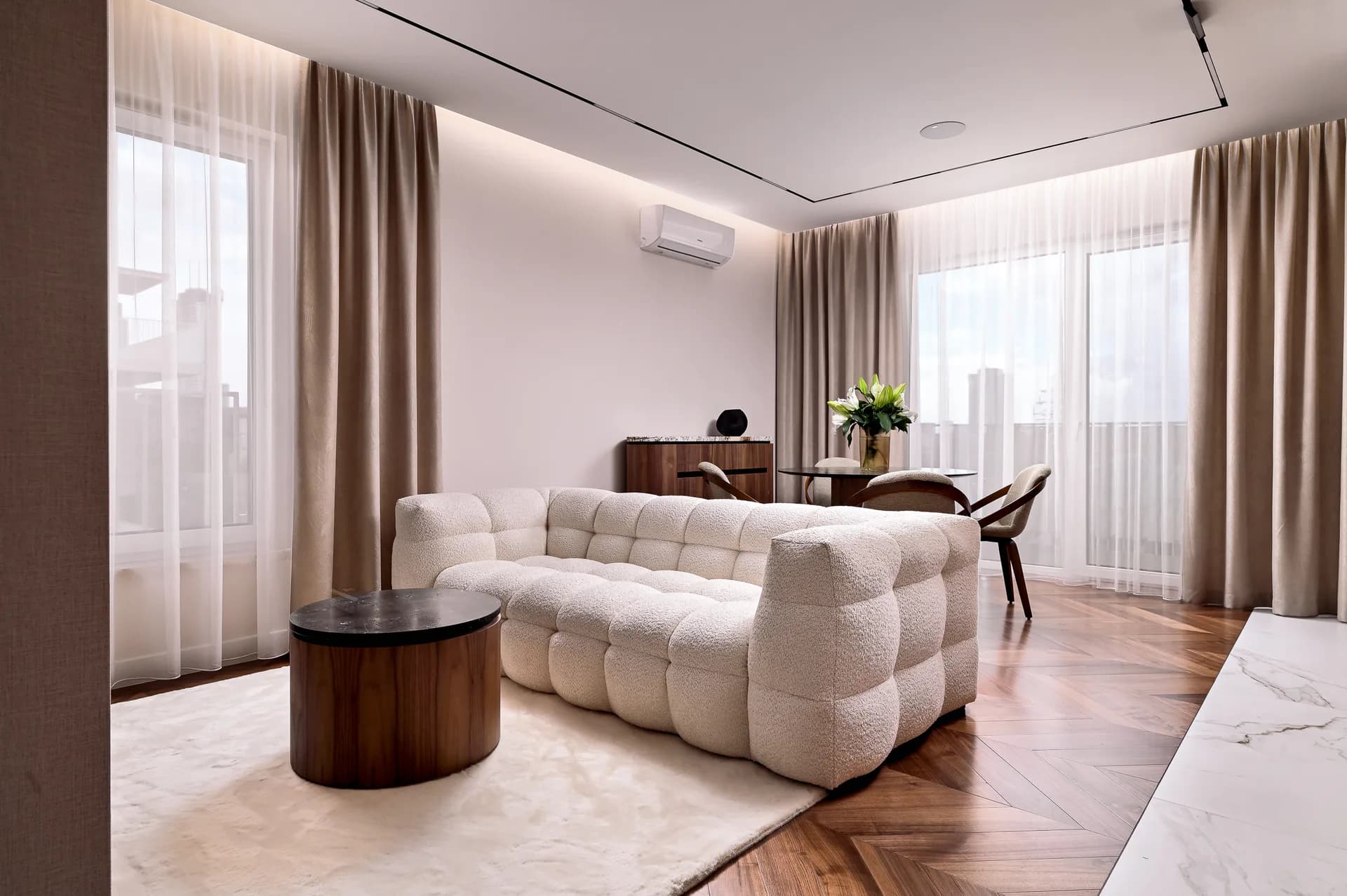
A dark floor of natural wood or panels is one of the strongest interior trends of recent years. Dark shades of oak, walnut and wenge dominate both…
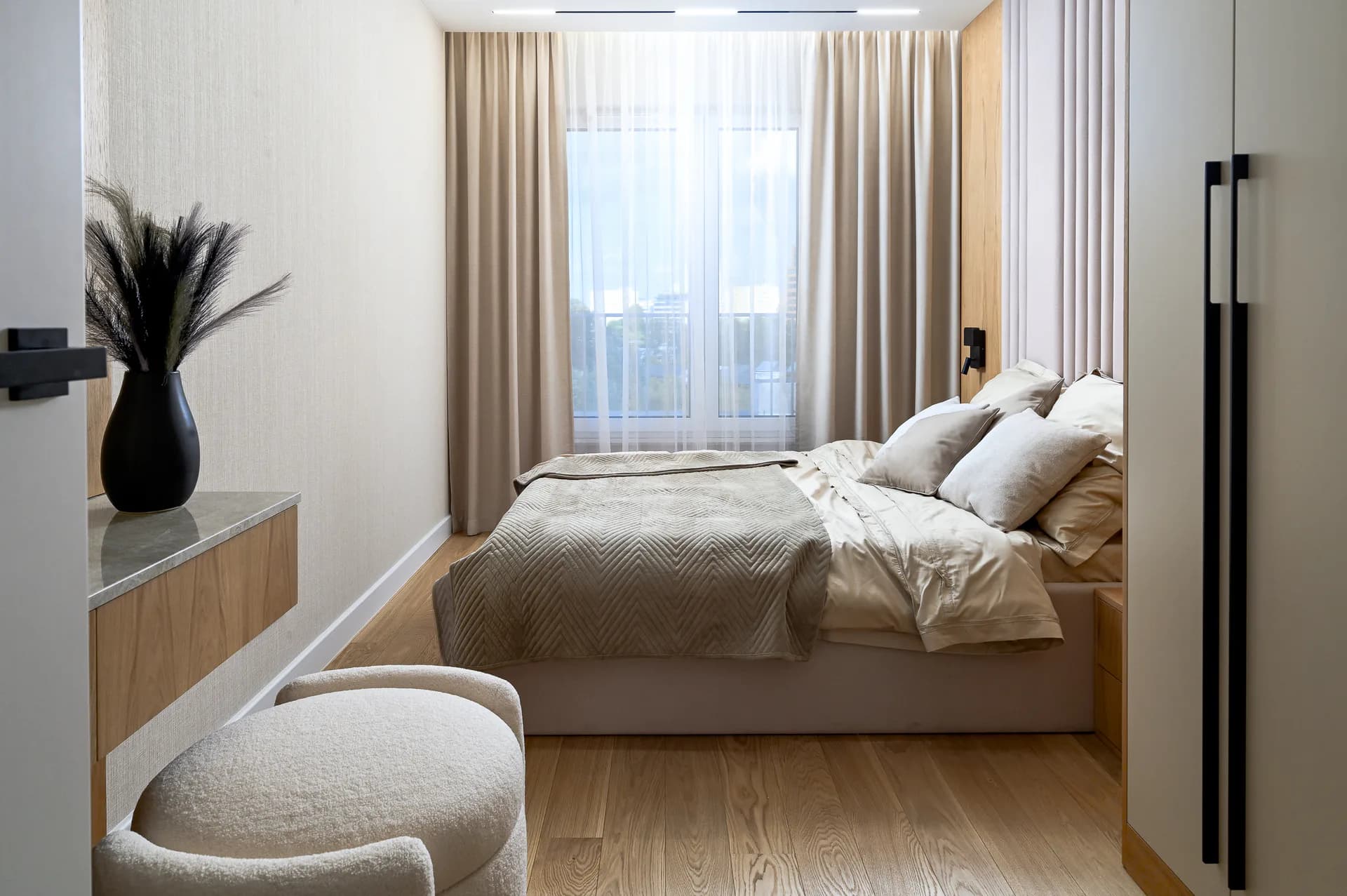
Floorboards are an inseparable element of every stylish, functional interior. Wooden floors have enjoyed unwavering popularity for years thanks to their natural…