

Kitchen floor panels: a complete guide to choosing and fitting
Kitchen floor panels are a modern solution that effectively replaces traditional ceramic tiles, offering a wide choice of wood-imitating designs…

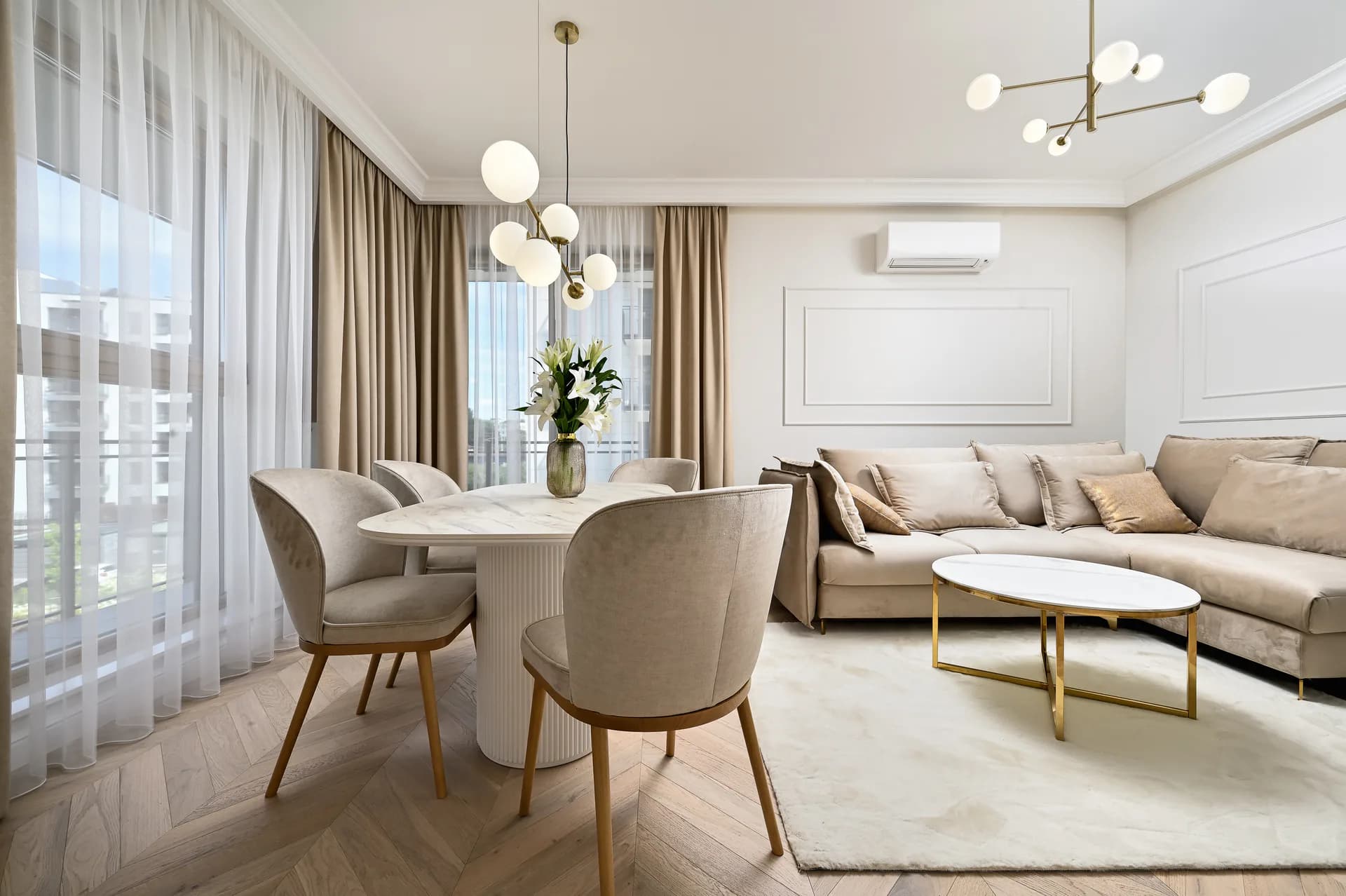
Herringbone panels are one of the most interesting ways to create an elegant floor without investing in traditional parquet. They combine the striking look of classic herringbone with easier installation, greater resistance to everyday use and a wider choice of materials. If you are wondering whether panels laid in a herringbone pattern are a good choice for a living room, bedroom or modern apartment – the answer is yes, provided the right type of panel is matched to the character of the interior. In this guide we explain which solutions are available, how the individual patterns differ and what to look out for before installation.
Herringbone panels are floor panels laid in a distinctive pattern resembling fir branches, creating an elegant, zigzag floor layout that has graced the finest European residences for centuries. This timeless pattern, available today in vinyl, laminate and wooden versions, lets you give any interior an exceptional character without investing in traditional parquet.
The article provides a comprehensive overview of the types of herringbone panels, laying techniques and practical installation tips. It is intended for flat owners planning a renovation, interior designers looking for proven solutions, and anyone wishing to combine classic elegance with modern functionality. Strictly technical matters relating to industrial production have been left out.
Herringbone panels are a modern alternative to wooden parquet – they offer an identical visual effect at a lower cost, with easier installation and greater resistance to everyday use. By choosing them, you gain durability, water resistance and premium aesthetics at an affordable price.
In this article you will learn:
Herringbone panels are floor panels laid in a geometric herringbone pattern, in which the individual boards meet at an angle, creating a distinctive layout resembling a fishbone or the branches of a fir tree. This style of arrangement originated in seventeenth-century France and was used in the residences of the aristocracy.
The difference between traditional herringbone parquet and modern panels lies above all in the construction and the price. Wooden parquet requires precise gluing, sanding and lacquering, whereas laminate and vinyl panels offer a click-type locking system, which significantly shortens installation time. The panels are also lighter (around 6–9 kg/m² compared with 12–20 kg/m² for solid parquet) and cheaper – they typically cost 80–150 zł/m², while natural wood is an expense in the region of 200–400 zł/m².
Laminate panels consist of an HDF core covered with a printed decorative layer and a protective laminate. Laminate herringbone stands out for its high abrasion resistance (classes AC4-AC6), affordable price and wide range of colours. The downside is its lower resistance to moisture – it will not work in rooms exposed to direct contact with water.
Vinyl panels (LVT) have a multi-layer construction with a vinyl core, a decorative layer and a protective polyurethane coating. Vinyl panels offer 100% water resistance, flexibility and quietness in use. A protective wear layer of 0.3-0.7 mm ensures a lifespan of 15-25 years in domestic conditions. It is the ideal solution for kitchens, bathrooms and commercial spaces.
Wooden panels, made of solid wood or as a three-layer engineered board, retain the natural look and texture of real wood. They can be renovated by sanding, but they require careful maintenance and are sensitive to changes in moisture.
French herringbone (chevron) features boards cut at a 45-degree angle, which meet in sharp, elegant points. It lends interiors dynamism and fluidity, creating an effect of continuous movement. The pattern gained popularity in France in the seventeenth century and was used, among other places, in palatial residences, including Versailles.
Classic herringbone, also known as English herringbone, uses rectangular boards of the same length laid alternately at 90 degrees to one another. It creates a distinctive stepped zigzag without sharp points. This variant is easier to install and generates less material waste.
The pattern's influence on the look of an interior is significant – French herringbone visually enlarges the space and directs the eye, while English herringbone gives a room a more ordered, calmer character. The herringbone pattern also masks minor unevenness in the subfloor and adds depth even to small interiors.
Knowing which types of herringbone panels are available on the market and how the individual patterns differ, it is worth taking a closer look at the specific benefits this solution brings to modern interiors.
Laying panels in a herringbone pattern is a proven way to make a space look bigger. The distinctive arrangement of the boards creates an effect of perspective that draws the eye and adds depth even to small rooms. Advanced UV digital printing technology allows oak, ash or walnut textures to be reproduced precisely – with knots and grain visible even from a metre away. A herringbone design instantly raises the prestige of an interior, evoking the elegance of European residences.
Resistance to abrasion and scratching depends on the usage class – AC5-AC6 panels will cope in high-traffic areas, guaranteeing a lifespan of 15-25 years. The top protective layer withstands point loads from furniture, protecting against dents.
Ease of care is another asset – vinyl and laminate panels need only regular vacuuming and wiping with a damp mop. Unlike traditional parquet, they require no sanding or lacquering.
Compatibility with underfloor heating is possible provided the surface temperature is kept below 28°C. SPC panels with a stone core offer the best dimensional stability – below 0.25% under changes in moisture.
Living room – the herringbone pattern creates an effect of depth and elegance, forming the centrepiece of the arrangement. French herringbone visually elongates the space in open-plan living rooms.
Hallway and corridor – the distinctive layout directs the perspective, leading guests' eyes deeper into the home. A high abrasion class ensures durability in intensively used areas.
Office – scratch-resistant panels prove their worth in commercial spaces. Hotels in the Accor chain use vinyl English herringbone, reducing maintenance costs by 60% compared with wood.
Panels laid in a herringbone pattern are also perfect for bedrooms, where they create a cosy atmosphere, and for kitchens – provided a fully waterproof vinyl version is chosen.
Knowing the advantages and applications of the panels is only half the battle. Correct installation determines the durability and looks of the floor for years to come.
Careful preparation of the subfloor eliminates 80% of future flooring problems. Unevenness, moisture or missing expansion gaps can lead to cracks, gaps and deformation of the panels.
| Criterion | Laminate | Vinyl | Wood |
| Lifespan | 10-15 years | 15-25 years | 30+ years (with renovation) |
| Price per m² | 60-120 zł | 80-150 zł | 200-400 zł |
| Moisture resistance | Low | 100% waterproof | Low |
| Ease of installation | Easy (click) | Easy (click) | Difficult (glued) |
| Thickness | 8-12 mm | 4-6 mm | 14-22 mm |
| Underfloor heating | Possible | Recommended (SPC) | Limited |
The choice in a nutshell: For kitchens and bathrooms, choose vinyl panels for their water resistance. For the living room and bedroom, AC5-class laminate herringbone will serve you well – it offers an excellent balance of quality and price.
With the installation principles covered, it is worth knowing the most common problems that can occur and how to avoid them.
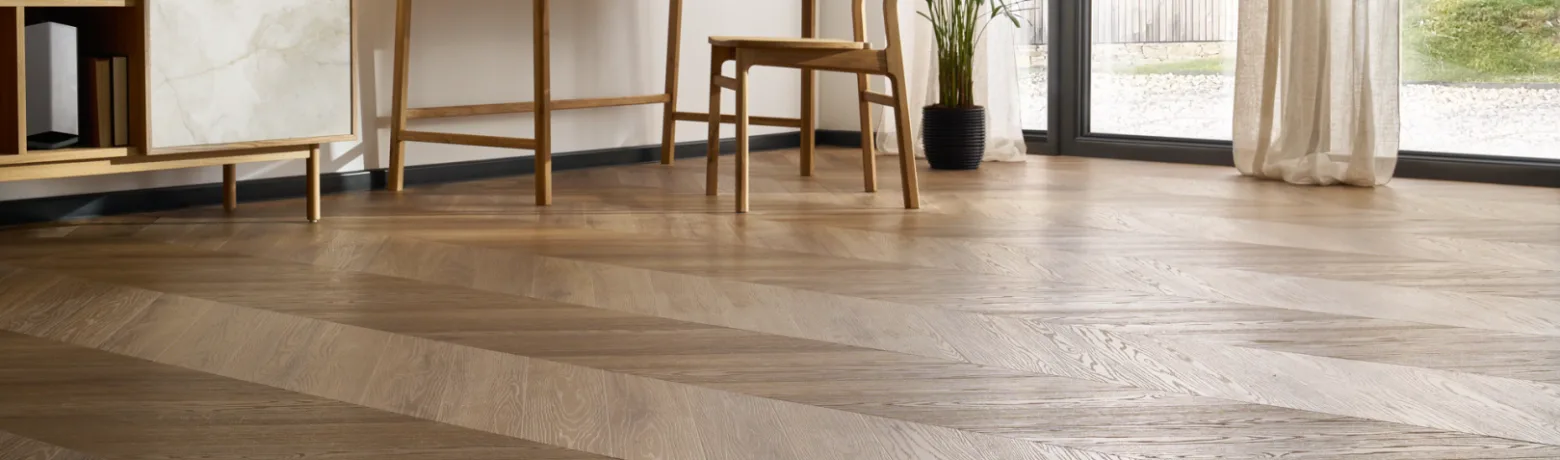
Even the best herringbone panels can cause trouble if installed incorrectly. Knowing the potential pitfalls allows you to avoid them or put them right quickly.
Unevenness exceeding 2 mm/2m causes the panels to creak and the locking joints to come apart. The solution: before installation, check the level with a long aluminium straightedge and even out any irregularities with a self-levelling compound. The cost of this additional preparation is far lower than replacing a damaged floor.
When laying herringbone, the pattern can easily drift, particularly in irregularly shaped rooms. The solution: establish the room's axis of symmetry and start the installation from the centre, working outwards in both directions. Prepare a layout plan on graph paper or in a design app – this will let you predict where the cut pieces will fall.
Panels expand and contract with changes in temperature and moisture. The solution: keep 8-10 mm expansion gaps at all fixed elements (walls, thresholds, pipes). Keep the indoor moisture level steady at 40-60% and avoid direct sunlight – cheaper models below 80 zł/m² can lose their colour after 5 years of exposure to the sun. Use expansion profiles at thresholds and never glue the panels down permanently.
Herringbone panels combine timeless elegance with the practicality of modern materials. Whether you choose French herringbone for a dynamic effect or classic English herringbone for a calmer arrangement – you gain a floor that visually enlarges the space, masks unevenness and serves for many years with minimal care.
It is also worth exploring panel care (suitable cleaning products, protection against scratches), the choice of skirting boards, and how to combine the herringbone pattern harmoniously with the other elements of the decor – furniture, textiles and lighting.
When buying, look for CE certification and a VOC emission class below European norms (E1 or better). Premium SPC panels provide the best stability in combination with underfloor heating.
The price per square metre of floor panels laid in a herringbone pattern depends on the material and the product class. Laminate panels are usually cheaper, while vinyl panels offer greater resistance to moisture and scratches.
Panels laid in the standard way are not always suitable for the classic herringbone pattern, as it requires precise alignment and appropriate cutting. However, many modern floor panels are designed to be laid in a herringbone pattern, which allows for easy installation and an attractive floor layout.
Thanks to its dynamic pattern and angled cuts, French herringbone visually enlarges modern interiors, drawing the eye along the lines of the panels. Unlike some patterns, it does not shrink the space – if anything, it lends it depth and elegance.
When laying panels in a herringbone pattern, it is advisable to buy around 15% more material than the floor area of the room. This is because of the angled cutting involved, which generates more waste than a traditional layout.
Herringbone floor panels are a timeless pattern that combines retro style with modern aesthetics. They are highly popular in both Scandinavian and modern interiors, lending rooms elegance and character.
The choice between laminate and vinyl panels depends on the user's needs. Laminate panels offer a high abrasion class and the natural look of wood, but they are less resistant to moisture. Vinyl panels are more resistant to scratches and water, which makes them the better choice for rooms exposed to moisture and heavy foot traffic. Both types of floor panels laid in a herringbone pattern offer durability and fine aesthetics, so it is worth matching your choice to the style of the interior and how intensively it is used.
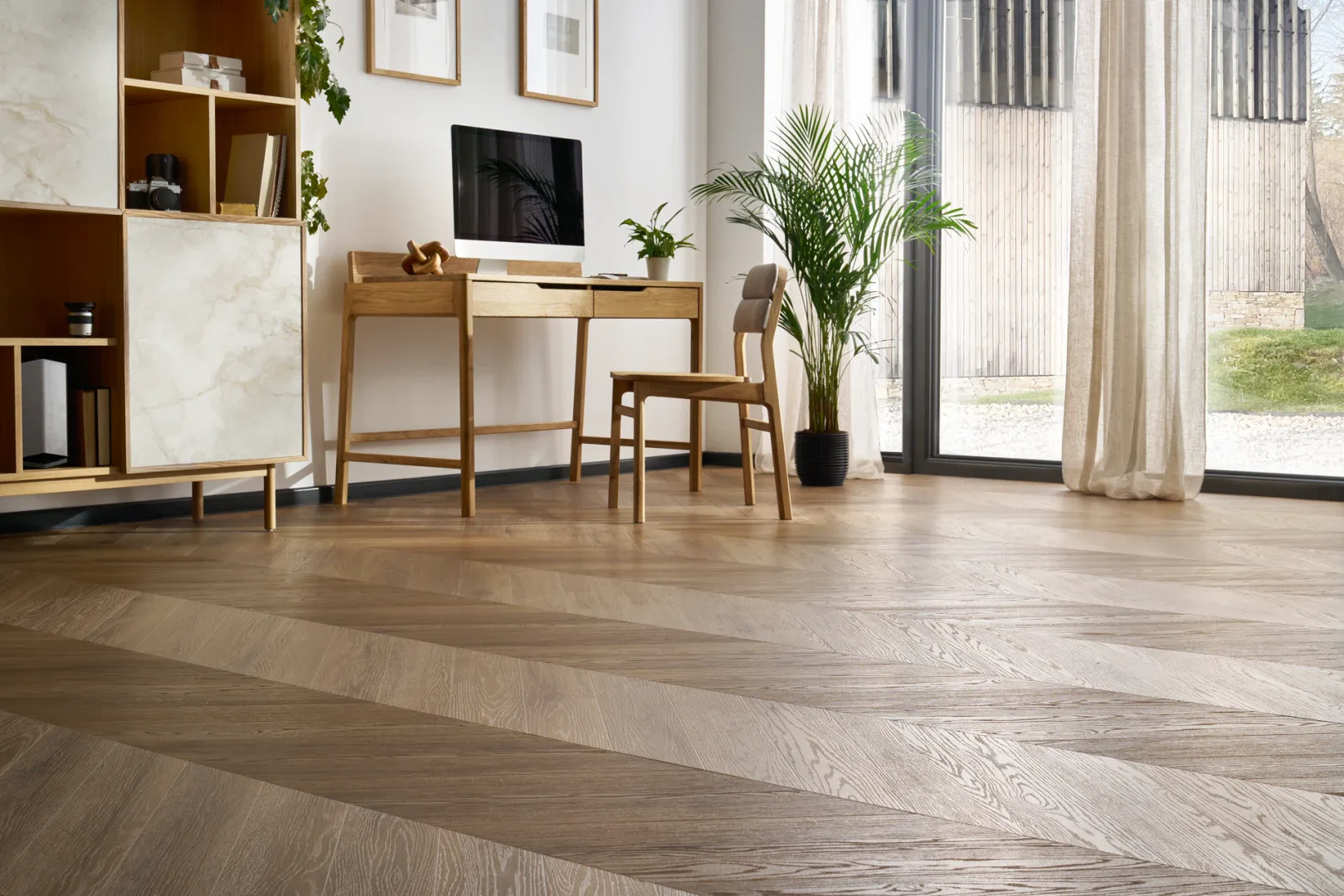
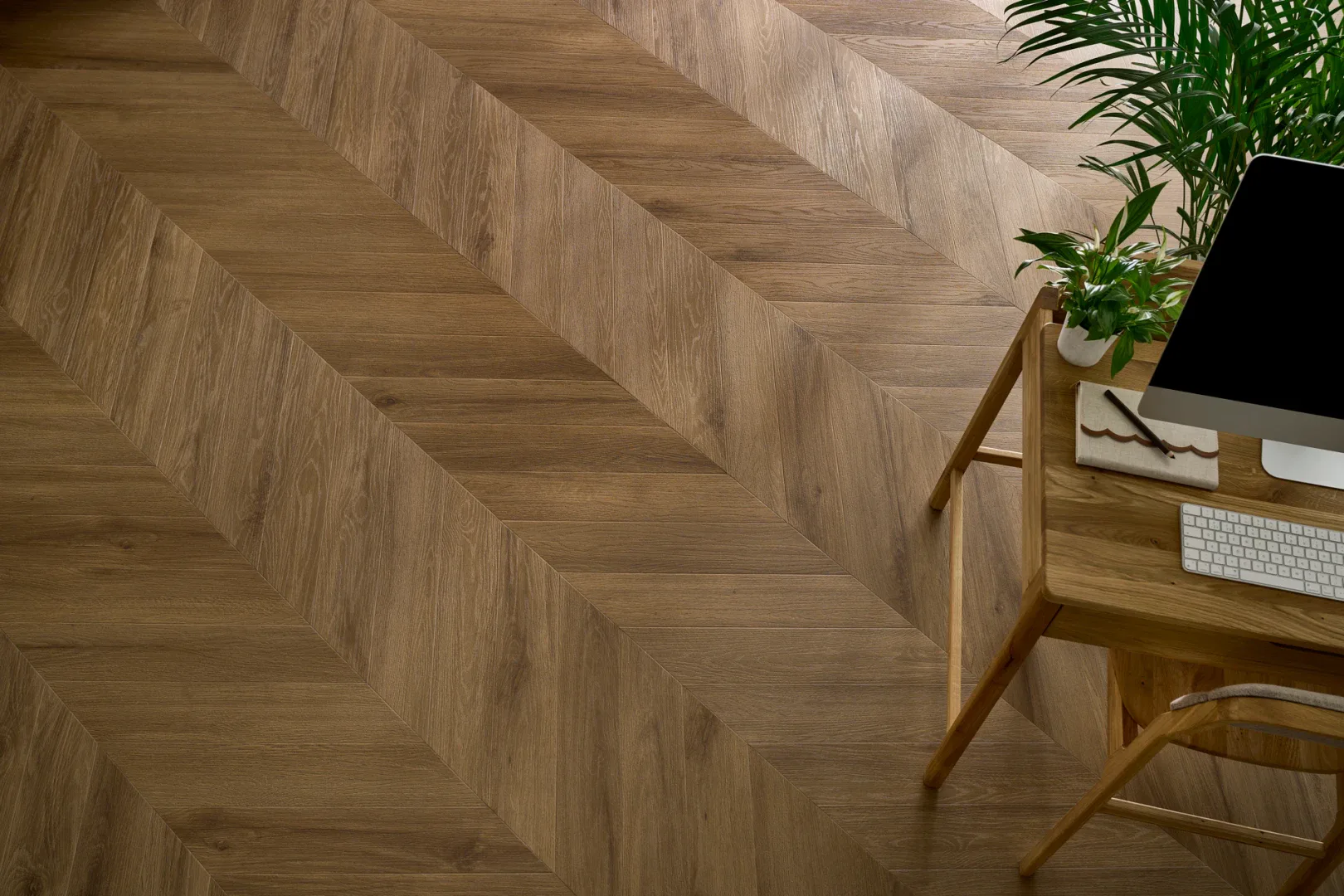
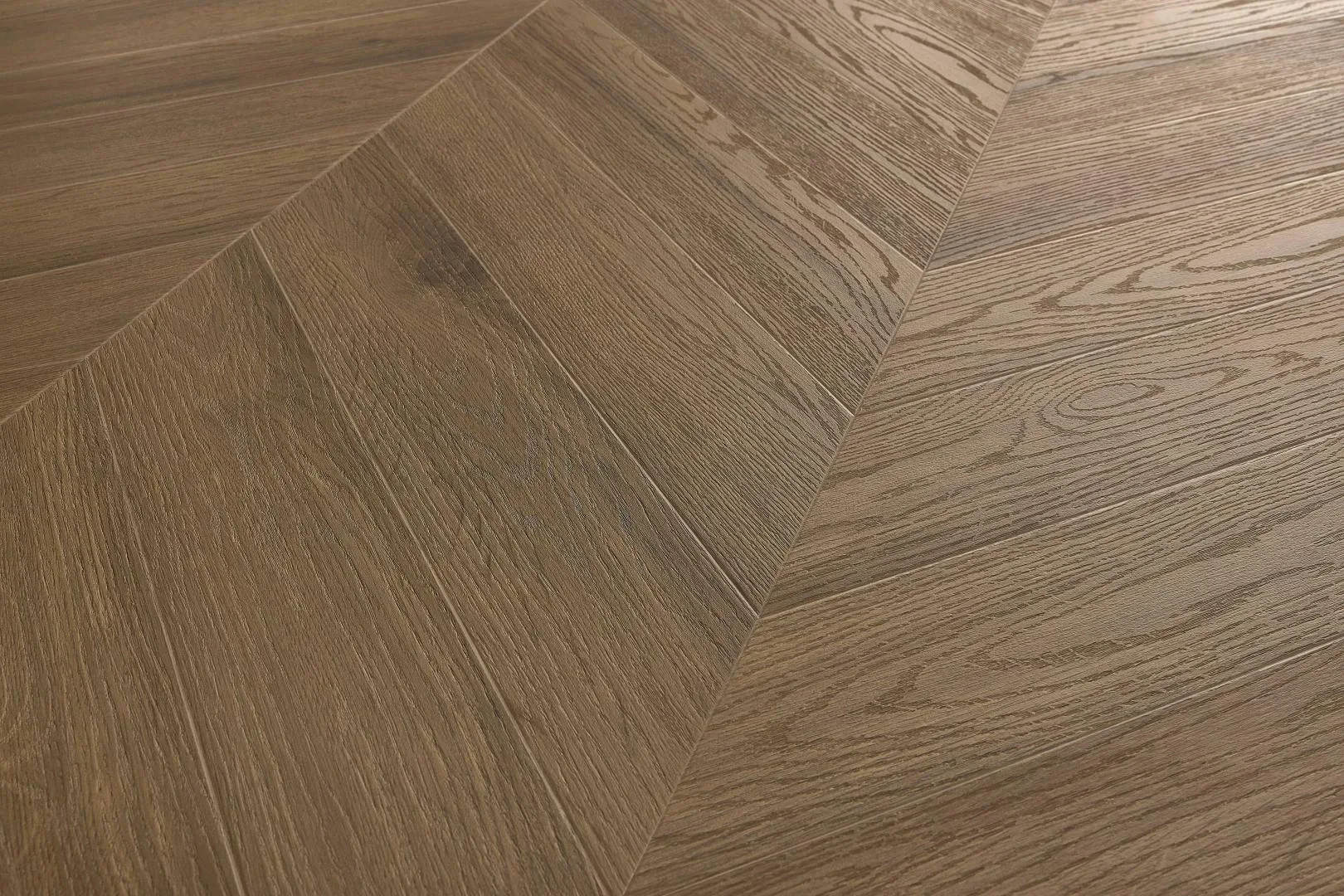
We will advise and prepare an individual quote matched to your interior.
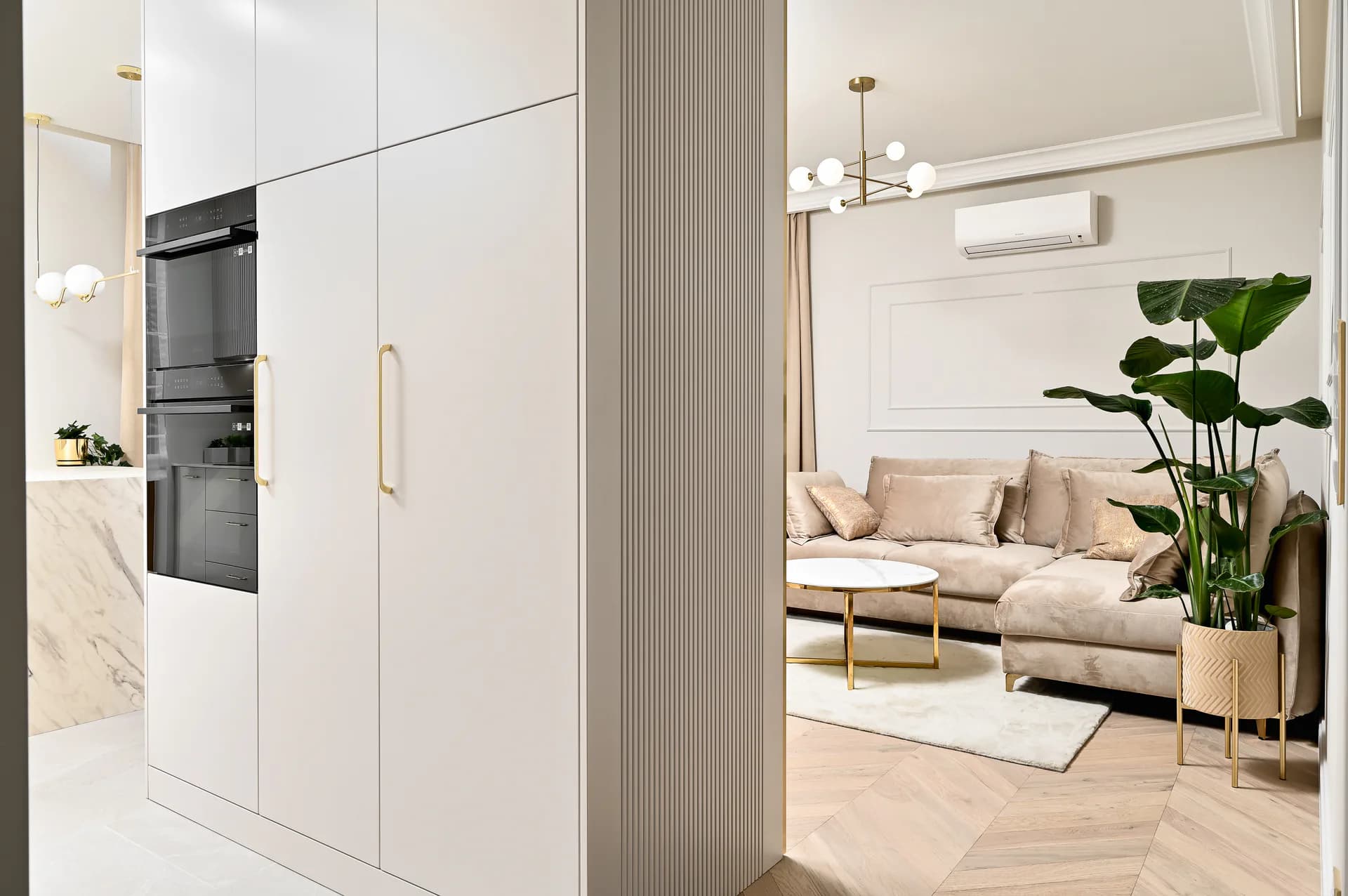
Kitchen floor panels are a modern solution that effectively replaces traditional ceramic tiles, offering a wide choice of wood-imitating designs…
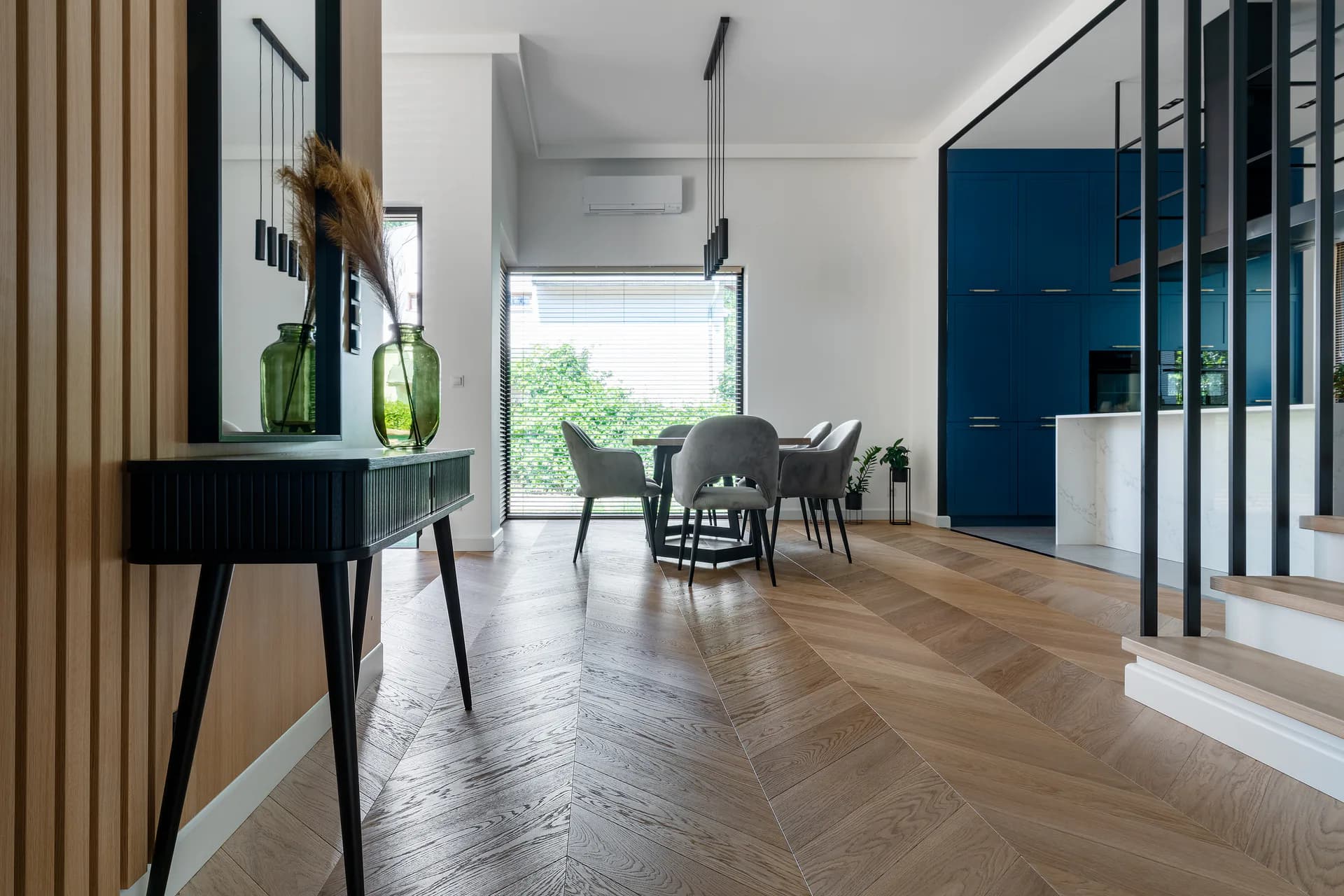
Floors are the foundation of every interior's finish, combining functionality with aesthetics. They are multi-layer constructions consisting of a load-bearing base, an underlay…
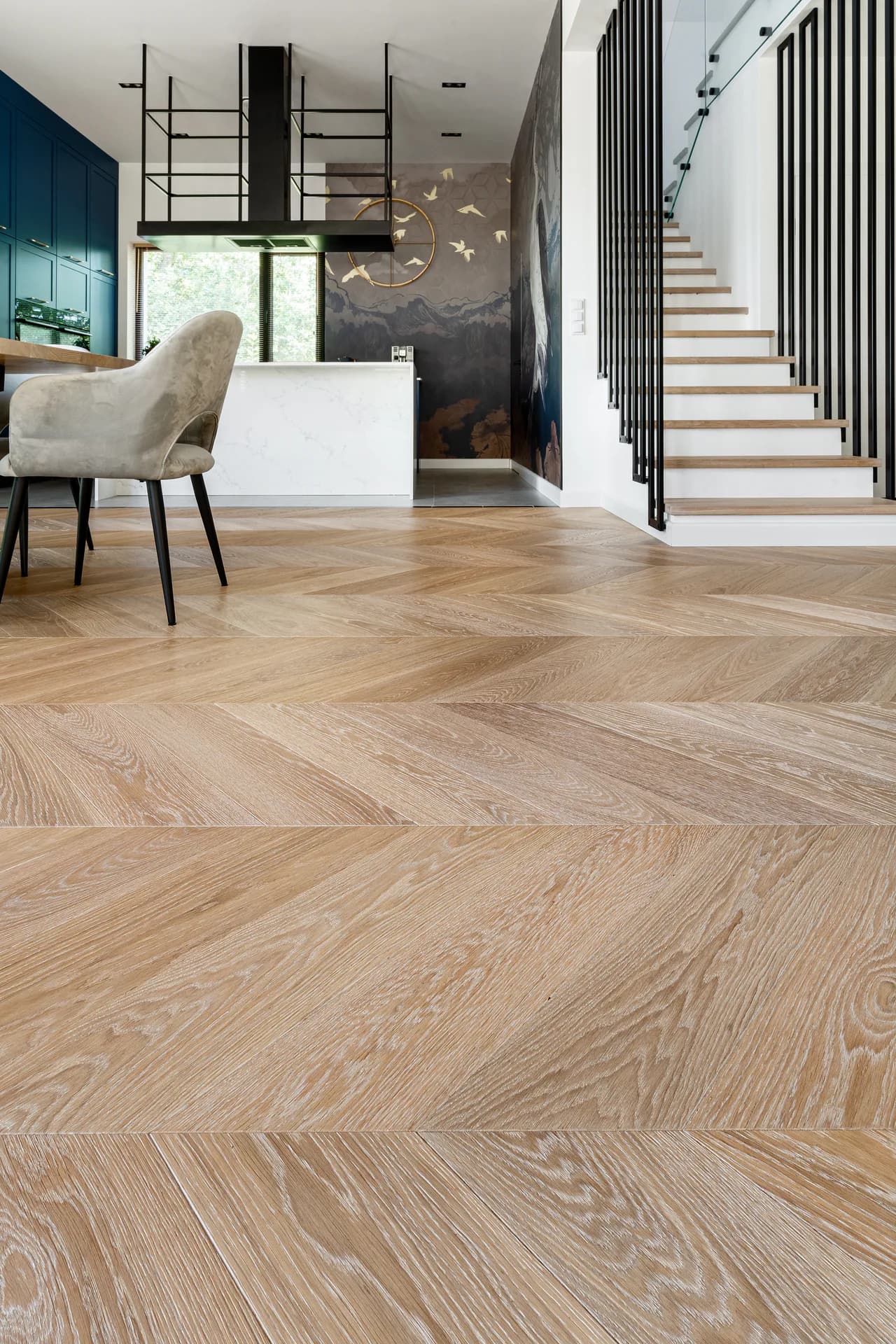
Waterproof kitchen floor panels are a practical solution for anyone expecting durability, easy cleaning and resistance to everyday use…