

Kitchen floor panels: a complete guide to choosing and fitting
Kitchen floor panels are a modern solution that effectively replaces traditional ceramic tiles, offering a wide choice of wood-imitating designs…

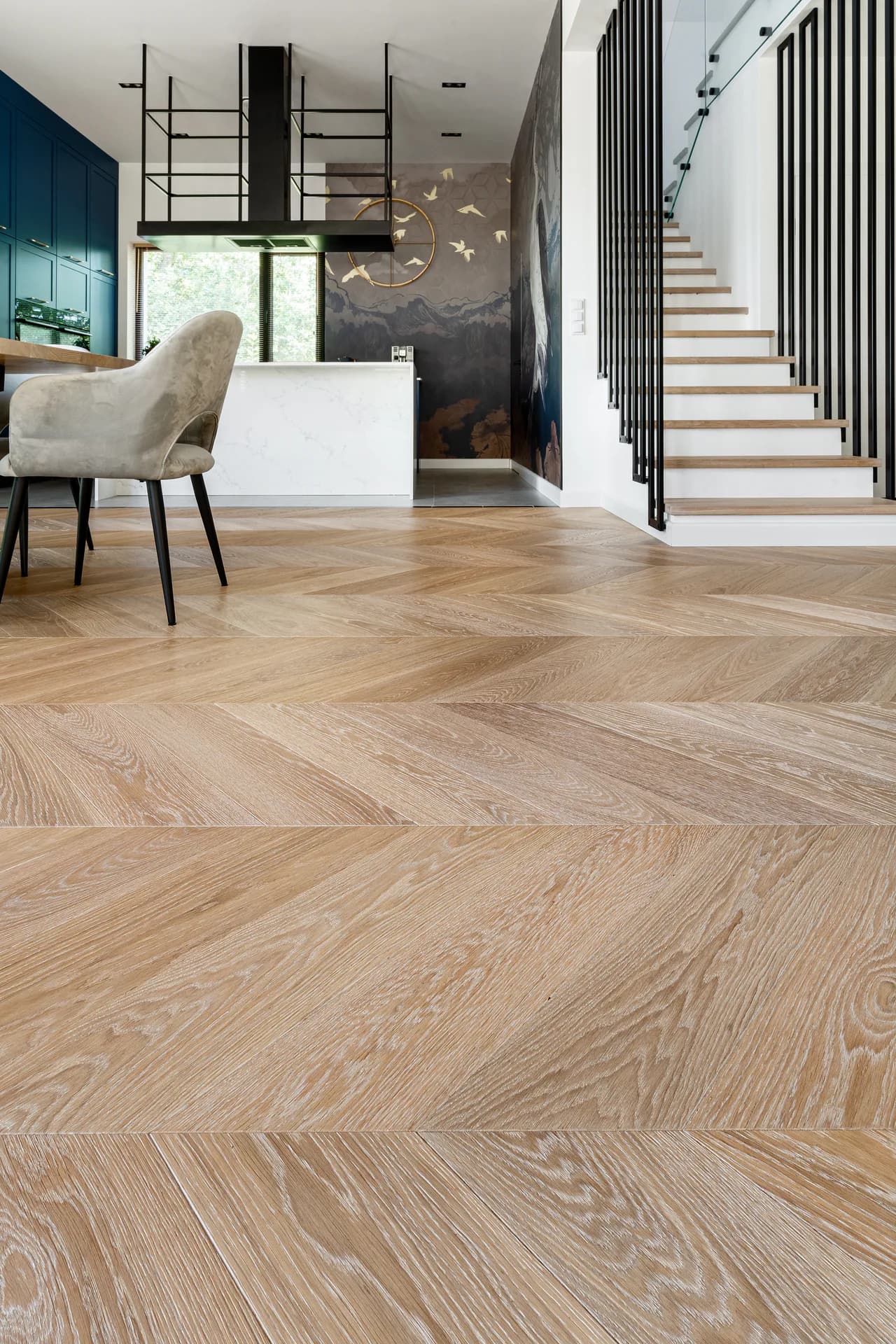
Waterproof floor panels for the kitchen are a practical solution for anyone who expects durability, easy cleaning and resistance to everyday wear. SPC vinyl models and modern laminate panels with enhanced moisture protection perform best, coping effectively with spilt water and intensive use.
Choosing the right floor panels for the kitchen is a key part of the design, one that combines good looks with functionality. Waterproof floor panels are becoming an increasingly popular solution, ideal for kitchens, where moisture and splashes are a daily reality. With them, you can enjoy a durable, easy-care floor that will stand up to even the most intensive use.
The core of SPC panels is resistant to water, but the watertightness of the whole floor depends on the installation and on how the edges are sealed
Waterproof laminate panels with Hydroseal technology withstand standing water for 24-72 hours when correctly installed
A usage class of at least 23/32 and tight 5G locking joints are the key parameters when buying panels for a kitchen
Modern floor panels are compatible with underfloor heating at temperatures of up to 27-29°C
Wiping up spilt water promptly and using suitable cleaning products extends the life of the floor
When choosing a kitchen floor in 2026, you have two main options: waterproof SPC vinyl panels with a mineral core, or laminate floor panels with Hydroseal technology.
SPC vinyl panels are declared waterproof – the core absorbs no water even after several days of immersion
Waterproof laminate panels protect against water penetration for 24-100 hours (depending on the manufacturer)
When buying, check the usage class (min. 23/32), the manufacturer's guarantee and the type of Click locking system
Quick-Step confirms it has had no water-related complaints in 10 years of using Hydroseal technology
Modern floor panels compete confidently with ceramic tiles – they are 4-6°C warmer to the touch, reduce footstep noise by 25-30 dB and lower the risk of broken crockery. In this article you will find practical guidance on choosing, installing and caring for waterproof panels.
The kitchen is a room where water appears every day in various forms – from splashes at the sink, through spilt drinks, to the wet paw prints of a dog coming in from outside.
Conventional panels without sealed joints start to swell after just 2-6 hours of contact with water. The difference between “water resistant” (coping with splashes for up to 1-2 h) and “waterproof” is crucial – the former tolerate the odd incident, while the latter can handle a standing puddle for dozens of hours.
Waterproof kitchen floors fall into three main categories, each with its own place depending on how intensively the room is used.
Waterproof SPC vinyl panels are an excellent choice for kitchens open to the living room and for rooms prone to frequent spills. The stone-powder core (80-90% of the composition) ensures zero water absorption.
They can be mopped with no fear of swelling
A warm surface – 4-6°C warmer than tiles without heating
Quiet underfoot, with less risk of crockery breaking when dropped
Compatible with underfloor heating (max 28°C)
A wide range of designs imitating natural wood, concrete or stone
SPC panels excel in heavily used rooms and let you run a single, uniform floor from the kitchen through the living room to the hallway; FirmFit floor panels are a good example.
Laminate floors with a high-density HDF core are an attractive option for the kitchen
Resistance to standing water: 24-100 h (O.R.C.A declares as much as 100 h)
A lower price – 20-40% cheaper than vinyl
A realistic real-wood grain thanks to 3D printing technology
A high AC4/AC5 abrasion class
The limitation is that the edges absorb more water than vinyl does. In small kitchens in blocks of flats, where you are not planning a wet zone connected to a bathroom, laminate floor panels are entirely sufficient.
When choosing panels for the kitchen, pay attention to a few key parameters in the technical data sheet:
| Parameter | Recommendation for the kitchen |
| Usage class | Min. 23/32, ideally 33 |
| Water resistance | Min. 24 h, ideally 48-72 h |
| Locking system | 5G or Uniclic with impregnation |
| Thickness | SPC: 4-5 mm, laminate: 8-10 mm |
| Max floor temp. | 27-29°C for underfloor heating |
Look for the “waterproof” or “100% waterproof” marking – it guarantees that the panels can withstand water itself, not just moisture. For underfloor heating, choose products with low thermal resistance.
Correct installation determines whether waterproof panels will actually protect your floor from water.
Subfloor evenness: max 2 mm of variation over 2 m
Screed moisture: below 2% (new flats need 4-6 weeks of drying)
Expansion gap: 8-12 mm at walls and thresholds
Underlay: with a vapour barrier for laminates, with a low thermal resistance for underfloor heating
The sink and dishwasher zone – sanitary silicone
Around a fridge with an ice maker
Runs under pipes and along door frames
Heavy built-in kitchen units are best set on a separate level (an OSB board, for example) so that they do not restrict the movement of a floating floor.
Even the best waterproof panels need basic care if they are to serve you for years to come.
Vacuum with a soft brush or use a microfibre mop
Clean with a well-wrung mop – moisture below 10%
Use products with a pH of 6-8, free of ammonia and bleach
Wipe up spilt liquids within an hour
A rubber mat by the sink
A mat under the dishwasher
Felt pads under furniture legs
Protective mats under chairs on castors
Periodically check that the joints by balcony doors remain tight – these spots are exposed to moisture from outside.
Yes – SPC vinyl panels and high-grade waterproof laminate panels replace tiles in 90% of domestic kitchens. They offer comparable water resistance with greater comfort underfoot. Ceramic tiles remain the better choice only in extremely wet zones, such as a walk-in shower in the bathroom.
Manufacturers declare protection from 24 to 100 hours (O.R.C.A – 100 h, standard models – 48-72 h). If the dishwasher fails, remove the water as quickly as possible and dry the subfloor with a fan. If the contact lasts longer than 72 h, consider taking the panels up.
Yes – both SPC panels and modern laminates are compatible with water-fed and electric heating. Check the permitted temperature (usually 27-29°C) and use an underlay with low thermal resistance. Heat transfer efficiency exceeds 90%.
It is a popular choice in modern interiors – tiles in the working zone, panels in the dining area. It requires a 5-8 mm expansion gap and T-profile transition strips to avoid stresses where height differences reach up to 10 mm.
We will advise and prepare an individual quote matched to your interior.
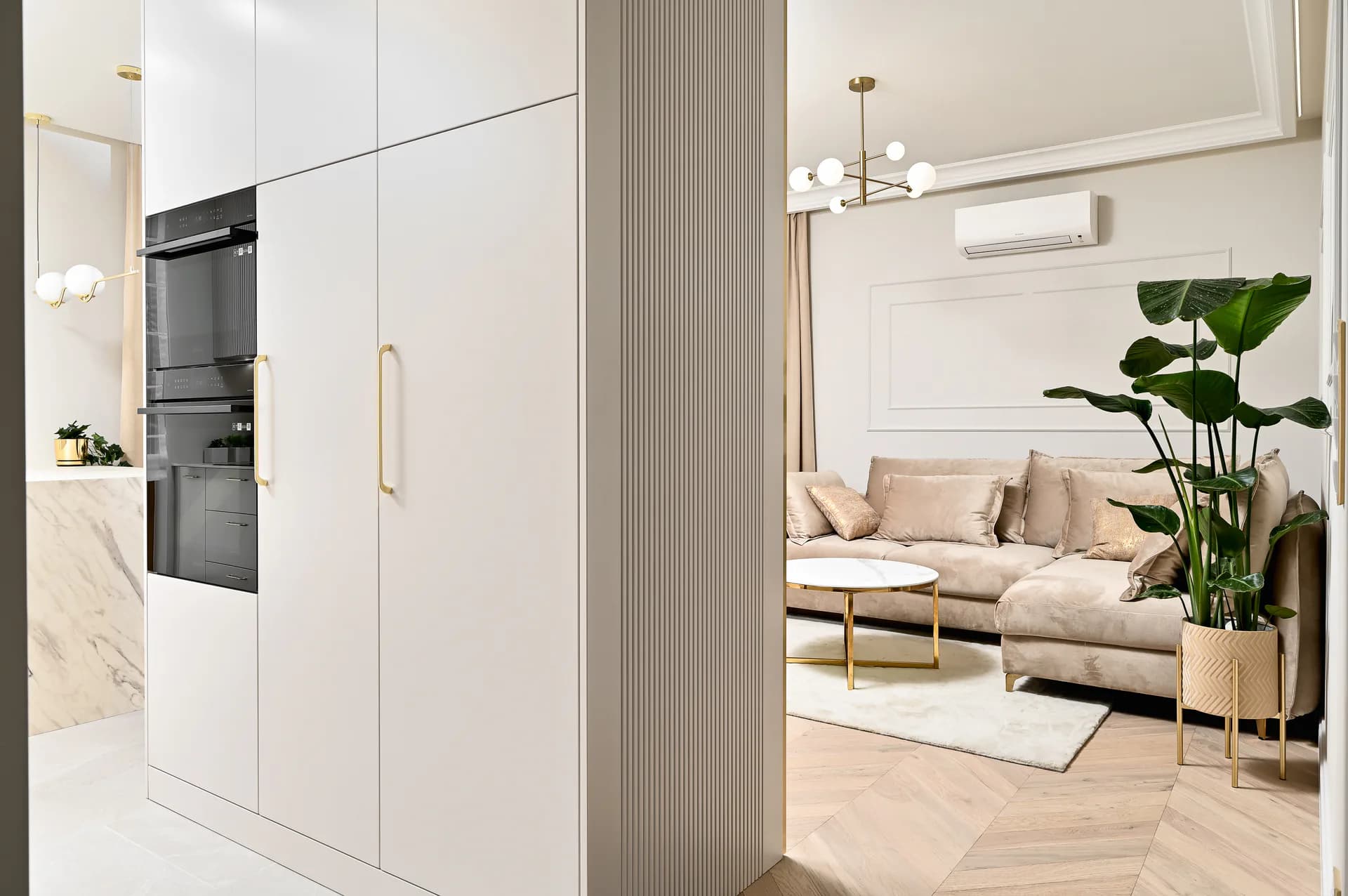
Kitchen floor panels are a modern solution that effectively replaces traditional ceramic tiles, offering a wide choice of wood-imitating designs…
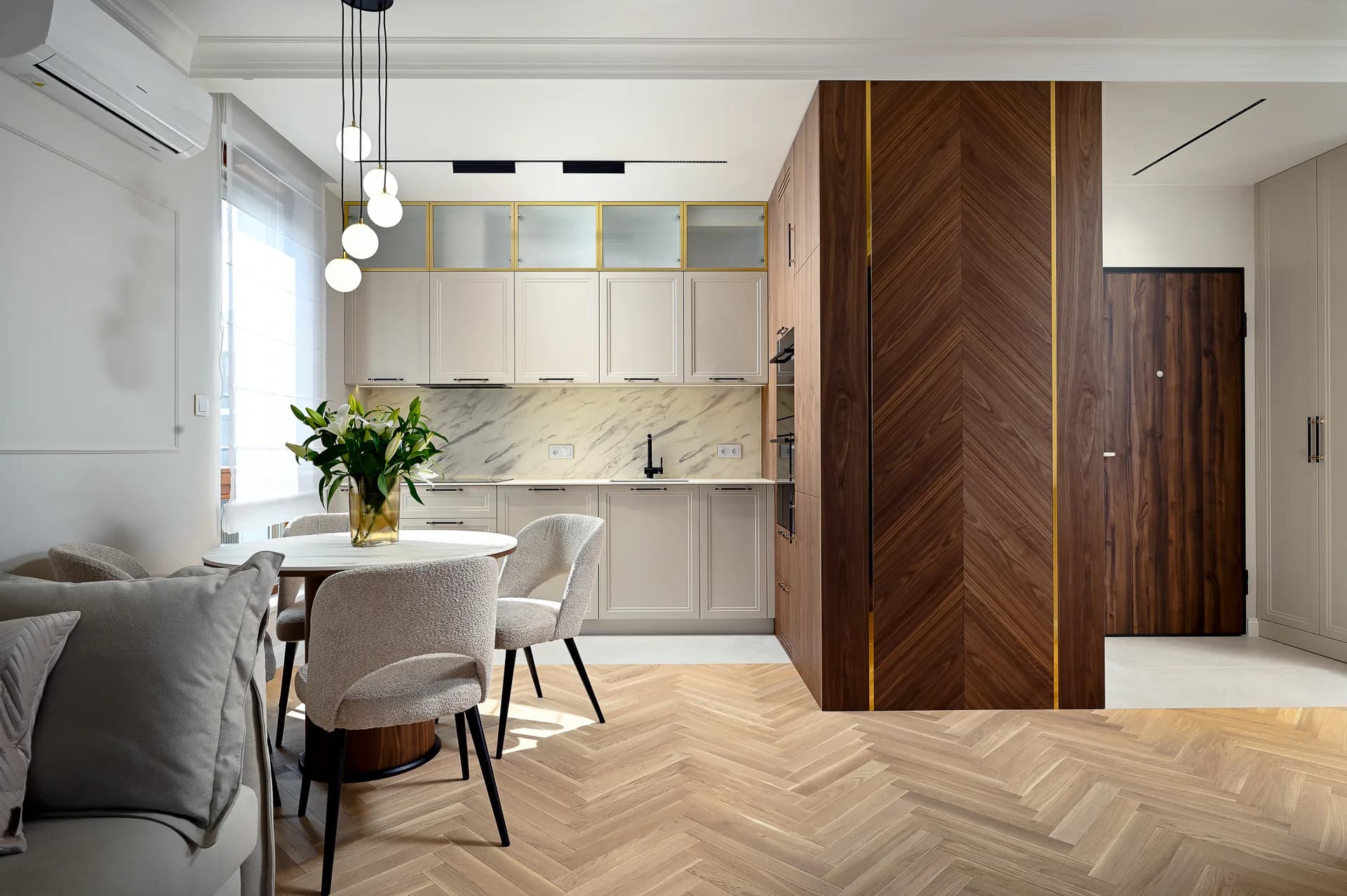
You can connect the kitchen and living-room floor in two ways: using one material throughout (SPC vinyl panels, wood-look porcelain tiles, microcement) or combining two…
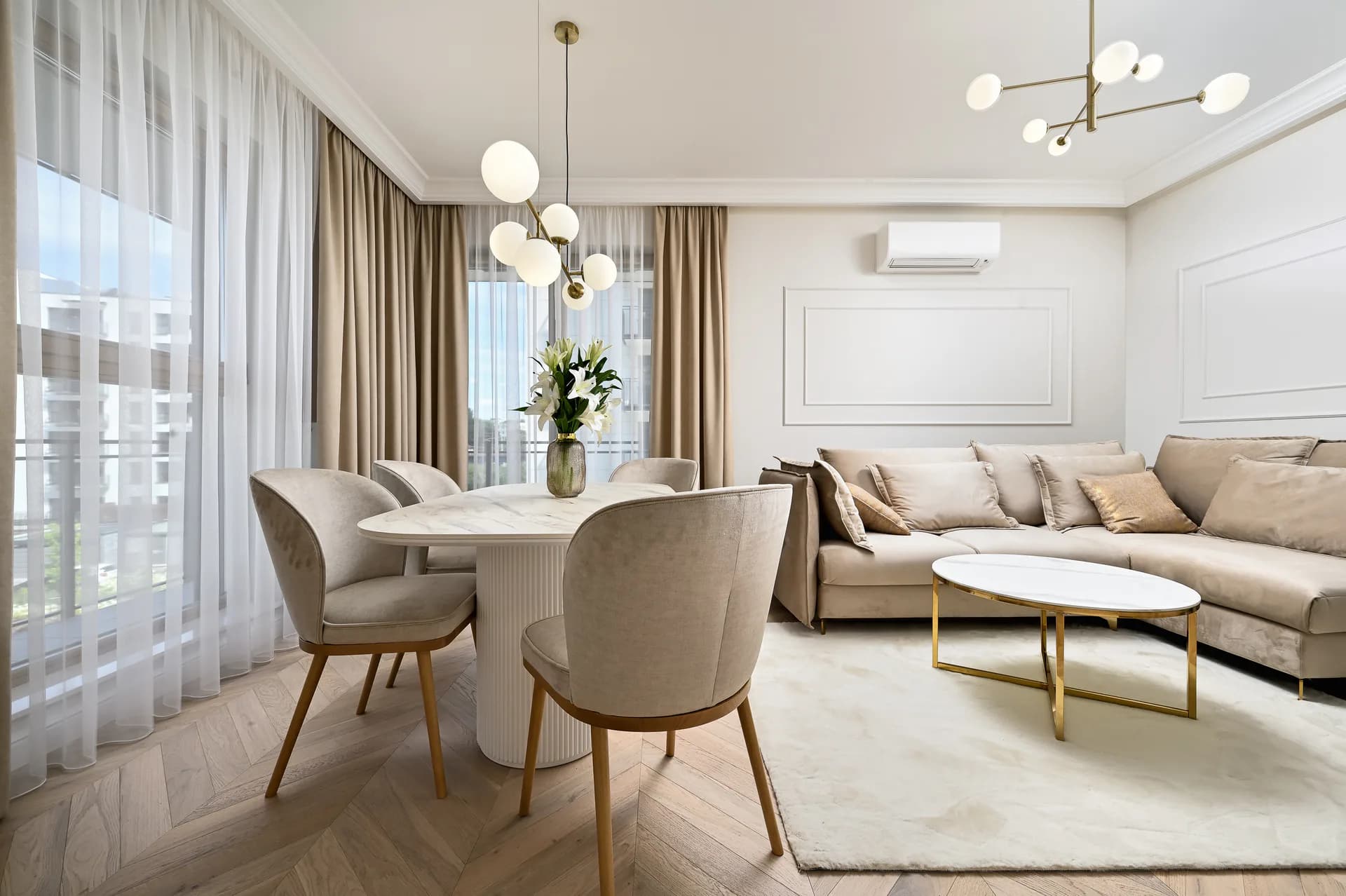
Herringbone panels are one of the most interesting ways to create an elegant floor without investing in traditional parquet…