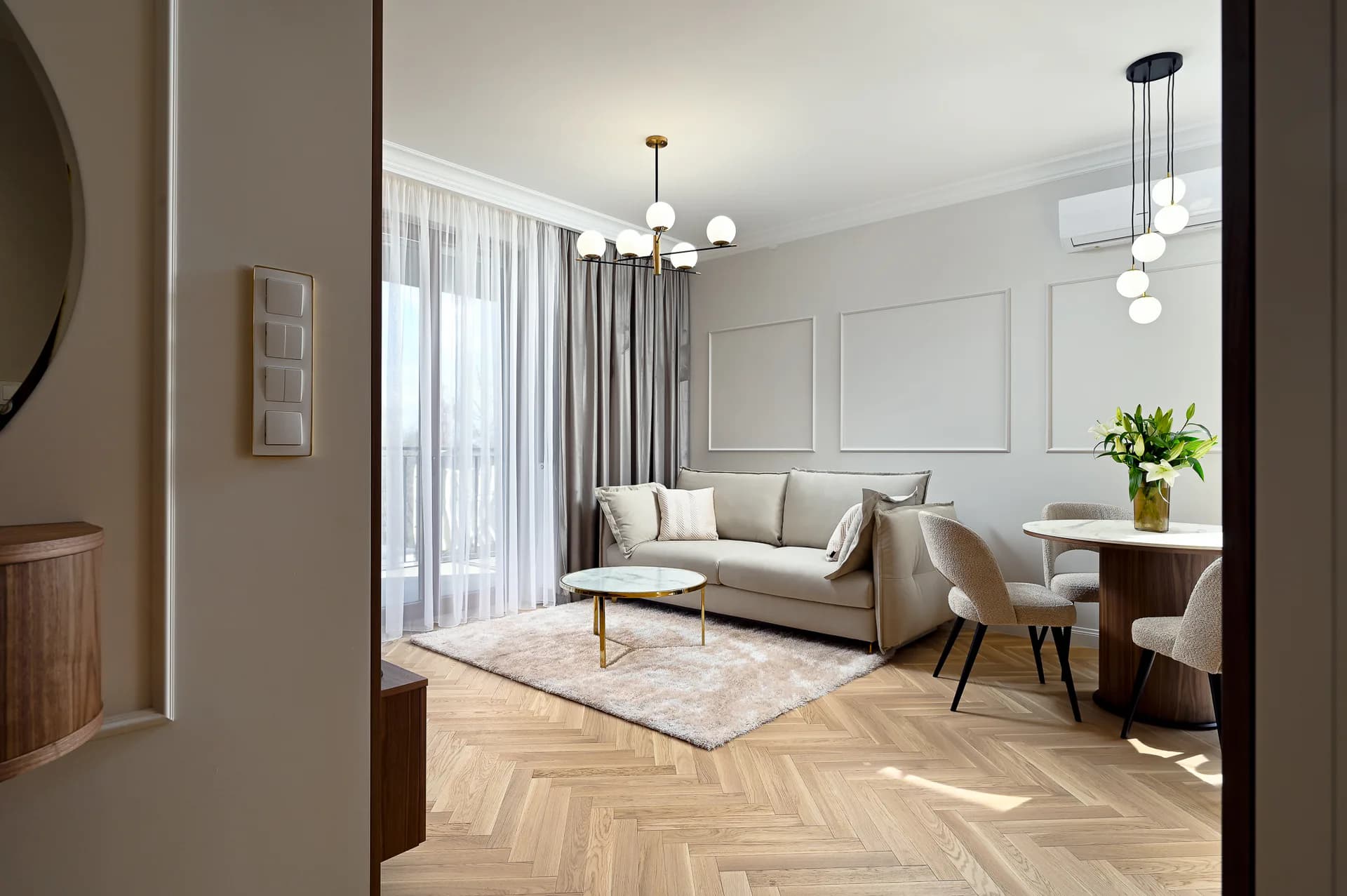
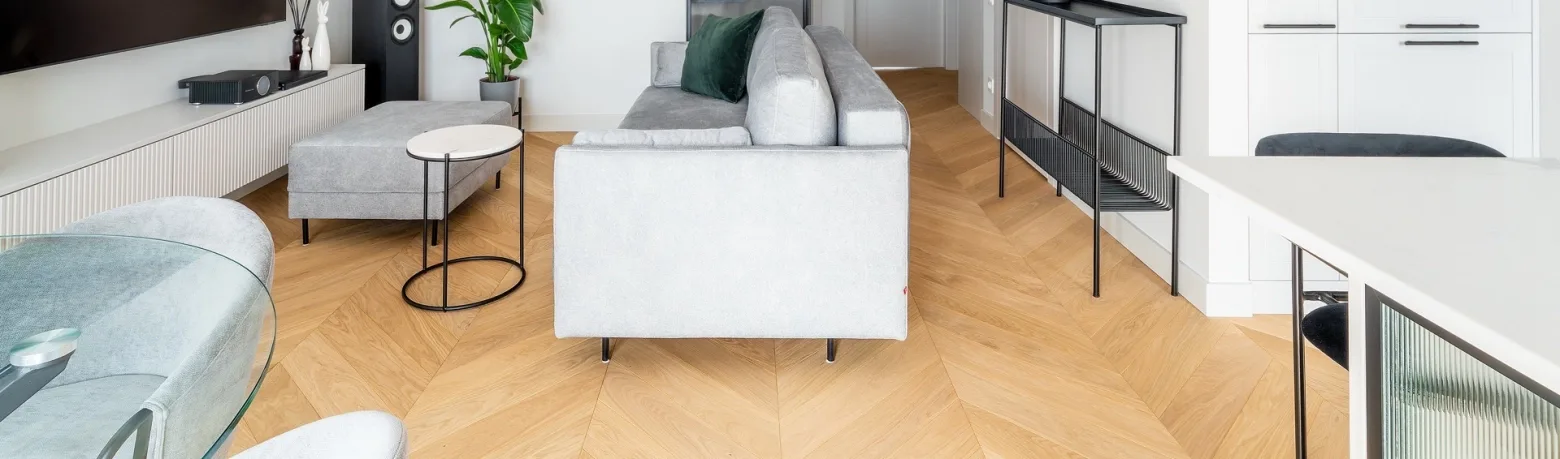
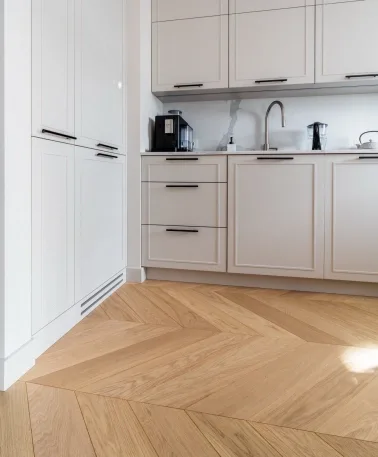
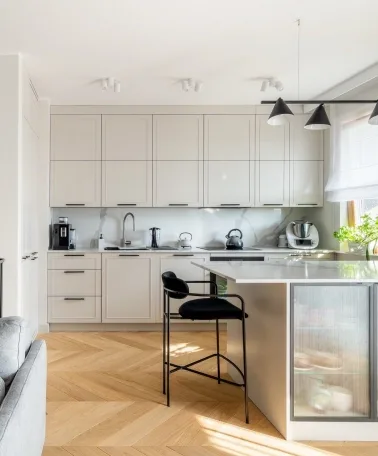
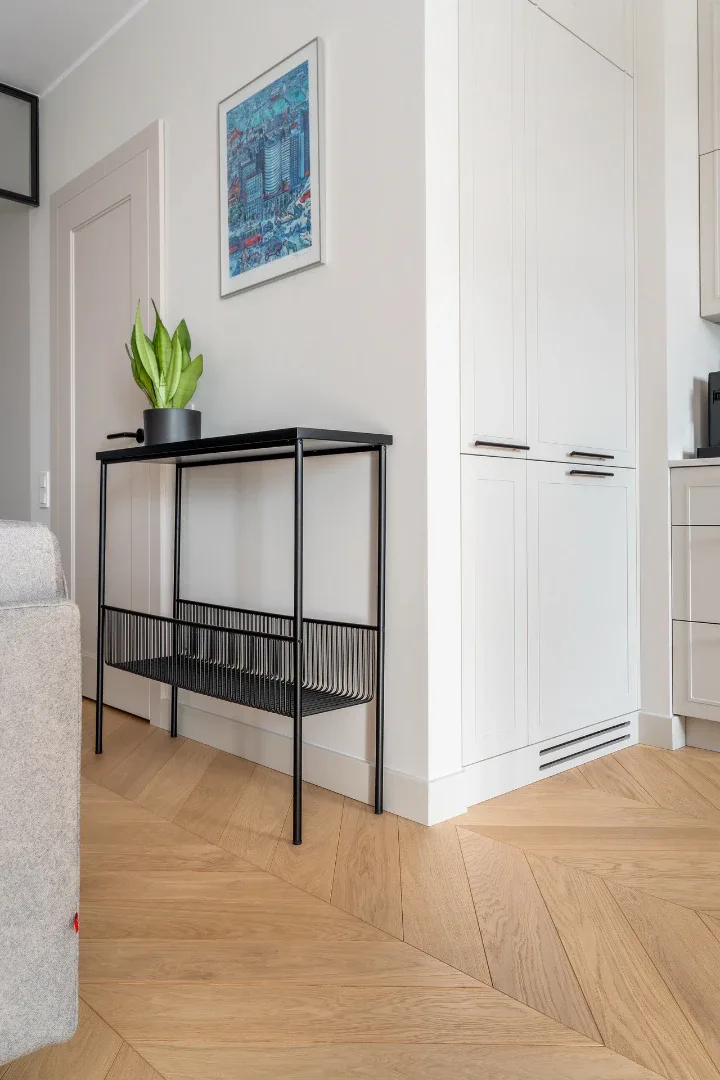
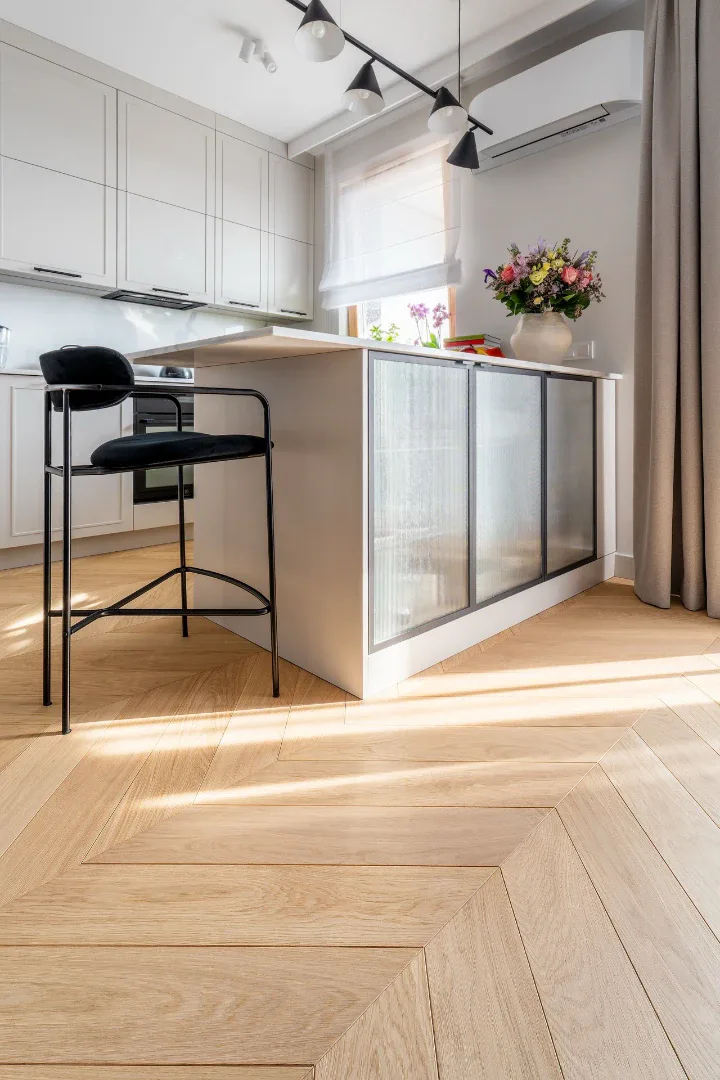
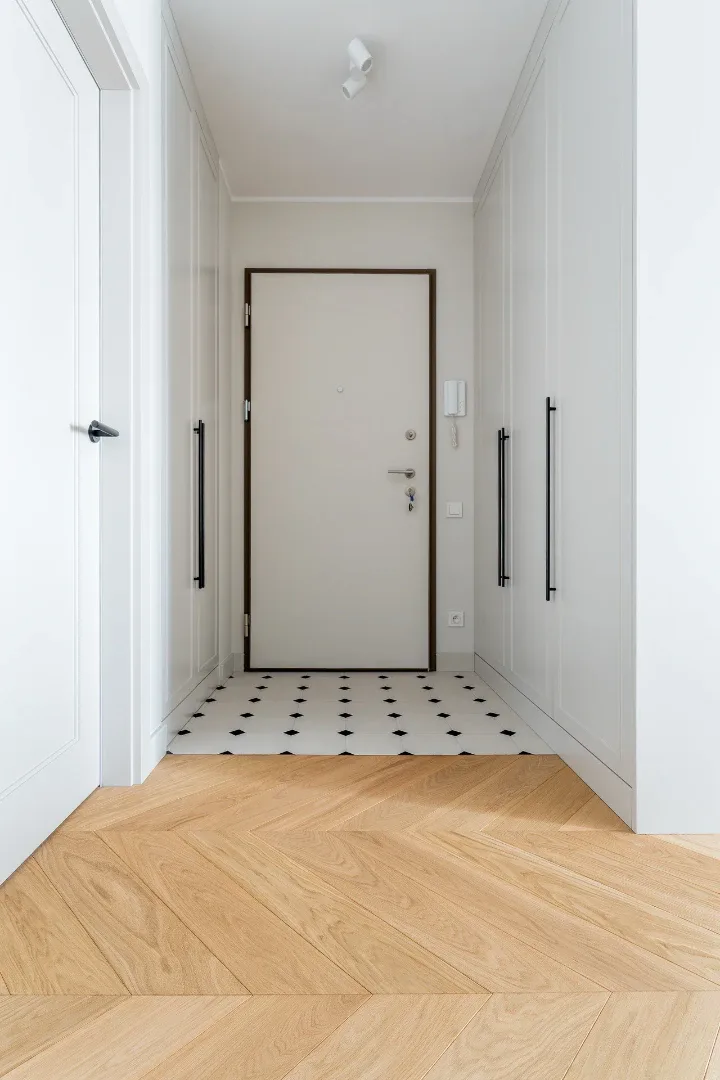
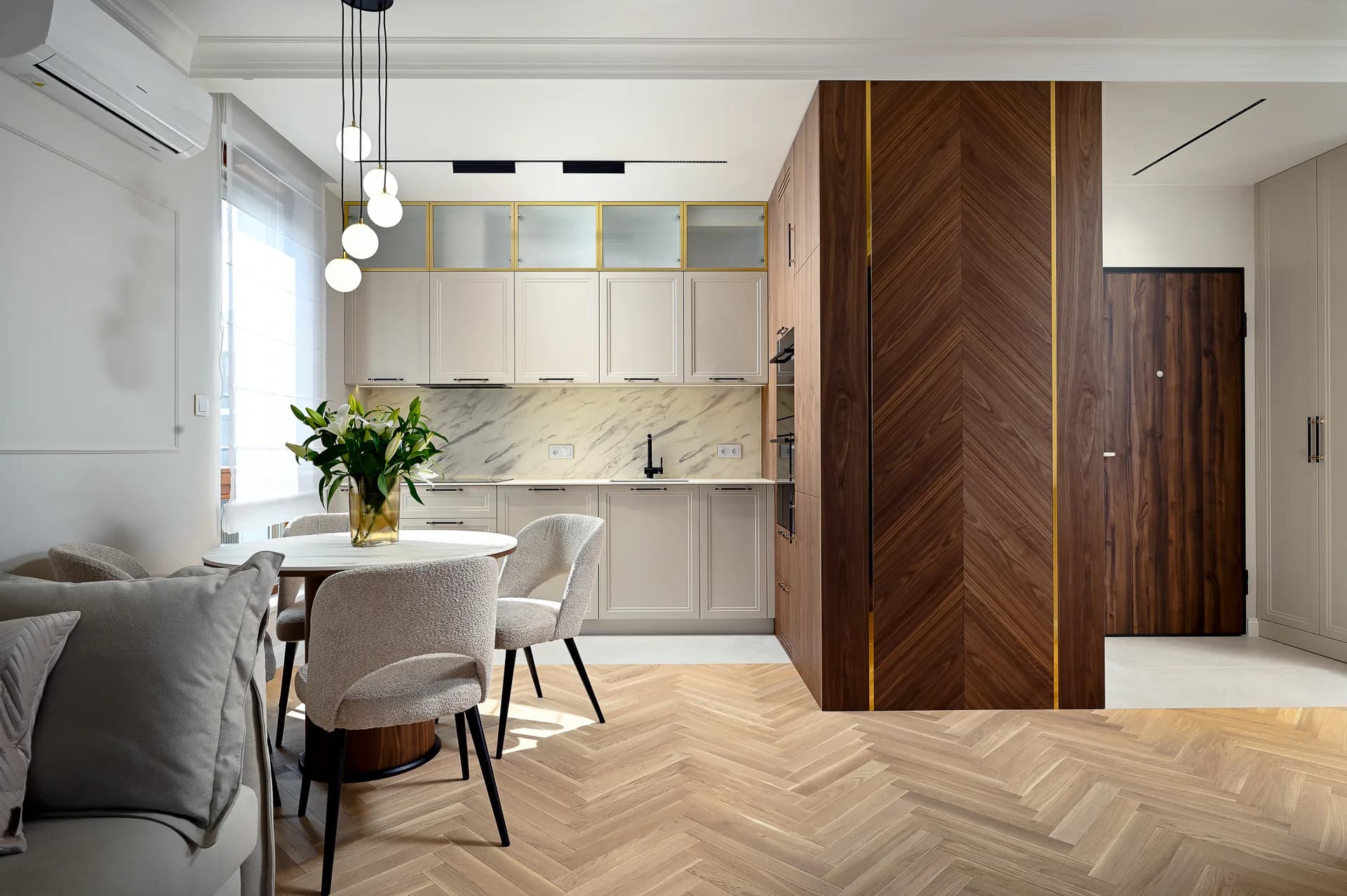
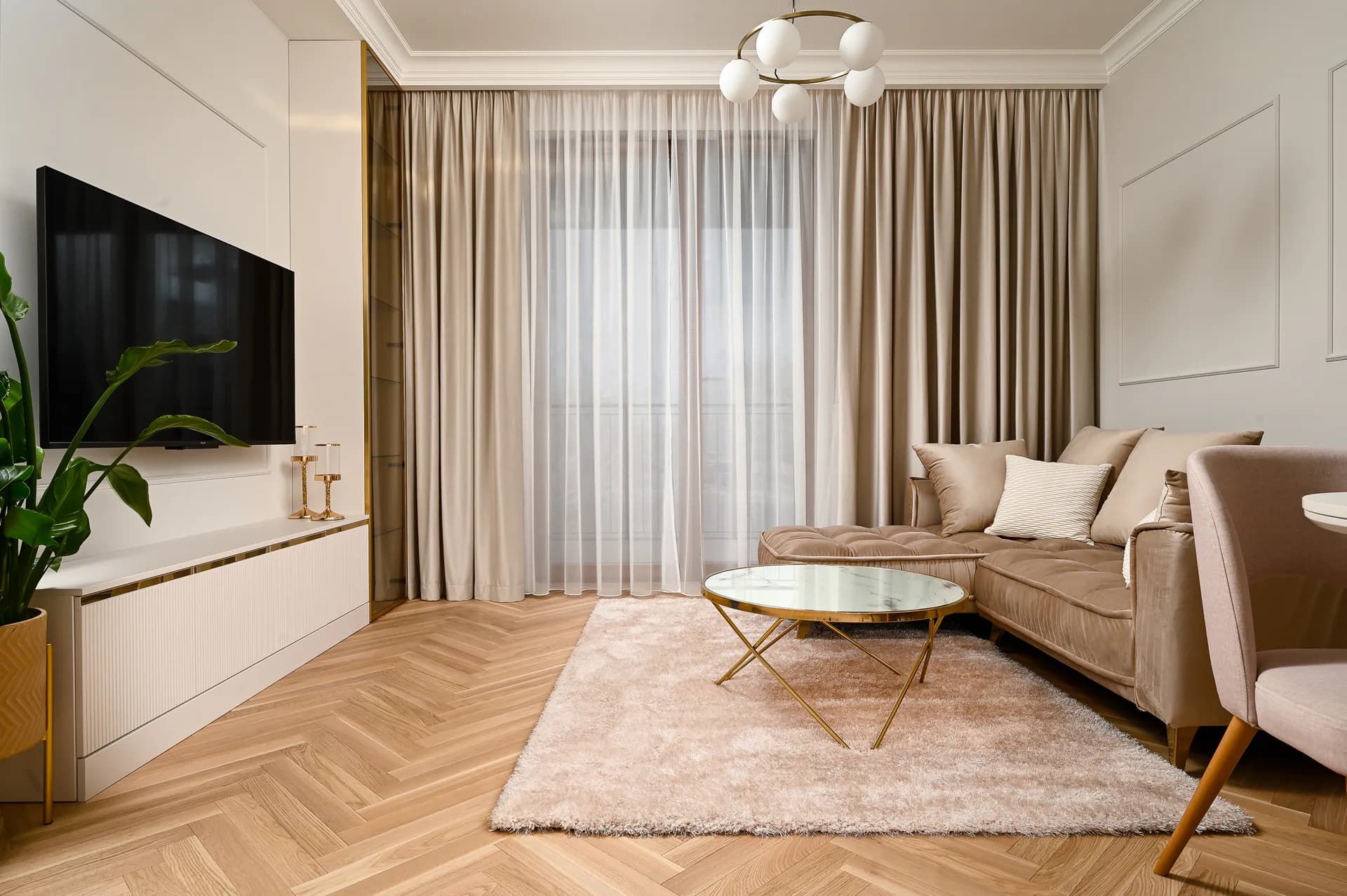
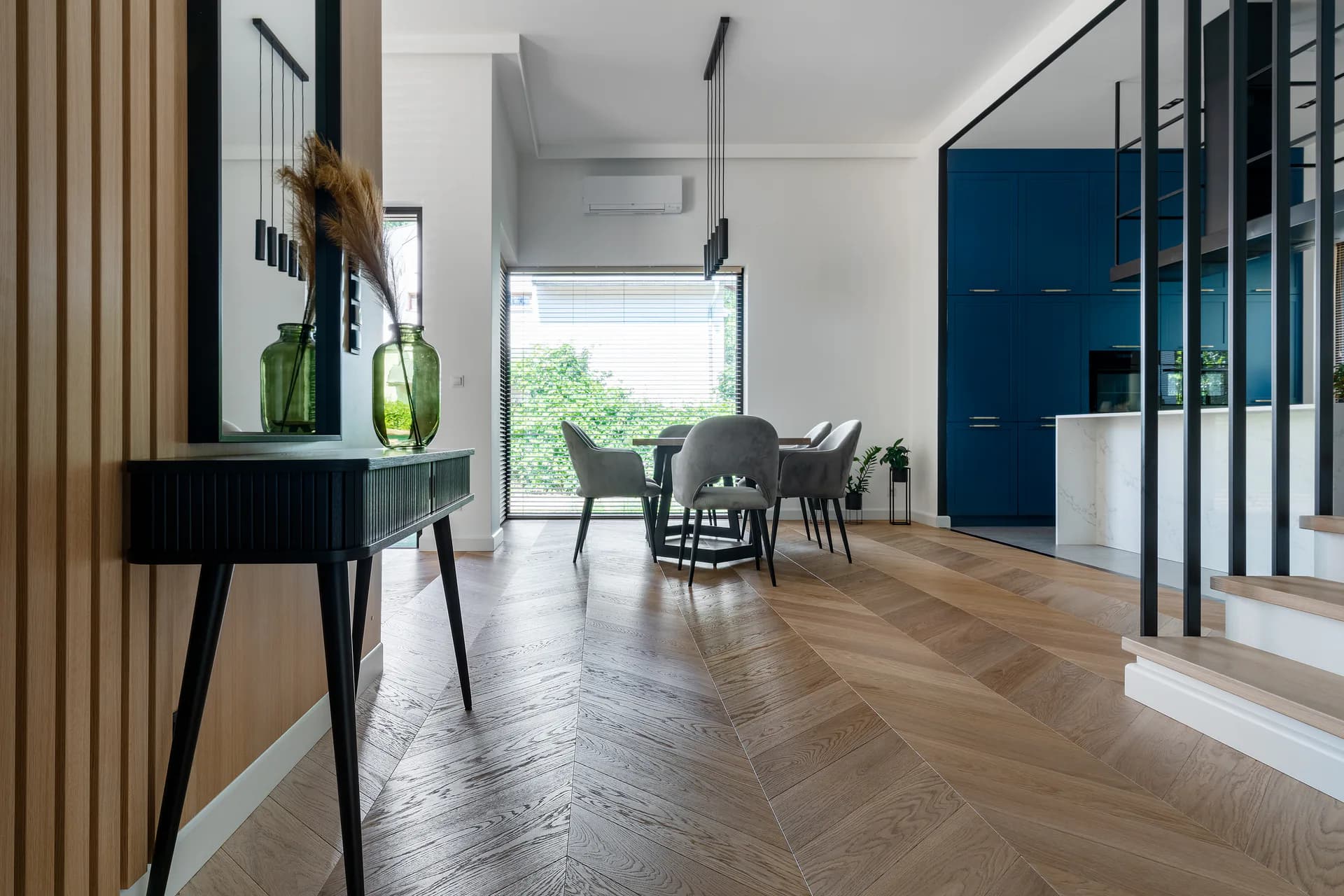
The best floor for a living room is one that suits your everyday life – it doesn't just look beautiful on the day it is fitted, but keeps its qualities for many years. Oak boards will suit those who value naturalness, elegance and a surface that can be renewed, while vinyl panels are the ideal solution for those who put practicality, water resistance and quick installation first. Laminate panels, in turn, offer the most favourable ratio of price to looks.
The choice of floor depends on your lifestyle, your budget and the durability you expect. With proper use, many of these options will keep their qualities for years to come.
The basics of choosing a living room floor
The living room is the most intensively used room in any home – it is where we entertain guests, where the children play and where the household relaxes. It is also the space that defines the character of the whole interior. That is why the choice of floor deserves more attention here than in the case of a bedroom or hallway. Before we compare specific materials, it is worth understanding the two foundations of the decision: your lifestyle and the functional demands of the room itself.
Lifestyle and the choice of material
Families with young children need a floor that resists stains and spilt juice and is easy to keep clean. The floor should be scratch-resistant in homes with children or pets – oak is one of the harder native wood species used for flooring, so it copes well with intensive use. Vinyl panels are waterproof and easy to maintain, which makes them an equally good choice in such conditions.
Where pets are concerned, it is worth paying attention to the hardness of the material and the surface's resistance to scratching. Oak generally withstands such demands better than soft wood species. Vinyl flooring is resistant to mechanical damage – both SPC and WPC cope well with point loads.
Older people will appreciate the comfort underfoot – wooden floors are warm and pleasant to the touch, and WPC panels additionally cushion each step. An anti-slip finish is particularly relevant here.
Lovers of elegance and modern design will find in oak boards what no imitation can deliver – the natural grain structure, the depth of colour and the prestige that comes with natural materials. Wood is a classic choice, adding warmth and elegance to any room.
The functional demands of a living room
Foot traffic in the living room is the heaviest of any room in the home – the floor has to withstand daily use by every member of the household, by guests and by pets. Heavy furniture – sofas, bookcases, tables – places point loads on the floor, and moving it can lead to scratches.
Exposure to spilt liquids is another factor, especially in living rooms combined with a kitchenette. In such a layout, the visual continuity of the floor across the entire area matters enormously to the look of the interior.
Acoustic requirements matter too – the noise of footsteps, of children playing or of chairs being moved can be irritating. A good acoustic underlay and the right type of material dampen these sounds effectively, making the room work better as a space for relaxation.
Types of flooring ideal for the living room
Of all the flooring materials available, three enjoy the greatest popularity in Polish living rooms: oak boards, vinyl panels and laminate panels. Each of them has clear advantages and its own characteristics – let's discuss them in detail.
Oak boards – natural beauty and durability
Natural wood is an elegant and durable solution, and the most common species are oak and ash. Oak stands out for its high hardness and good resistance to everyday use, its distinctive grain pattern and a natural charm that no print can fully reproduce. A wooden floor brings warmth and refinement to a living room – wood is a classic flooring material, adding warmth to any interior.
Two types of oak board are available on the market, and wooden floors from reputable brands at attractive prices make it possible to choose options suited to your budget and interior style:
Solid wood boards – solid timber from 15 mm thick upwards. They can be sanded 5–8 times (each cycle removes around 1.5–2 mm of wood), which means a lifespan of 30–50 years with proper care. Wooden floors are durable and can last for decades.
Engineered boards – a top layer of fine hardwood over stabilising layers (plywood, HDF). Products with a 4–6 mm wear layer allow 2–3 sanding cycles, while premium products with a 6–7 mm layer can be renewed many times over. Depending on the thickness of the wear layer, the floor can be renovated repeatedly.
Engineered boards generally work better with underfloor heating than solid wood boards, although suitability is always determined by the recommendations of the manufacturers of the floor and the heating system. Oak boards by Kaczkan are one example, combining an elegant finish with high durability. Wood is a natural material, which makes it an ecological choice – more and more products carry FSC certification and use oils low in volatile organic compounds.
Vinyl panels – modernity and practicality
Vinyl panels are hugely popular with those looking for modern floors that combine the look of wood with extreme resilience. Their layered construction is based on one of two types of core:
SPC (Stone Polymer Composite) – a core made from a blend of calcium and PVC, very hard and rigid, typically 4–6 mm thick. The SPC core does not absorb moisture, so the material performs well in rooms exposed to occasional contact with water.
WPC (Wood Plastic Composite) – a core containing cellulose and a polymer with foaming agents, 6–8 mm thick. Softer, better at insulating sound and warmer underfoot.
Vinyl panels are available in a wide range of colours and designs – today's oak-effect finishes with brushed texture and V-groove bevelling are visually very close to the original. Vinyl panels are quiet and comfortable underfoot, and click-fit installation allows them to be laid over an existing subfloor without gluing. Vinyl flooring works well with underfloor heating, which makes it a versatile solution. With correct use, it can keep its qualities for many years.
Laminate panels – the compromise between price and quality
Laminate panels are cheaper than wooden floors and easier to install, which is why they enjoy such popularity. A wide choice of laminate and vinyl panels lets you match the design and technical parameters to the specific needs of your living room. Their multi-layer construction is based on an HDF board – the higher the density of the core, the better the resistance to impacts and point loads.
For a living room, choose laminate panels with an abrasion class of AC4 or AC5 – these are the classes suited to higher-traffic spaces. In these higher classes, laminate panels are resistant to abrasion and scratching.
Laminate panels come in many designs and colours – from classic oak boards to stone or concrete effects. The wide choice makes it easy to match the floor to any interior style. Installing laminate panels is quick and easy – a 20 m² living room can be laid in a single day.
Bear in mind, however, that laminate floor panels have limited resistance to moisture – the HDF core swells when flooded, and the fact that they cannot be sanded means they are less durable over a horizon of several decades compared with oak boards.
A detailed analysis of the best solutions
To make comparison easier, we have compiled the key technical and practical parameters of the three types of living room flooring. Each material has its strengths – the comparison helps you make an informed decision based on concrete figures.
Comparison of material properties
Criterion
Solid oak boards (20 mm)
Engineered boards (14–15 mm, 4–6 mm wear layer)
SPC/WPC vinyl panels
AC4–AC5 laminate panels
Lifespan
30–50 years with renewal
20–30 years
15–25 years
10–20 years
Moisture resistance
Moderate – they require proper care
Better dimensional stability
Very high – waterproof
Low – moisture can deform them
Scope for renovation
5–8 sanding cycles
2–3 sanding cycles
None
None
Cost per m² (approximate)
300–500+ zł
150–250 zł
100–180 zł
80–150 zł
Ease of installation
Glued or tongue-and-groove; requires preparation
Floating or glued installation
Quick click installation
Quick floating installation
Underfloor heating
Not recommended
Yes (with a suitable wear layer)
Yes
Yes (with temperature limits)
Installation time for 20 m²
1–2 working days
1 day
0.5–1 day
0.5–1 day
Maintenance
Oil/lacquer every 2–3 years
Oil/lacquer, 1–2 renovations
Regular cleaning
Regular cleaning
A wooden floor can last for decades with proper care – it is the only material on this list that can be renewed repeatedly. A wooden floor needs re-lacquering every 10–15 years in the case of a lacquered finish, while an oiled finish calls for maintenance every 2–3 years. Vinyl panels are resistant to mechanical damage and require no renovation, but deep scratches cannot be repaired by refinishing the surface.
Choosing a floor for your specific needs
Before buying, ask yourself five questions:
What area? Will the floor cover just the living room, or the circulation space and the kitchenette as well?
What total budget? Factor in the material, installation, underlay, skirting boards and any future sanding.
Are you planning underfloor heating? If so, engineered boards or vinyl panels will be a good solution; laminate panels come with temperature restrictions.
How intensive will the use be? Children, pets, frequent entertaining – these point towards harder materials or a higher abrasion class.
Do you care about being able to renovate? If you want a floor for 30+ years with the option of renewal, oak boards are worth deciding on.
Your budget analysis should take in not only the price of the material per m² but also the cost of installation (50–100 zł/m² for wood, 30–50 zł/m² for panels), the acoustic underlay, the finishing trims and any levelling of the subfloor. When choosing a supplier, look at the thickness of the wear layer (for engineered boards), the abrasion class (for laminates) and the thickness of the protective layer (for vinyls).
Typical problems and their solutions
Even the best floor can run into difficulties in everyday use. Most problems, however, can be anticipated and effectively prevented.
The problem of moisture and spilt liquids
Wiping up spilt liquids immediately, whatever the type of floor, is the basic rule – even vinyl floors, though waterproof, can develop problems underneath after prolonged contact with water. Oak boards need treating with oils or waxes every 2–3 years – a properly cared-for wooden floor keeps its qualities for decades. Wooden floors need re-lacquering every 10–15 years in the case of a lacquered finish. In a living room combined with a kitchen – an area more exposed to frequent spills – it is worth considering vinyl panels in the kitchen zone or a single moisture-resistant material across the entire surface. Good ventilation and keeping the air humidity at 40–60% protect every type of floor.
The problem of noise and acoustics
Acoustic underlays beneath laminate and vinyl panels effectively reduce the noise of footsteps – a good-quality underlay can cut impact sound by 15–20 dB. WPC vinyl panels with an integrated sound-deadening layer offer better acoustics than SPC thanks to their foamed, softer core. Rugs and soft furniture complete the sound-dampening – especially in living rooms with a hard floor and large glazed areas, where sound reflects. Wooden floors with a natural finish and bevelled joints do a good job of masking the sounds of everyday use.
The problem of mechanical damage
Mechanical damage is the most common complaint among the owners of living room floors. Felt pads under furniture legs are a simple, effective safeguard against scratches – replacing them every few months costs pennies, yet protects the floor for years. Regular vacuuming removes abrasive particles (sand, small stones) which, with everyday use, act like sandpaper on the floor's surface.
With laminate and vinyl panels, deeper damage is resolved by replacing individual elements, which is possible with floating installation. Oak boards offer a unique advantage: surface scratches are removed by sanding, and a single sanding takes off around 0.5–1 mm of the wood layer. An engineered board with a 4–6 mm wear layer allows 2–3 such renewals over its lifetime.
Summary and recommendations
Which floor will work best in your living room? The answer depends on your priorities. Oak boards are a natural material offering the highest durability and prestige – a properly maintained oak floor can serve for more than 30 years, and the ability to sand it makes it an investment for generations. Vinyl panels are modern floors combining practicality with attractive looks – waterproof, scratch-resistant and simple to install. Laminate panels offer a good budget solution with a wide choice of designs.
Concrete next steps:
Measure the area of the living room (and of any adjoining rooms) – add 5–10% extra for offcuts
Set your total budget – material, installation, underlay, skirting boards
Order 3 samples for your home and observe them in natural light over a few days – light floor shades visually enlarge a space, while dark floor shades bring elegance and cosiness
Consult a fitter – they will assess the condition of the subfloor and advise on the best installation method
Plan the date – allow time for the material to acclimatise (especially wood – a minimum of 48 hours in the room where it will be laid)
Current interior design trends for 2026 point to a return of warm, natural colours – a palette of beiges, coffee tones and warm wood dominates interior styling. The classic style is characterised by herringbone floors, while the modern style favours uniform surfaces. Light shades are ideal for the Scandinavian and modern styles, and whitened boards are gaining popularity among younger homeowners. The fashionable floors of 2026 combine natural materials with functionality – brushed textures, bevelled V-grooves and neutral shades create the base on which the character of the whole interior is built.
It is also worth looking into skirting boards in the colour of the floor or the walls (the trend of carrying the wall colour onto the skirting and the door frame), underfloor heating systems compatible with your chosen material, and oil finishes and lacquers low in volatile organic compounds, which fit the growing environmental trend.
Frequently asked questions
How much does a floor for a 20 m² living room cost?
The cost of the material ranges from around 1600 zł (AC4 laminate) to more than 10 000 zł (solid oak boards). An example three-layer 14 mm oak board costs around 179 zł/m², which is roughly 3580 zł for the material alone. On top of that come installation, underlay and skirting – a total of 2500 to 15 000 zł depending on the material.
Are vinyl panels suitable for underfloor heating?
Yes – vinyl flooring works well with underfloor heating, in both the SPC and the WPC versions. Vinyl panels conduct heat well and do not deform under the influence of temperature. Engineered boards are also compatible, provided the manufacturer confirms such use.
How many times can oak boards be sanded?
A 20 mm solid board can be sanded 5–8 times, and an engineered board with a 4–6 mm wear layer 2–3 times. A single sanding removes around 0.5–1 mm of wood. Vinyl and laminate panels cannot be sanded – an important difference in favour of wooden floors.
Which abrasion class of laminate panels for a living room?
Laminate panels should have an abrasion class of AC4 or AC5. Class AC4 is sufficient for a typical living room, and AC5 for spaces with very heavy traffic. A higher class means durability measured at more than 6500 abrasion cycles in the Taber test.
Does a wooden floor need a lot of maintenance?
Wood needs lacquering or oiling every 10–15 years in the case of lacquer, and renewal every 2–3 years with an oiled finish. Wooden floors require proper care, but in return they offer the possibility of repeated renewal and a lifespan measured in decades. For everyday use, regular vacuuming and avoiding excess water are all it takes.
What is the difference between SPC and WPC in vinyl panels?
SPC has an almost entirely mineral core – it is harder, more rigid and thinner (4–6 mm). WPC contains cellulose and a foamed polymer – it is thicker (6–8 mm), softer underfoot and better at insulating sound. Both types are waterproof. SPC performs better in zones with fluctuating temperatures, WPC where comfort and quiet matter more.
Can laminate panels be laid as a DIY job?
Yes – installing laminate panels is quick and easy thanks to the click-lock system. A 20 m² living room can be laid in half a day. It does, however, require a perfectly level, dry subfloor. Laminate panels are cheaper and easier to install than wood, which makes them a popular choice for a DIY refurbishment.
About the author
Paweł Dąbrowski
Właściciel marki Świat Podłóg, twórca marki Europarkiet
Ekspert w dziedzinie podłóg drewnianych i nowoczesnych systemów podłogowych. Od ponad 22 lat zawodowo związany z branżą, łącząc doświadczenie w doradztwie technicznym, sprzedaży oraz realizacji inwestycji mieszkaniowych i komercyjnych.
Jest właścicielem marki Świat Podłóg – firmy z ponad 30-letnią historią – oraz twórcą marki Europarkiet, specjalizującej się w podłogach drewnianych klasy premium. Na co dzień współpracuje z architektami wnętrz, wykonawcami i inwestorami, pomagając dobrać rozwiązania, które łączą estetykę, trwałość i najwyższą jakość wykonania.
W swoich publikacjach stawia na rzetelną wiedzę, praktyczne doświadczenie i prosty język. Na blogu Europarkiet wyjaśnia technologie, obala popularne mity i pokazuje rozwiązania, które sprawdzają się w rzeczywistych realizacjach – od wyboru podłogi, przez montaż, aż po pielęgnację drewna.
You can connect the kitchen and living-room floor in two ways: using one material throughout (SPC vinyl panels, wood-look porcelain tiles, microcement) or combining two…
Floors are the foundation of every interior's finish, combining functionality with aesthetics. They are multi-layer constructions consisting of a load-bearing base, an underlay…