


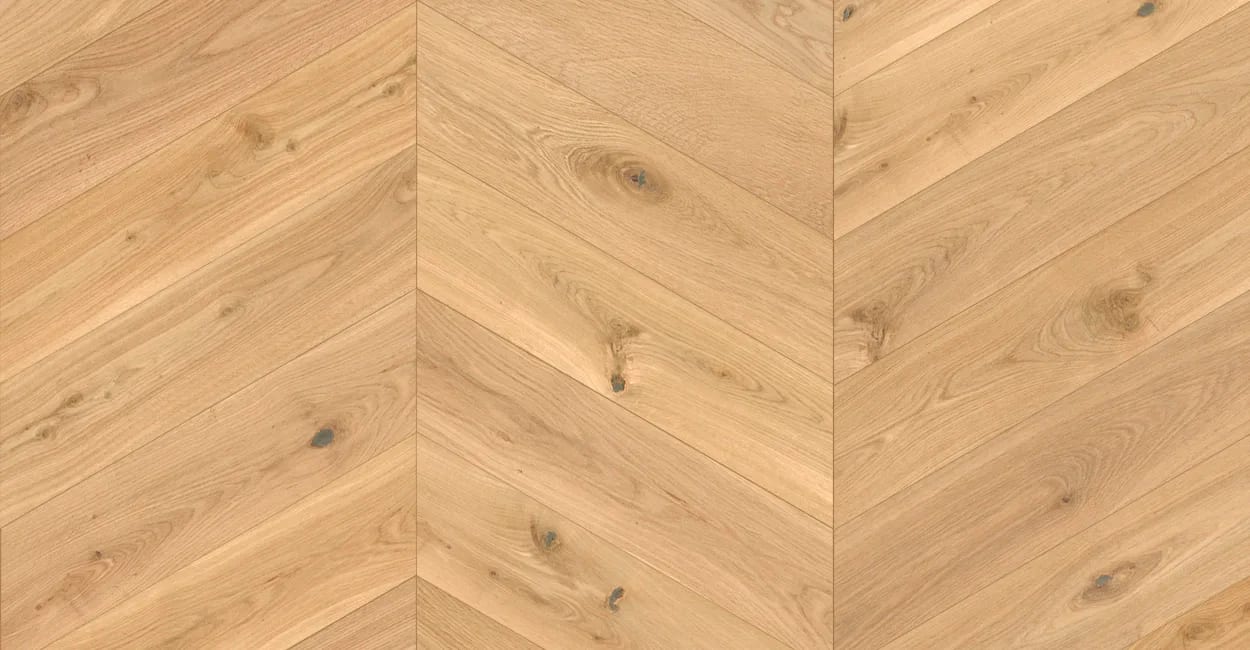
Oak Sand Rustic
LarecoParquet
Engineered boards have a top layer of solid wood bonded to a stable, multi-layer backing – in this category, oak parquet and boards in classic formats and for herringbone, from KACZKAN, Lareco and MAD. The whole range in this category is approved for use with underfloor heating. On the floor, they look like solid wood. When comparing models, look at the thickness of the wear layer – that’s what decides how many times the floor can be refinished.


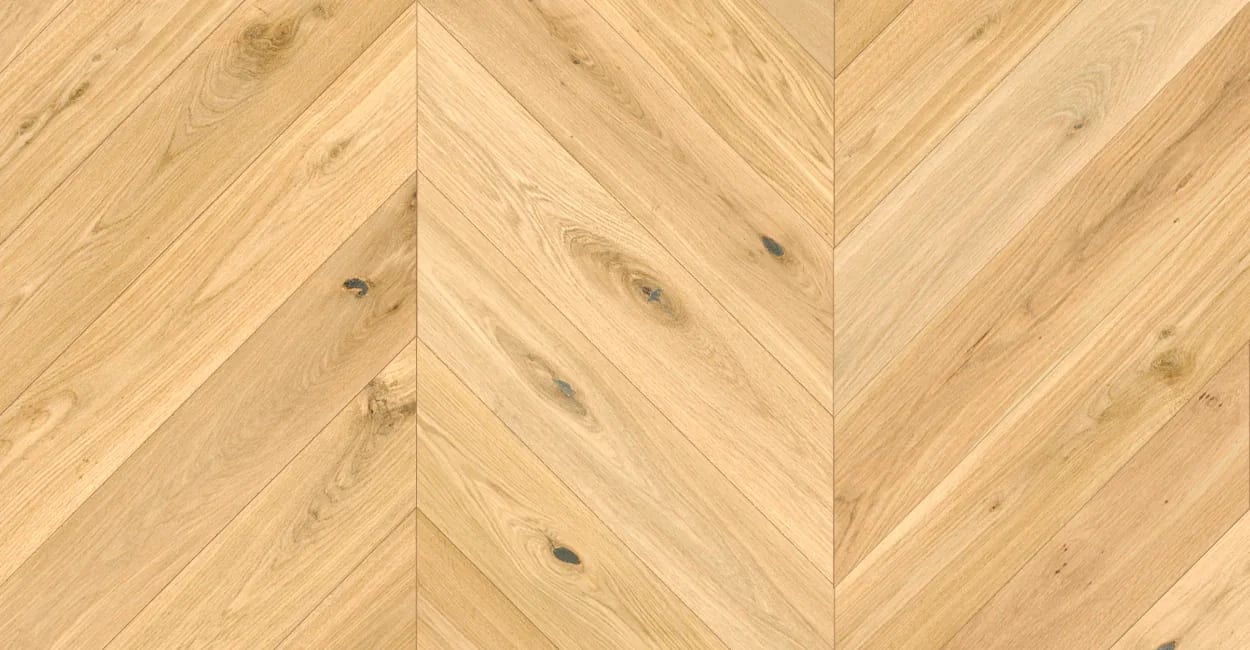


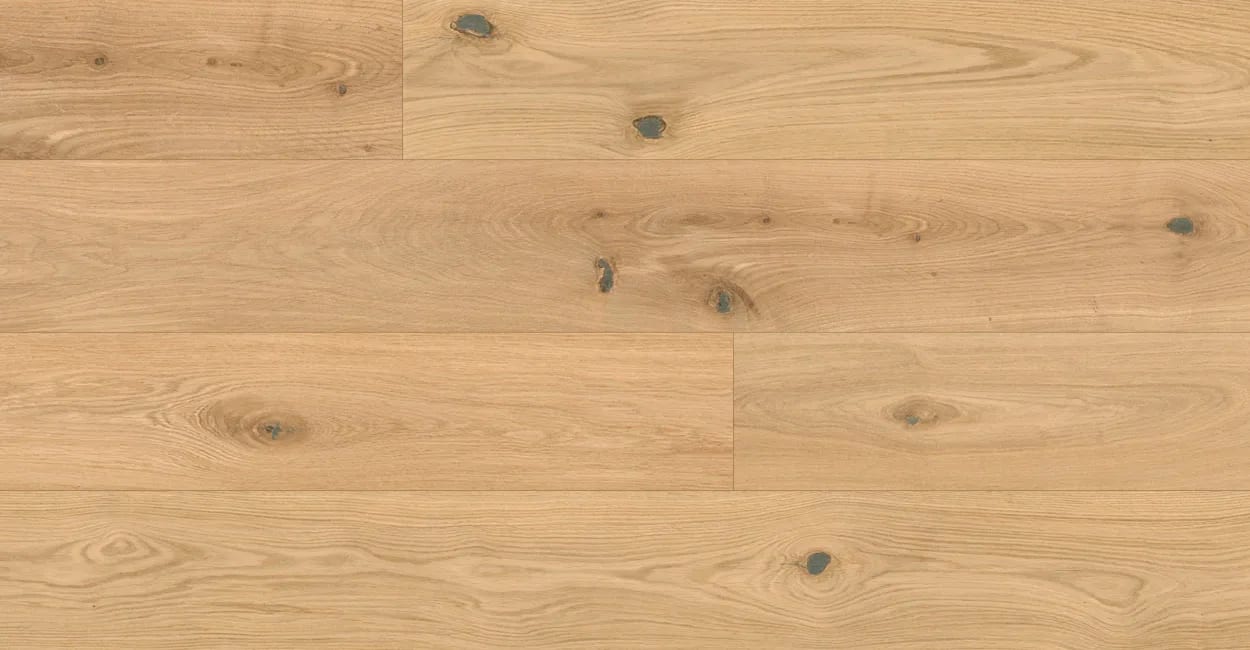


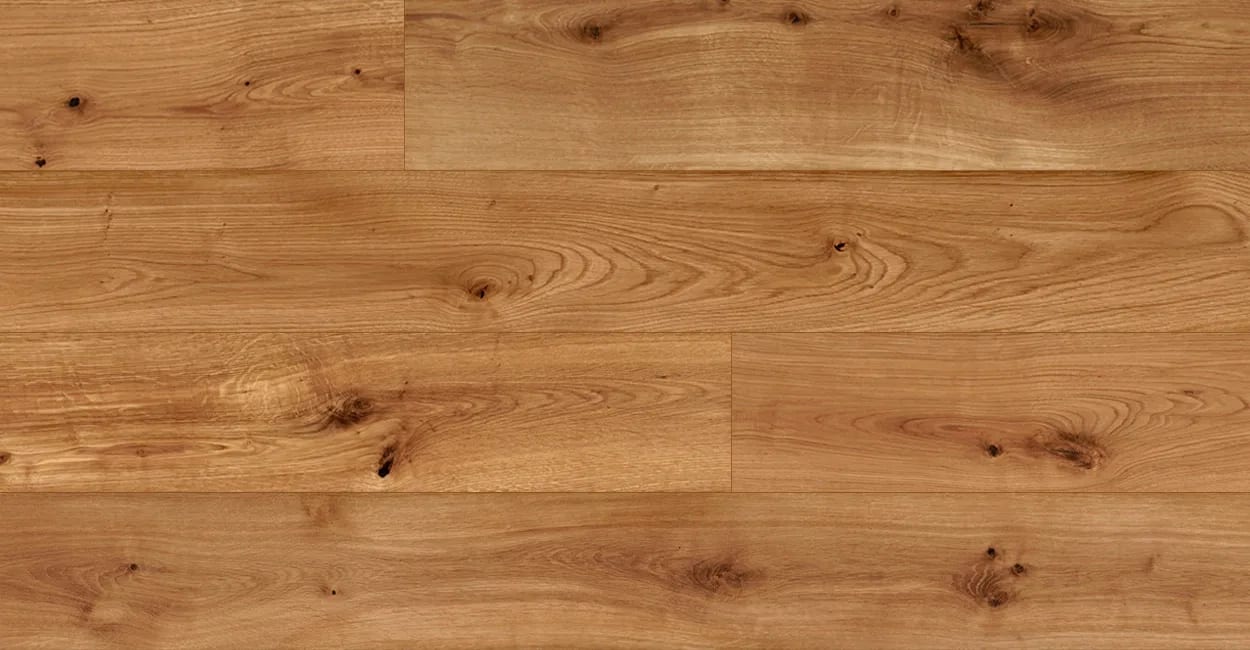


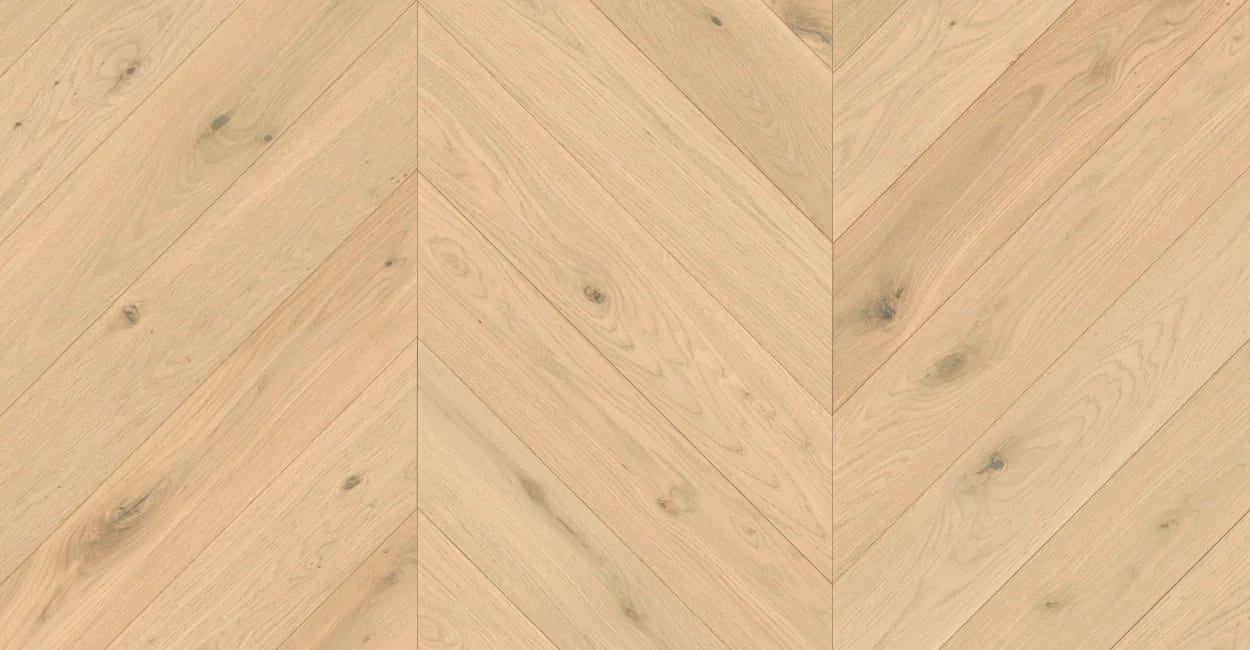


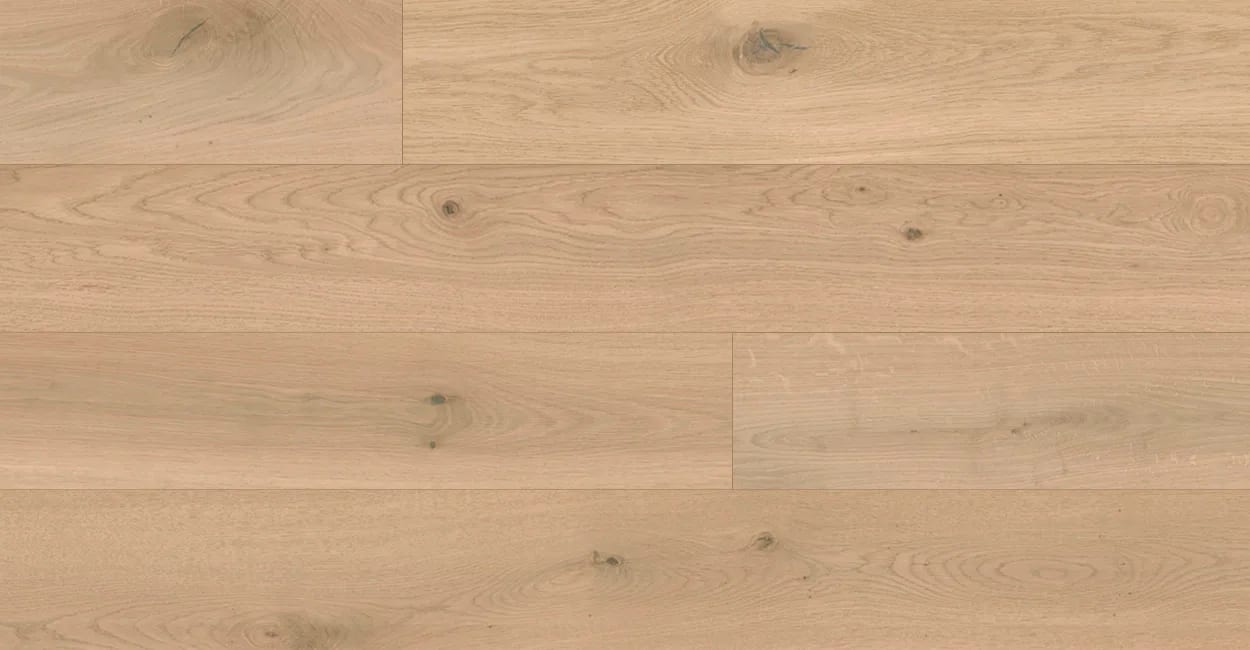






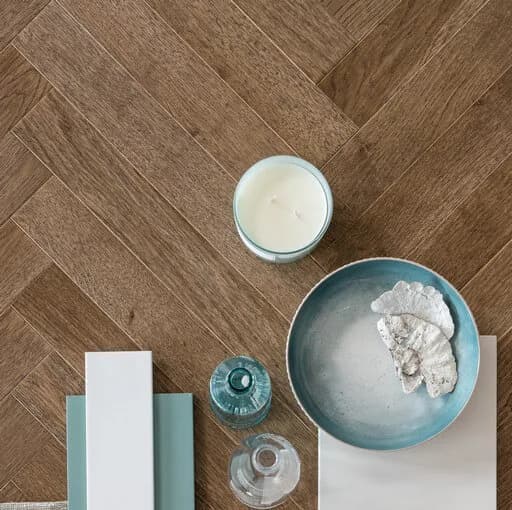

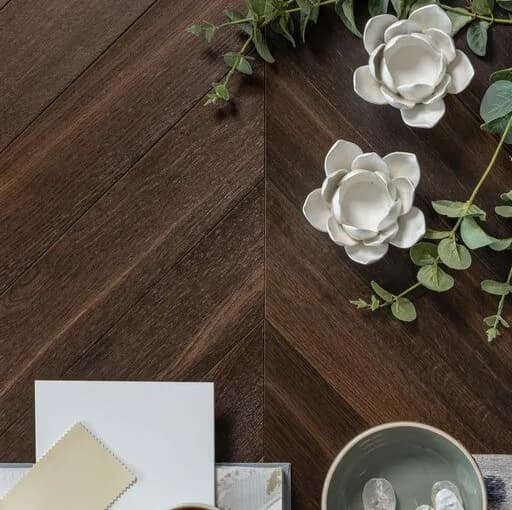

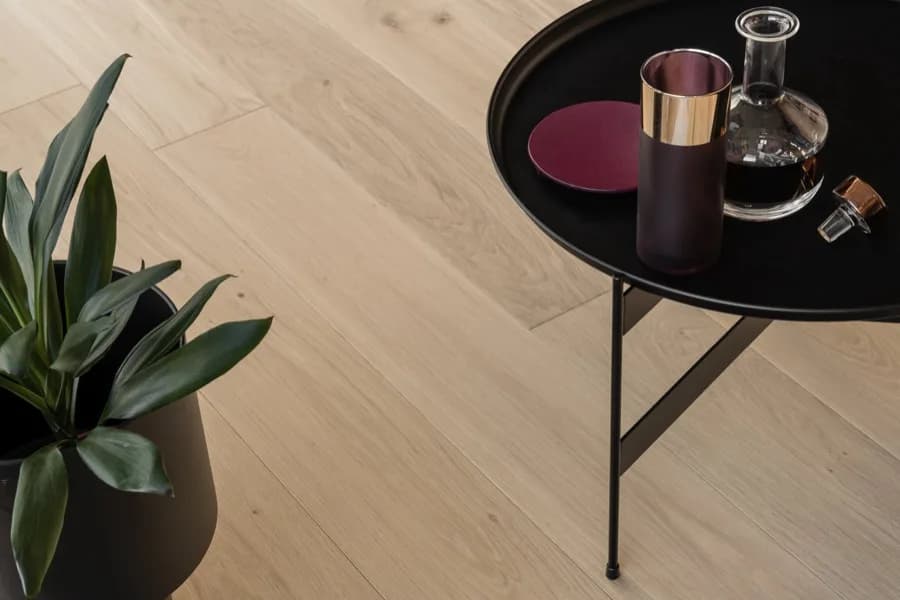
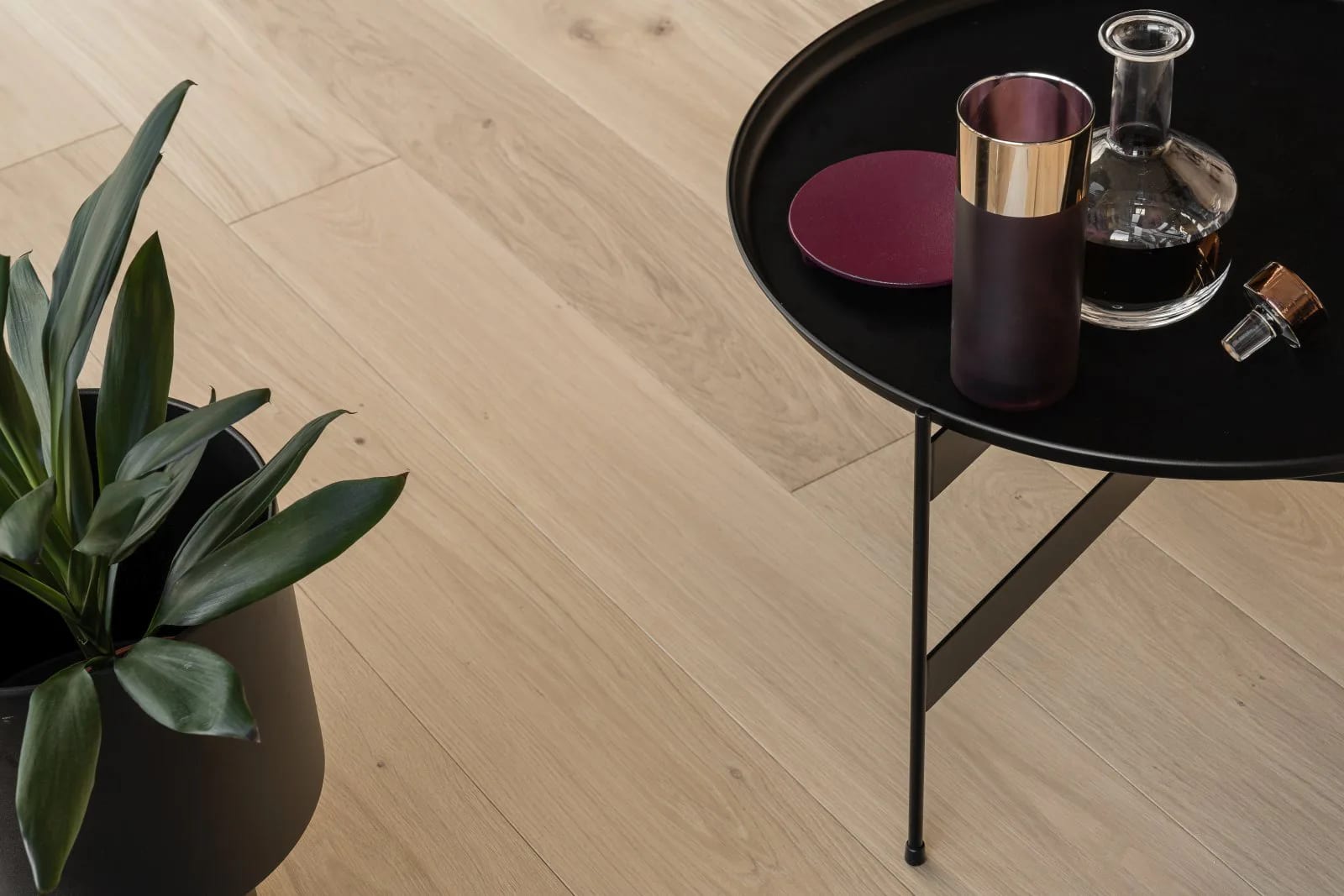

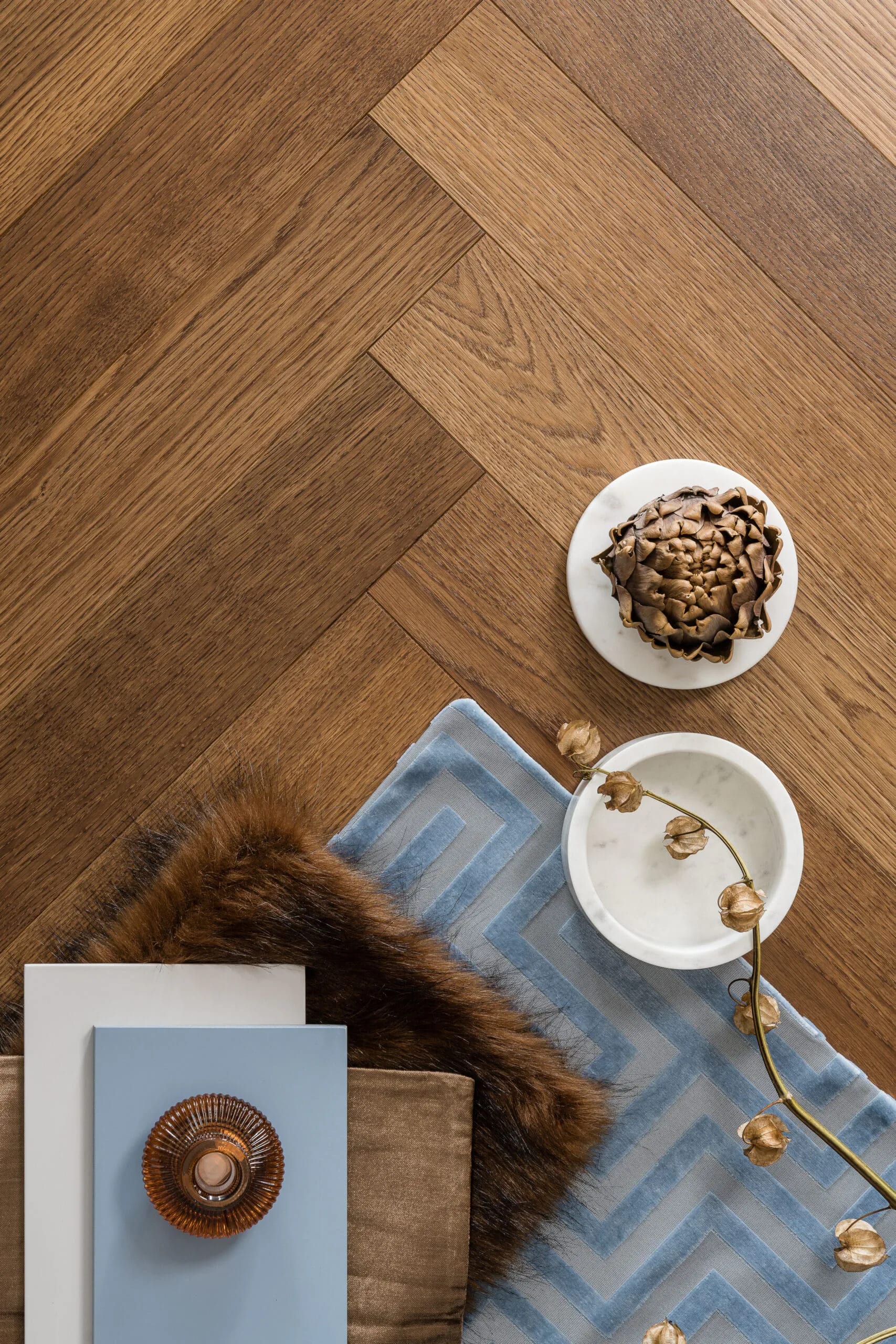
Engineered boards combine a wood wear layer with a layered core, which helps limit movement on the usual subfloors in a home. The range is mainly oak models; in colour terms, light and natural shades dominate, alongside classic sizes and boards for herringbone layouts. Grain, tone and bevel all matter to how the surface reads, because they really change the look of the whole floor.
What matters is the board size, the grain pattern, whether there’s a bevel, and the specs of the individual model. A wider board shows the wood grain better, while a bevel — a slight edge cut — separates the individual pieces more clearly, which means the whole surface looks different. In this category, people also compare standard boards with models made for herringbone, because not only the layout changes, but also how the wood comes across.
The current range includes, among others, ALPINA — KACZKAN, Andante Live Matt — Boen, Oak Amber Natur — Lareco and Forest Oak Natur — Bory Polskie. The differences between them come down to the tone of the oak, grade, how calm the grain is, the bevel and the size; these features are easiest to judge from a real sample, not just a photo.
The most important spec for an engineered board is still the thickness of the wear layer. This is given in the product sheet for each model, and it decides whether the board can be sanded and how many times it can be renovated during its life. So two models with a similar colour and size can differ not in how they look, but in how deeply the wood can be worked when the surface is refreshed later on.
The board’s construction matters too. The layered build affects how rigid the piece is, how it behaves on the subfloor and how the model performs after installation. So when comparing specs, the collection name alone isn’t enough. You need to look at the total board thickness alongside the wear layer, because that’s what affects later use and how much renovation is possible.
An engineered board is also chosen for its more stable construction, and in this category the whole range is suitable for underfloor heating. The end result still depends on the subfloor, the installation and the type of joint; for some models, the fitting method is listed in the product specs. On an uneven screed, it’s easier to get edge movement, walking noise and faster stress on the joints, even with the right model.
These differences aren’t down just to the species or colour, but to the mix of layered construction, the thickness of the wear layer — that is, the top part of the board — the conditions in the room and the way it’s fitted. That’s why, when comparing engineered boards, the technical specs and how each model has been prepared for laying really matter.