


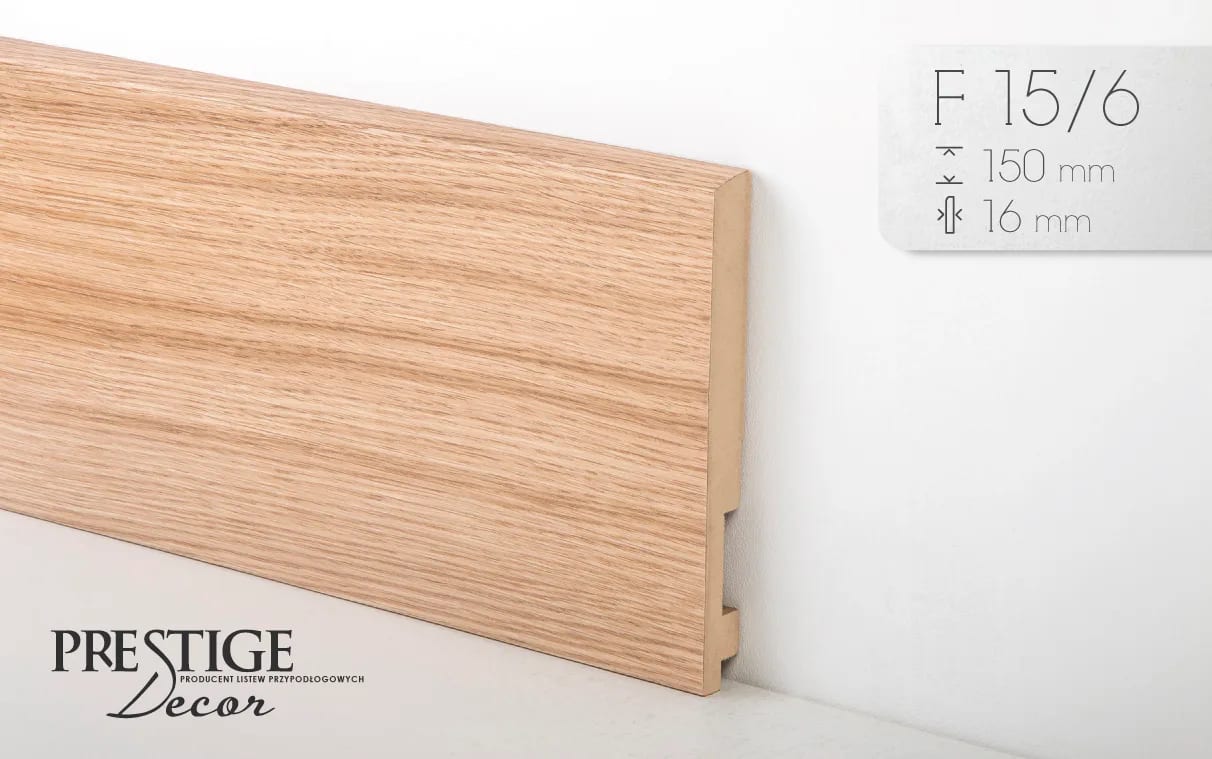
Prestige Decor F15/6
Prestige DecorSkirting and accessories
Veneered MDF skirting boards are MDF profiles faced with a thin layer of real oak veneer – in this range, only from Prestige Decor, in natural wood tones, both lighter and darker. The veneer has its own grain, so the skirting looks like wood, but doesn’t warp the way solid wood can. It’s fitted with glue, without drilling into the wall, so it needs a flat, clean surface. When choosing a colour, place a sample of the skirting next to the board and compare the shade and grain.

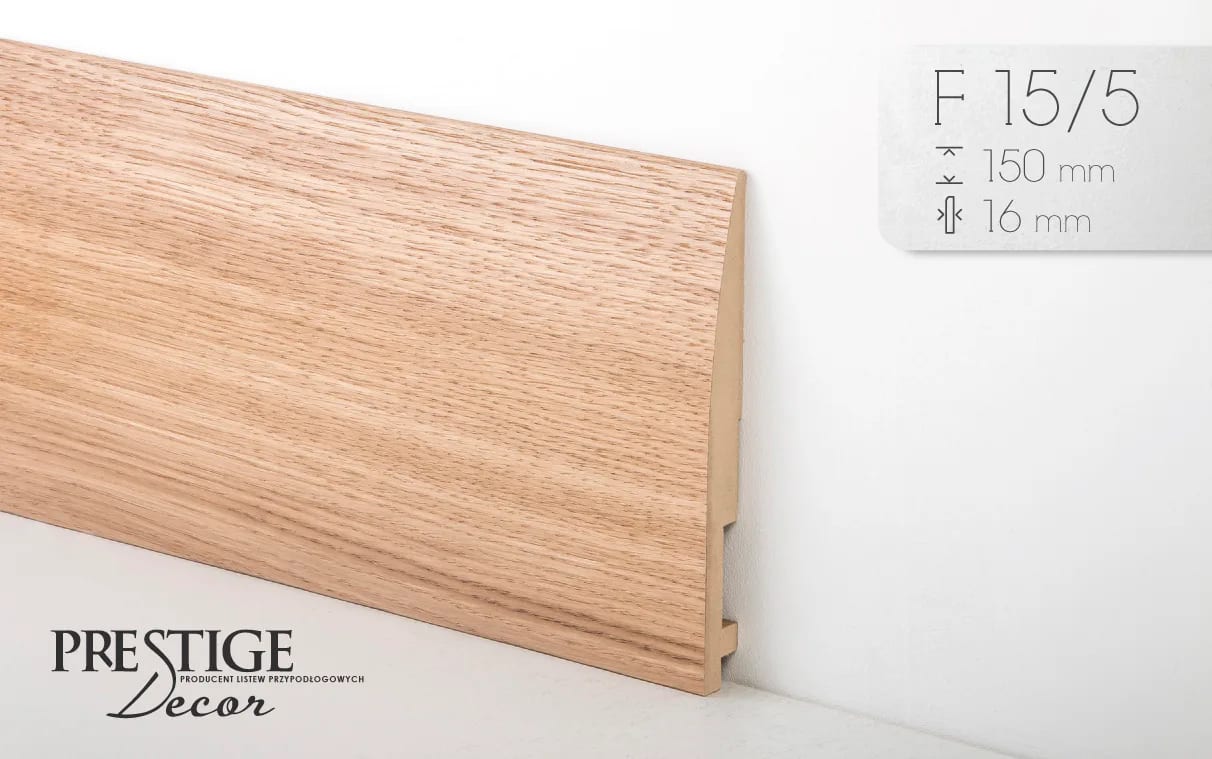

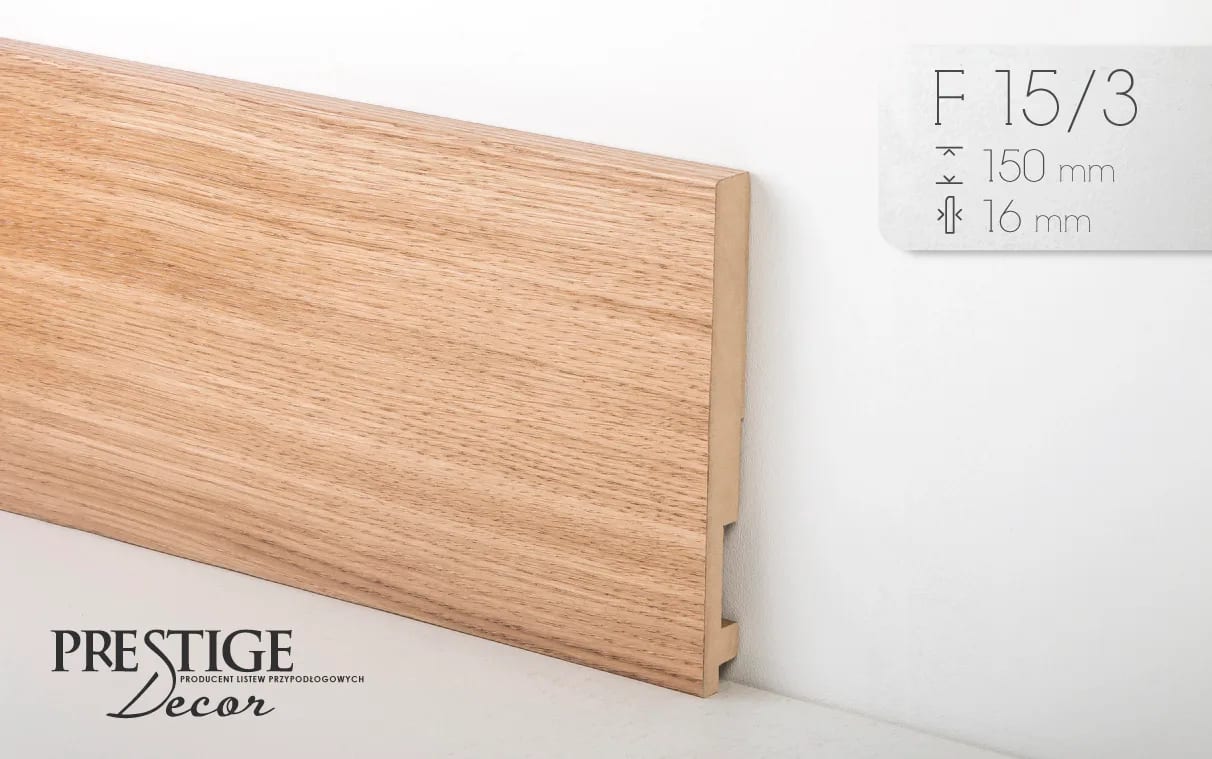

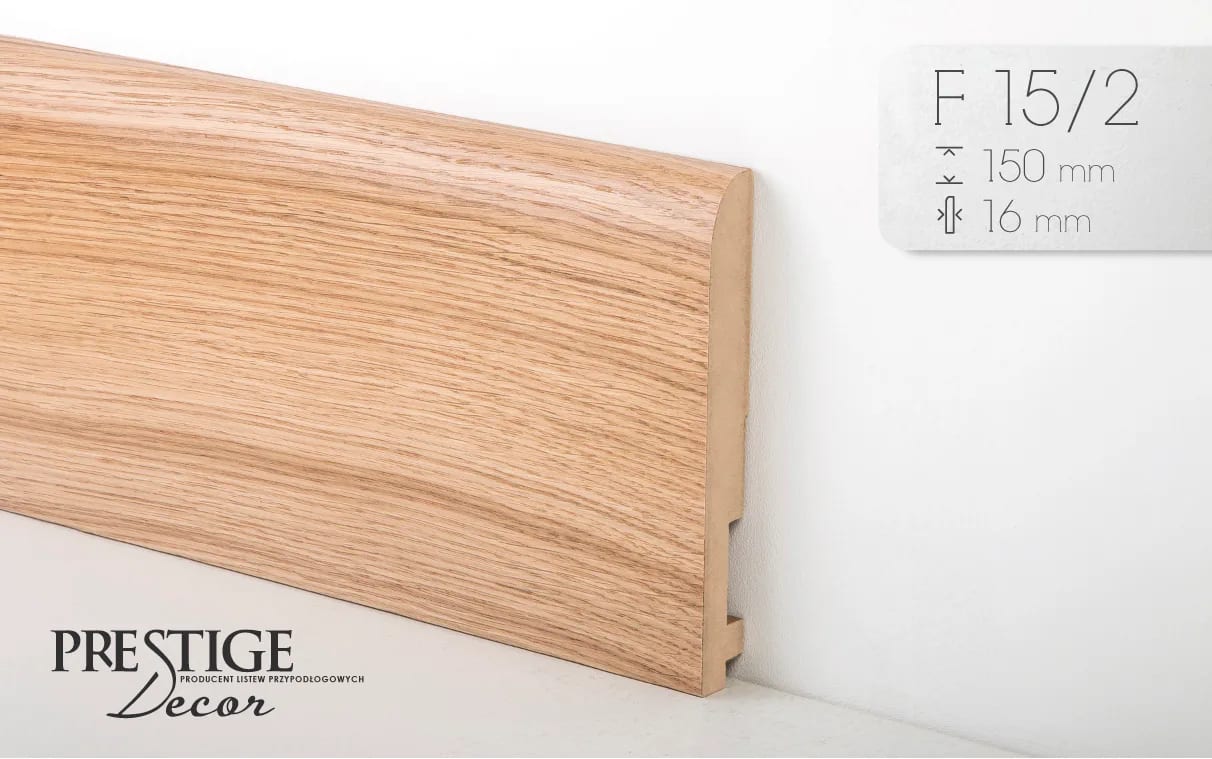

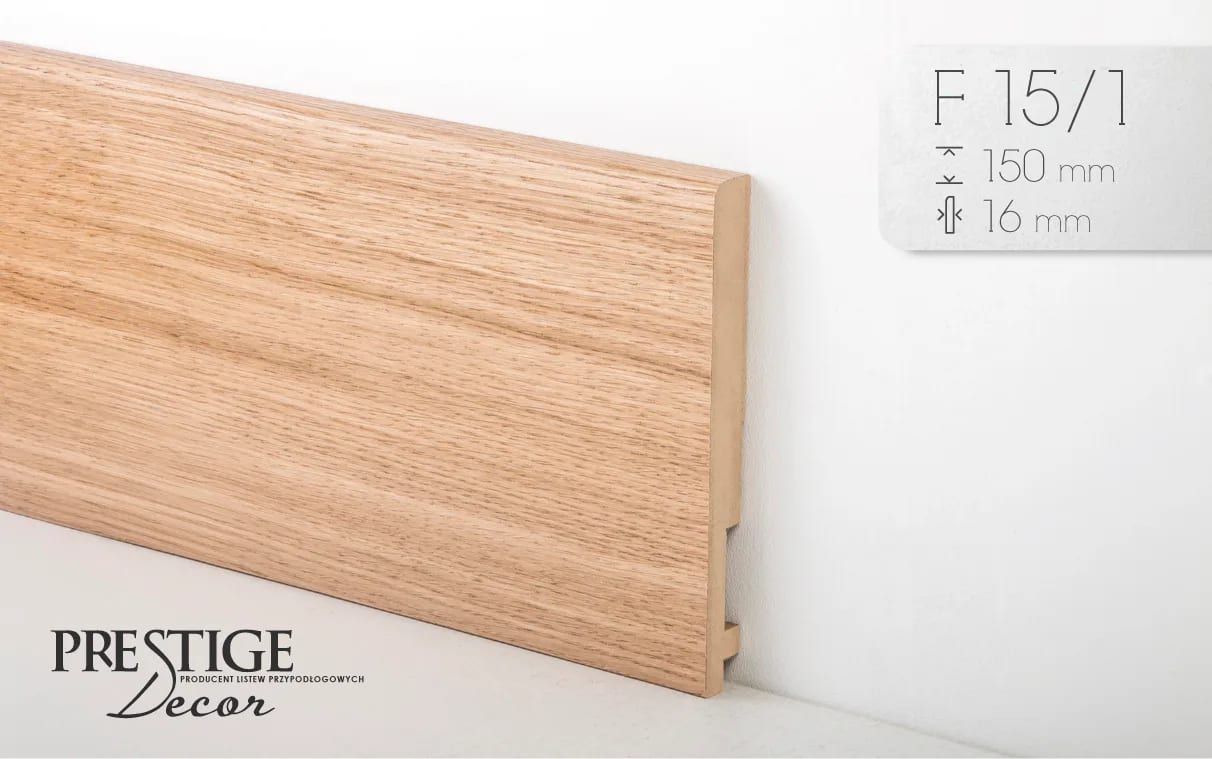

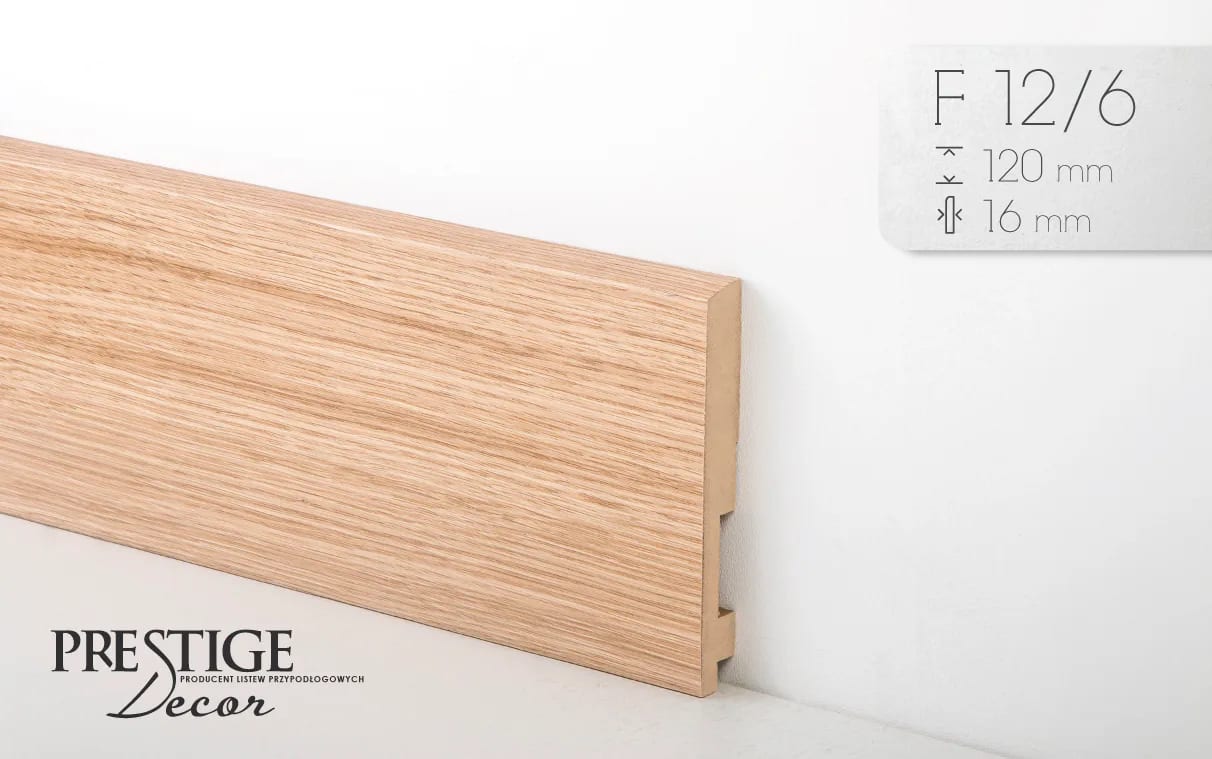

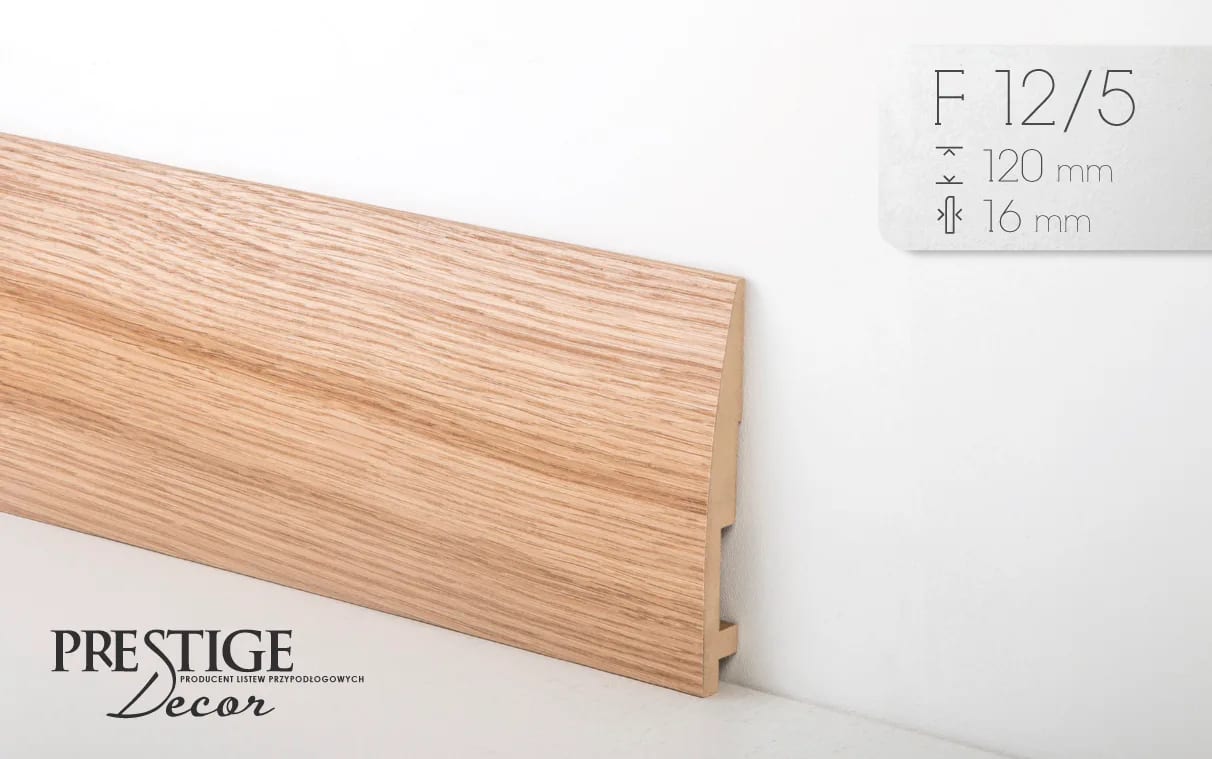

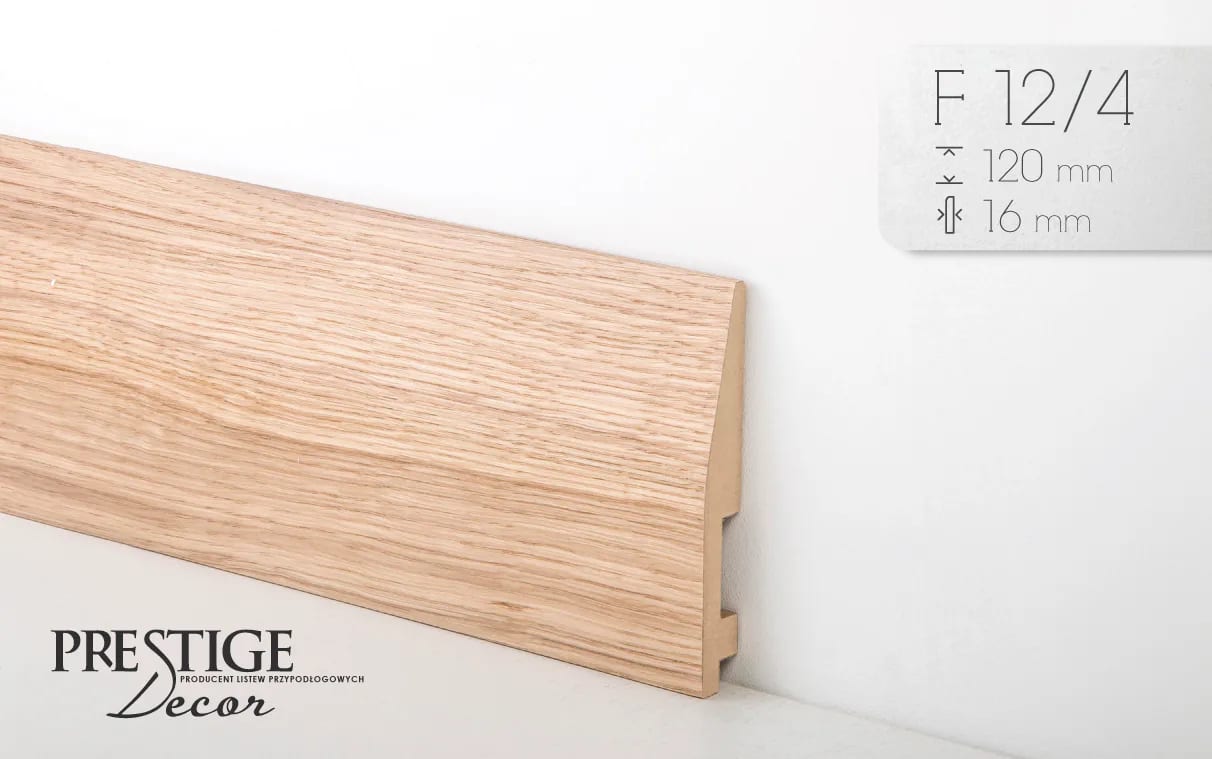

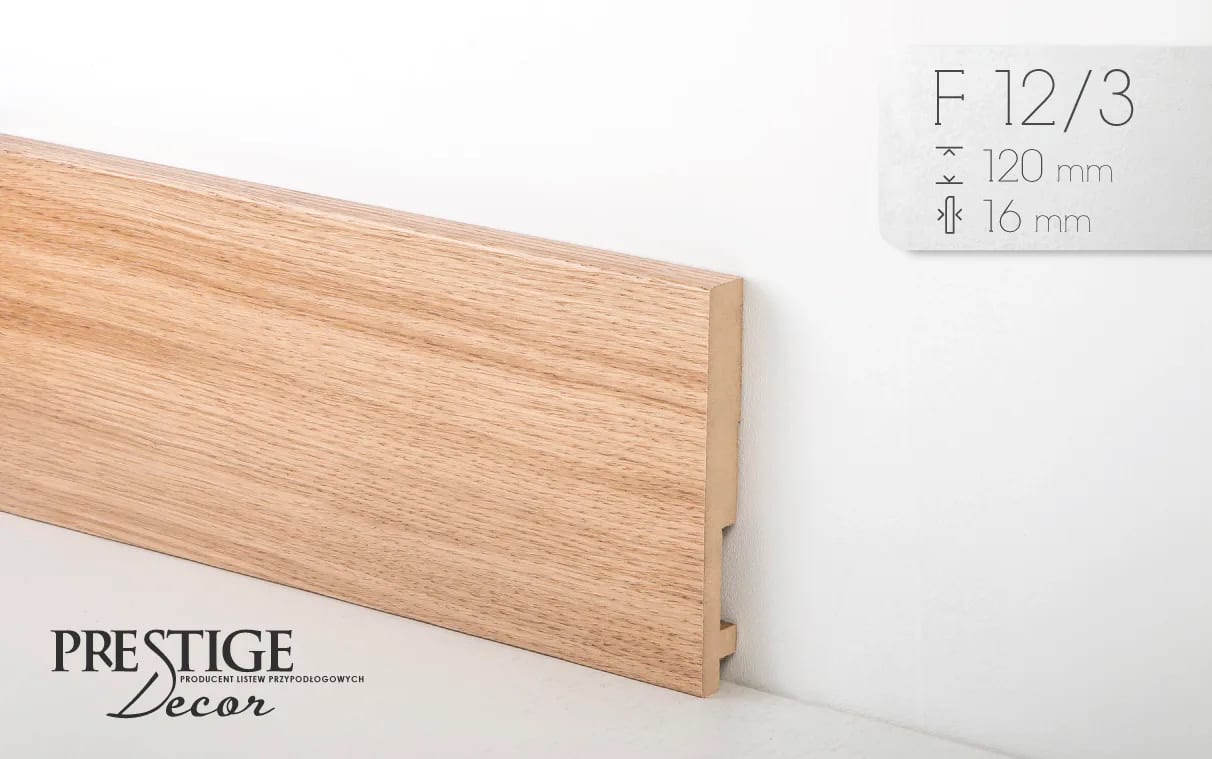

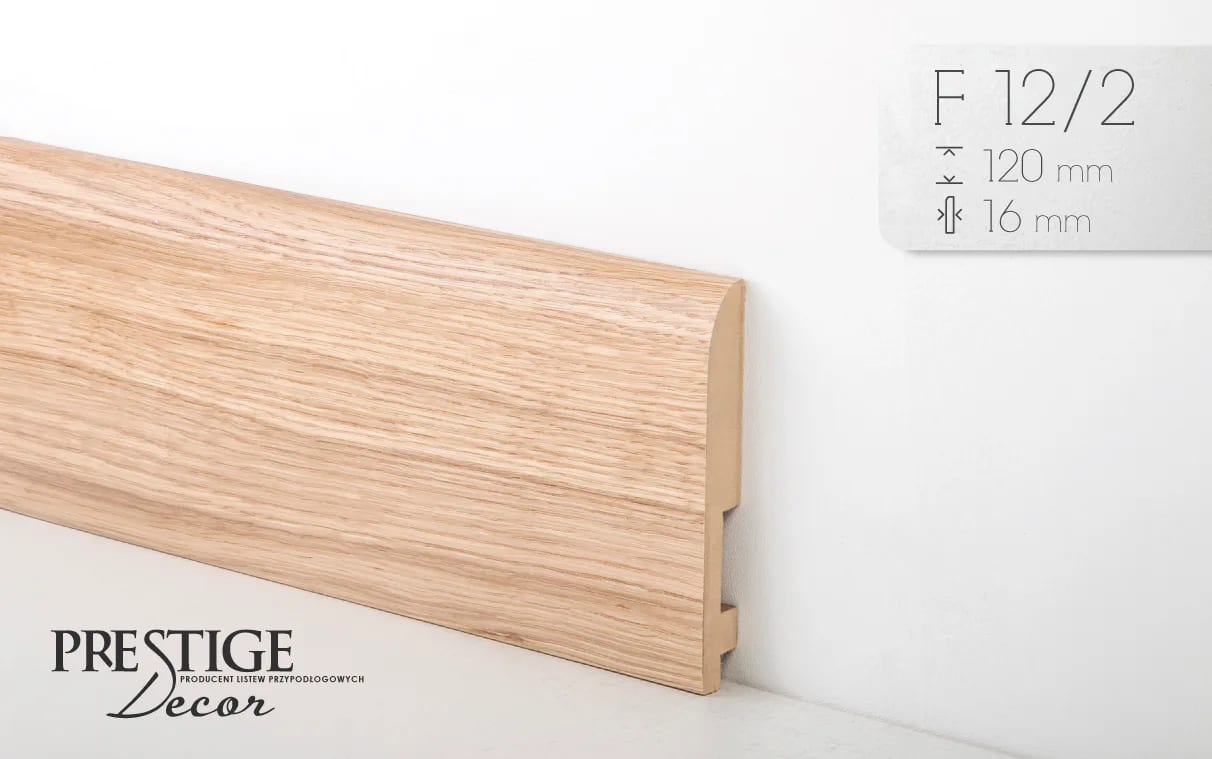

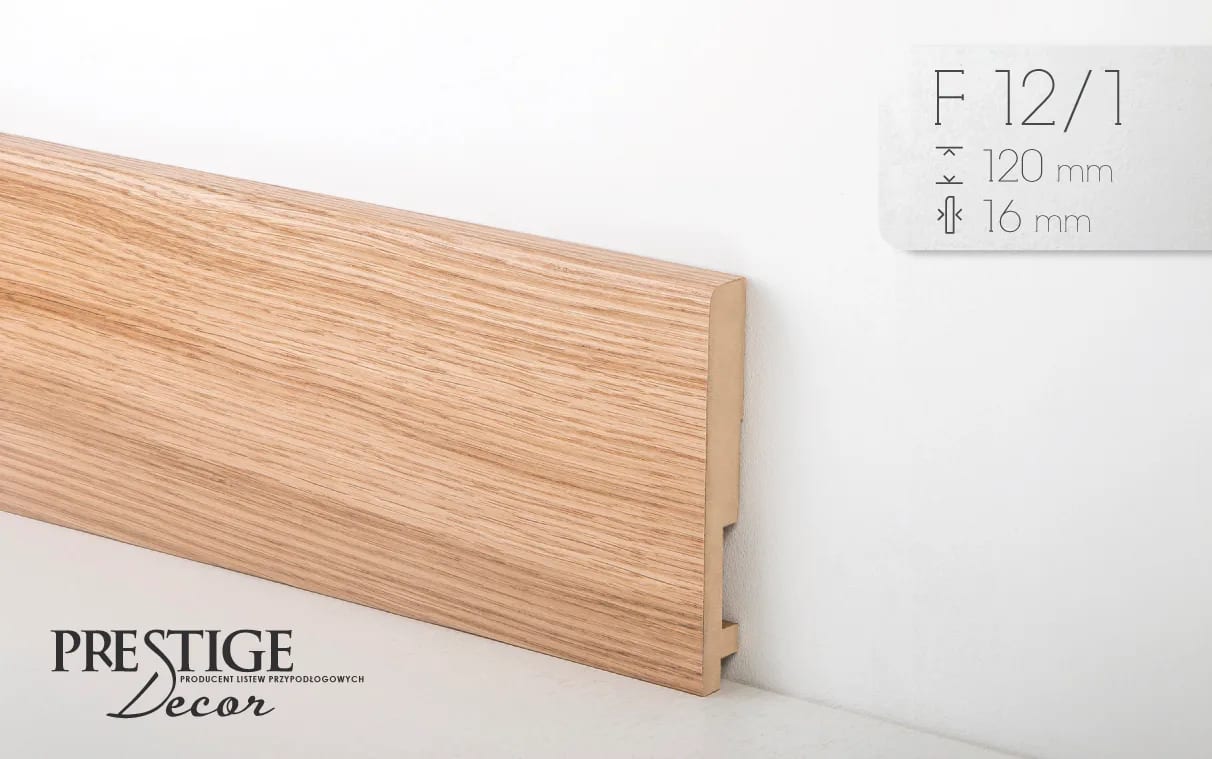

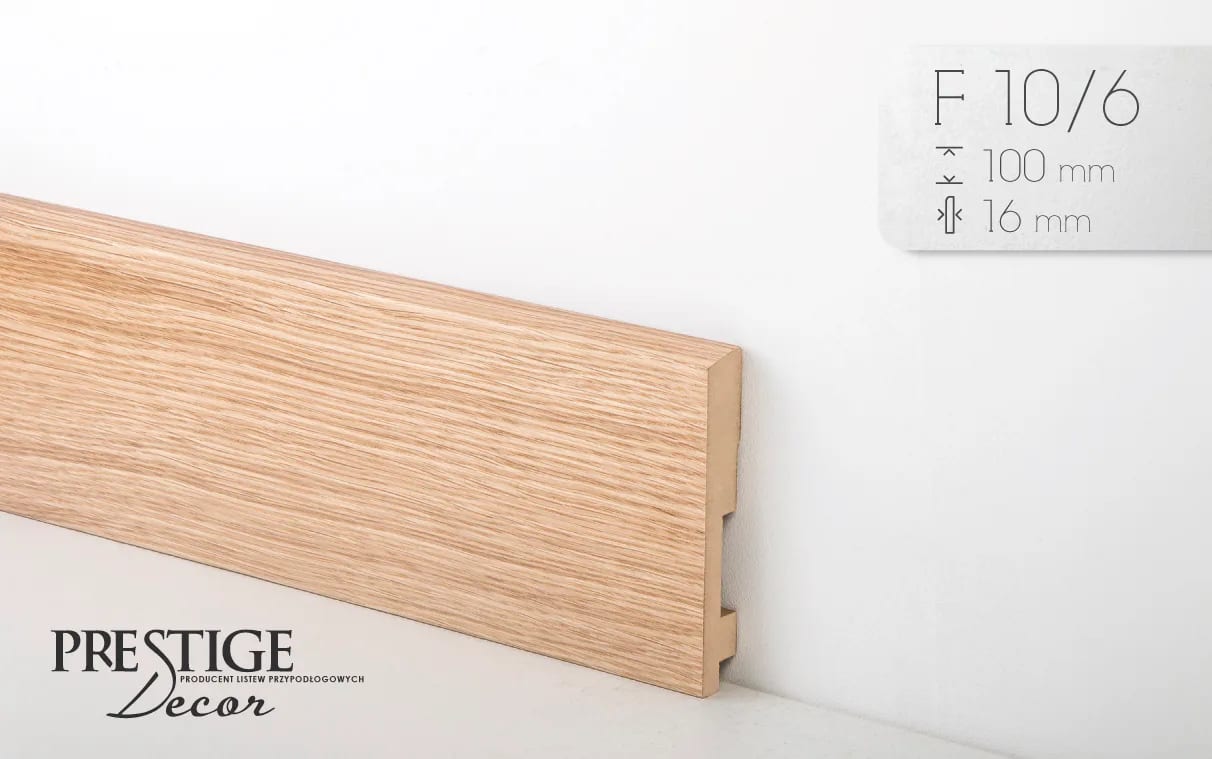

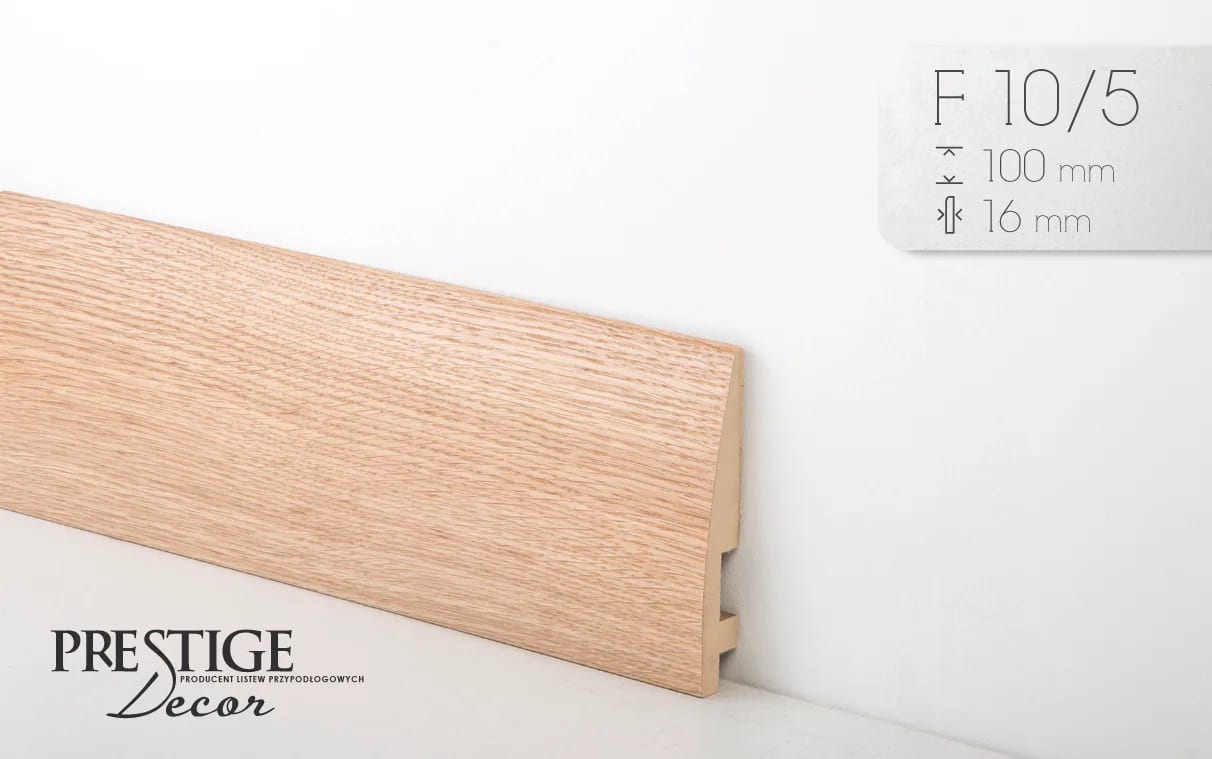

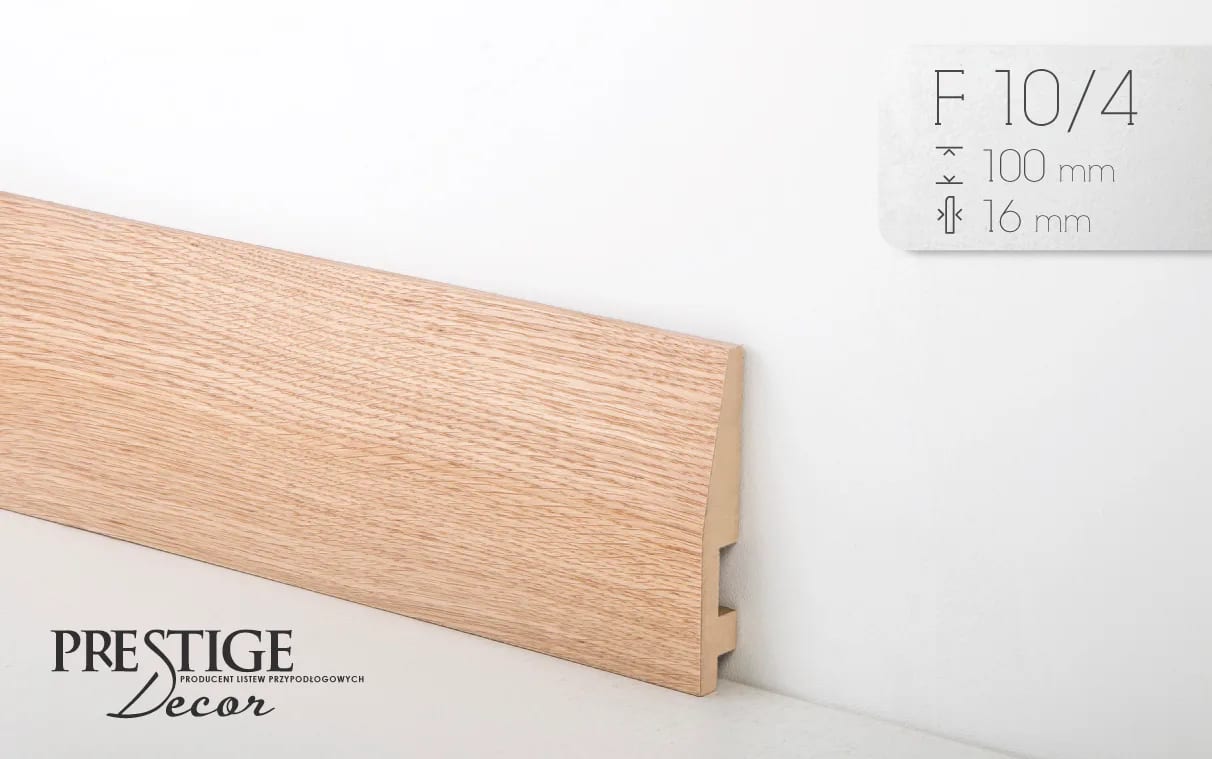

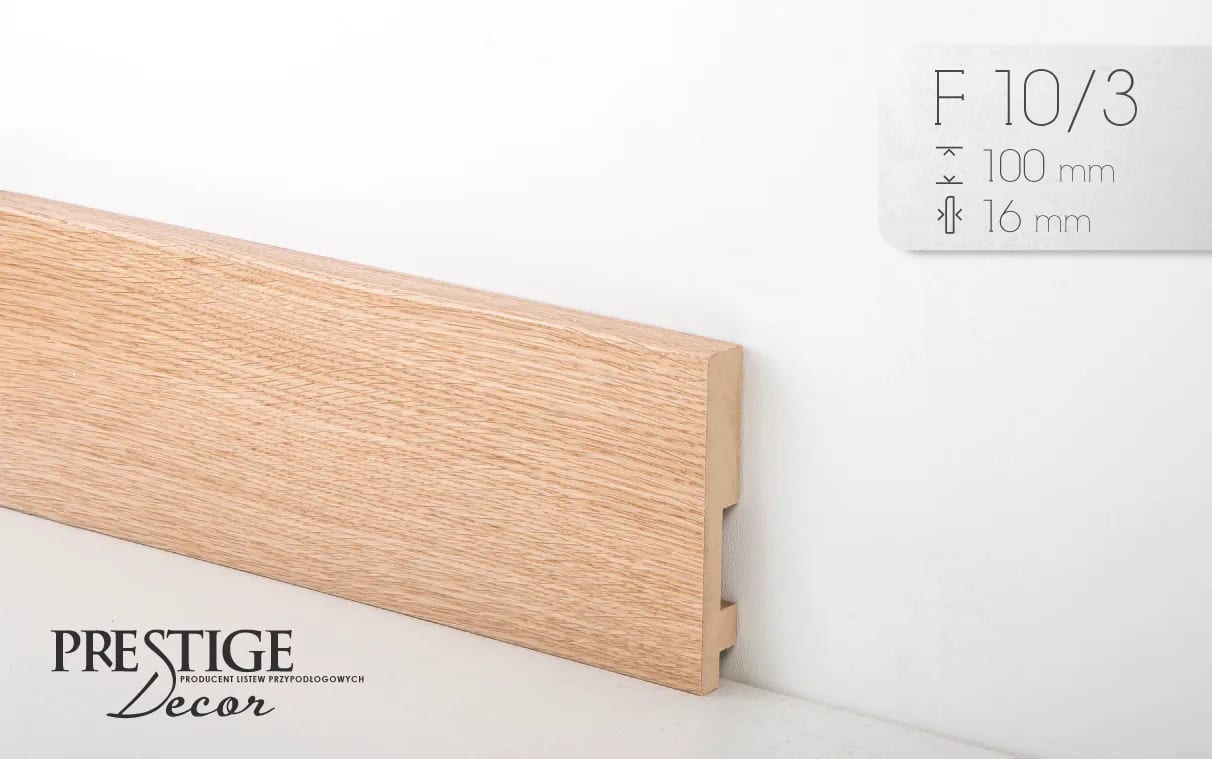

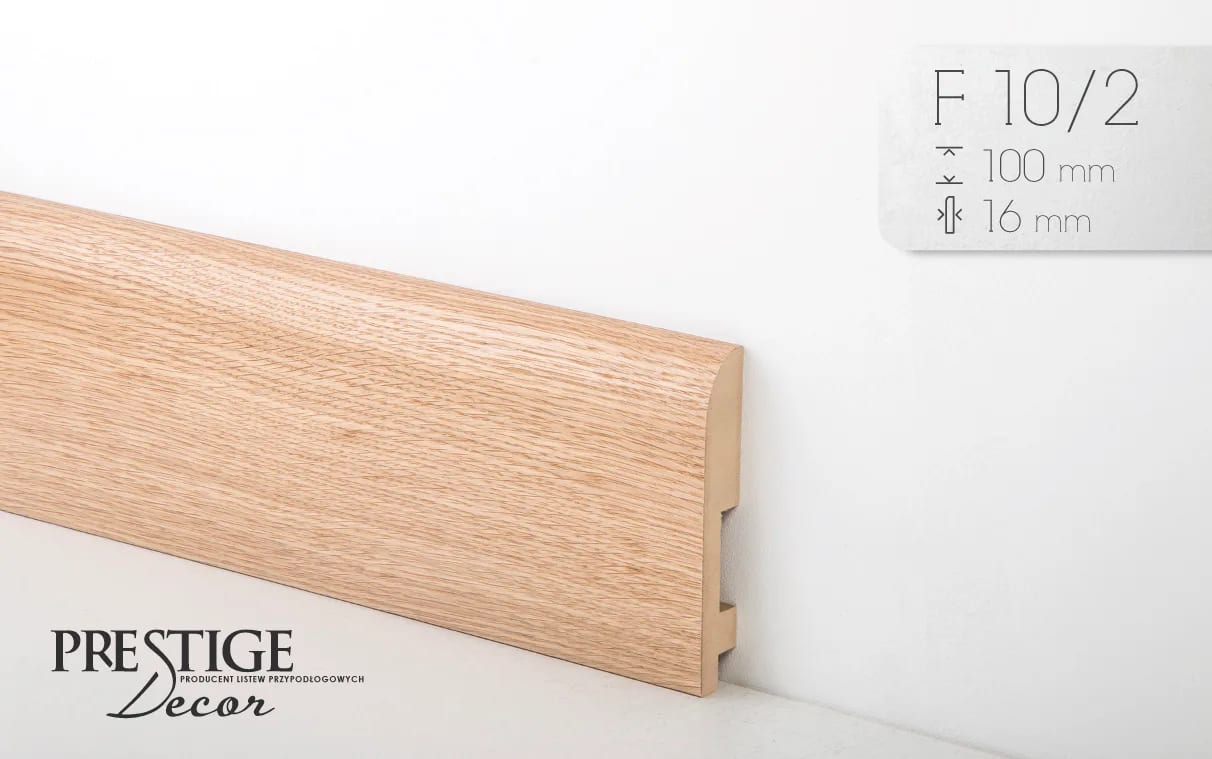

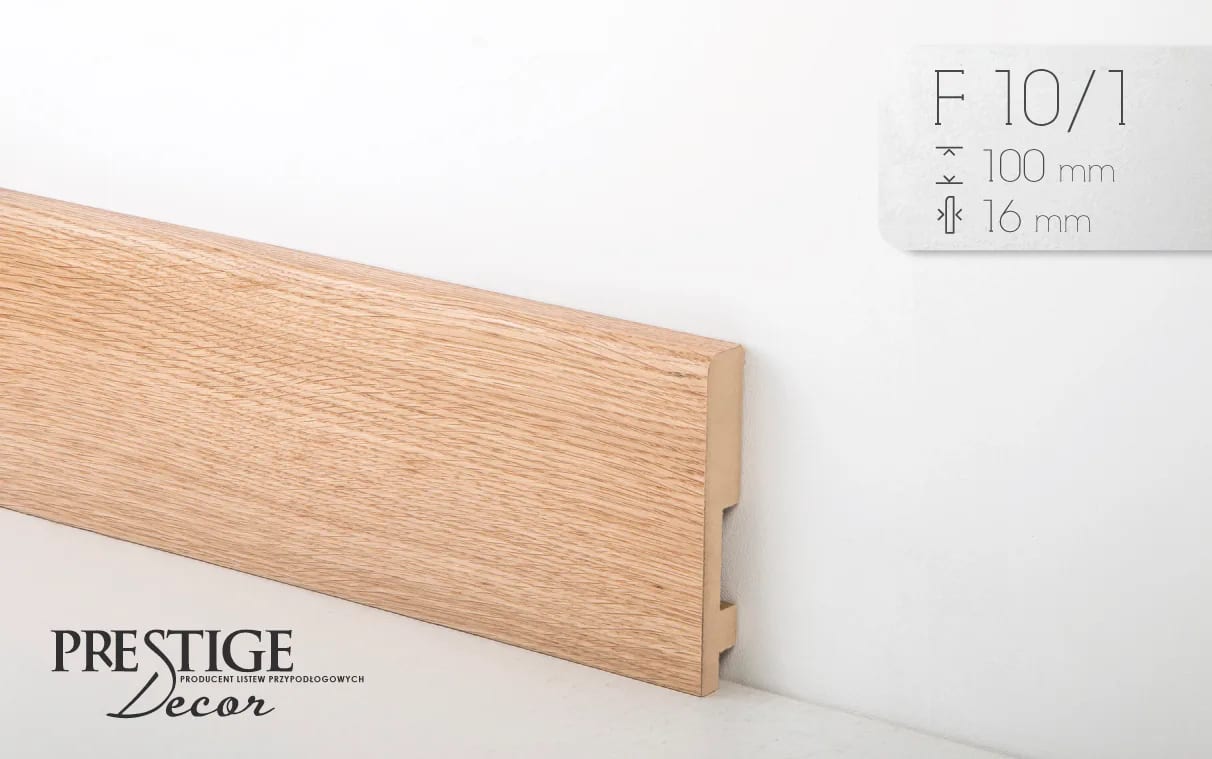

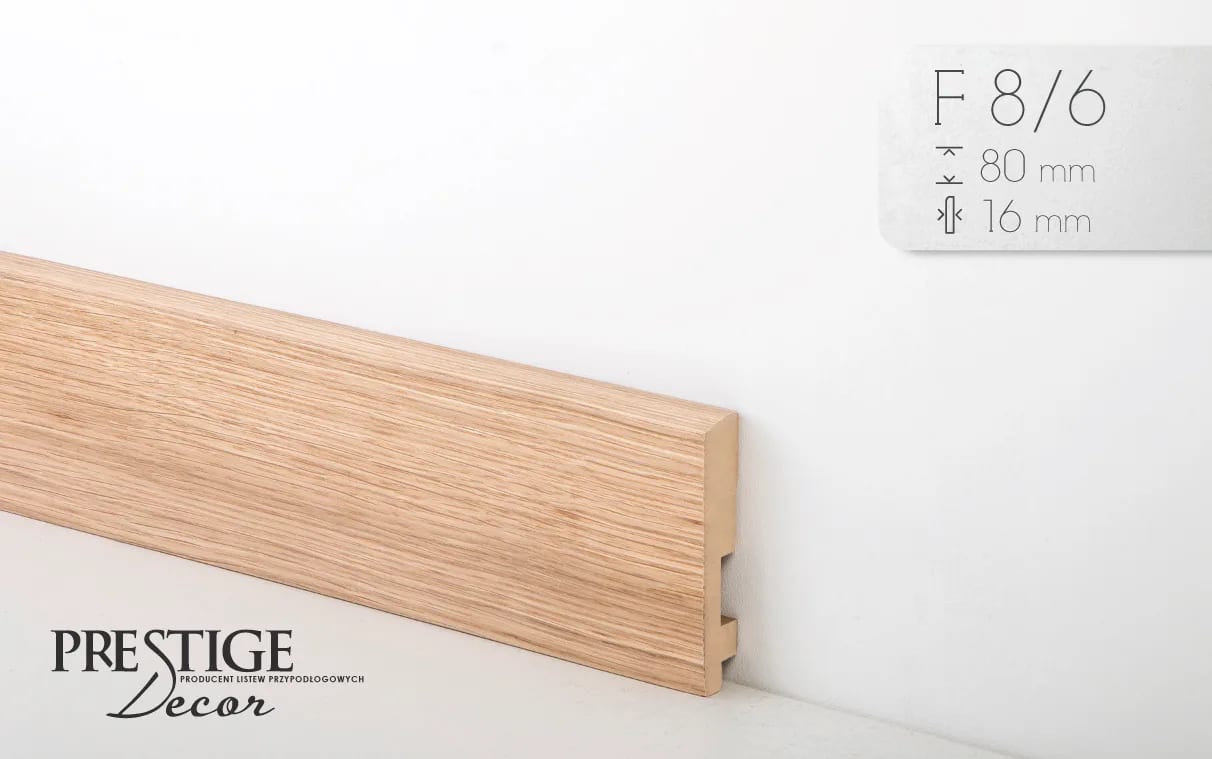

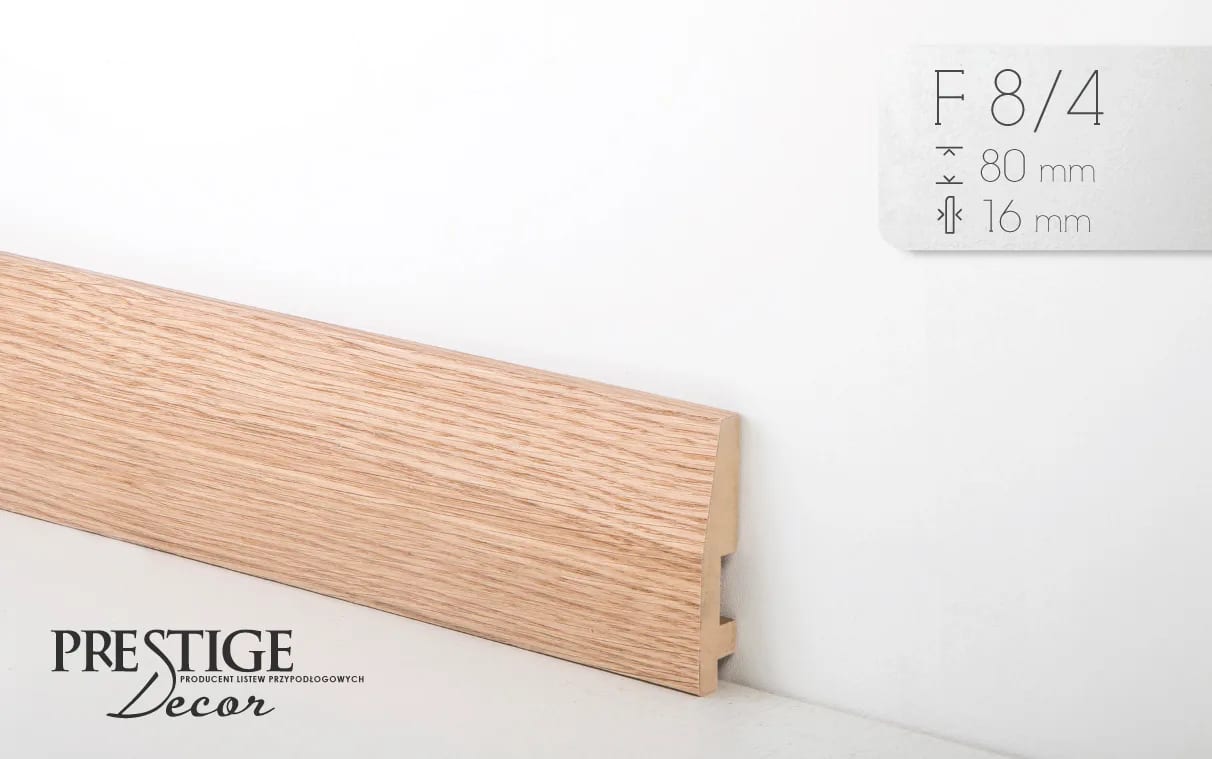

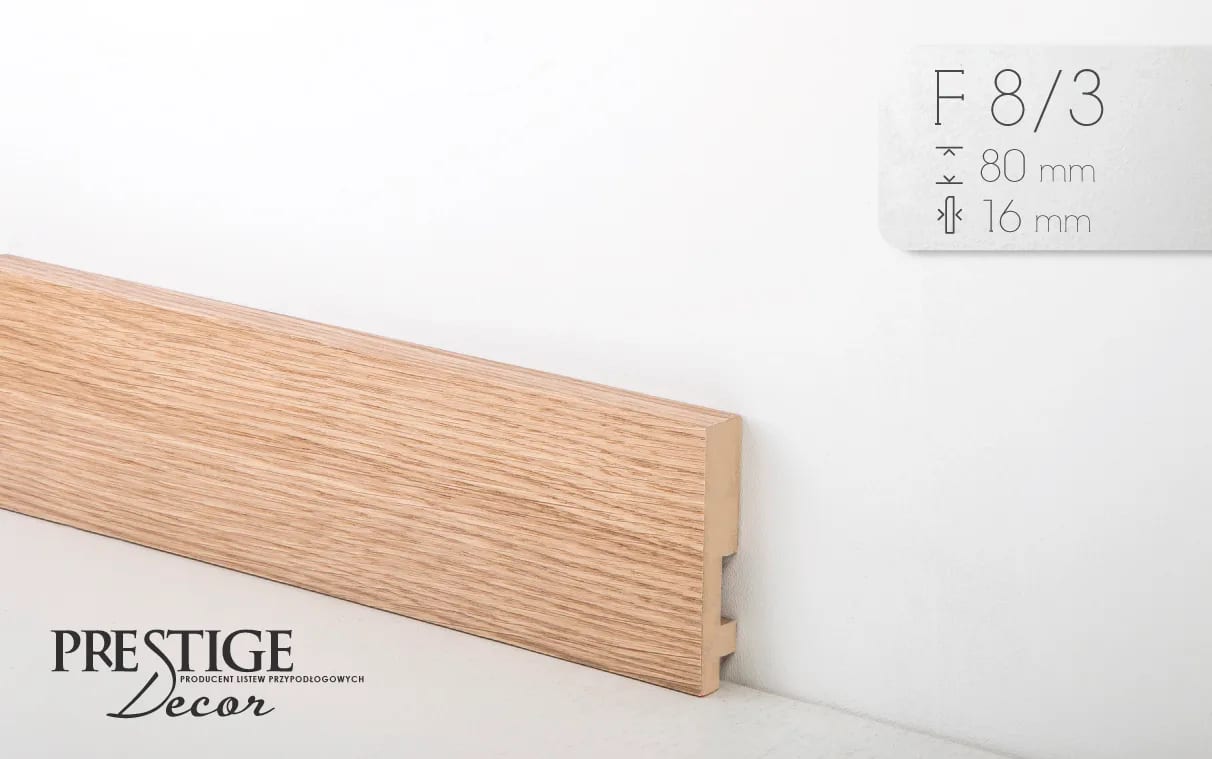

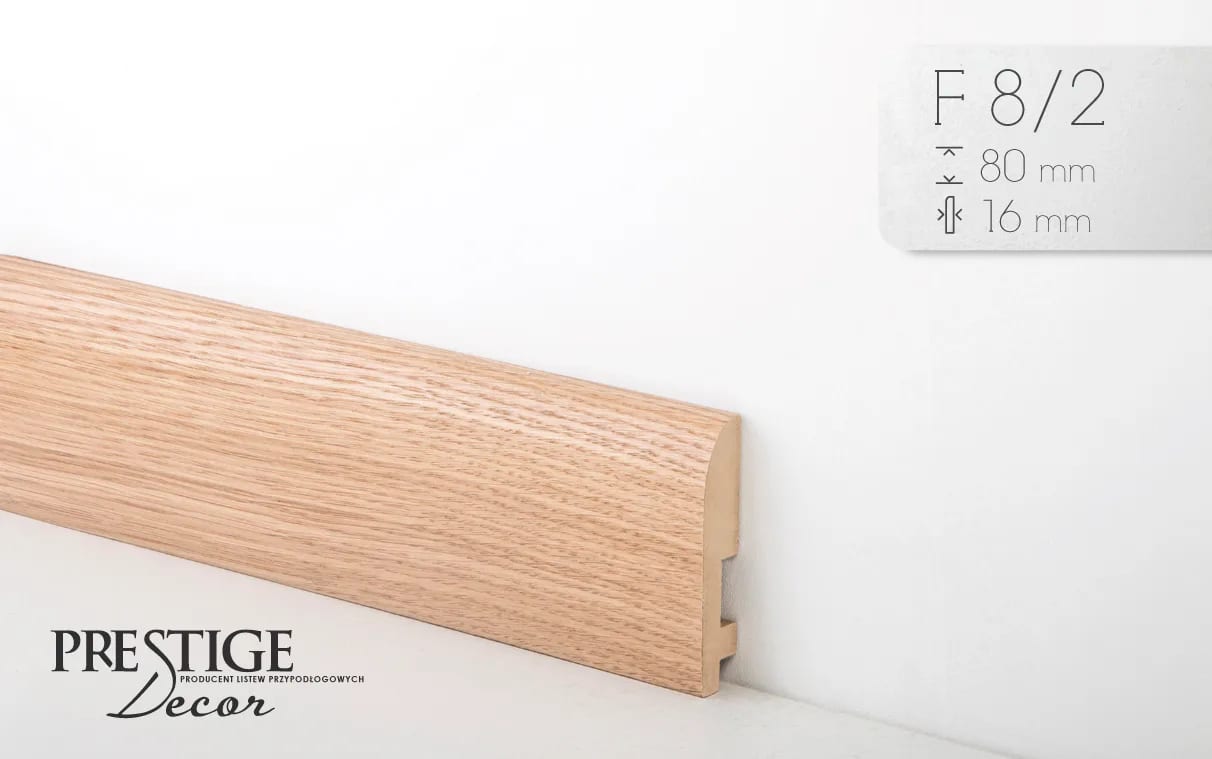

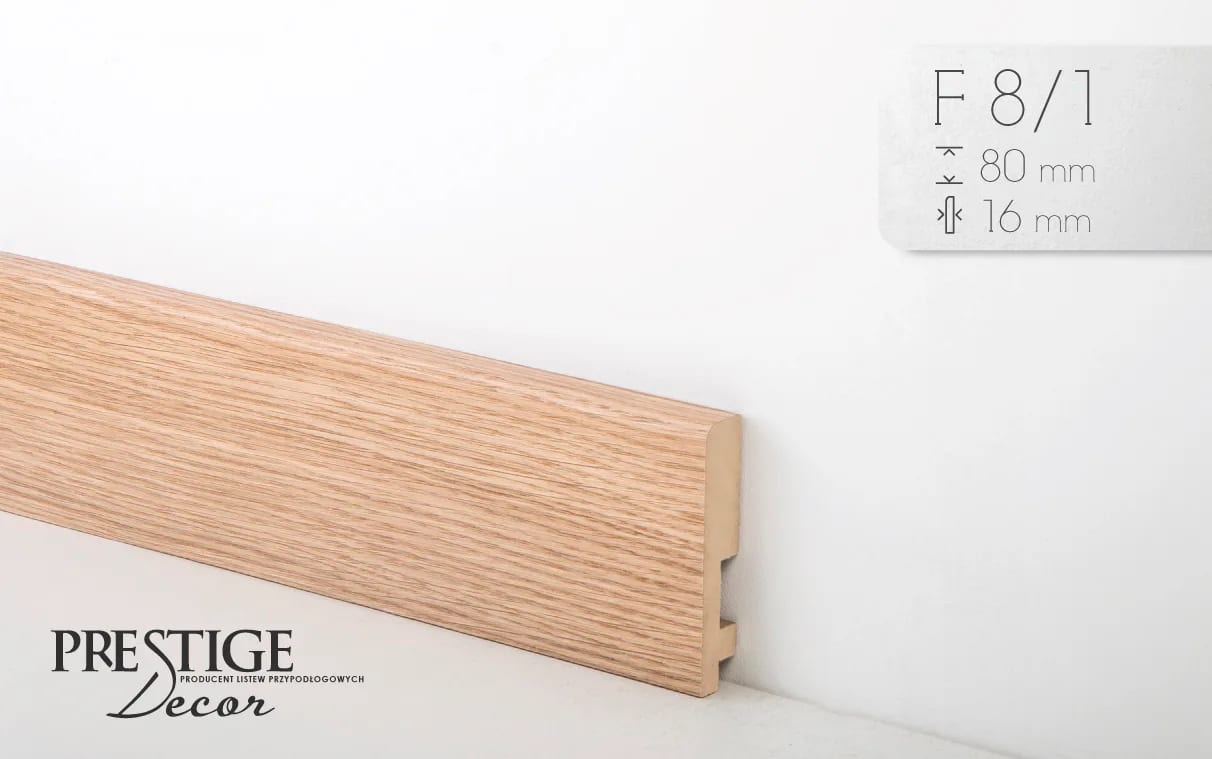

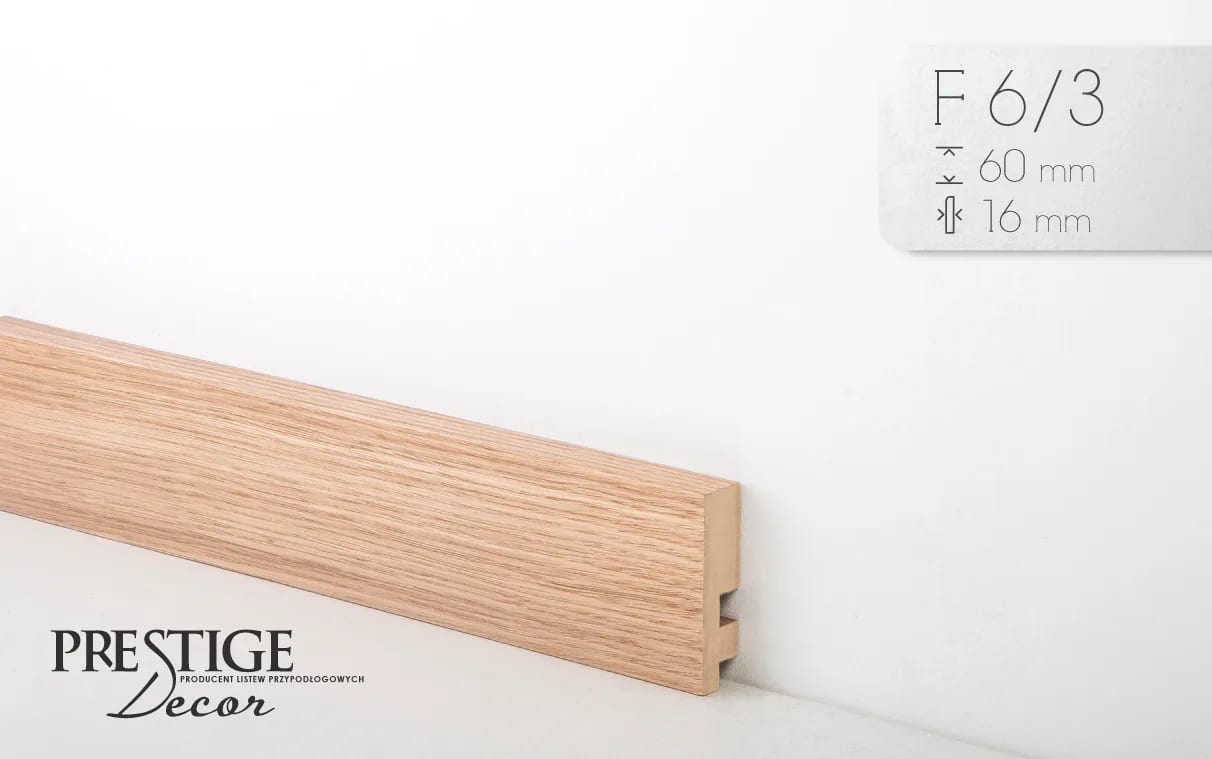

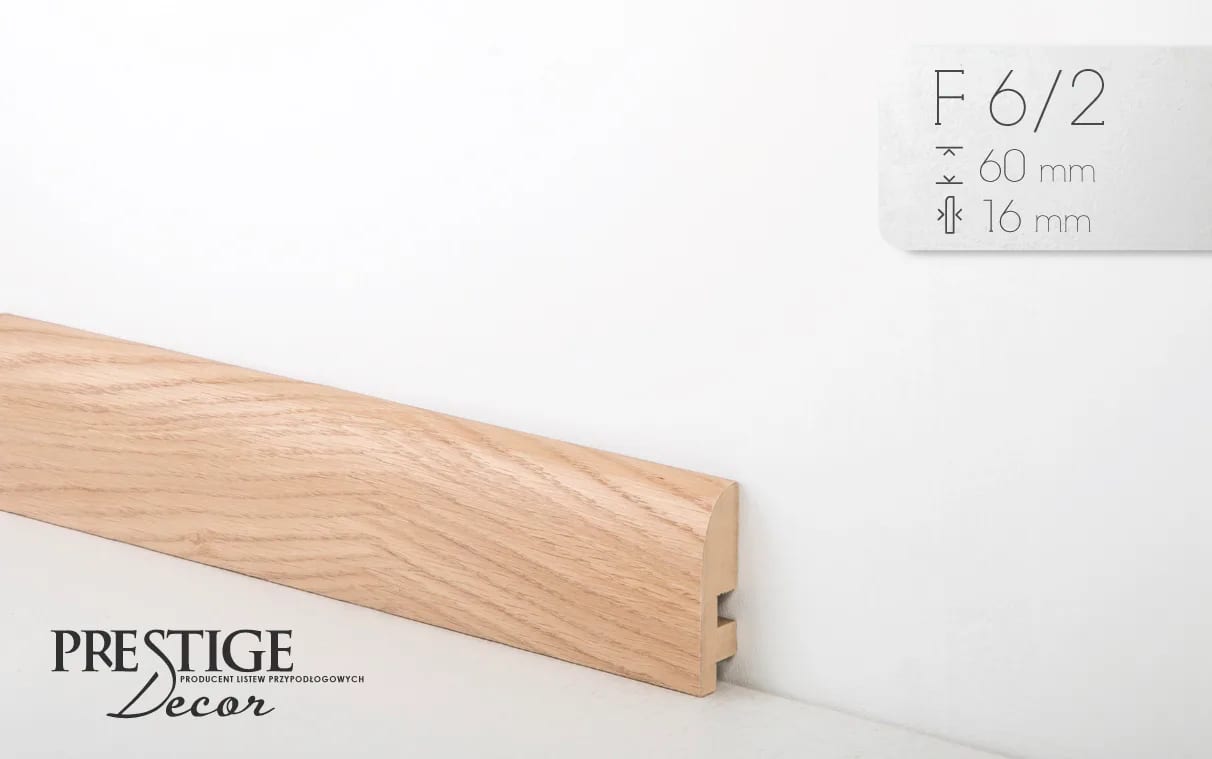
Veneered MDF skirting boards are for people who want a neat finish where the wall meets the floor without it looking like plastic. This group includes only Prestige Decor skirting boards, veneered and kept mainly in natural wood shades. They work well where you want a calm line along the wall, not a strong contrast. If there’s a wider expansion gap at the floor or an uneven cut edge, the look depends not just on the colour, but also on the height, profile and thickness of the skirting board.
When choosing veneered MDF skirting boards, you first compare the size, profile and fitting position. A board that’s too thin won’t hide a wide expansion gap along the wall, and the height decides how many marks on the wall just above the floor get covered. Thickness matters too: by door frames, door leaves and fitted units, a bulkier profile can clash with the joinery detail. In refurbished homes, the wall condition soon shows up as well, because with glue-down fitting any unevenness later shows through as a gap.
In this category, you mainly compare the shape, colour and surface finish. This page features, among others, Prestige Decor F10/1, Prestige Decor F8/3 and Prestige Decor F15/2, so you can compare different ranges and proportions. Even with a similar colour, a different profile can clearly change the look of the join where the wall meets the floor.
Natural colours are best judged in daylight and next to a real sample of the floor or doors. A catalogue photo can make the tone warmer or cooler, and only when you see it in place do you notice the difference between the skirting board and the boards or parquet. With a floor that has a strong grain pattern, a skirting board in a similar tone usually tidies up the whole look and doesn’t break the line along the wall. A darker option frames the room more strongly, so that effect only really makes sense where the contrast is intentional.
The range is dominated by natural tones, including lighter and deeper options based on oak veneer, among others. This is a material where differences in grain and slight shifts in colour can appear between lengths — that’s a feature of veneer, not a faulty batch. The finish also affects the look: lacquer, a clear coat or oil lacquer all show the wood grain differently and react differently in everyday use.
Glue-down fitting starts with preparing the base: the wall should be dry, stable and properly dust-free. If the paint is flaking or the plaster is dusty, the adhesive bonds to the loose layer rather than the base itself, so over time the skirting can pull away. The skirting board is glued only to the wall, not to a floating floor, because that join stops the floor moving. On a freshly painted wall, a thin gap can also appear at the joint.
The run of the wall and the corners matter too. On a wavy surface, the skirting board won’t copy every dip and bump, so gaps are later visible, especially in side light. It’s the same with a crooked corner: the cut itself can be right, but the joint can still drift by a few millimetres visually. The skirting board hides the expansion gap at the wall, meaning the space the floor needs to move, but it won’t disguise every inaccuracy in the floor cut.