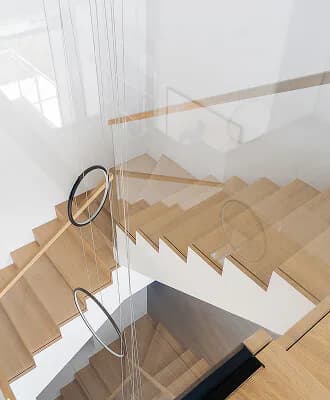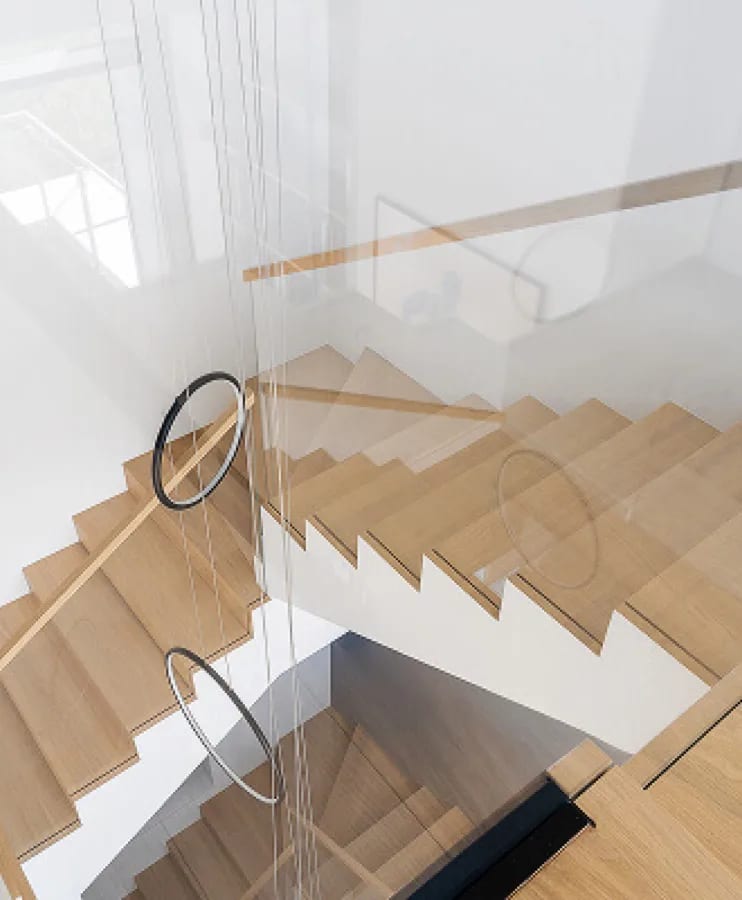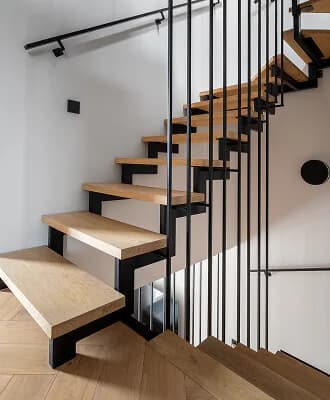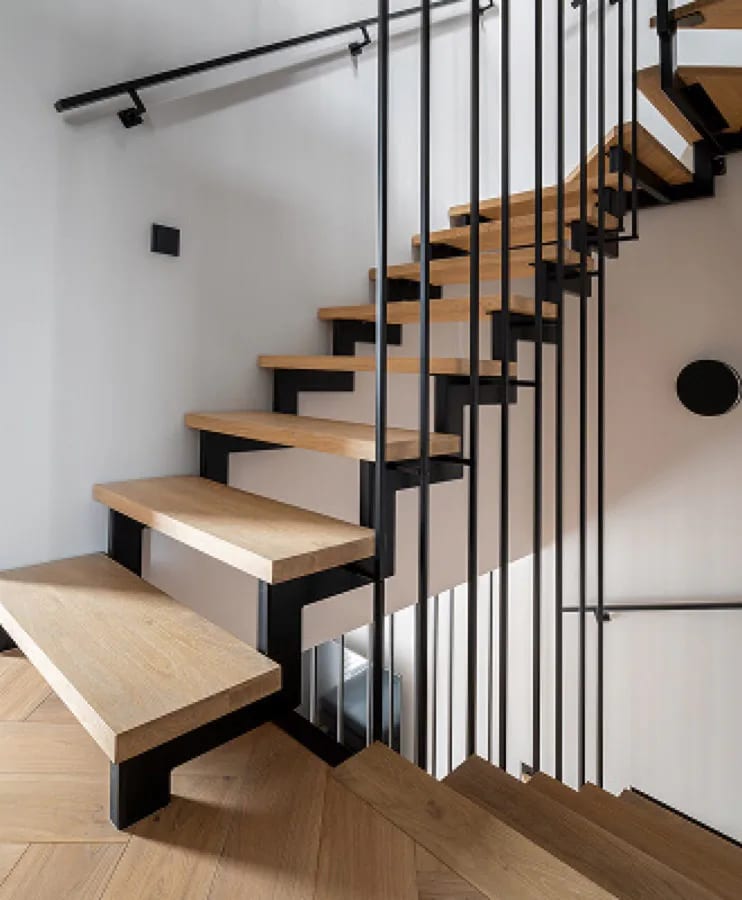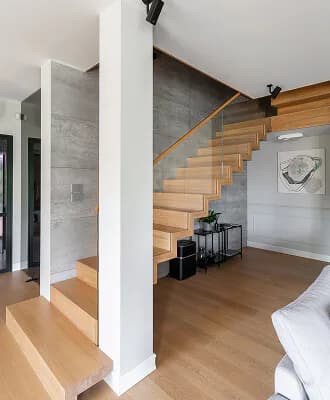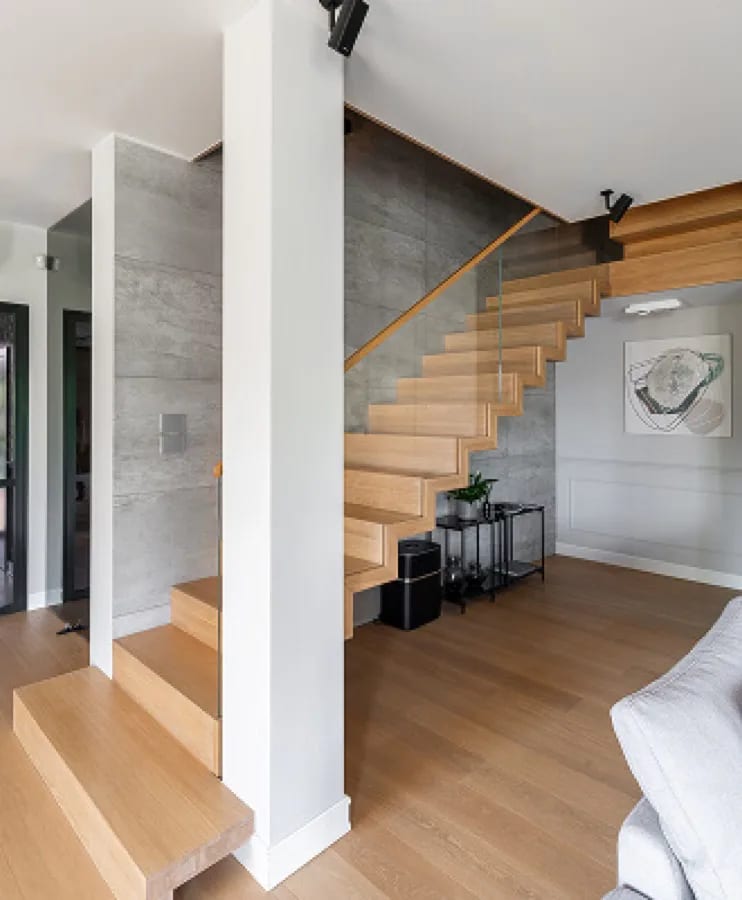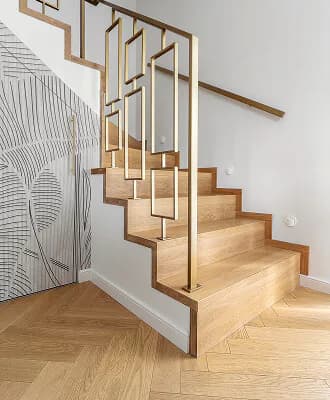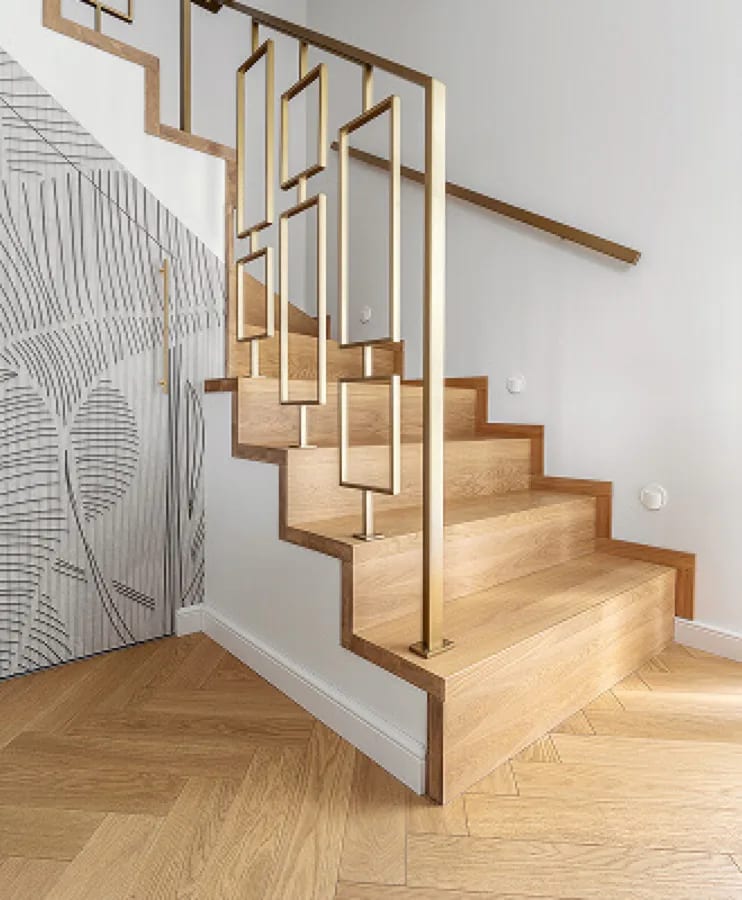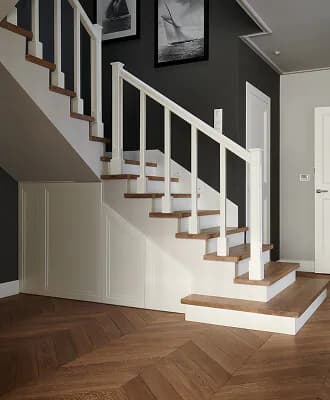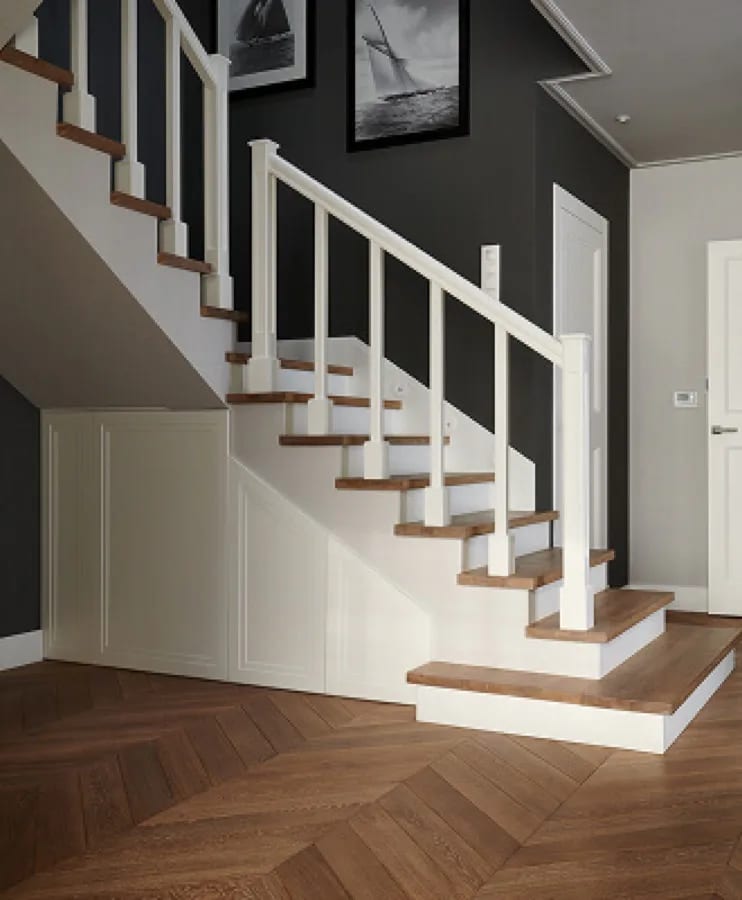
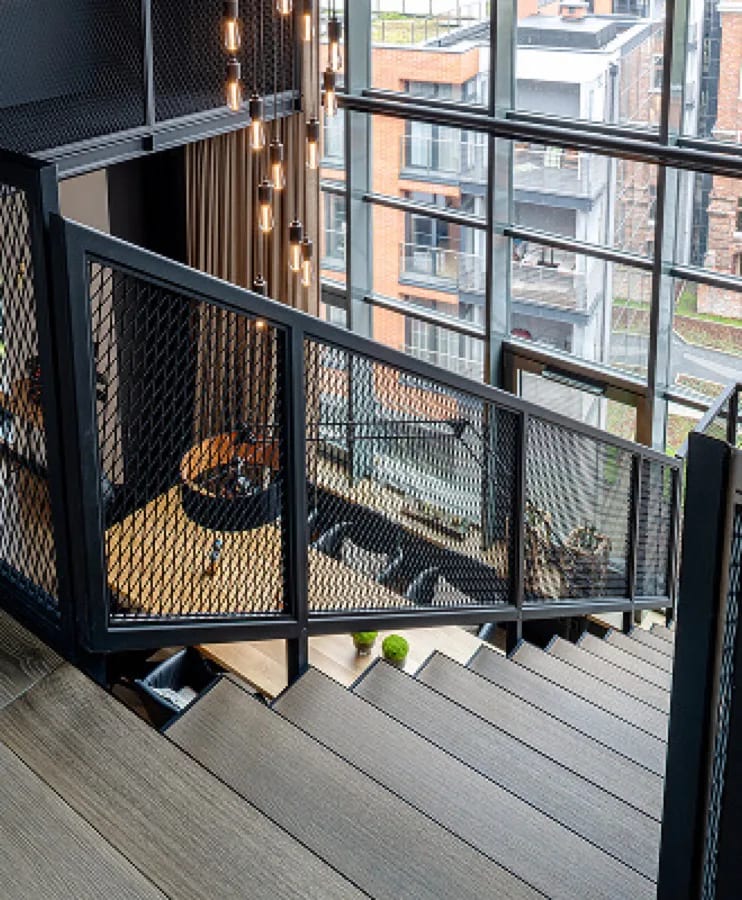
The wooden stairs range includes oak and ash models, plus a few in walnut or exotic wood, in shades from light to dark. The treads are finished with lacquer or oil, in matt or satin. Oak and ash are hard woods that stand up well to everyday foot traffic. If the stairs connect to the floor upstairs, match the species and shade of the treads to the boards so the transition looks seamless.
Wooden stairs affect everyday movement around the home through the height and depth of each step, the type of wood and the finish. These are the details that decide how easy they are to go up and down, as well as how the surface catches the light and works visually in the room. The range includes, among others, cladding for concrete stairs, self-supporting stairs, winder stairs and carpet-style stairs, complemented by balustrades.
The choice usually starts with the layout of the house and how much space there is, and only then moves on to the look. If there’s already a concrete staircase in the building, wooden cladding gives it a neater, more finished look and let you match the wood to the existing structure. In smaller spaces, winder stairs, which change the direction of the run, help fit everything in without an extra landing. With a simpler layout, it’s easier to keep a regular rhythm to the steps. When space is tight, the turn of the run itself and the proportions of each step matter even more.
In an open-plan living area, self-supporting stairs and carpet-style stairs simply give a different effect. Self-supporting stairs have a more open look, in other words they show the structure itself more clearly. Carpet-style stairs create a continuous line of treads and risers, so the form feels fuller and more closed. It’s not the same type of structure, which means the whole shape is read differently too. In the data shown here, oak and ash appear most often, as well as walnut and selected exotic options. The pairing of the stairs with the balustrade also matters, because it affects how the proportions of the run and the whole staircase are seen.
When measuring and pricing, it matters a lot whether the run sits on concrete or is self-supporting, and where the turn sits on winder stairs — that is, stairs that change direction without a classic landing. That affects how the wooden parts are matched to the room layout. On clad concrete stairs and carpet-style stairs, the cladding on the treads and risers plays a bigger role, as does the way the line of the run is carried through. On self-supporting models, the structure itself has more visual impact, which means they read differently in the space than a solid form.
The finish affects how the steps are seen in everyday use. Some versions are lacquered or oiled, in matt or semi-matt. When comparing stairs, you look at how the steps will be used and what the surface feels like. This isn’t a fixed set for every model, just the range shown in selected projects and data. When comparing stairs, it’s worth matching the finish with the balustrade and the light in the room, because the rhythm of the whole run shows up quickly on the steps.