


Oak Sand Natur
LarecoParquet
For living room flooring, we focus on oak parquet and boards from KACZKAN and Lareco, with a strong share of chevron and herringbone. The living room is usually the largest open space in a flat, so the floor shapes the feel of the room and stands up to everyday use from family and guests. A brushed finish with a strong grain shows marks from daily use less than a smooth board. The whole range is suitable for underfloor heating, so focus on the layout and shade.

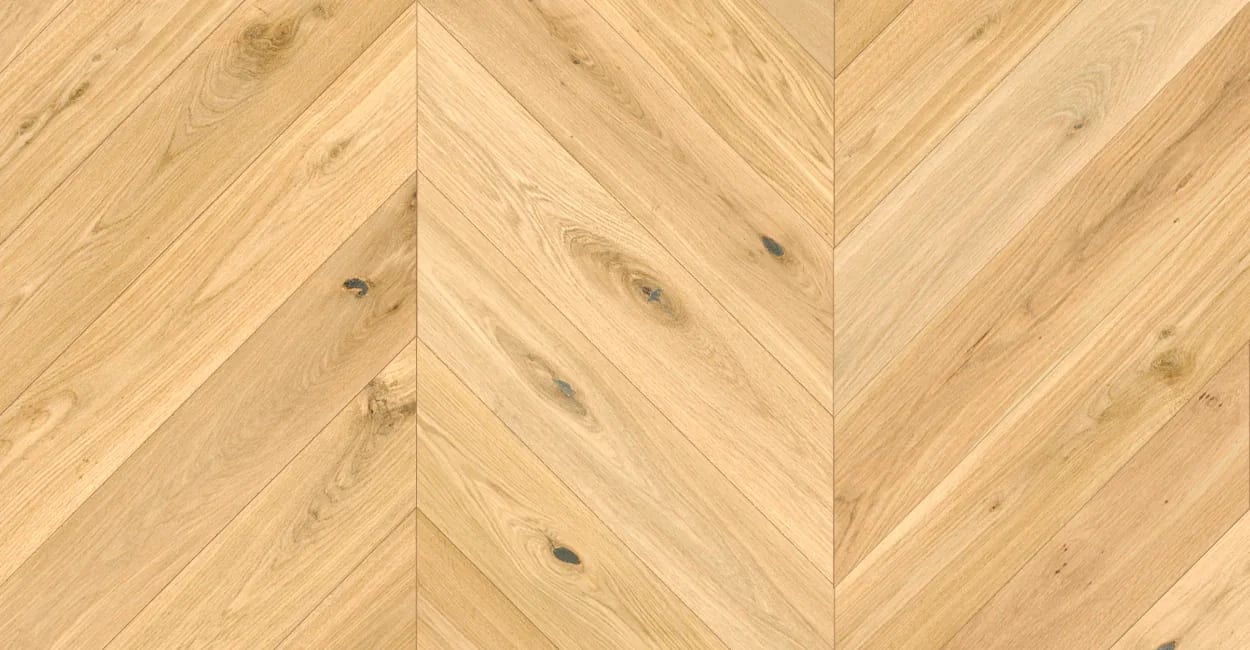


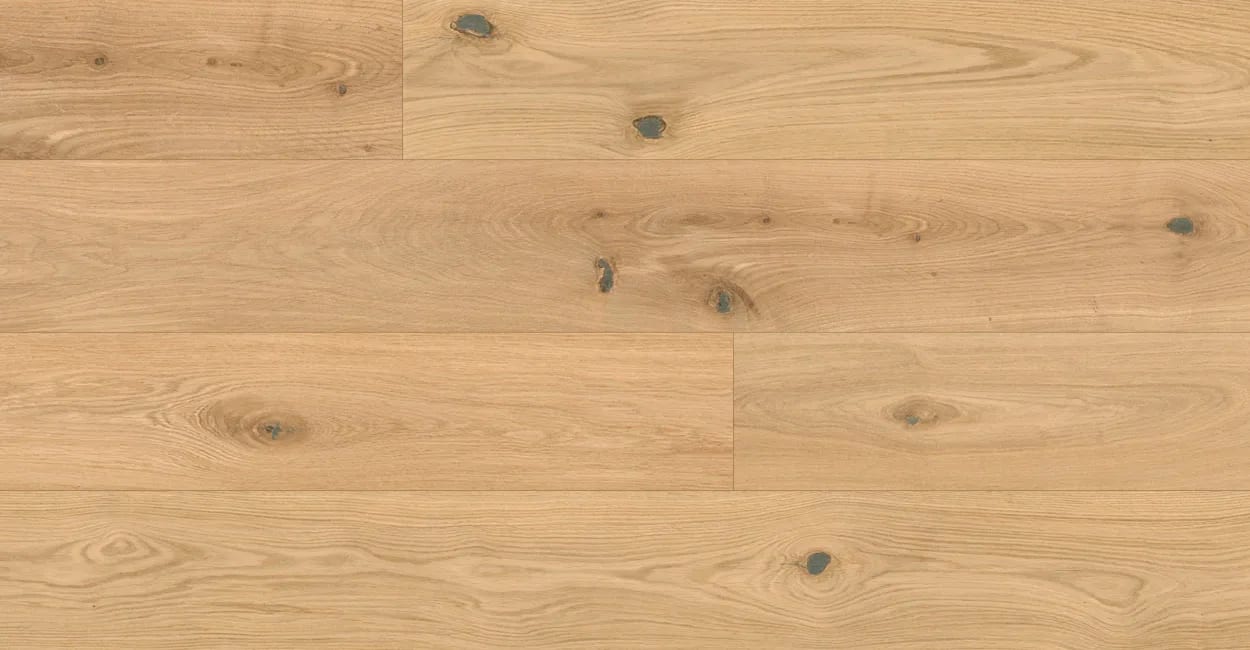


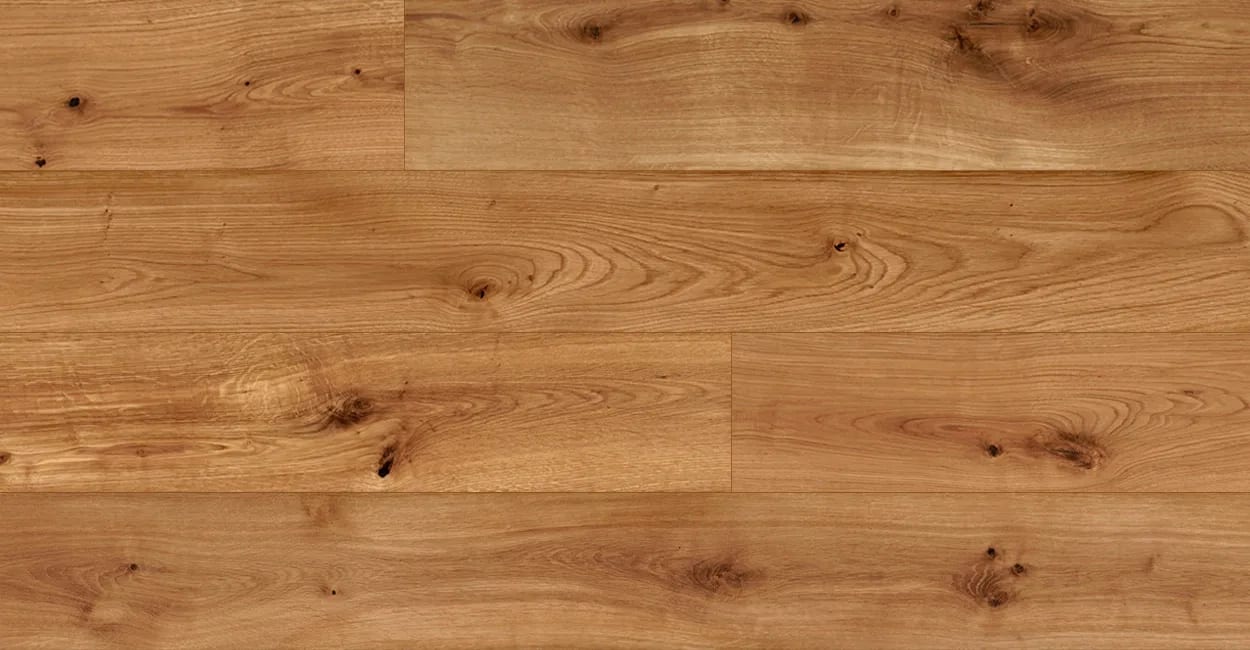


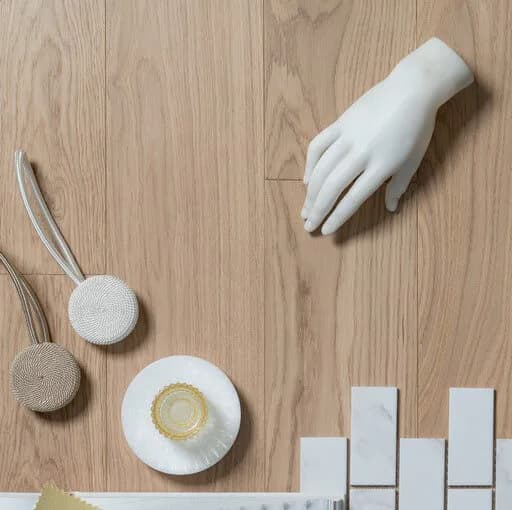


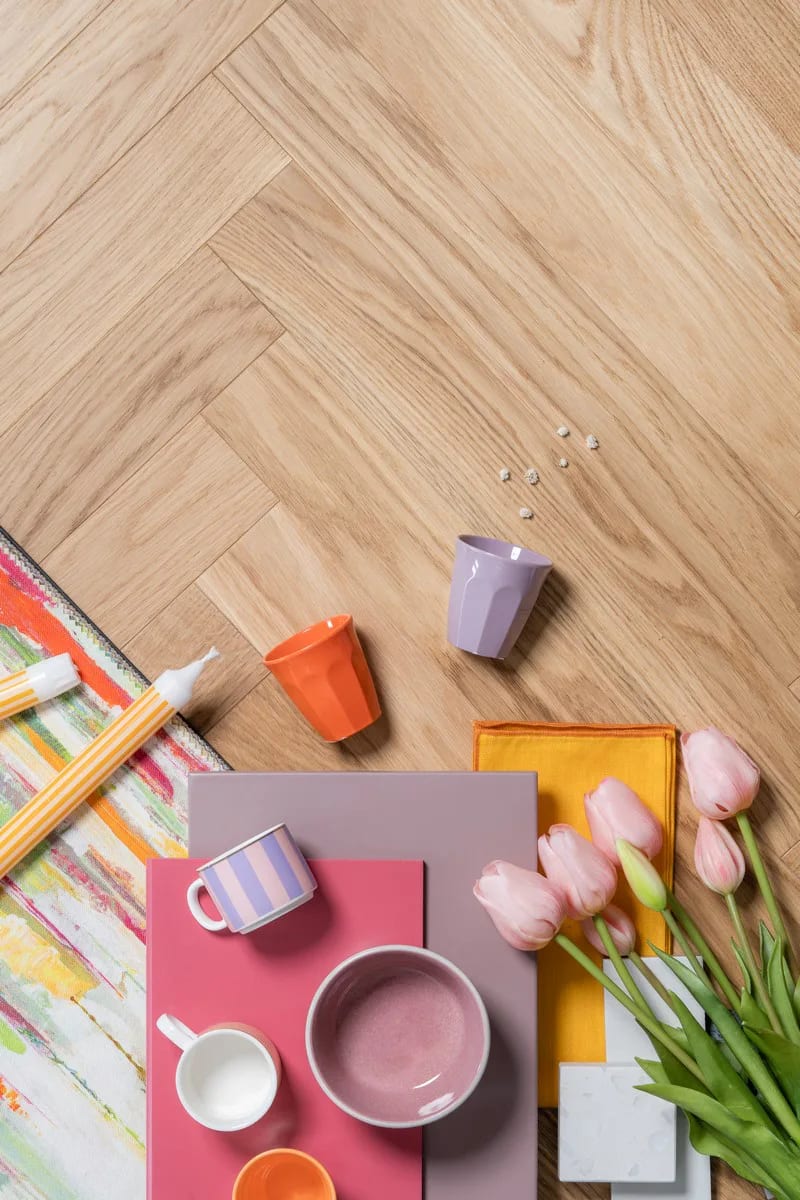
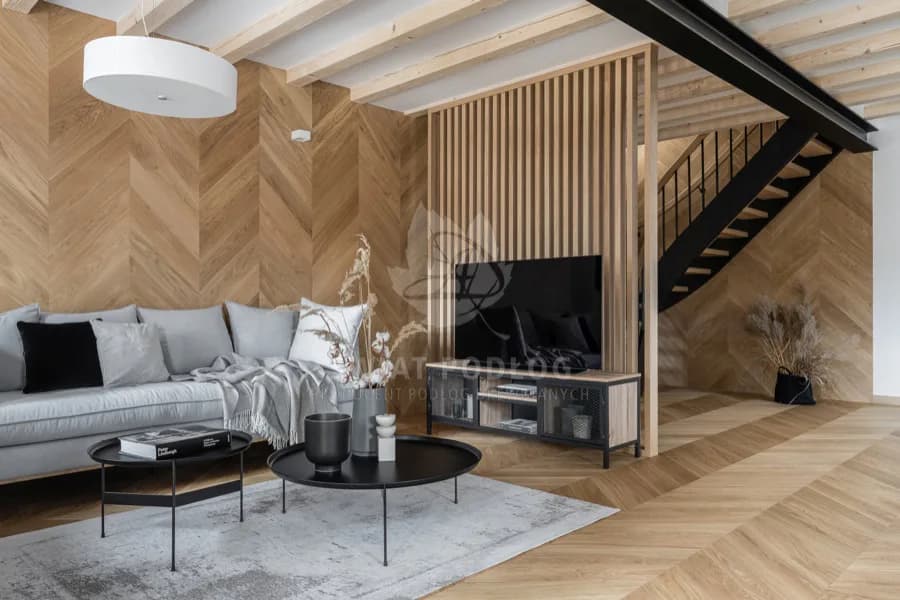
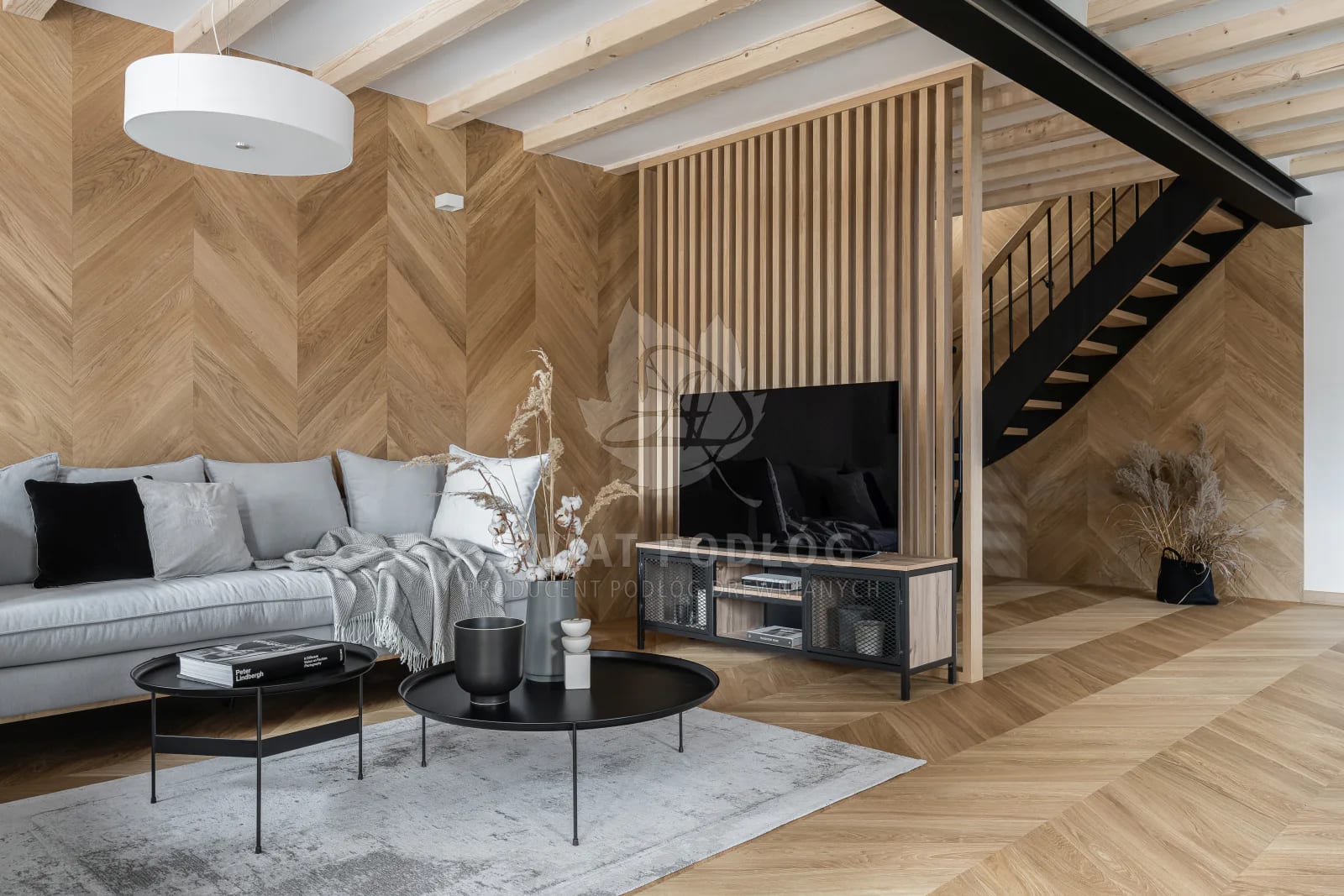
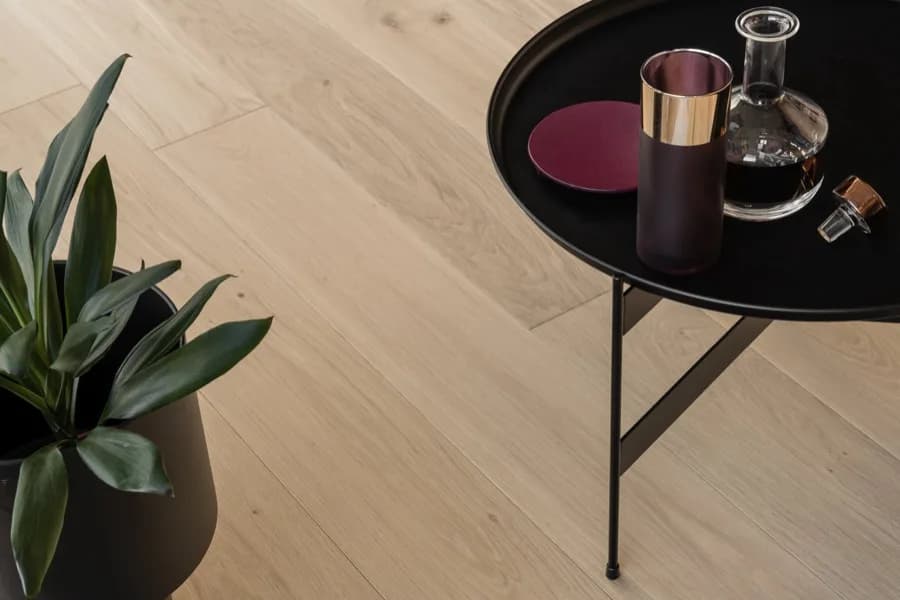
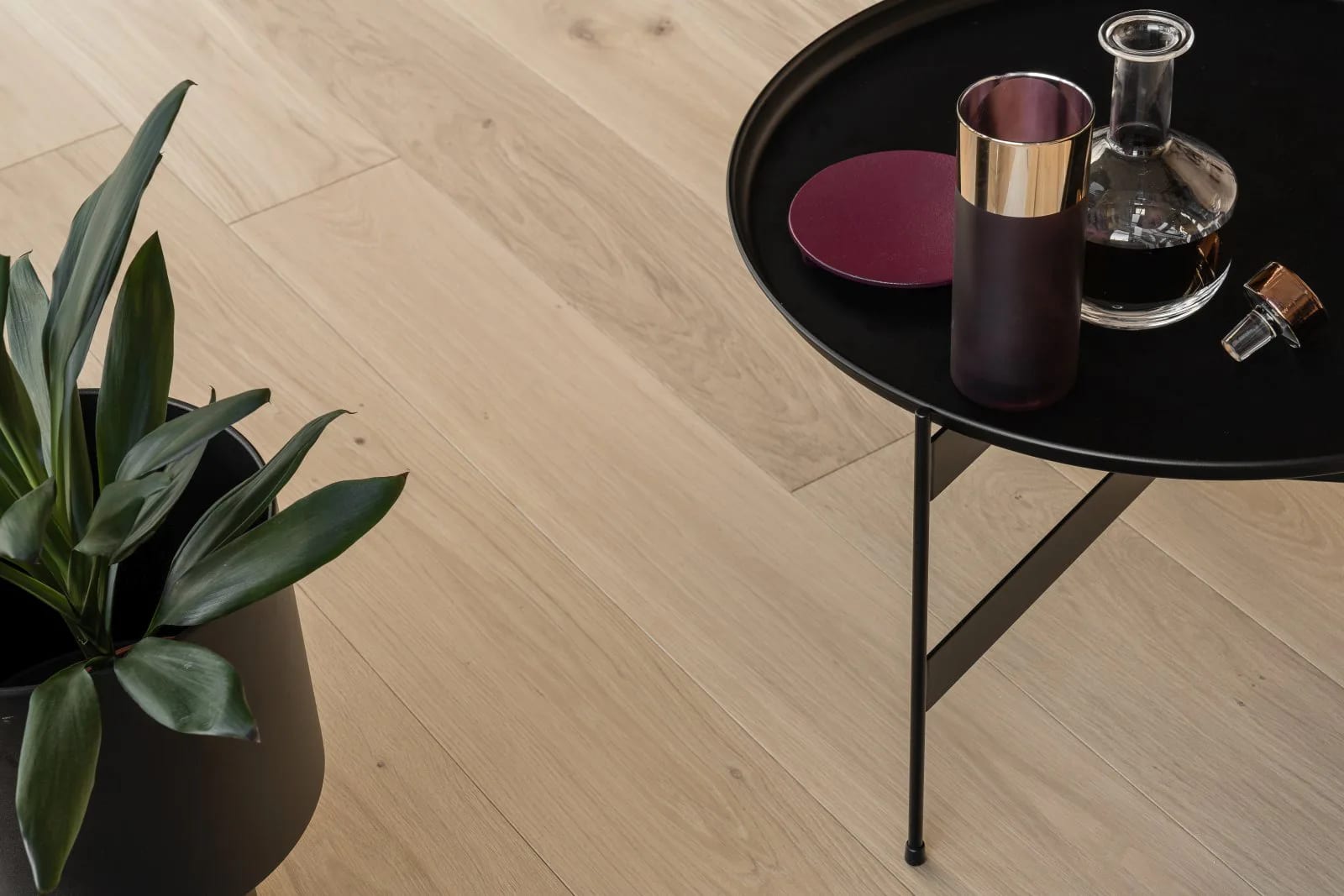

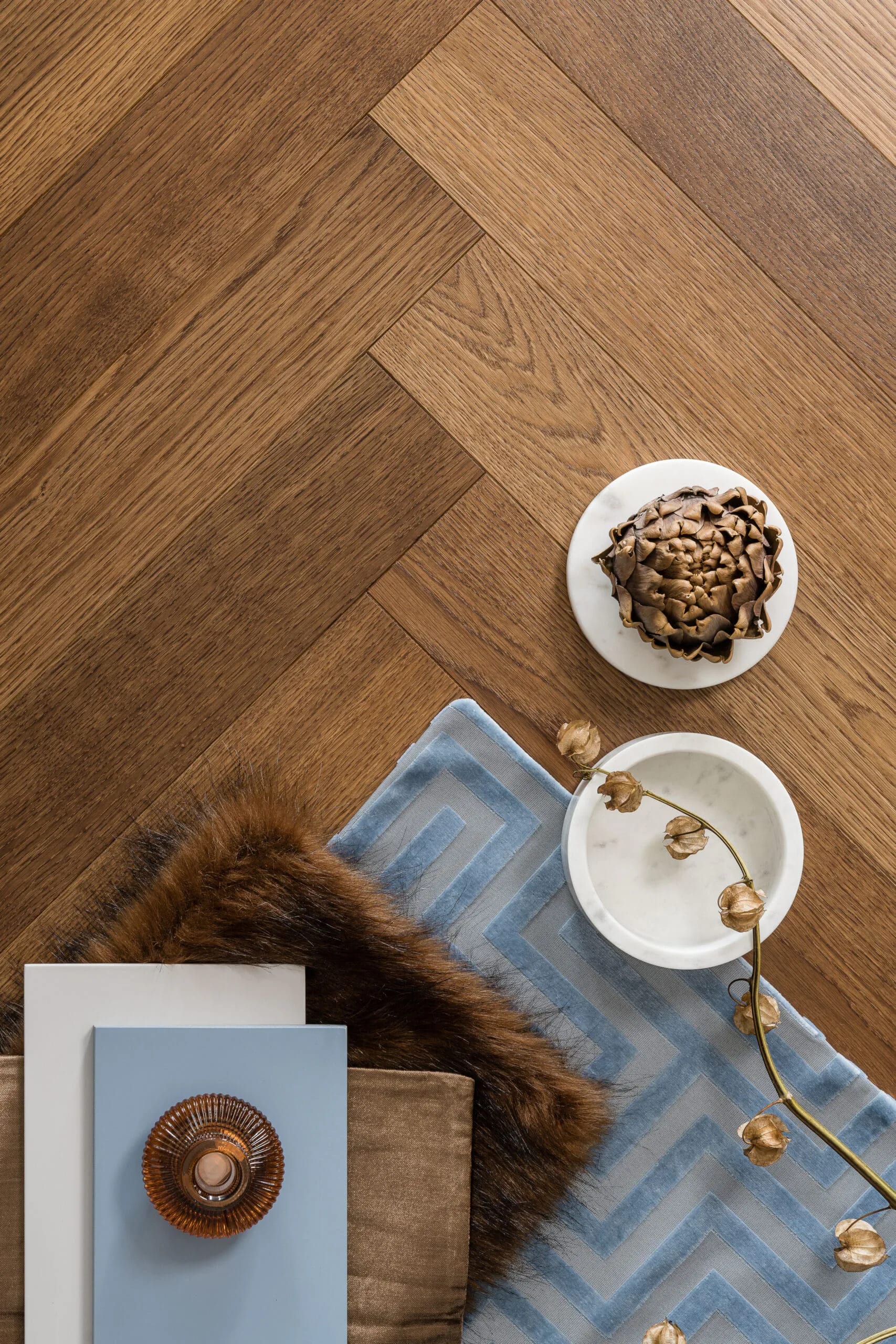

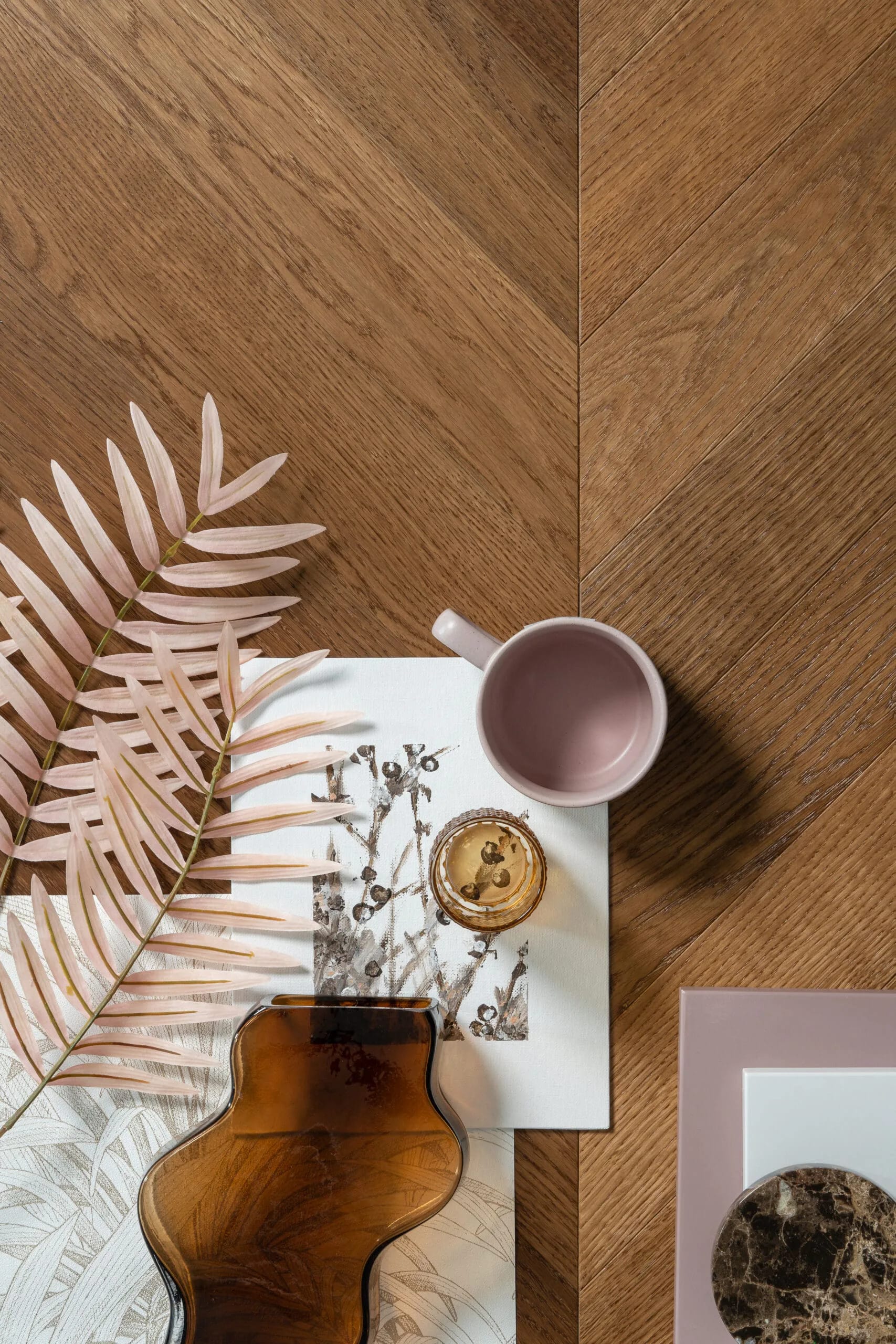

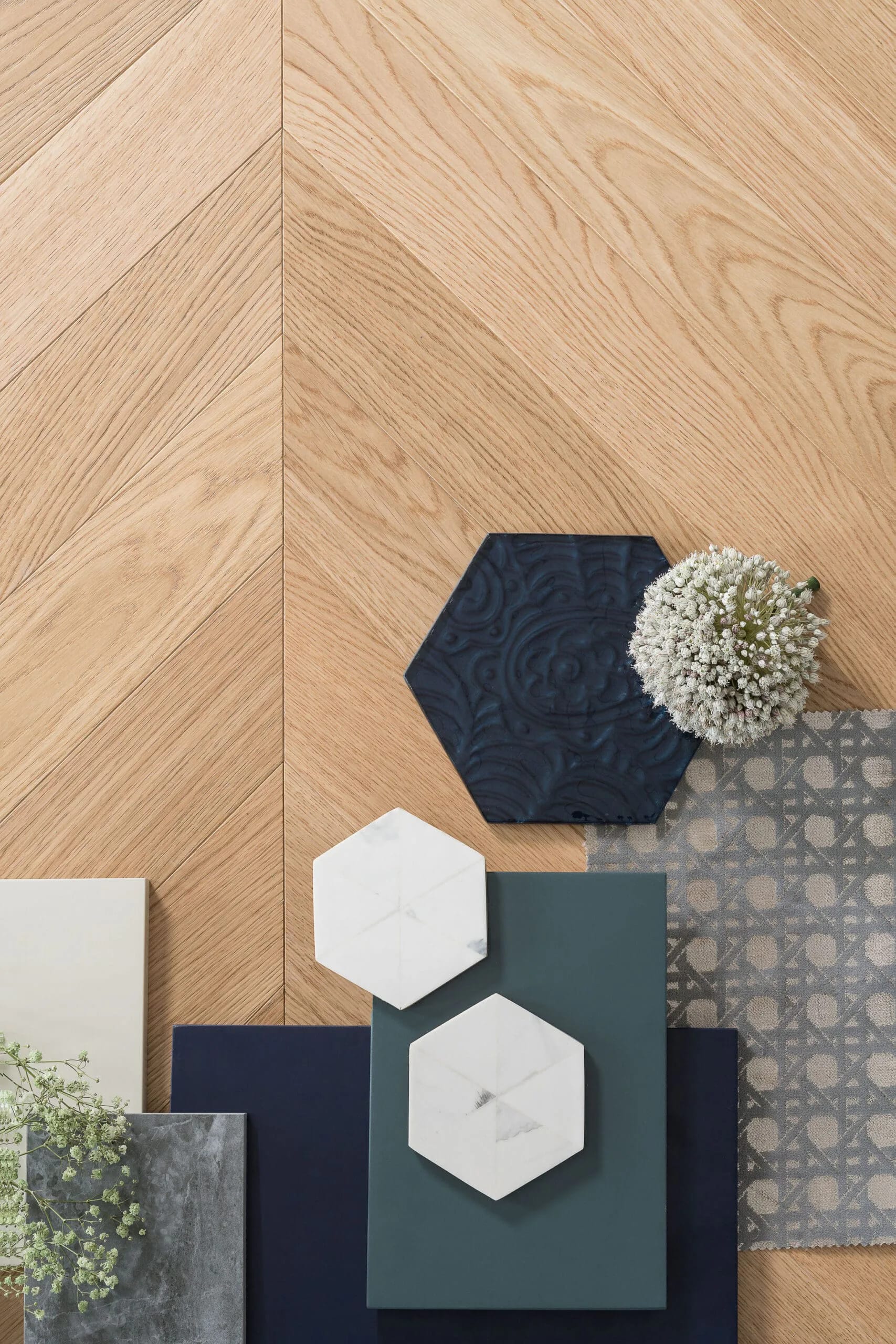

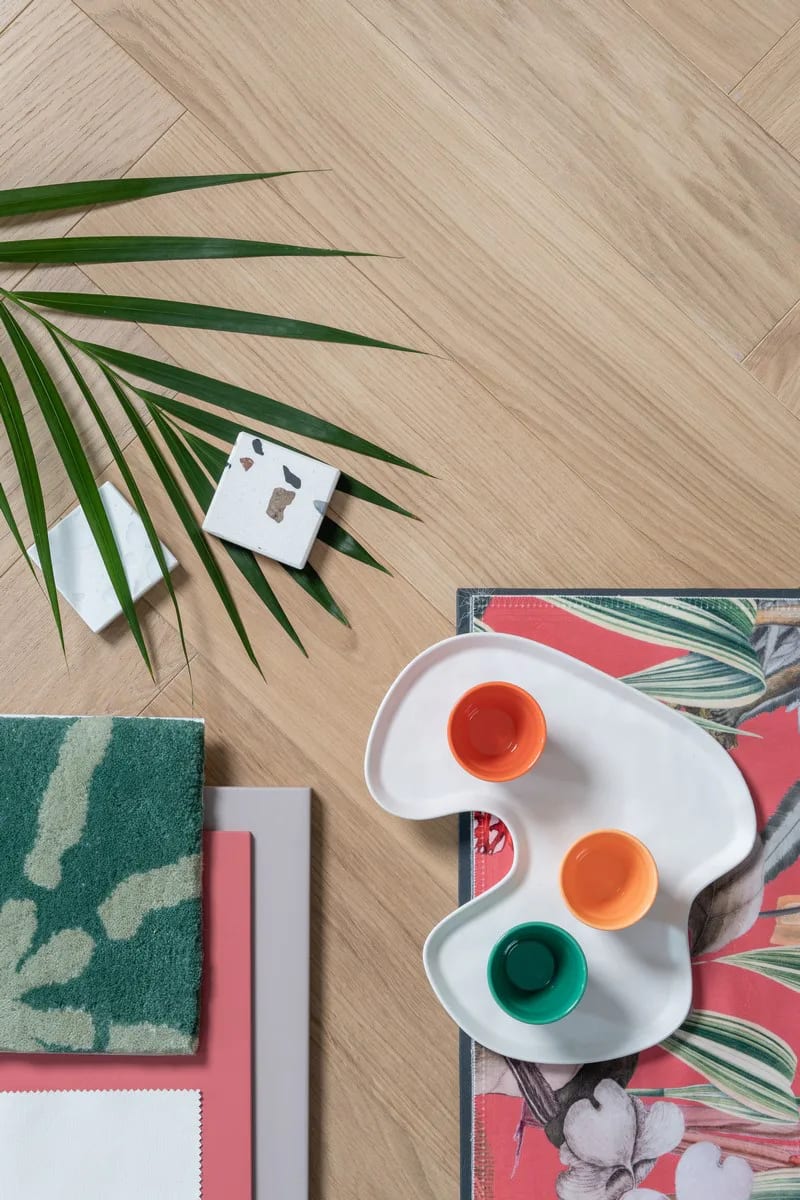

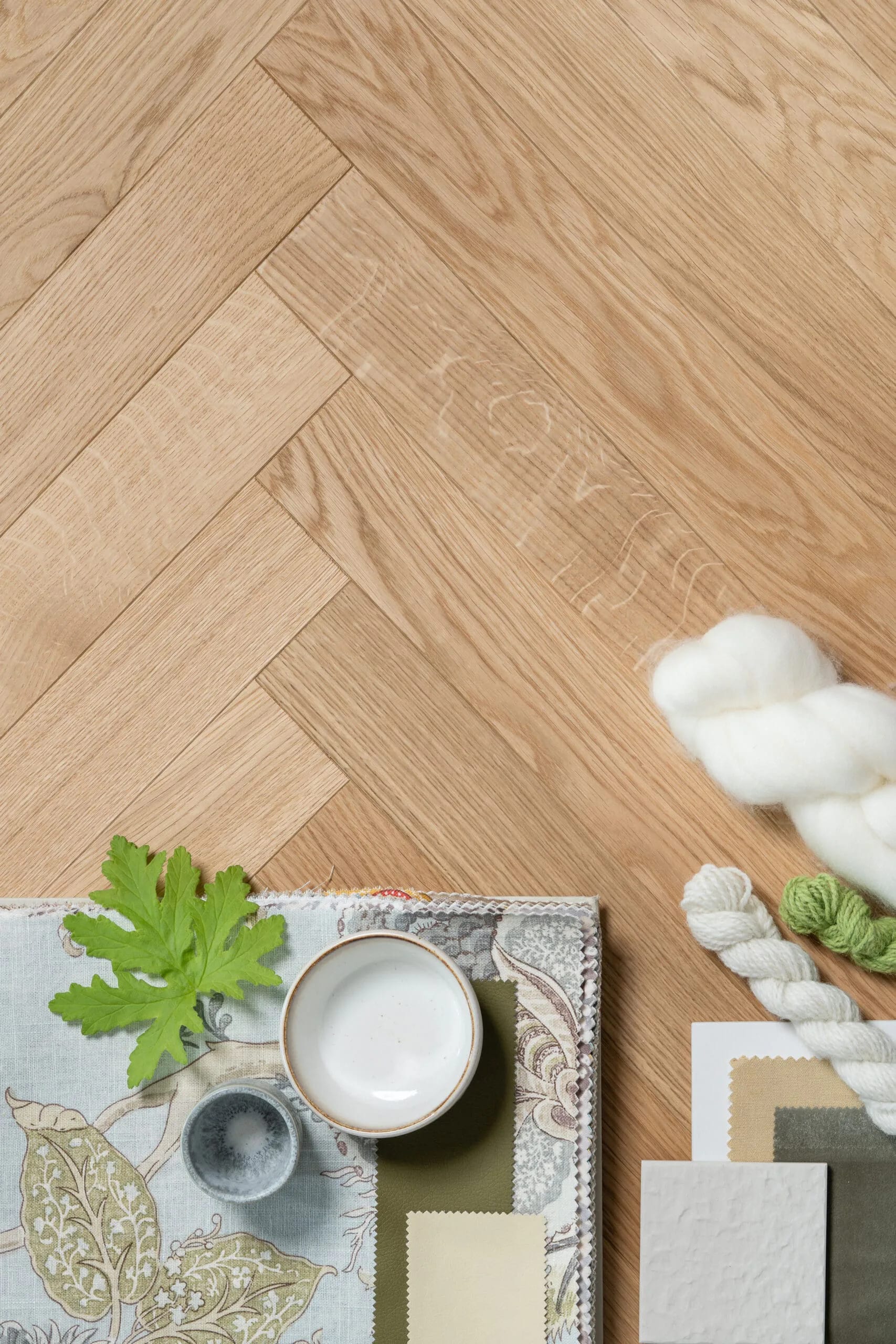

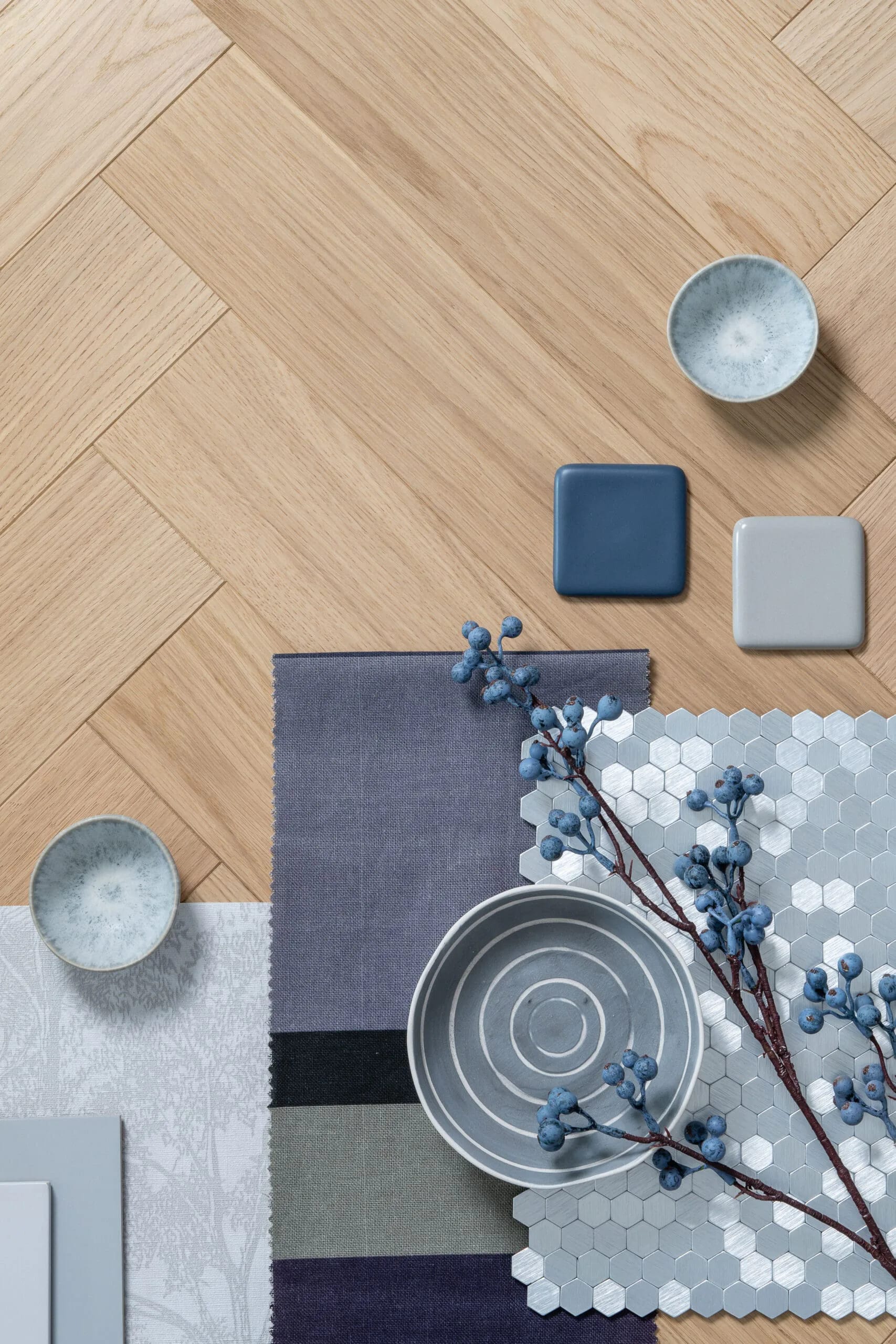

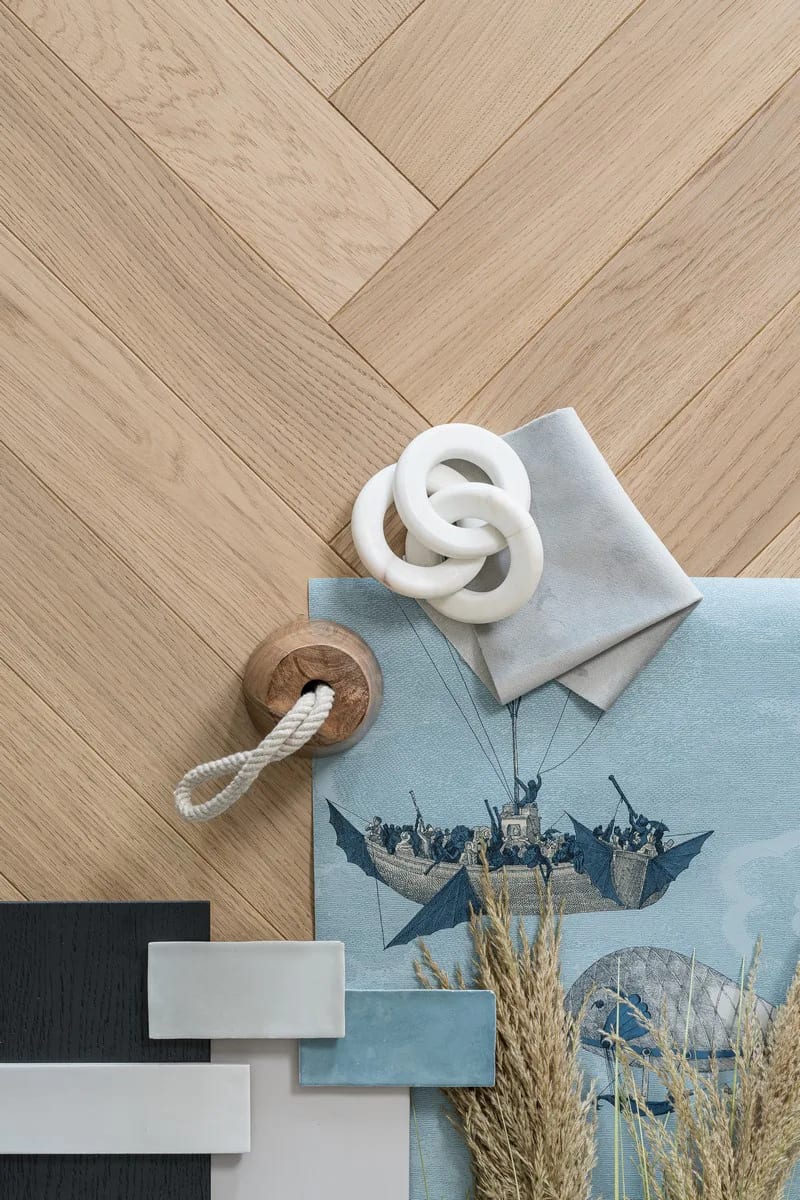

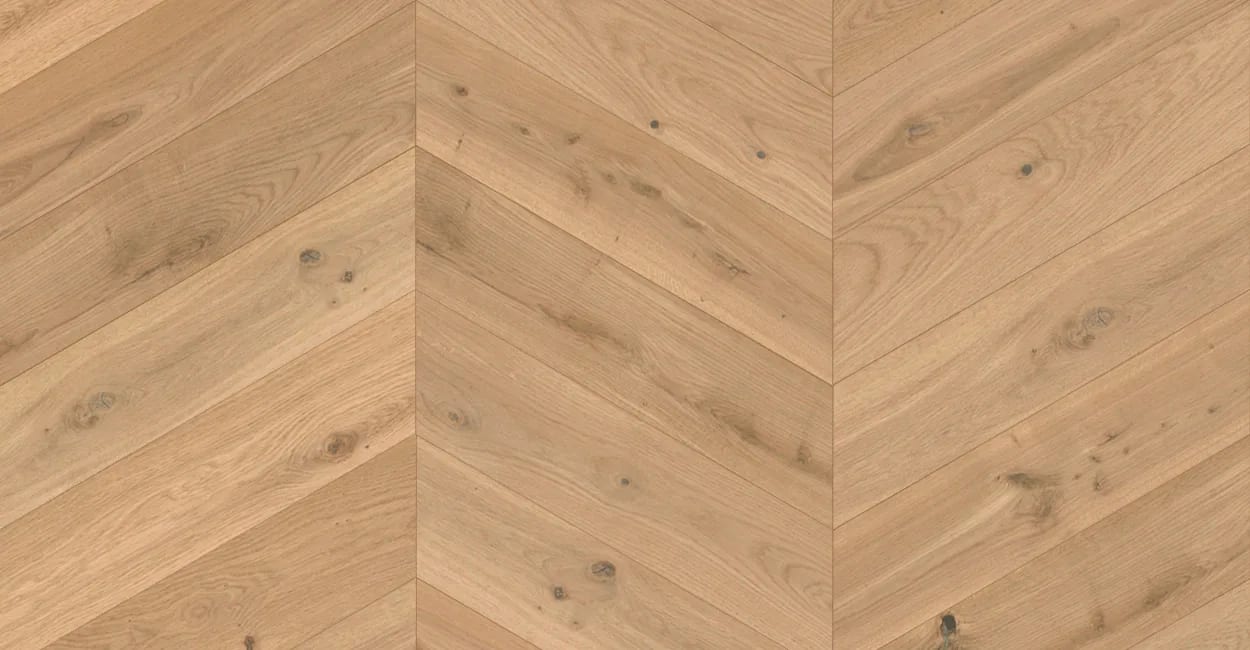

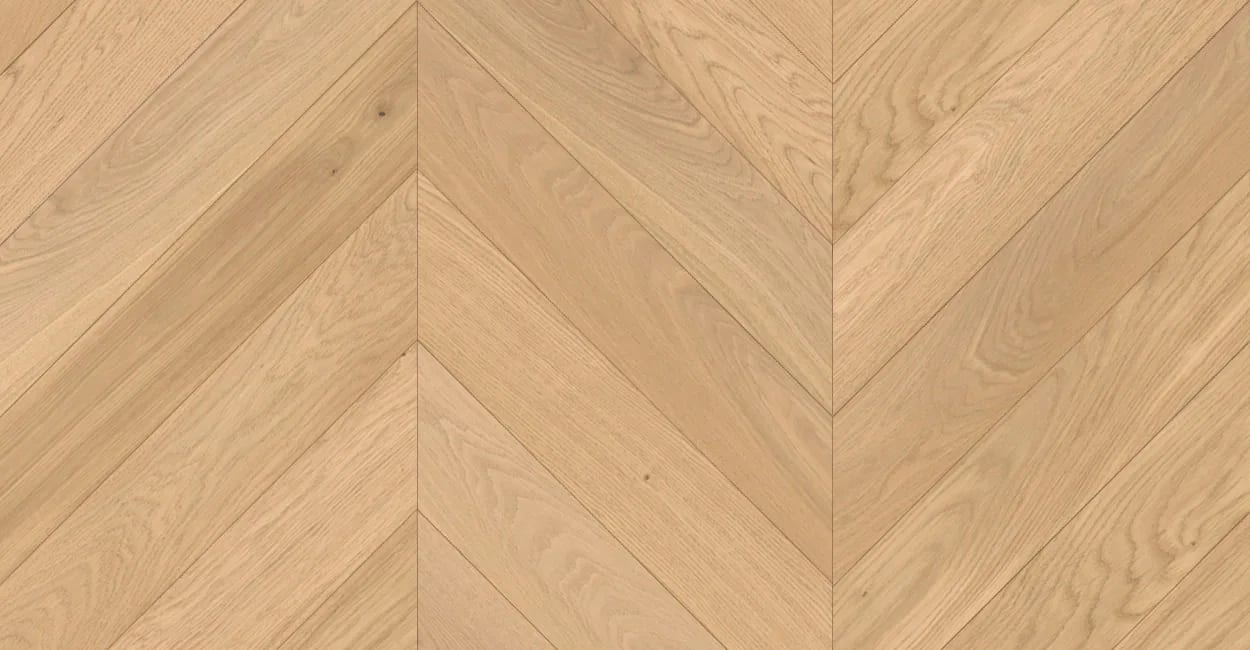

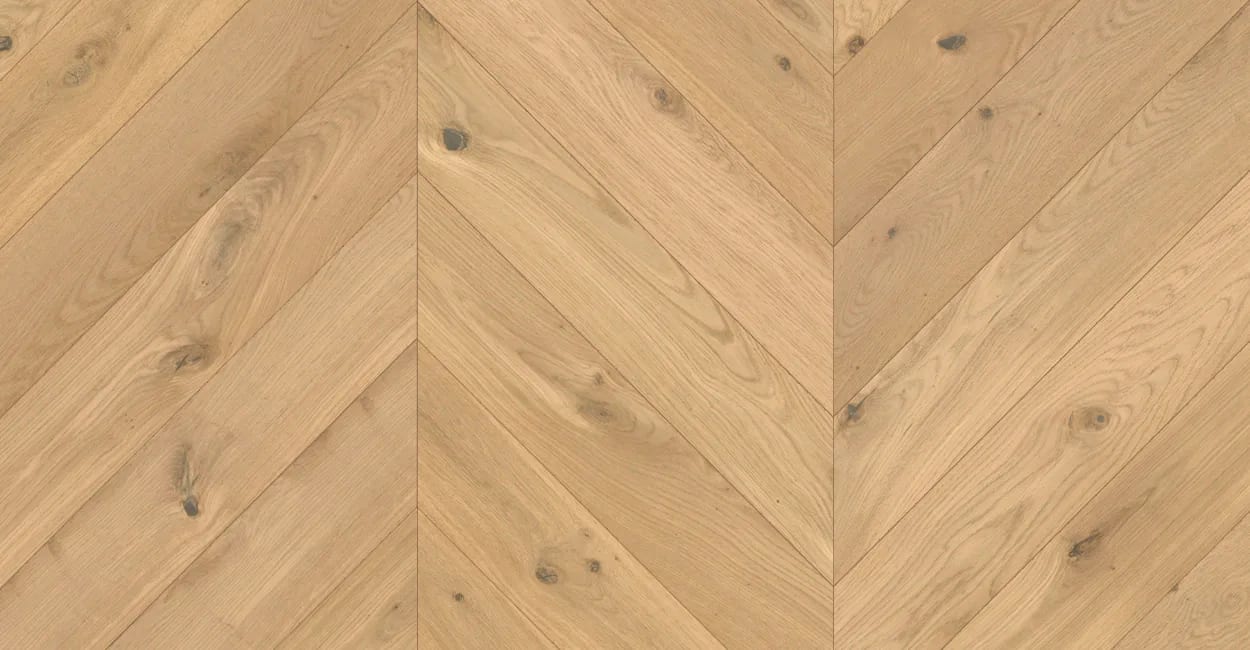
Flooring for living rooms and lounges is usually chosen with everyday use in mind, because it’s the area for the sofa, table, walkway and often the door to the balcony or terrace too. Oak turns up regularly in this category, alongside brushed surfaces — ones where the wood grain shows more clearly. You can see that in KACZKAN Baltic Seaside, Lareco Oak Amber Natur, World of Floors Piano 1L and Oak Sierra Arbiton from the vinyl and laminate flooring range, a model with an oak decor rather than real wood.
Living room flooring is usually chosen to suit how the room’s used, the layout and how much light it gets. In a smaller room or one that’s less well lit, a lighter shade simply won’t darken the whole floor as much as a darker board. With everyday traffic, children or pets, a calmer grain and a less contrasting finish give the floor a more even look in normal use. A completely smooth surface, on the other hand, shows small scratches and scuffs more clearly than a texture with stronger grain.
Product descriptions in this category often mention underfloor heating, but the final result also depends on the condition of the subfloor. Damp or uneven screed are more likely to lead to creaking, boards moving and seasonal gaps than the choice of decor itself. One large floor area in the living space also matters: the longer the walkways and the more light across the surface, the more clearly you can see shade differences, board joins and signs of everyday use.
In a living room with patio or balcony doors, it’s not just the finish itself that affects how the floor looks after a few months, but also the sand and moisture brought in from outside. These are what wear the top layer fastest in the walkway by the door. That’s why the finish is chosen to match how heavily the room’s used, and oiled and lacquered wood in the living room still needs basic protection: a doormat at the door and felt pads under furniture. Around the table and seating area, missing felt pads under chairs, the sofa or an armchair leave more marks than the difference between one finish and another.
Light also plays a role in this area. With large glazing and strong sun from the patio side, the colour of the wood changes unevenly over time, especially if part of the floor is always covered by a rug or furniture. In the living room, it’s not just the decor on the sample that matters, but also how the floor behaves on a large surface used every day. From that point of view, board proportions matter, as does the bevel — that is, the slight edge chamfer — how the colour reads in daylight, and whether everyday marks stand out too much from the rest of the floor.