

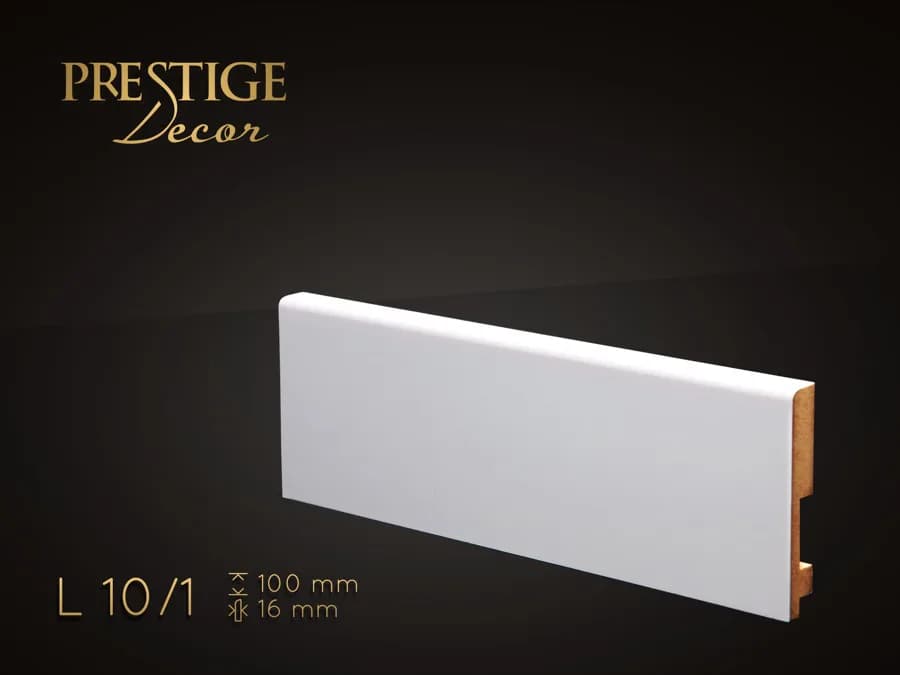
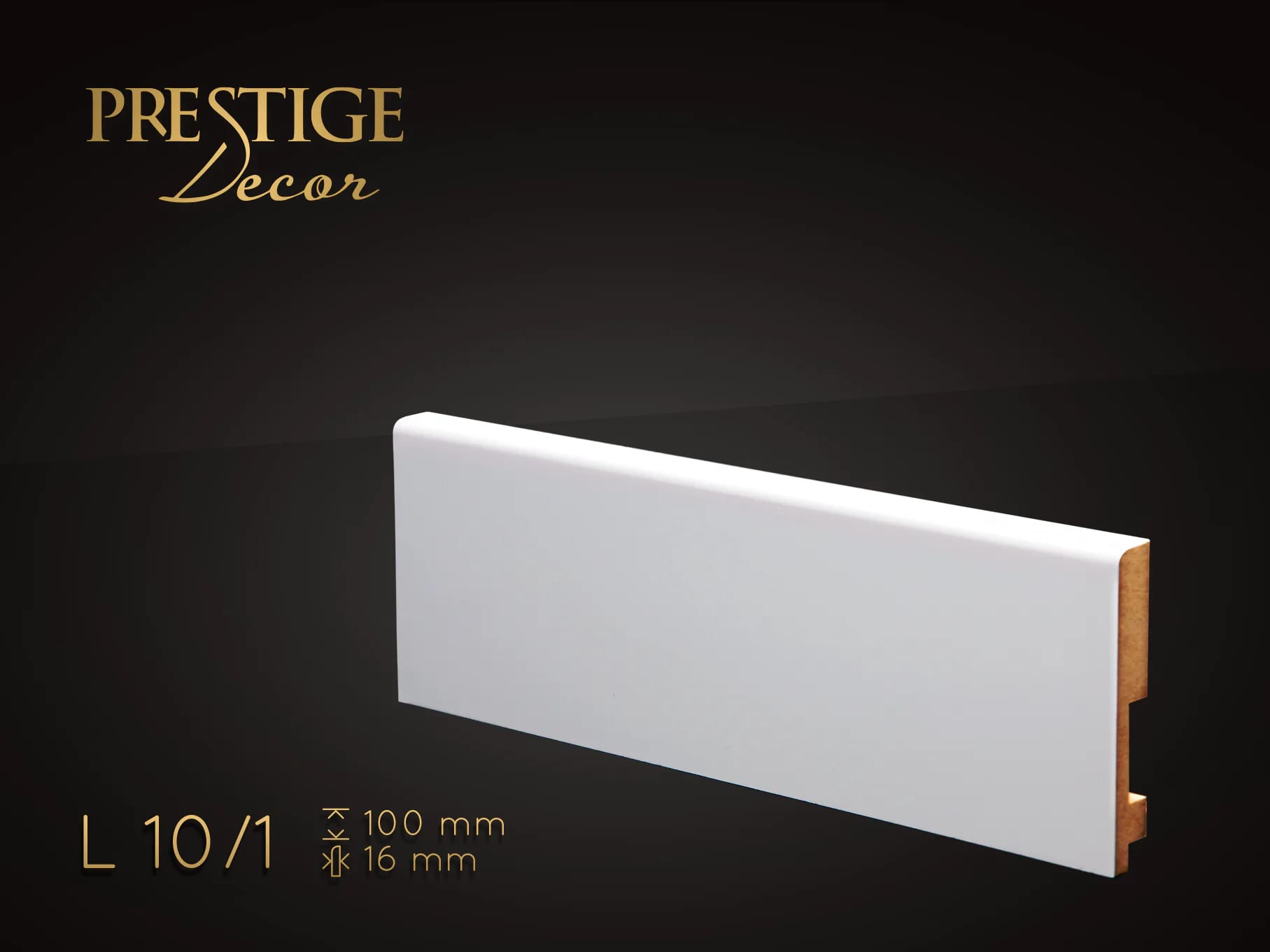
Prestige Decor L10/1
Prestige DecorSkirting and accessories
Lacquered MDF skirting boards are smooth MDF profiles coated in an opaque lacquer – in this range, from Prestige Decor, in light colours, with dark and grey versions alongside them. This kind of skirting doesn’t try to look like wood; instead, it matches the wall or door in colour, so it works with any floor. It’s fitted with glue, and on some models also with clips. With a tall profile, a flat wall matters – you can seal the gap between the skirting and the plaster with acrylic in the lacquer colour.
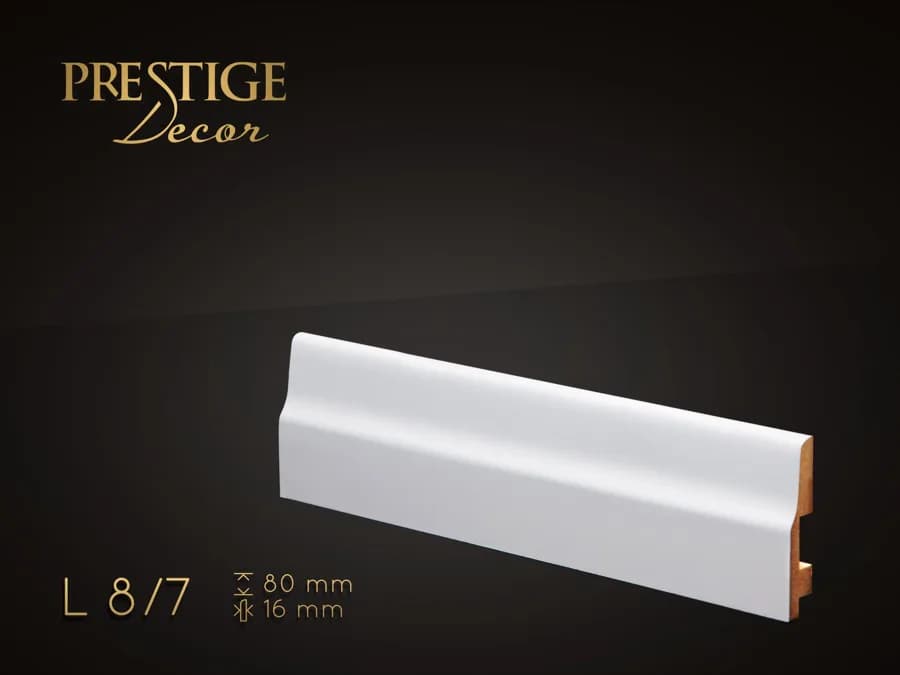
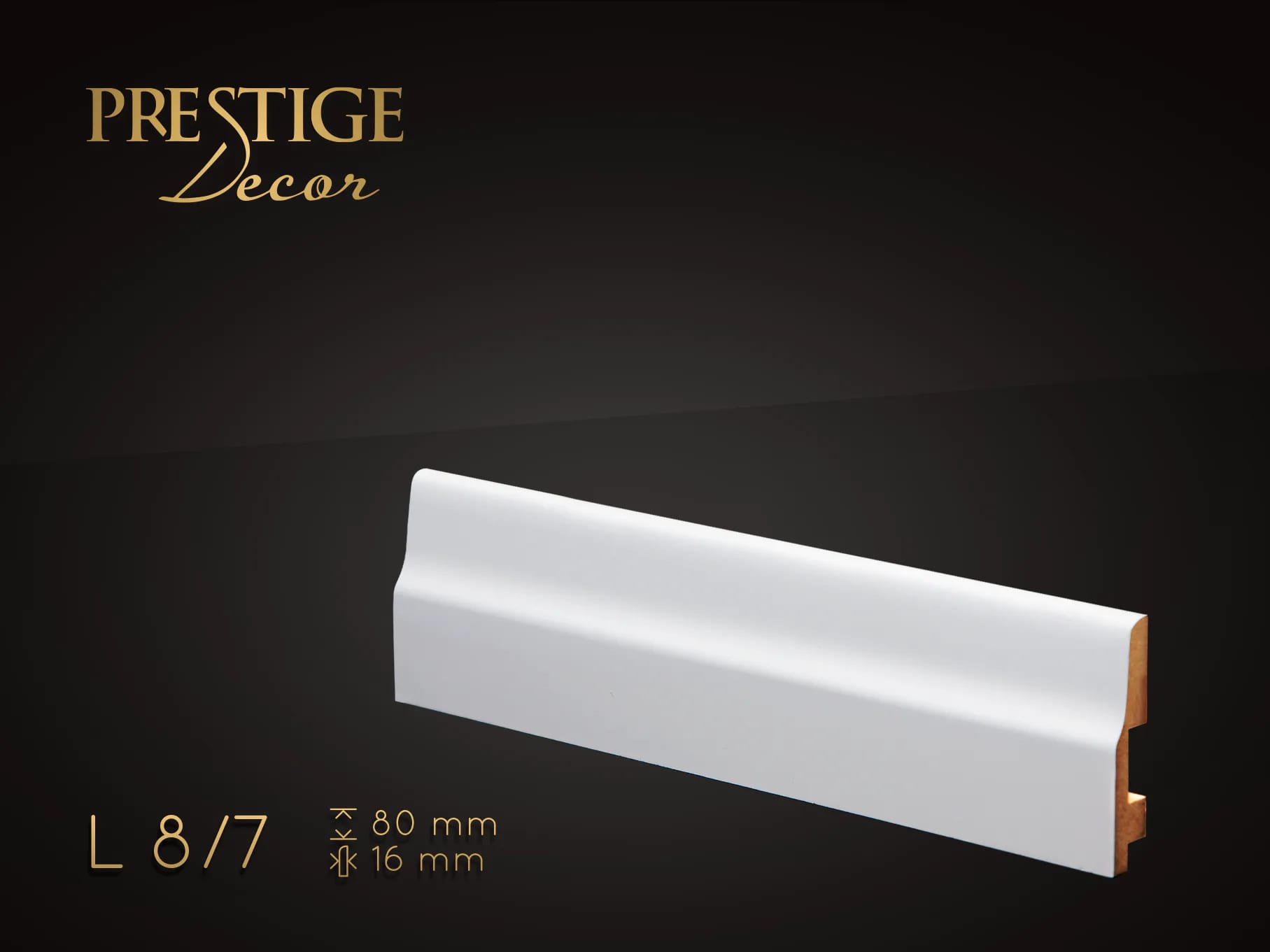
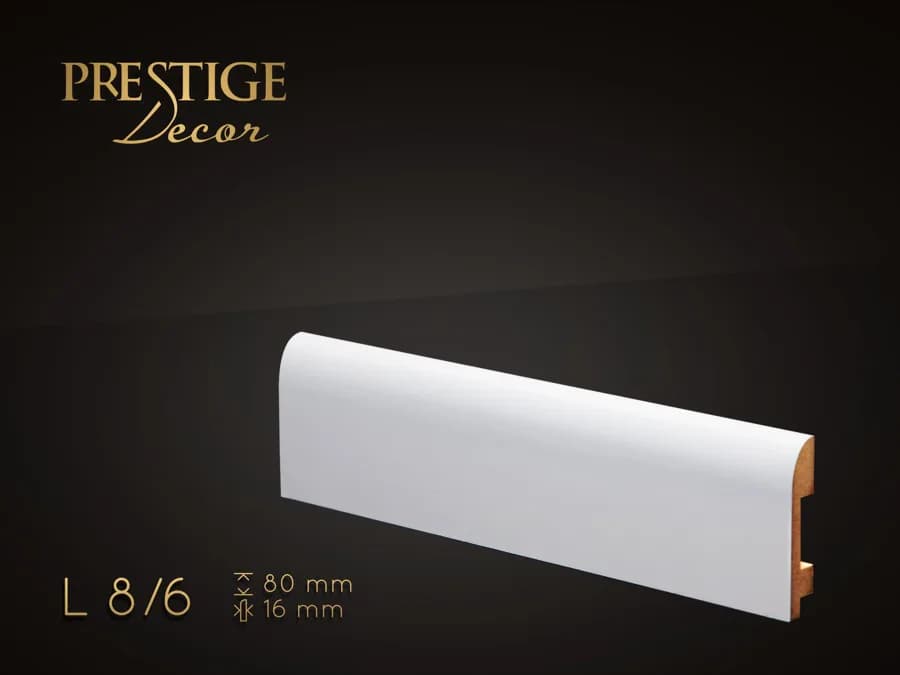
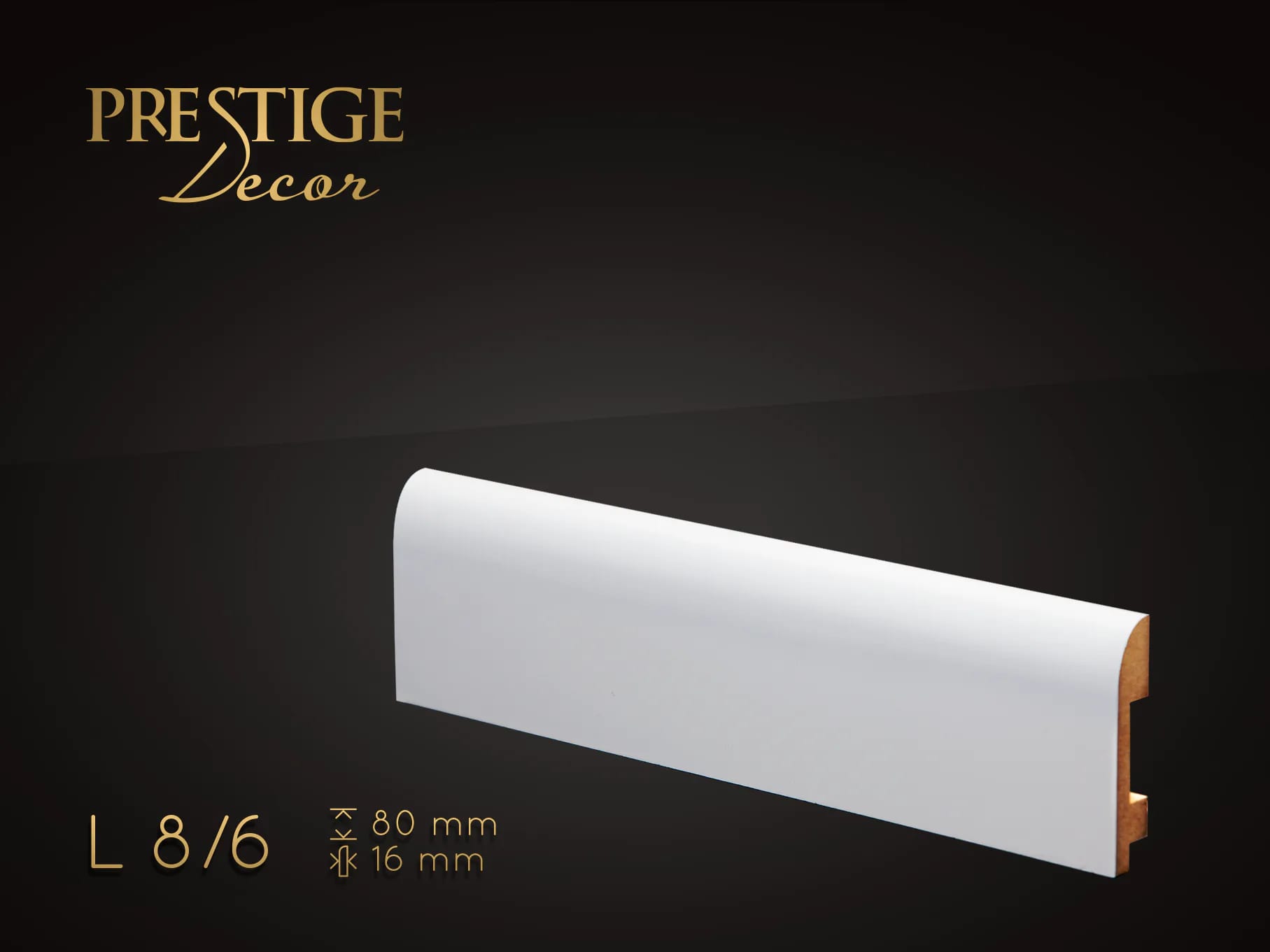
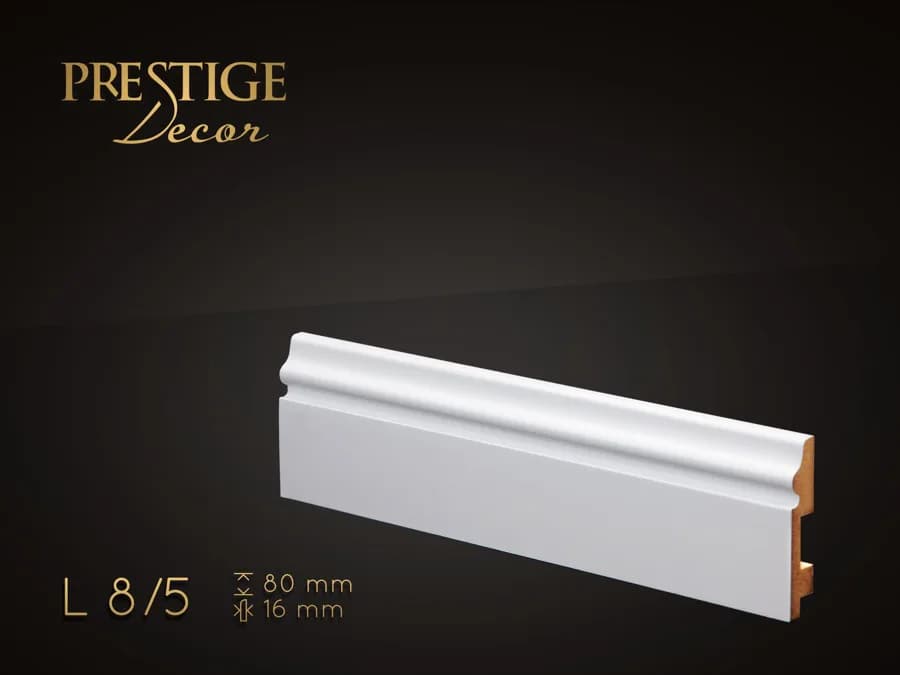
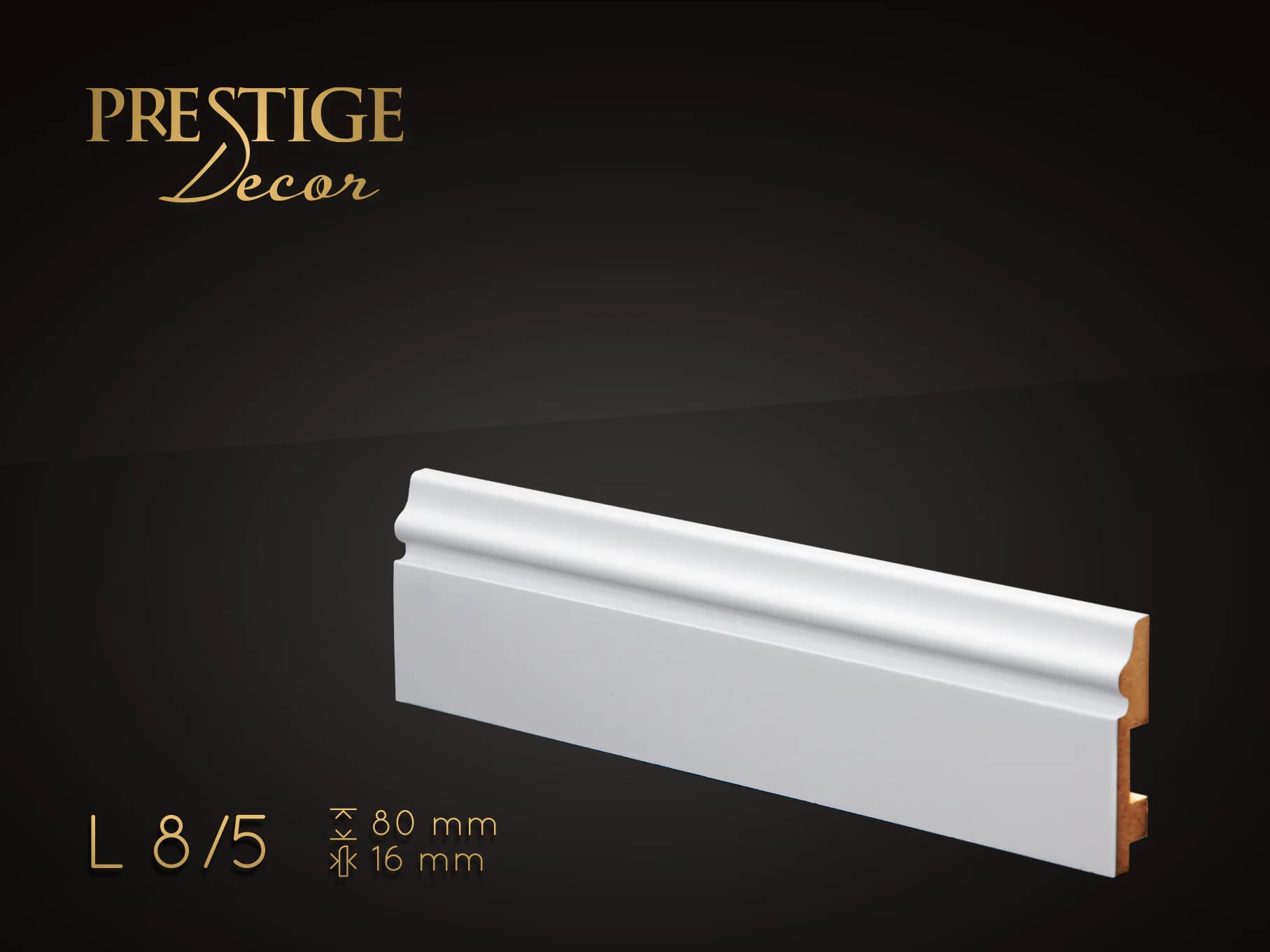
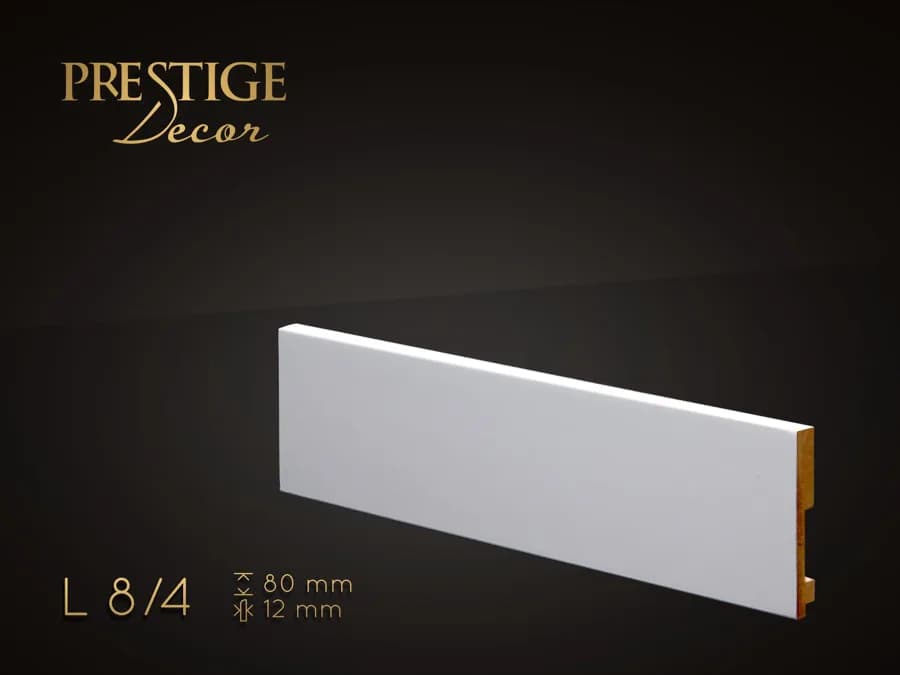
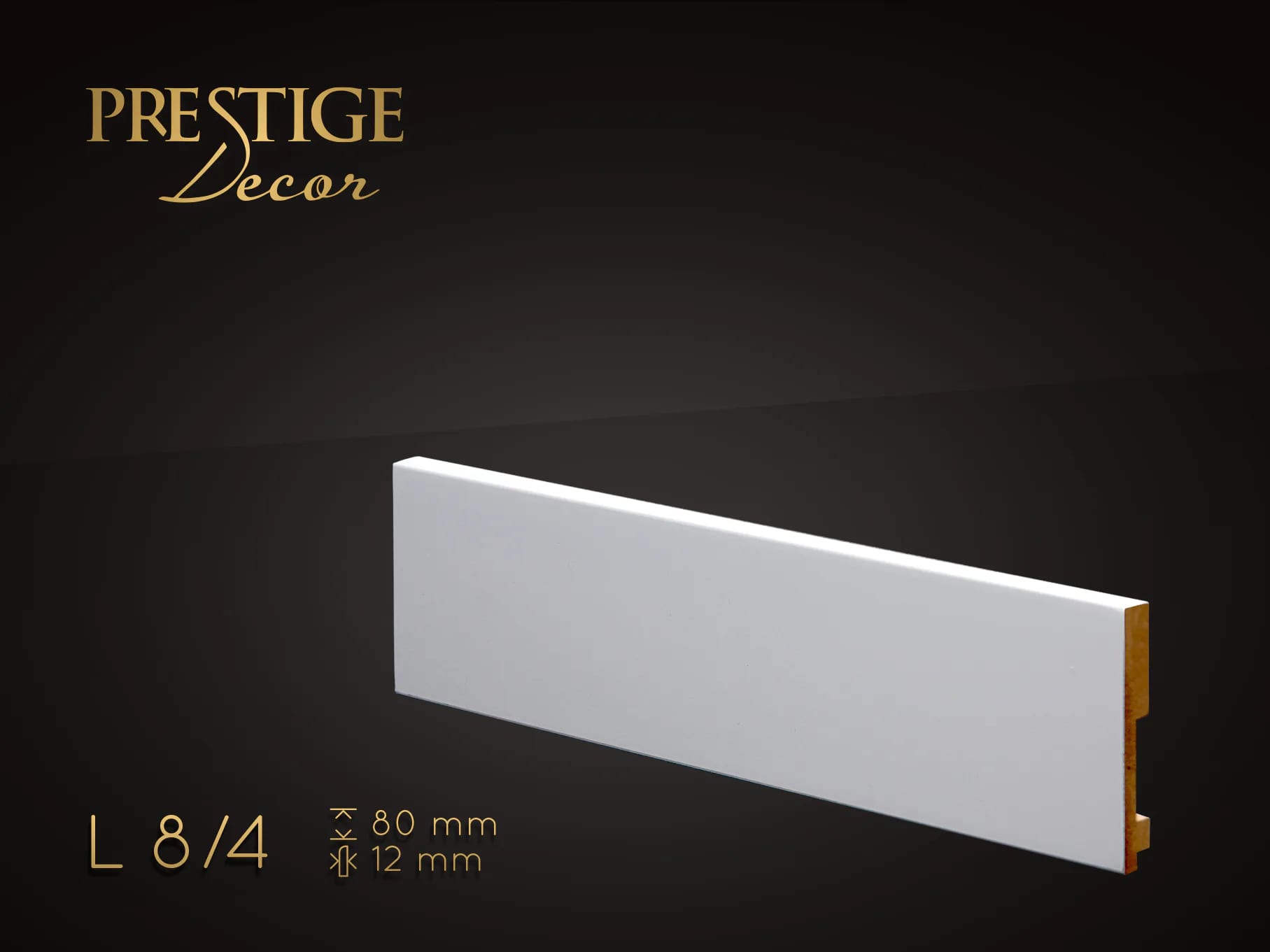


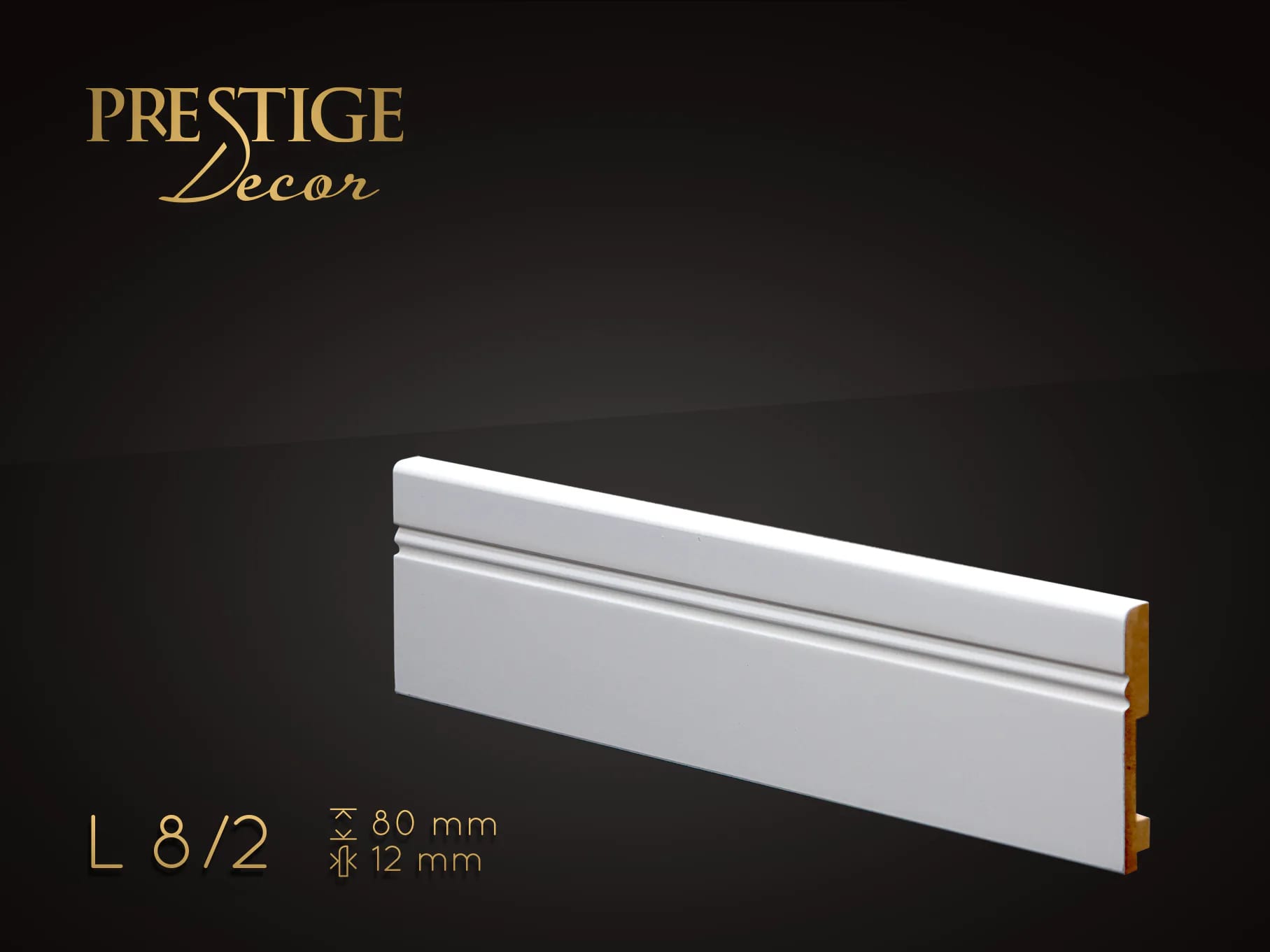
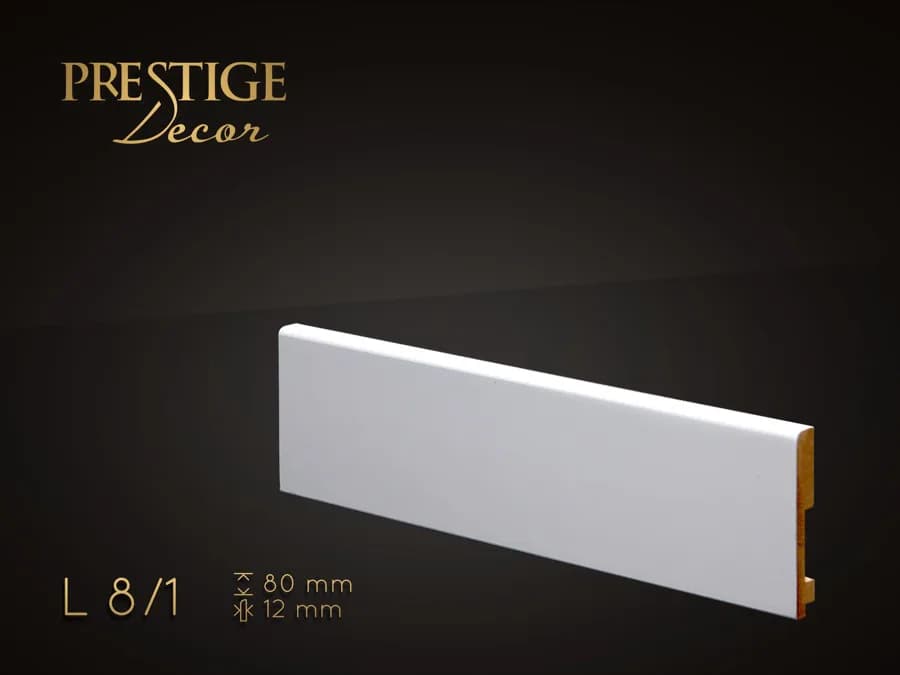
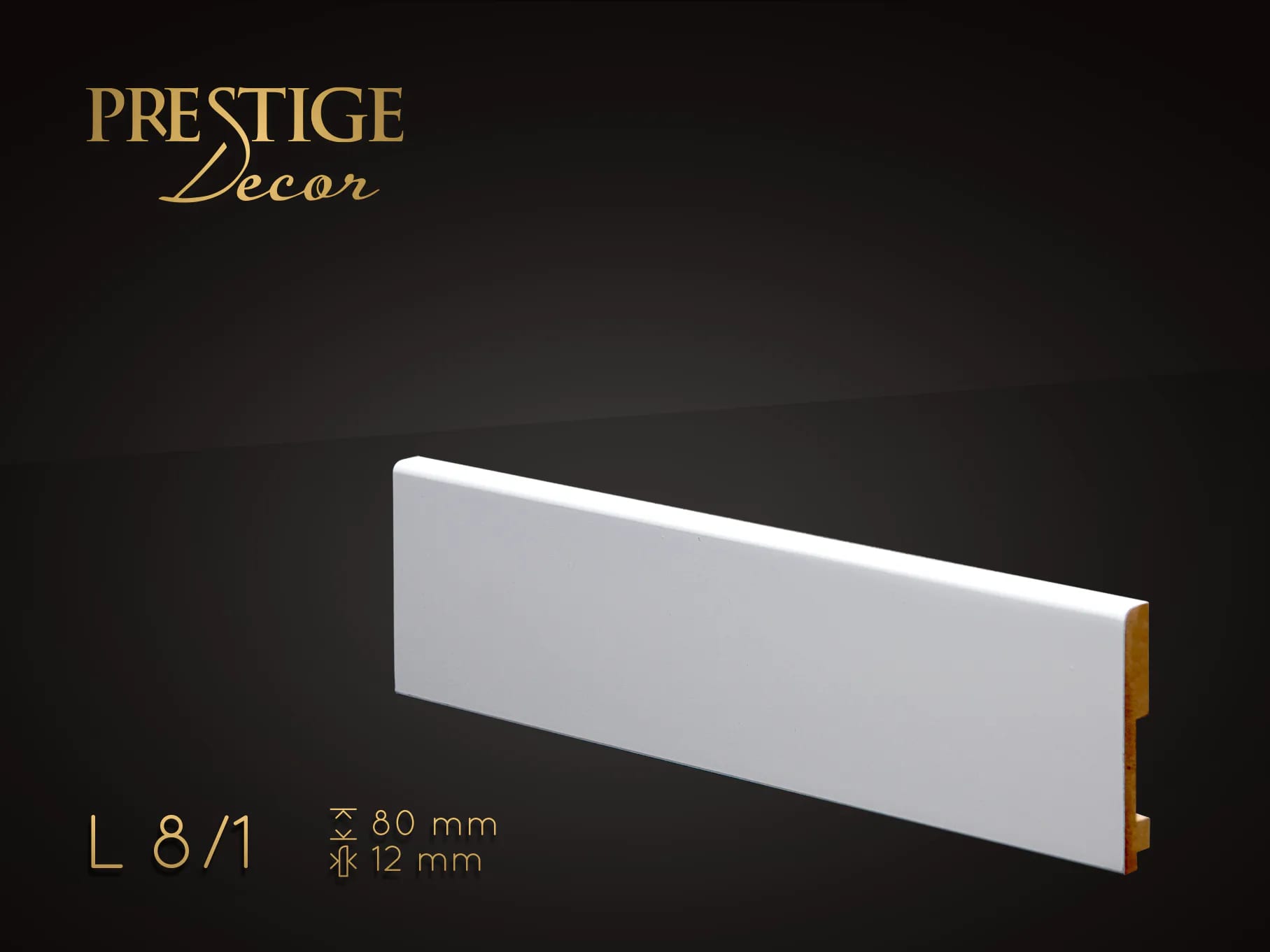

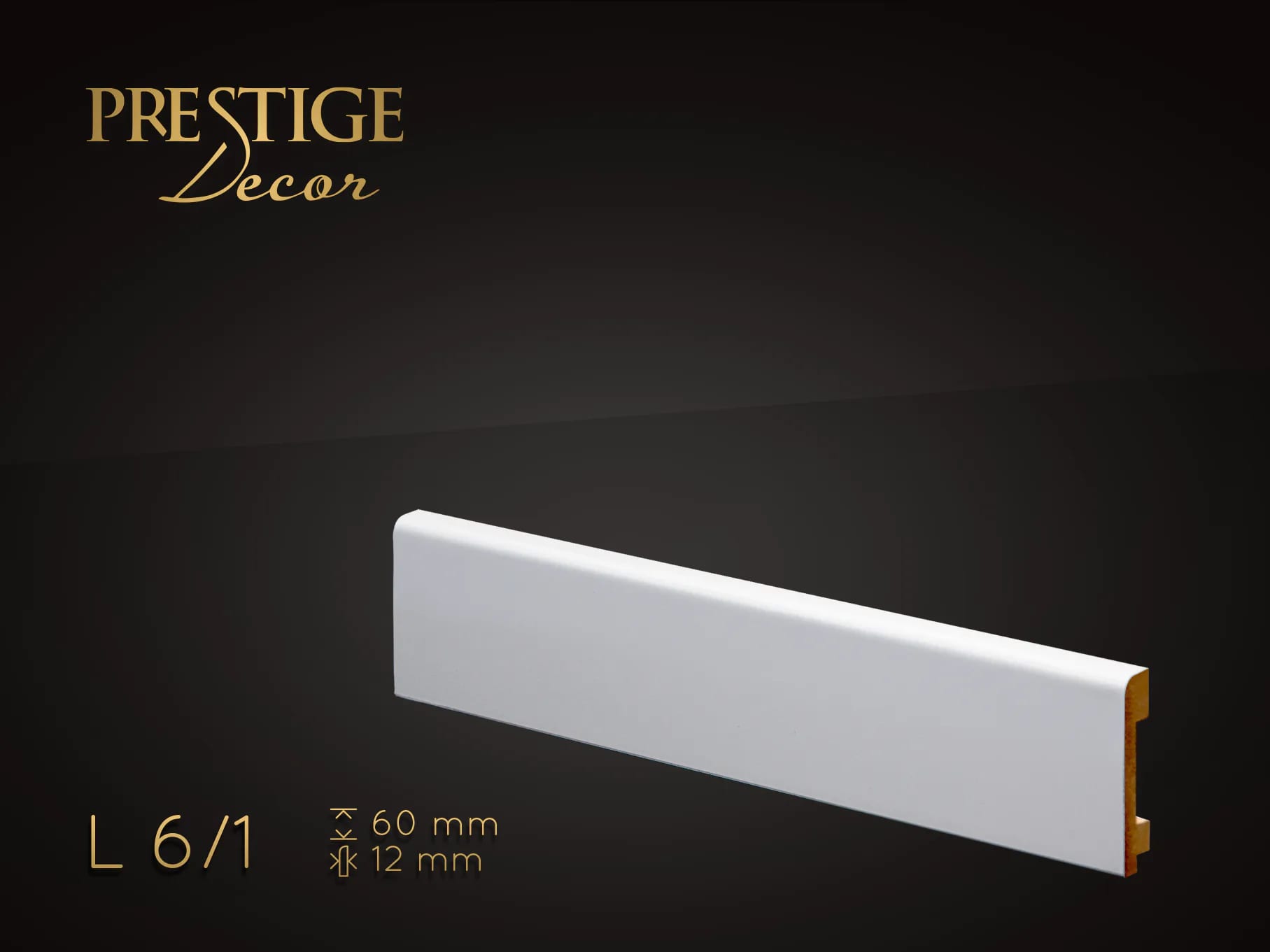
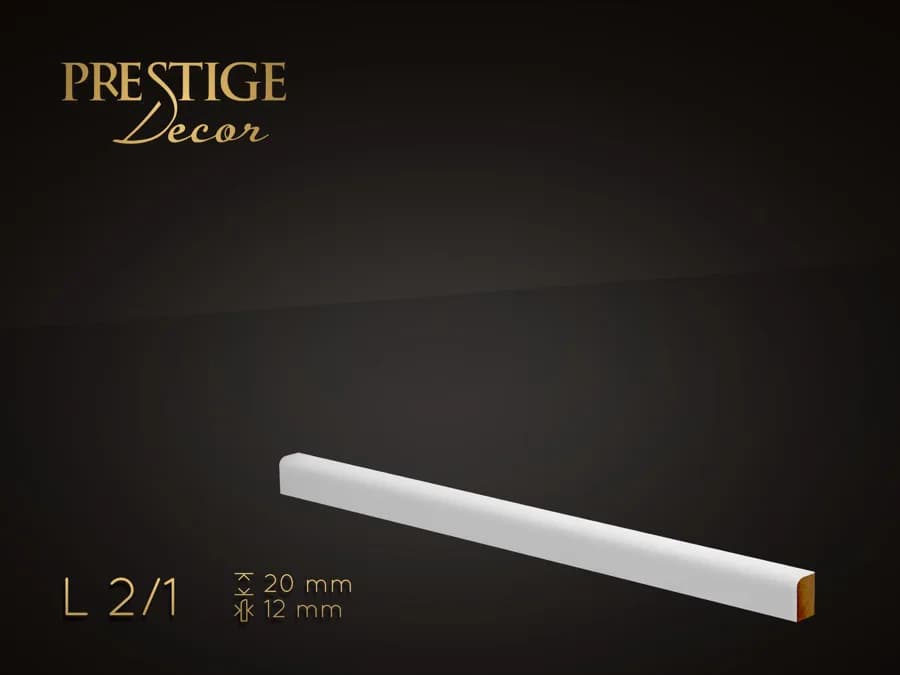
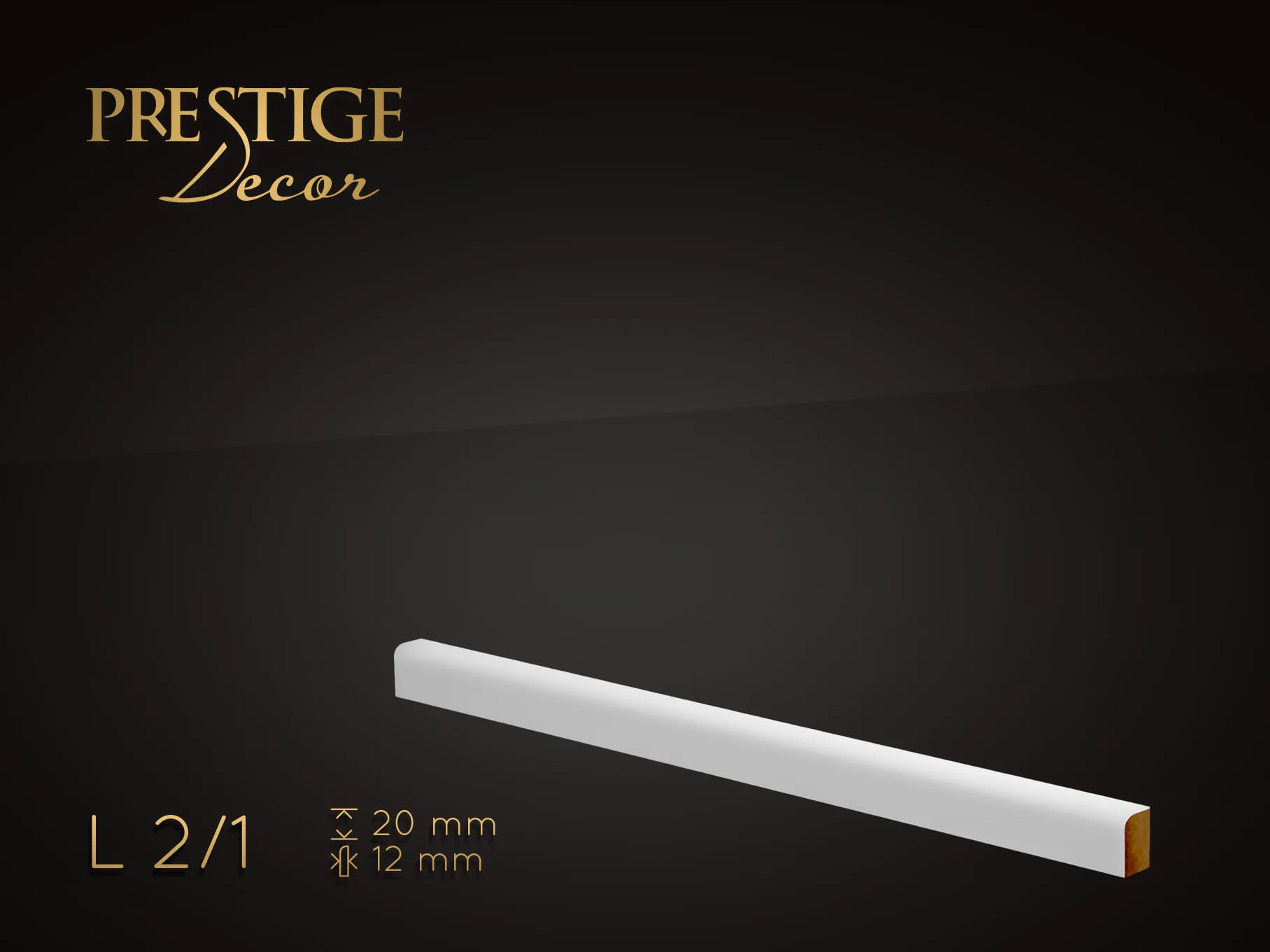
Lacquered MDF skirting boards are a good choice for interiors where you want a smooth painted finish and a clean line along the floor. The end result depends not just on the profile itself, but also on the condition of the wall and how neatly the corners are cut. This range includes, among others, Prestige Decor L8/1, Prestige Decor L10/1, Prestige Decor L12/2 and Prestige Decor L15/1.
You choose a lacquered MDF skirting board to suit the expansion gap width, the proportions of the room and the places where the profile meets a door frame or built-in units. It’s the thickness of the board that covers the gap by the floor, not its height. The height and the moulding pattern — in other words, the shape of the front — affect how strongly the skirting board defines the bottom of the wall and how it sits by doors, furniture fronts or wardrobe plinths.
The differences between ranges are seen mainly in the shape of the profile, the top edge and the proportions of the front. With a similar colour, it’s the shape that decides whether the skirting gives a calmer finish or marks the line by the floor more strongly. You need to check this in the product sheet, not rely on the model number alone.
For some models, the colour has been listed, meaning the shade of the finish: light, dark and grey versions are available. The choice is therefore based on how the profile works with the colour of the floor, wall and joinery. Against a light background, the outline of the skirting is less contrasting, while with darker finishes it stands out more clearly.
Lacquered MDF gives a smooth surface that shows up the quality of the finish and how well it’s been fitted. On this kind of material, uneven joints, tiny gaps at the corners and any deviation at the top edge from the wall line show up fairly quickly.
The finish on the cut edges also matters. The factory surface stays even, while the sections cut on site need very precise fitting, because that’s where differences in wall angle and small mismatches between lengths show up. On longer, straight profiles you can also see ripples in the wall, even a few centimetres above the floor.
These skirting boards work properly in dry conditions, right by the floor. If the floor is flooded for a long time, or a cut edge is in constant contact with water, moisture can get into the material and weaken its stability over time.
Fitting goes smoothly when the floor is already laid, the painted walls have had time to dry, and there’s no moisture left around the floor from wet trades. With glue-down fitting, the substrate matters too: the wall needs to be dry, sound and dust-free, otherwise the skirting starts to pull away along its length or in places at the joins over time.
The skirting is fixed to the wall, not joined to the floor. With a floating floor — that is, one that moves independently of the walls — it shouldn’t be pressed down onto the floor, so the floor can move as it should. Before fitting, you also need to check the wall right at floor level, because old repairs, brittle patches where skirting has been pulled off, and local unevenness all affect the top line and the look of the joins.