

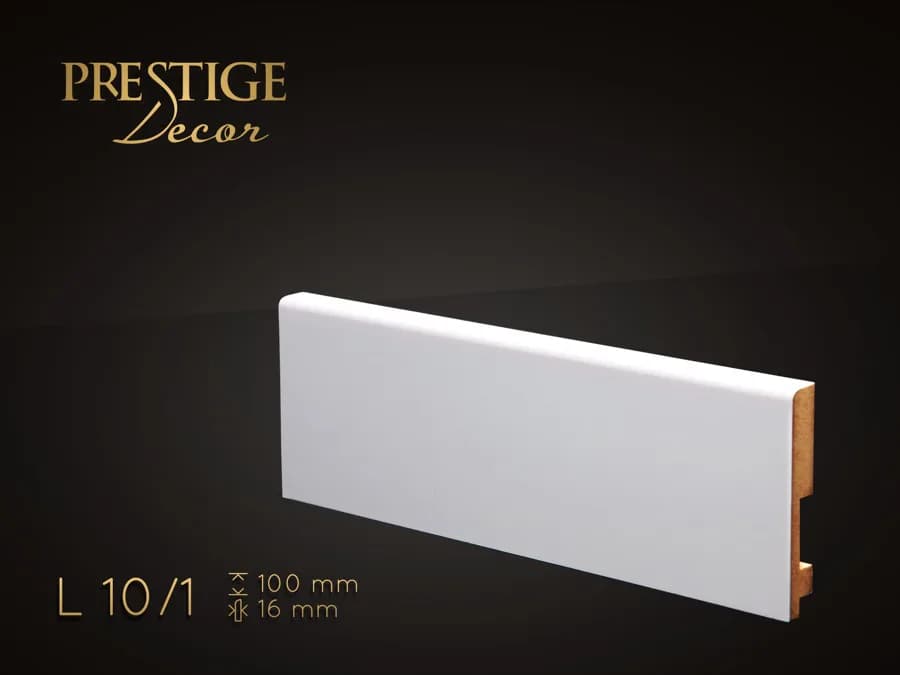
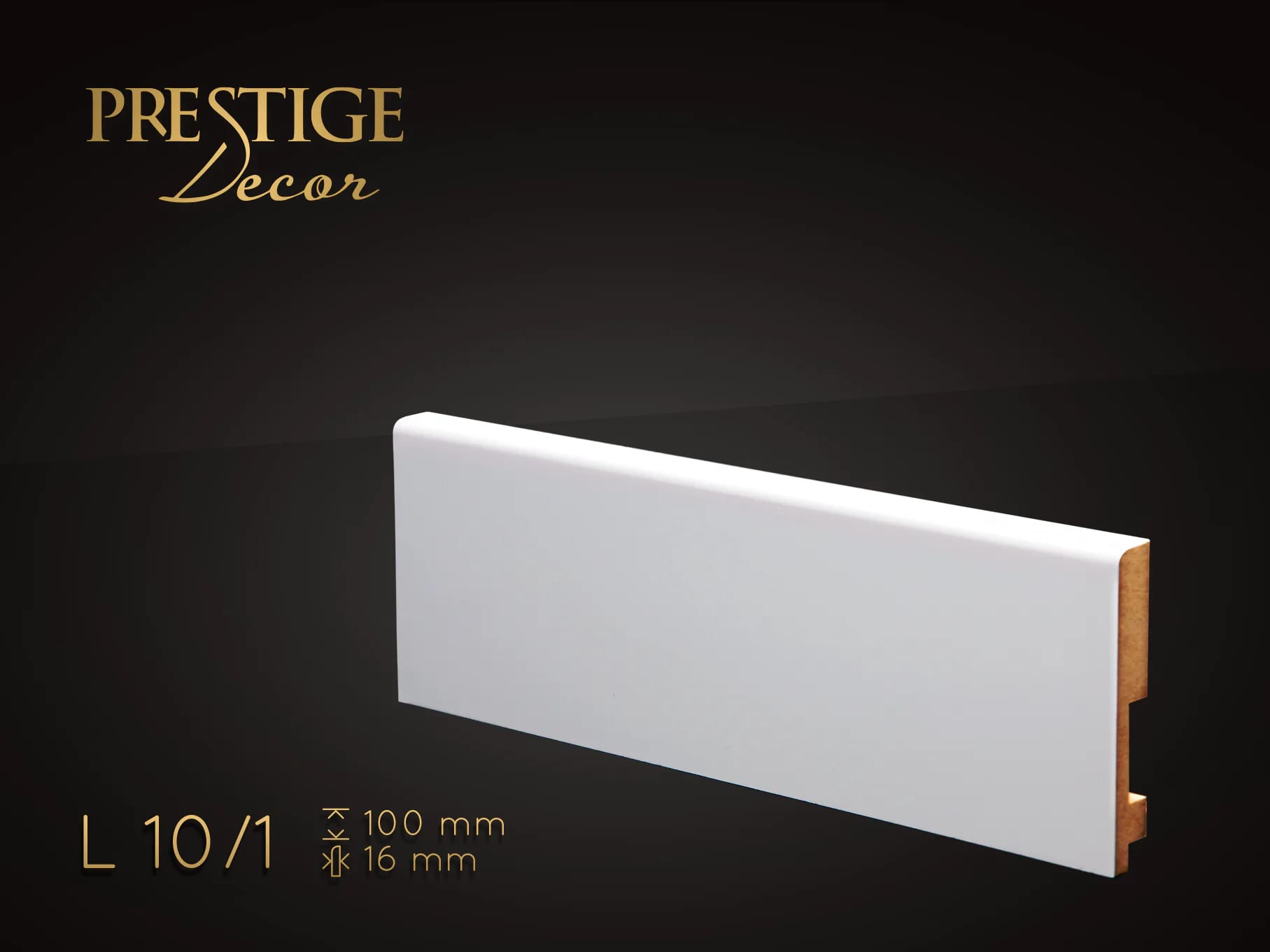
Prestige Decor L10/1
Prestige Decor
The skirting boards here are mainly MDF profiles from Prestige Decor, lacquered or wrapped in natural oak veneer, complemented by Arbiton PVC skirting. Lacquered skirting blends into the wall or door colour, while oak veneer visually ties in with a wooden floor. Where the fixing method is stated, most are glued, so you won’t need to drill into the wall. Match the colour and height of the skirting by holding a sample up to the floor and architrave.
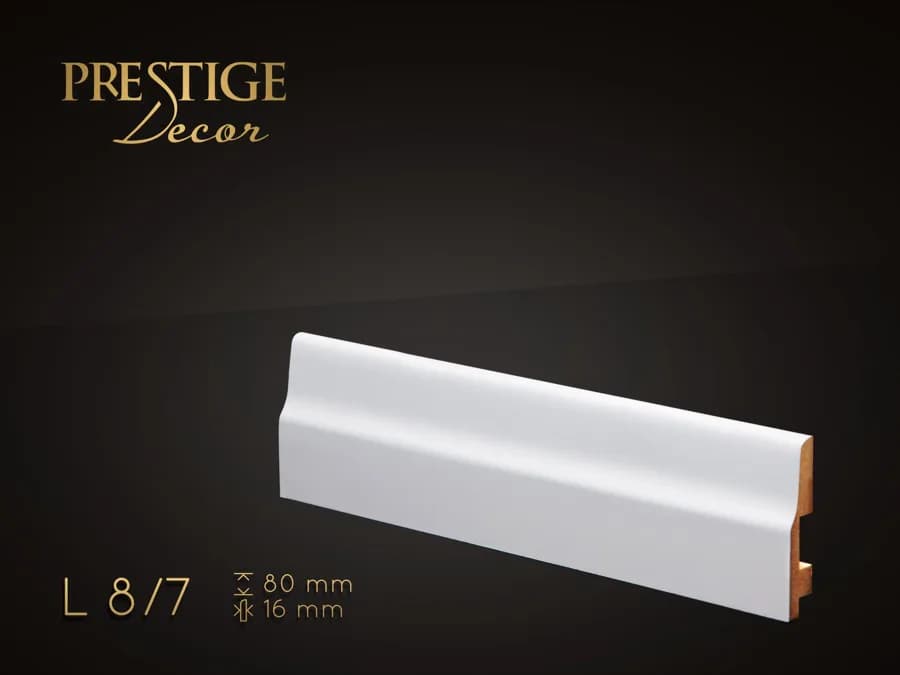
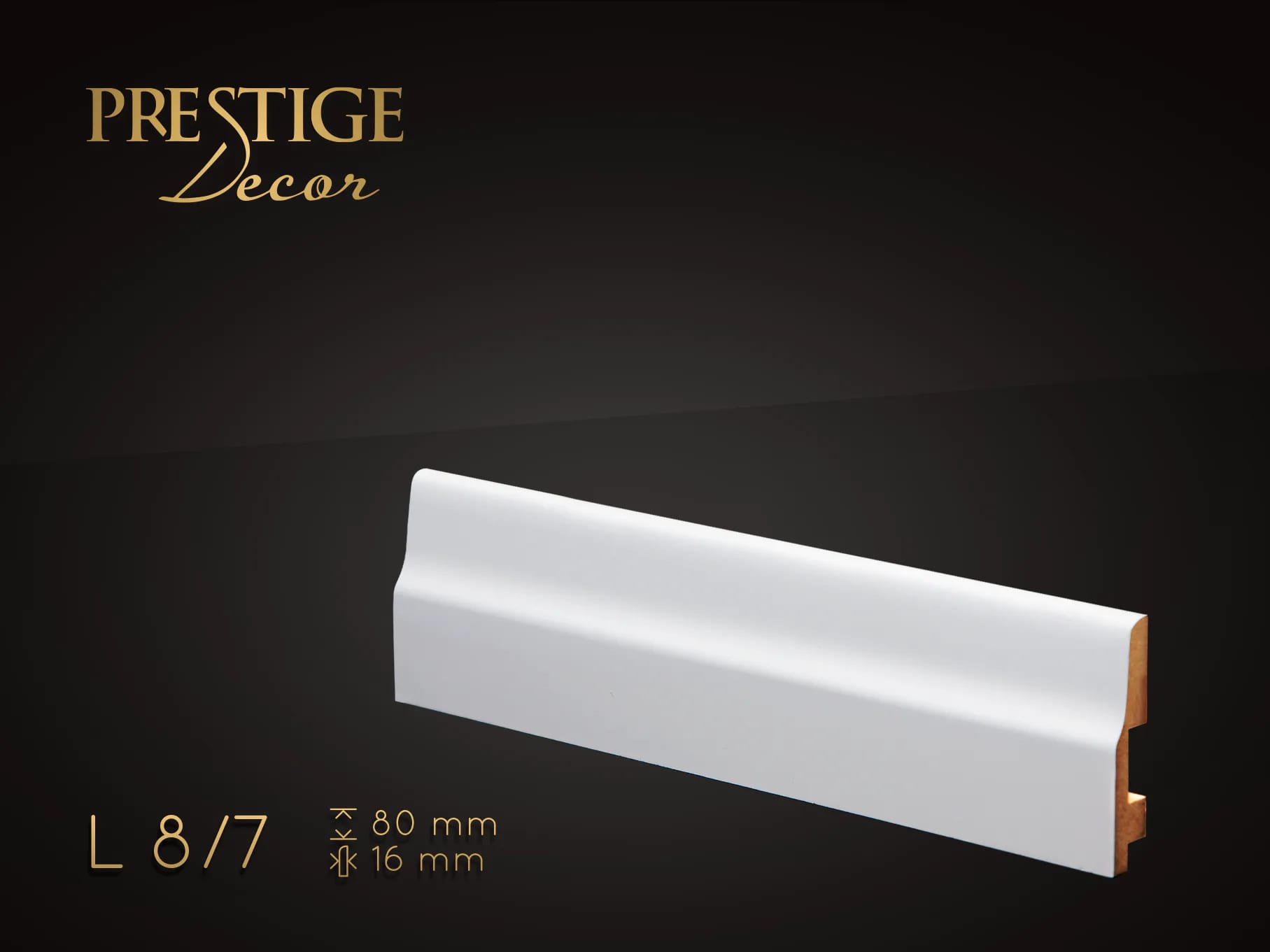
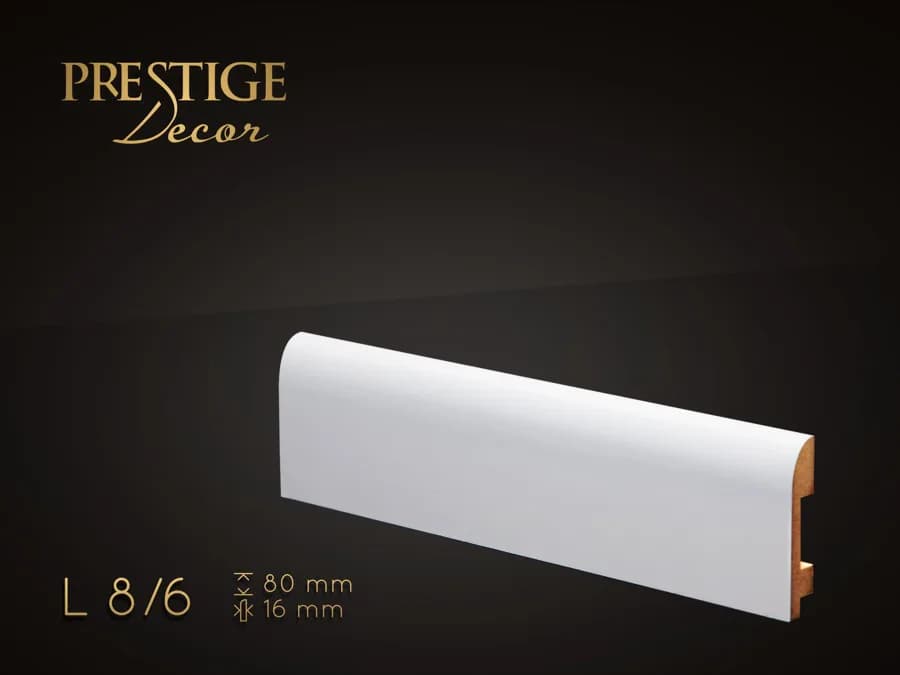
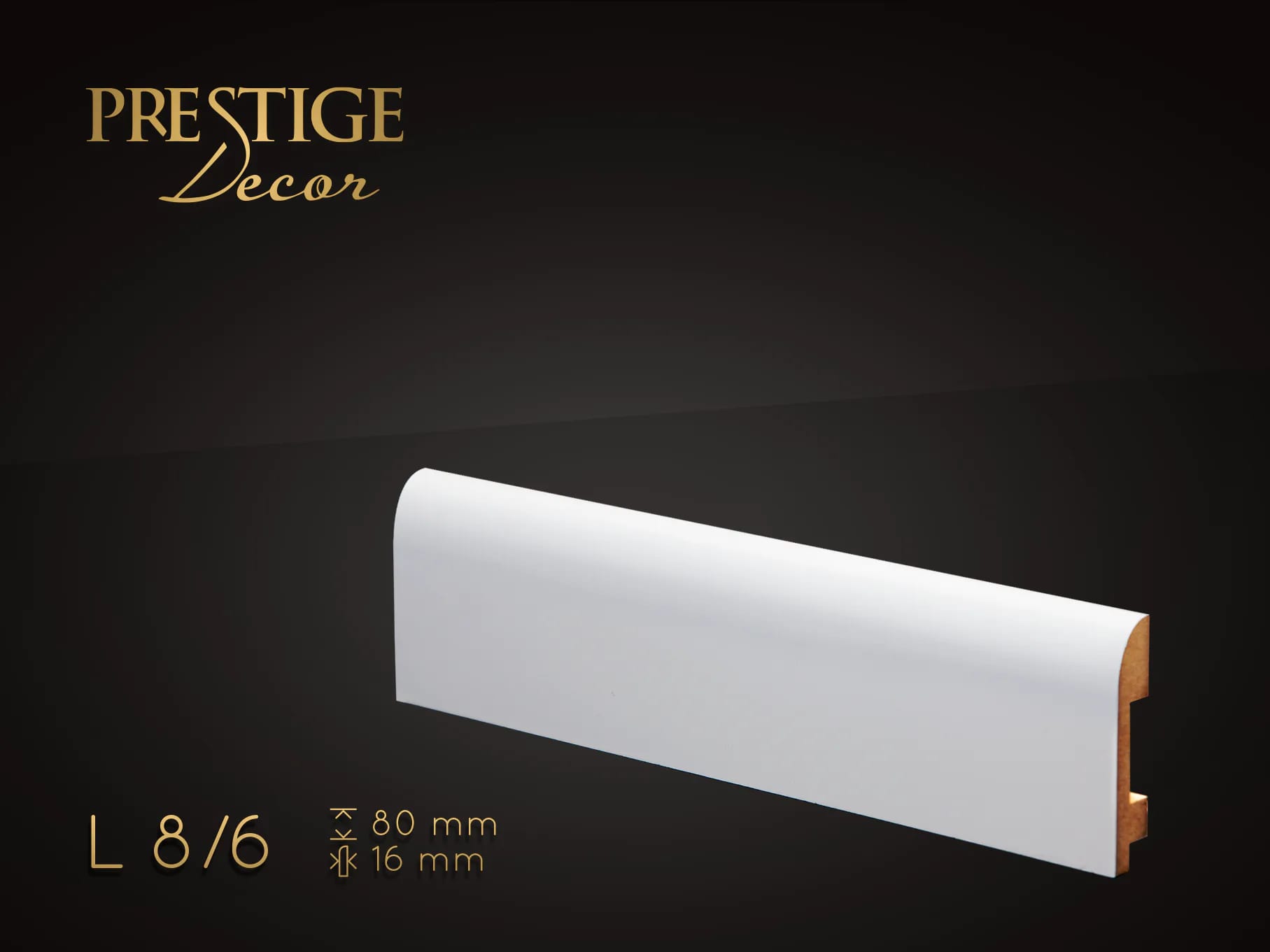
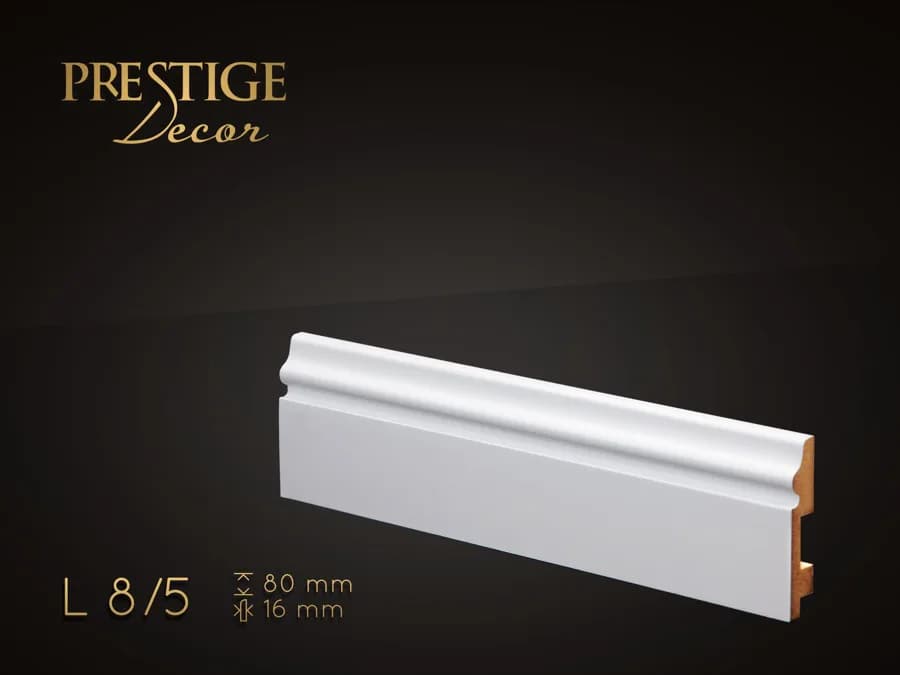
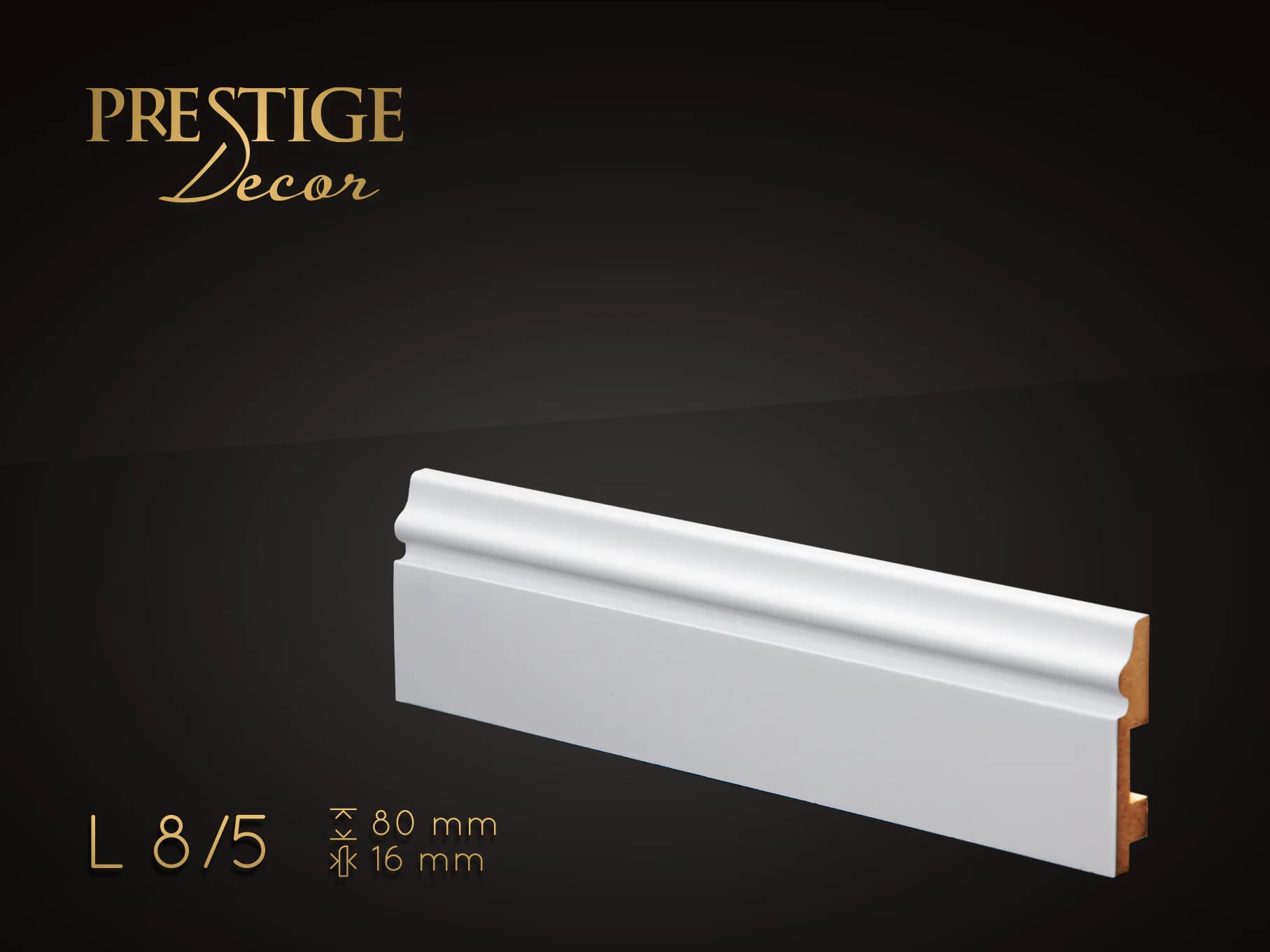
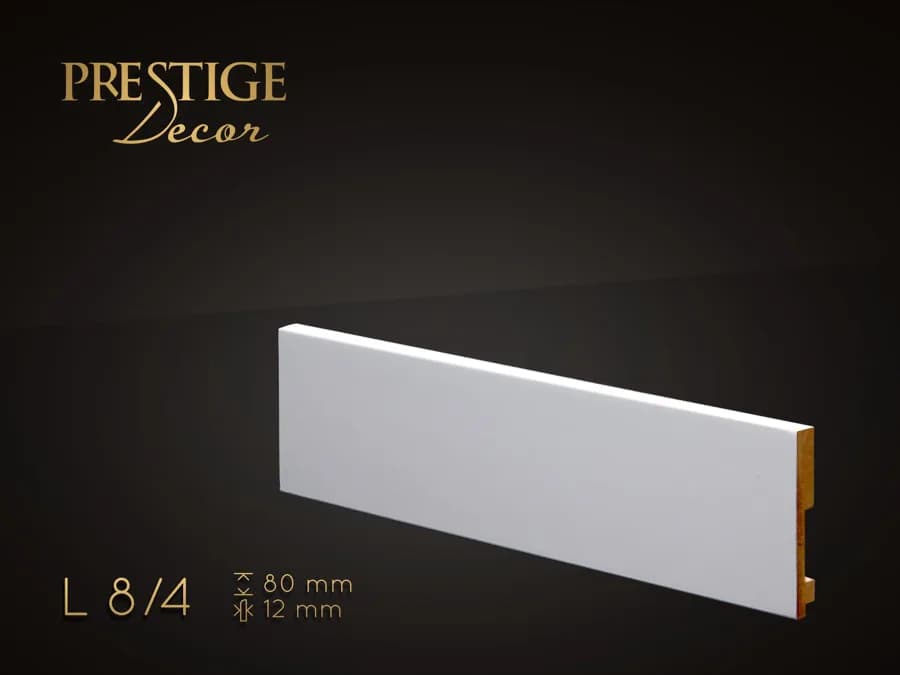
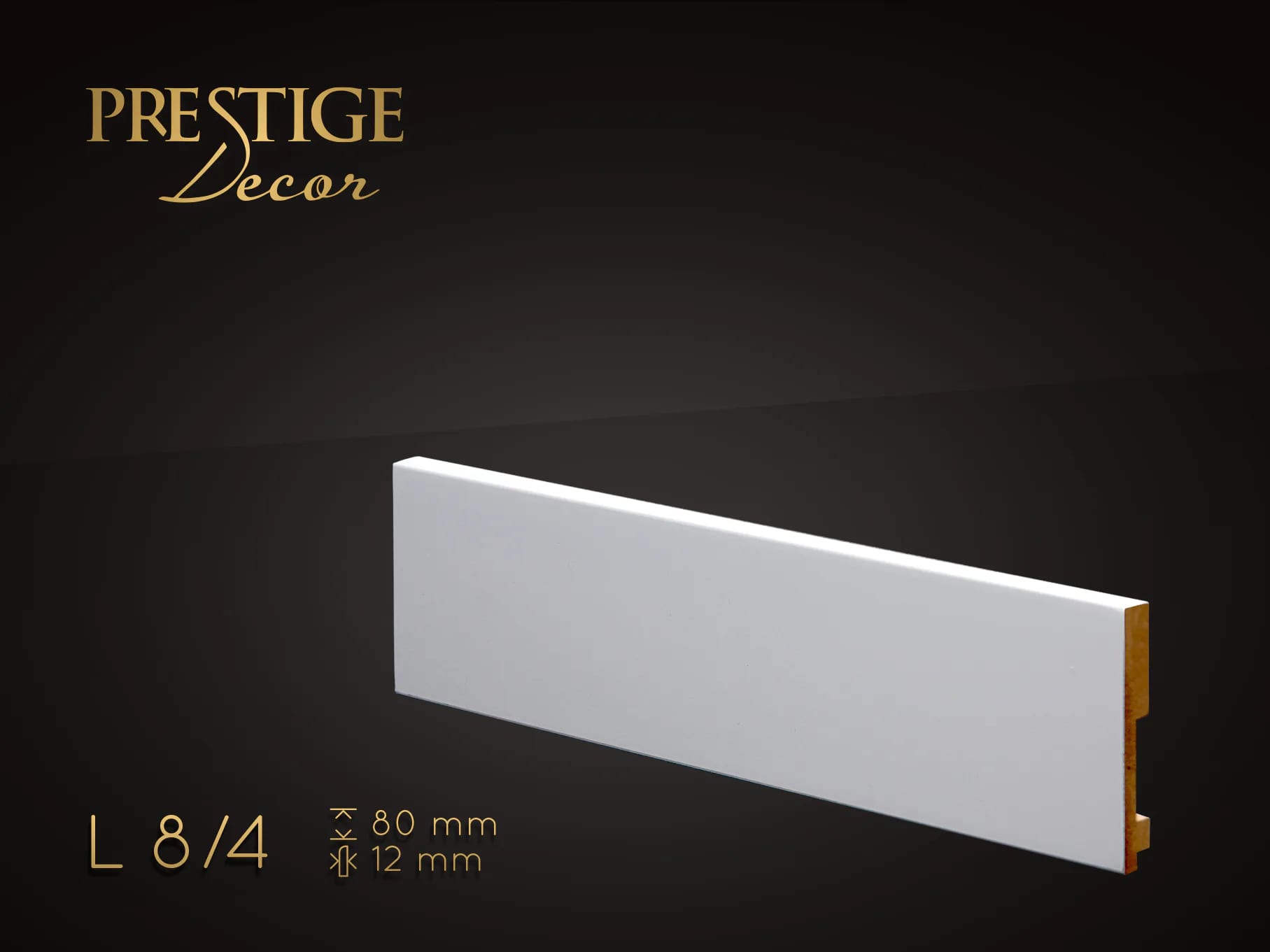


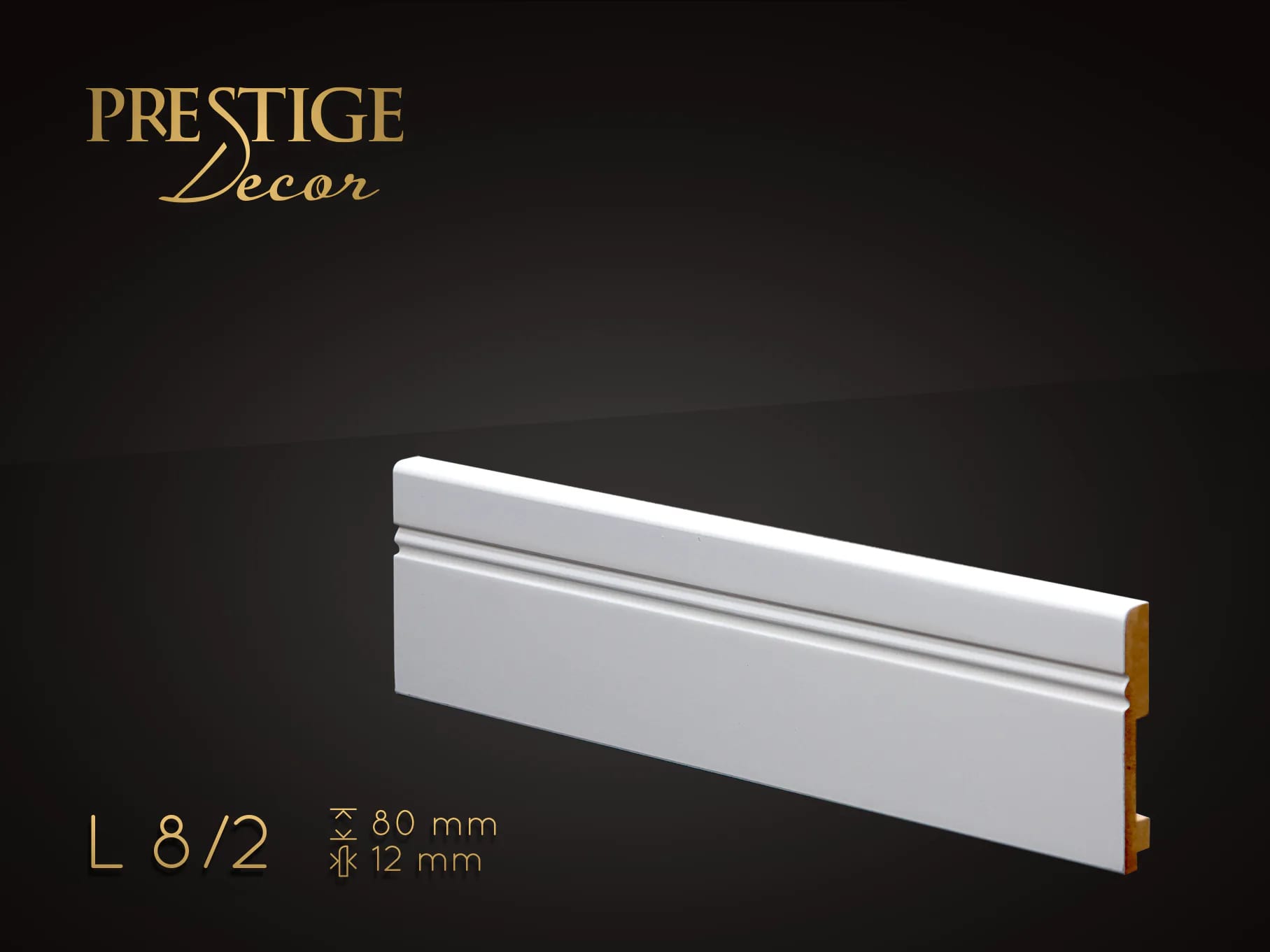
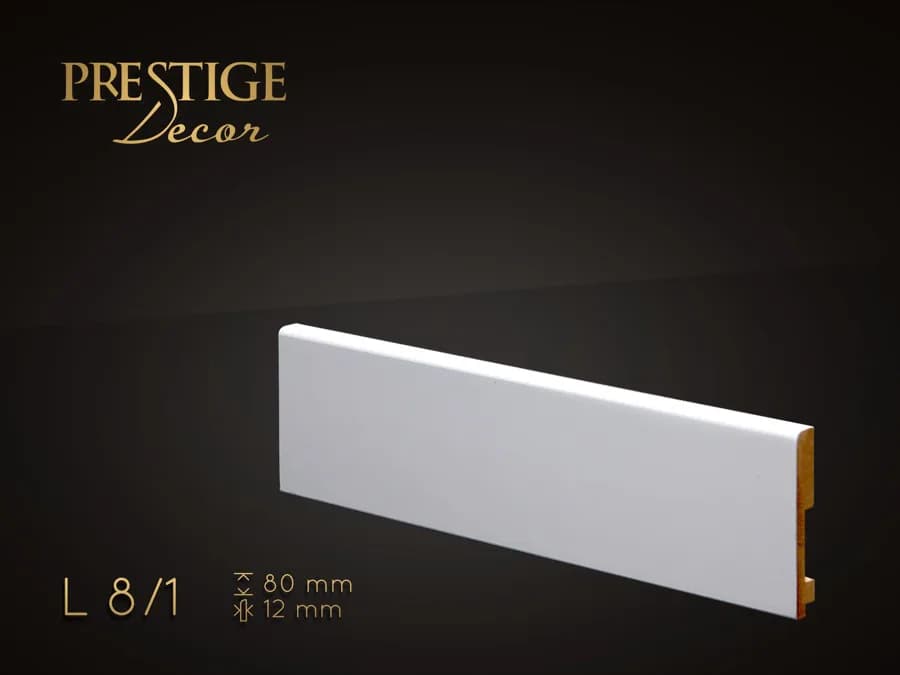
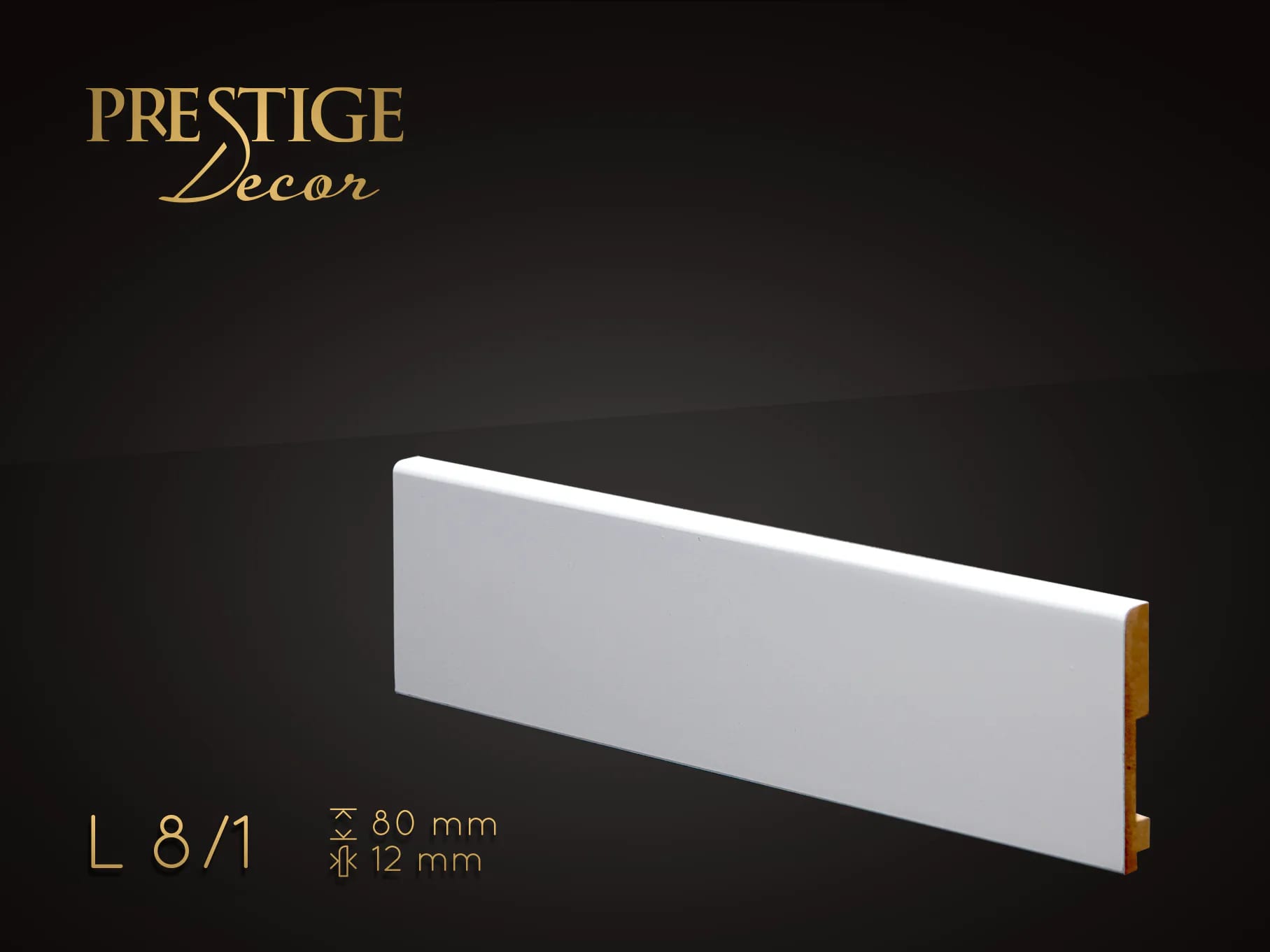

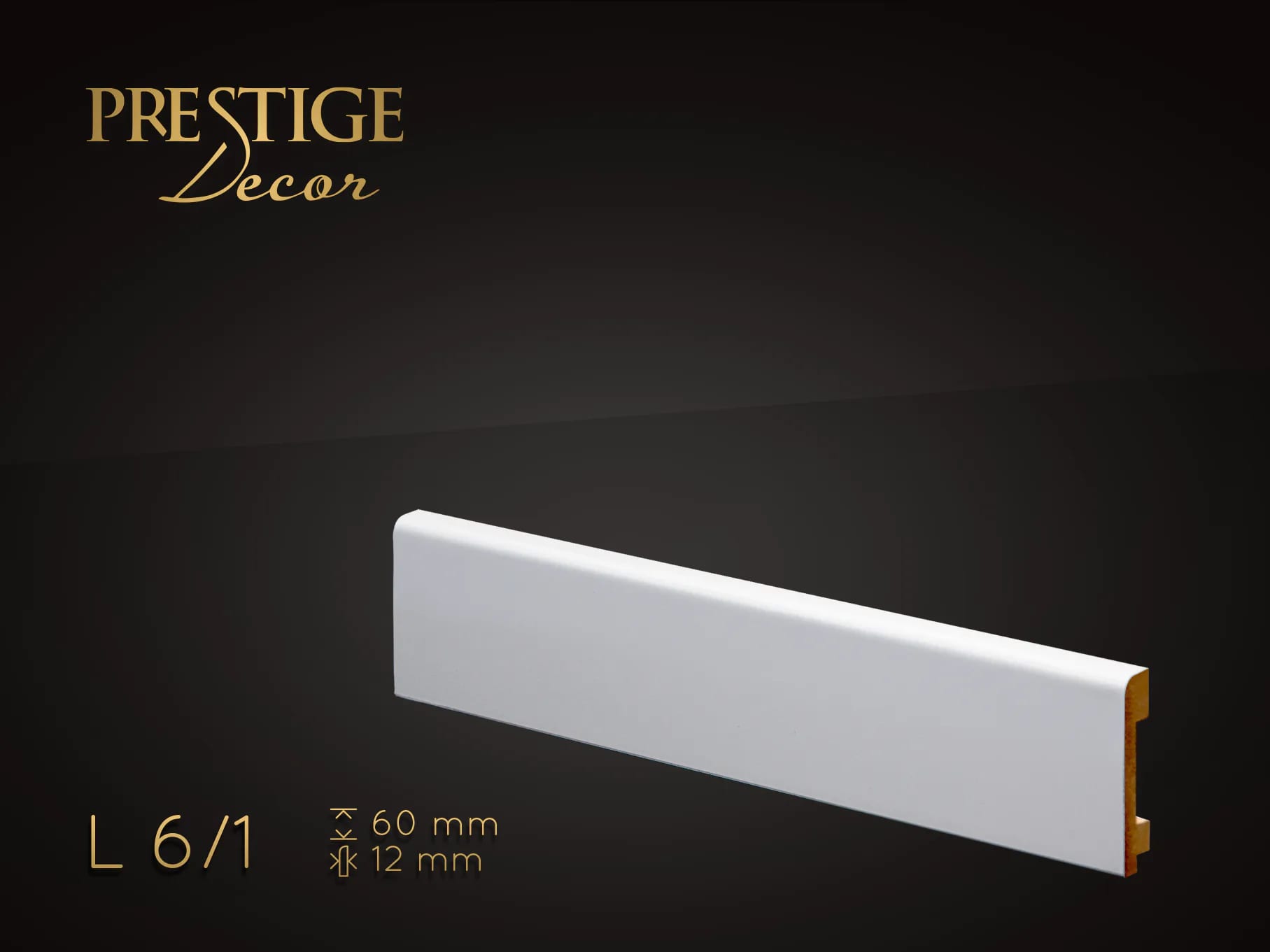
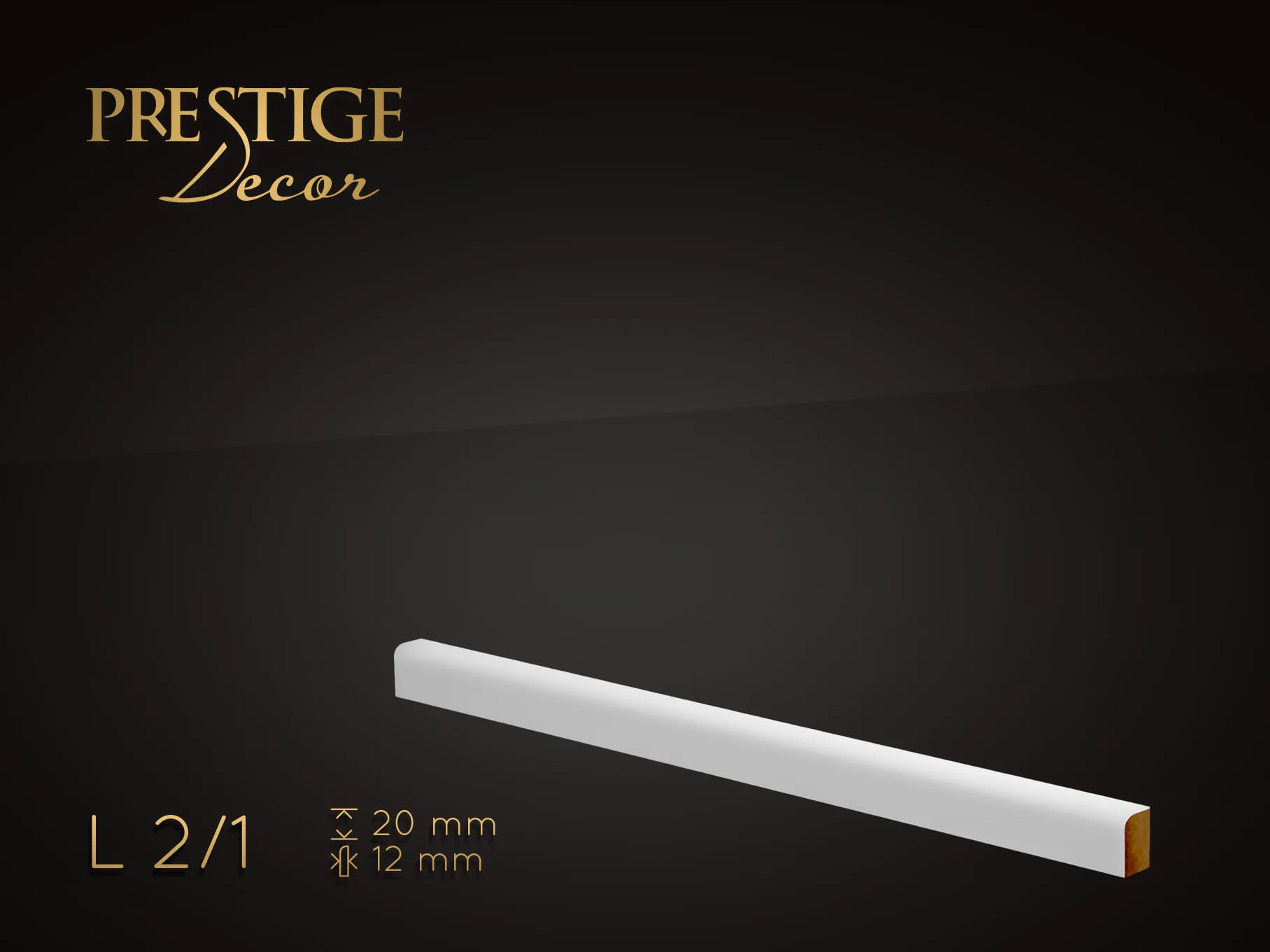

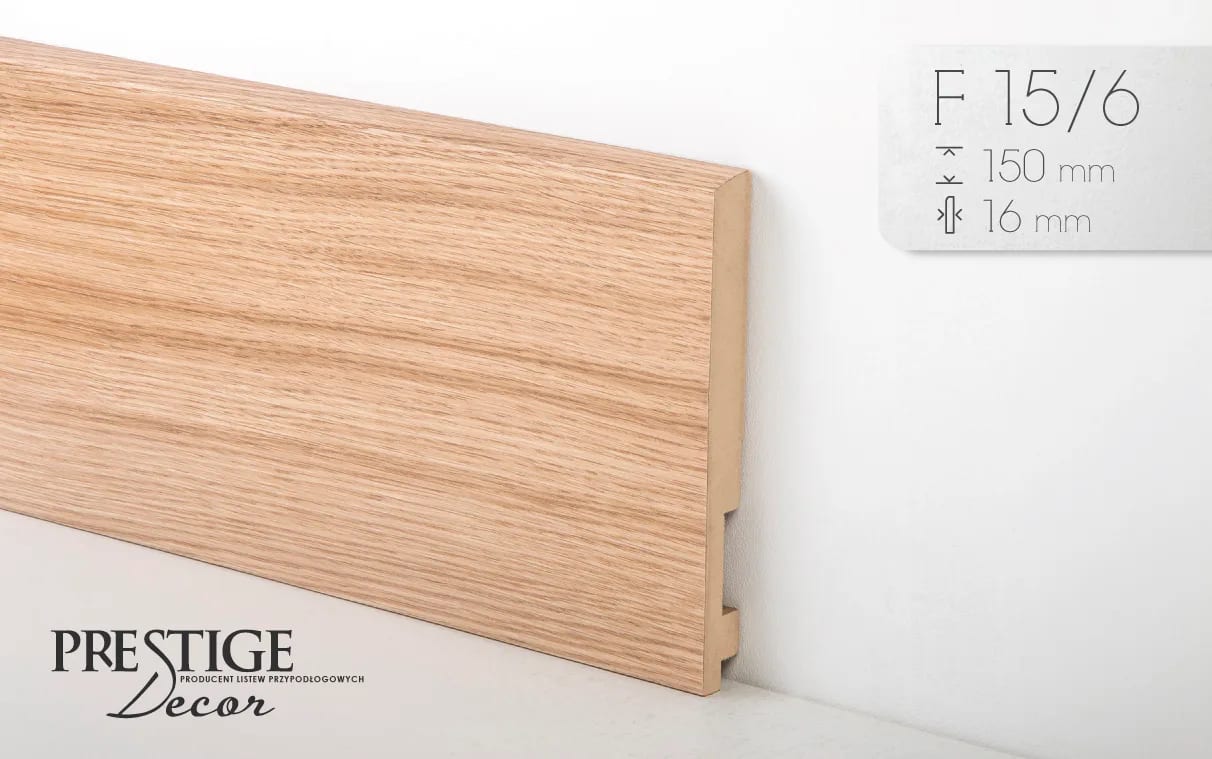

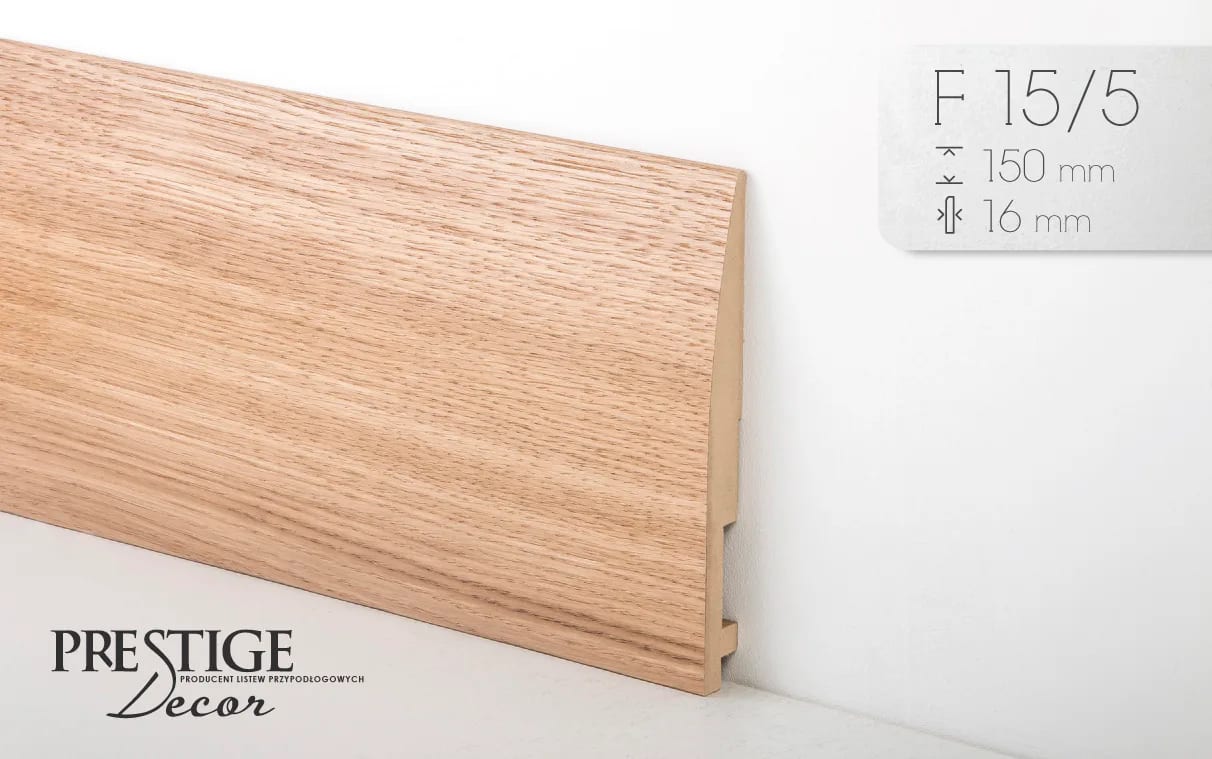

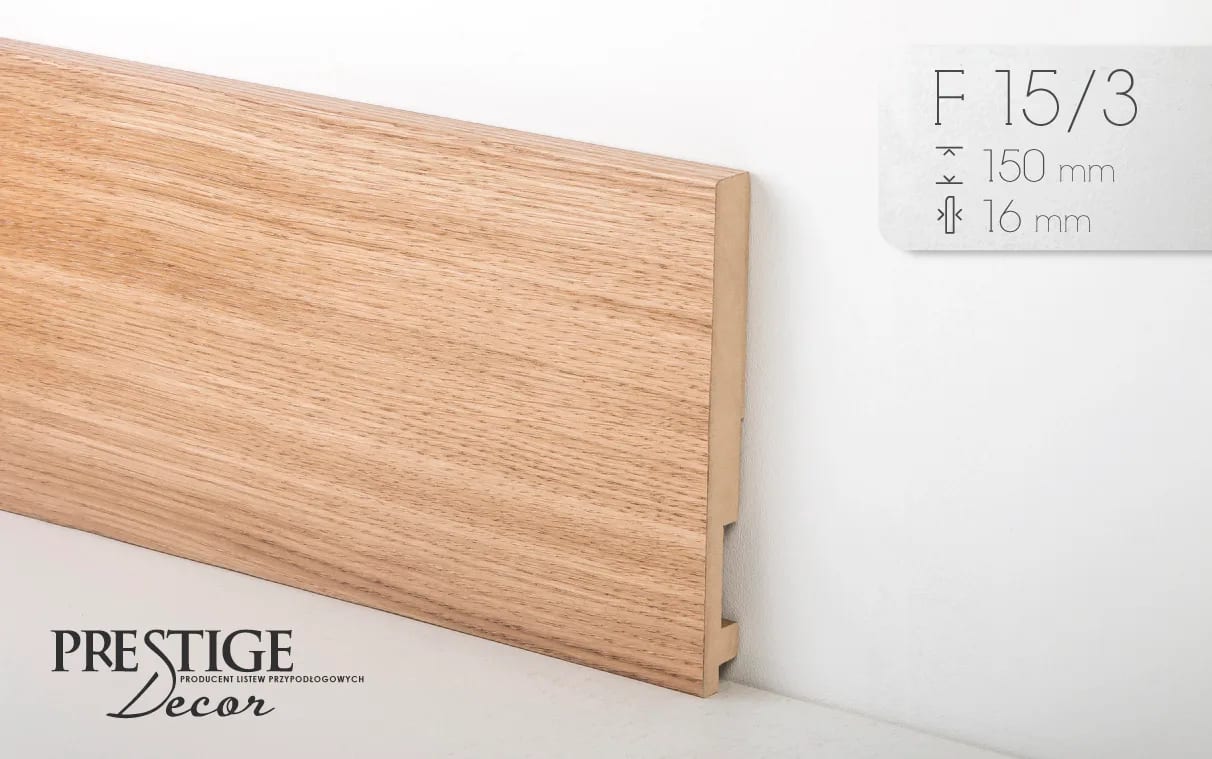

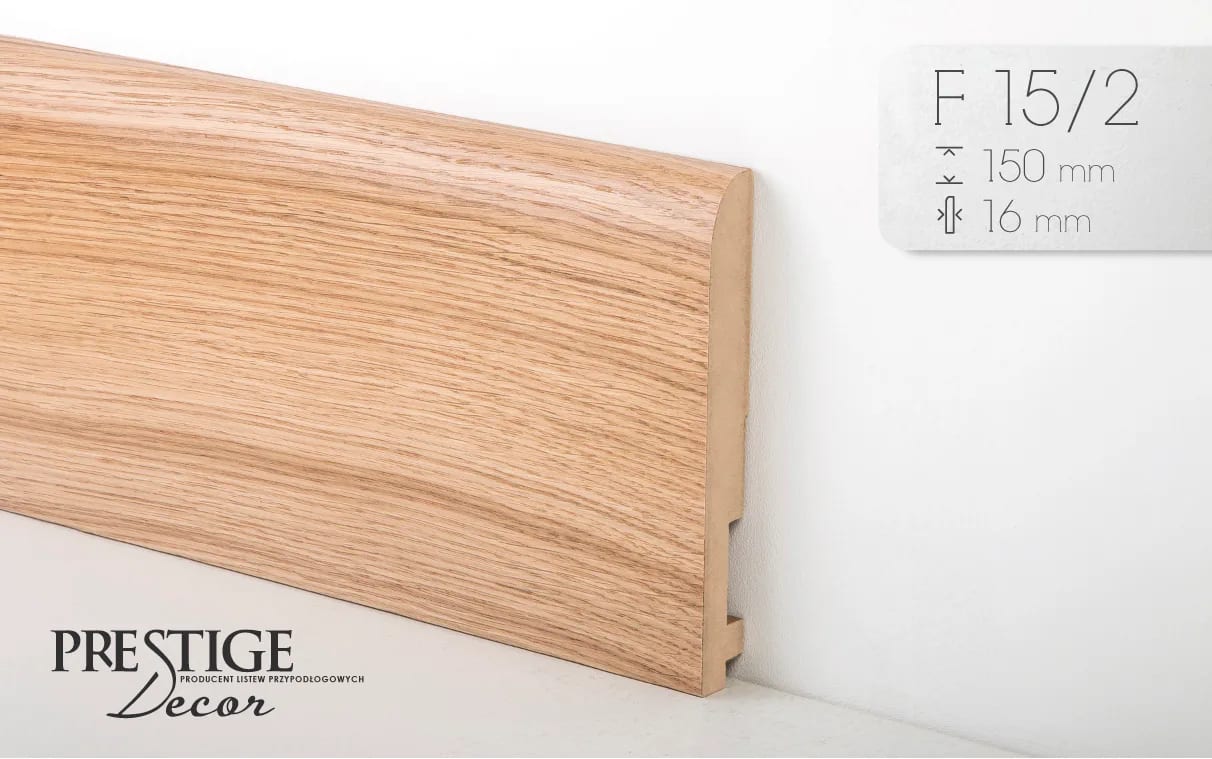

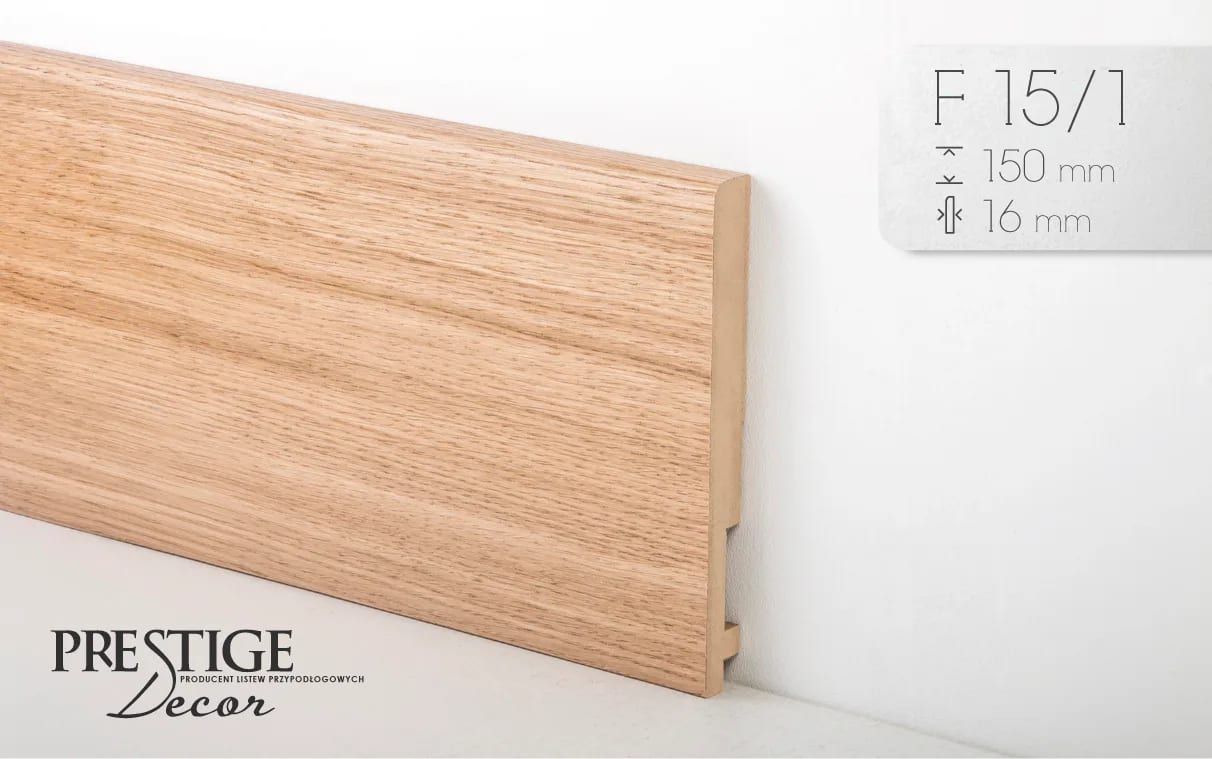

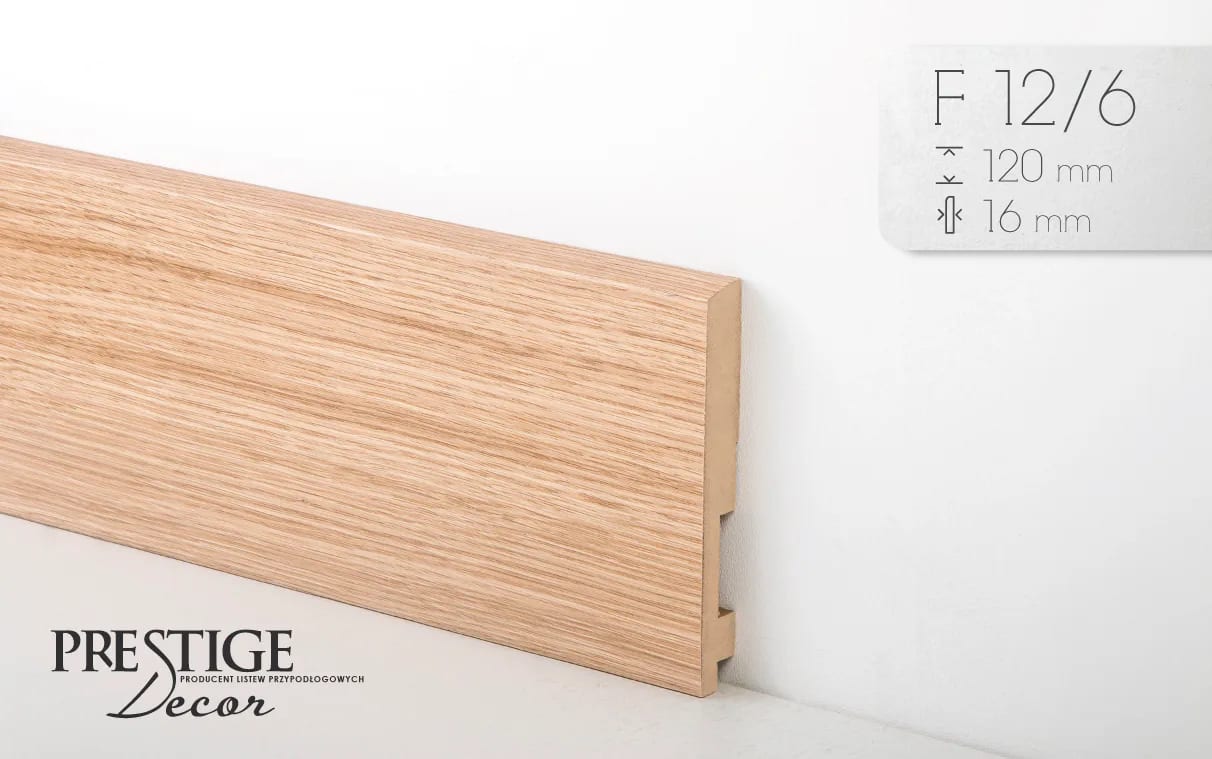

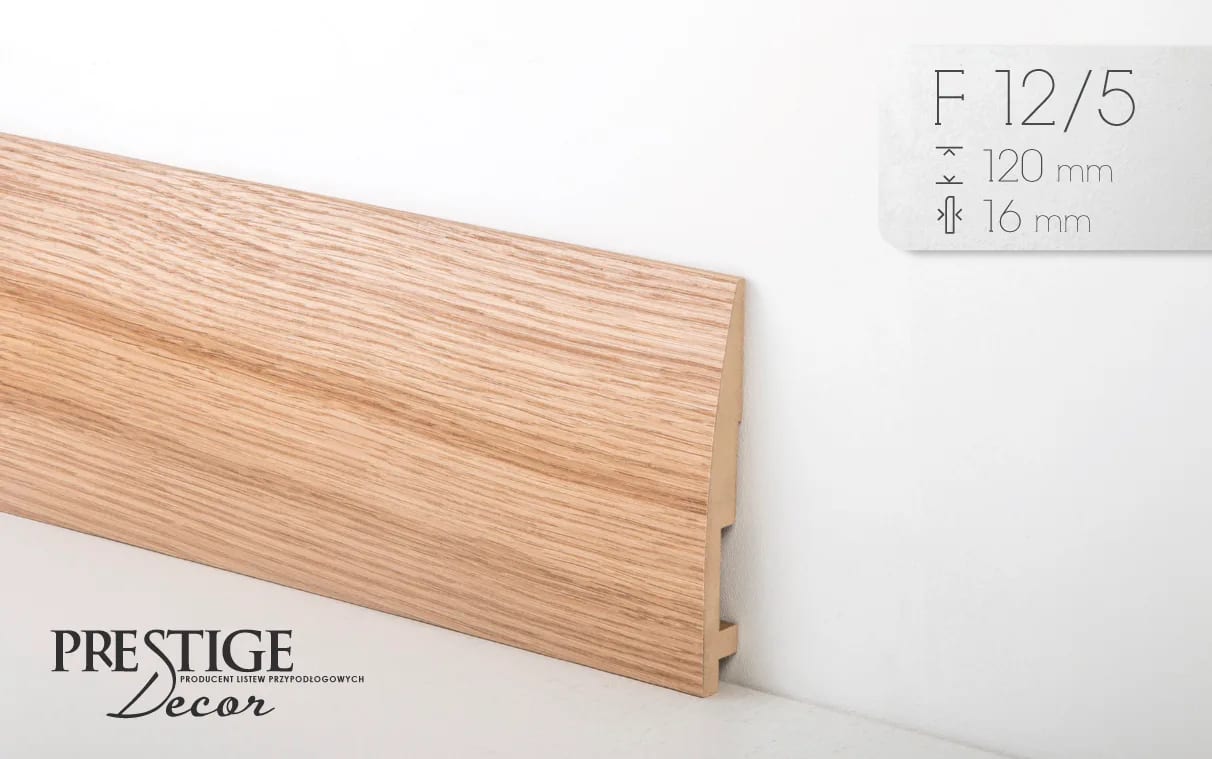

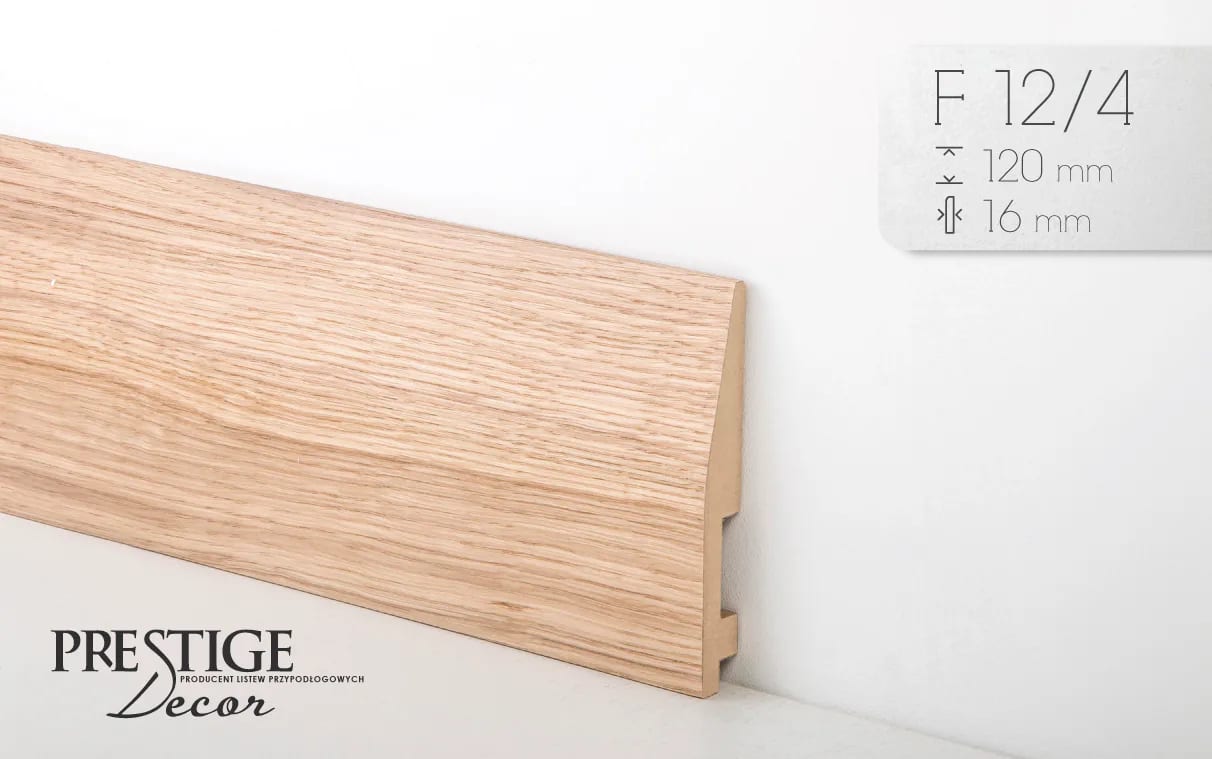

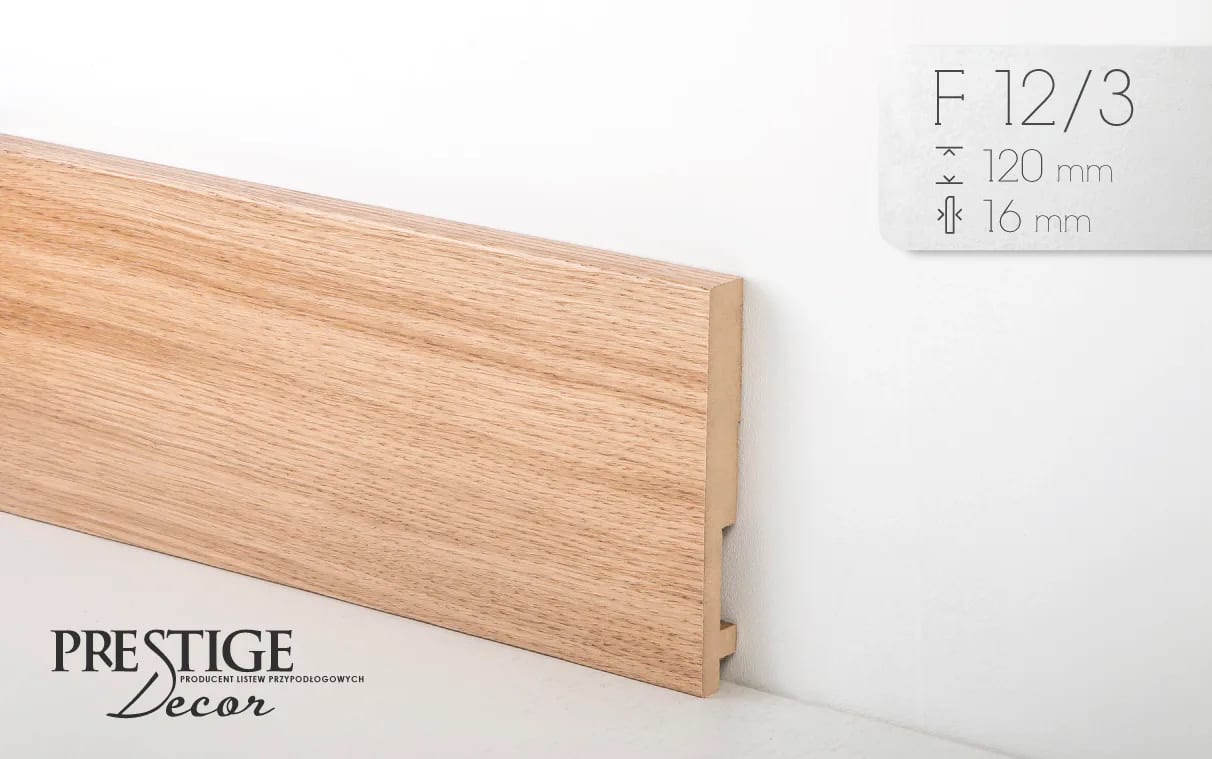

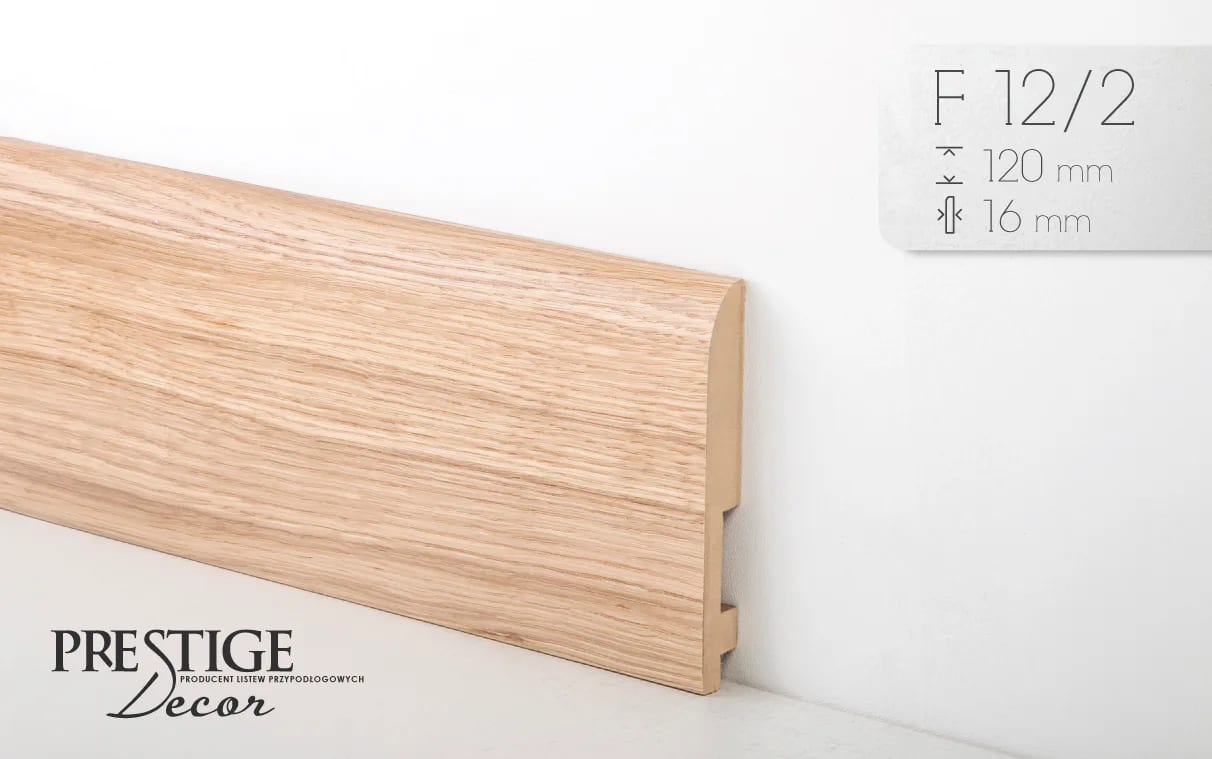

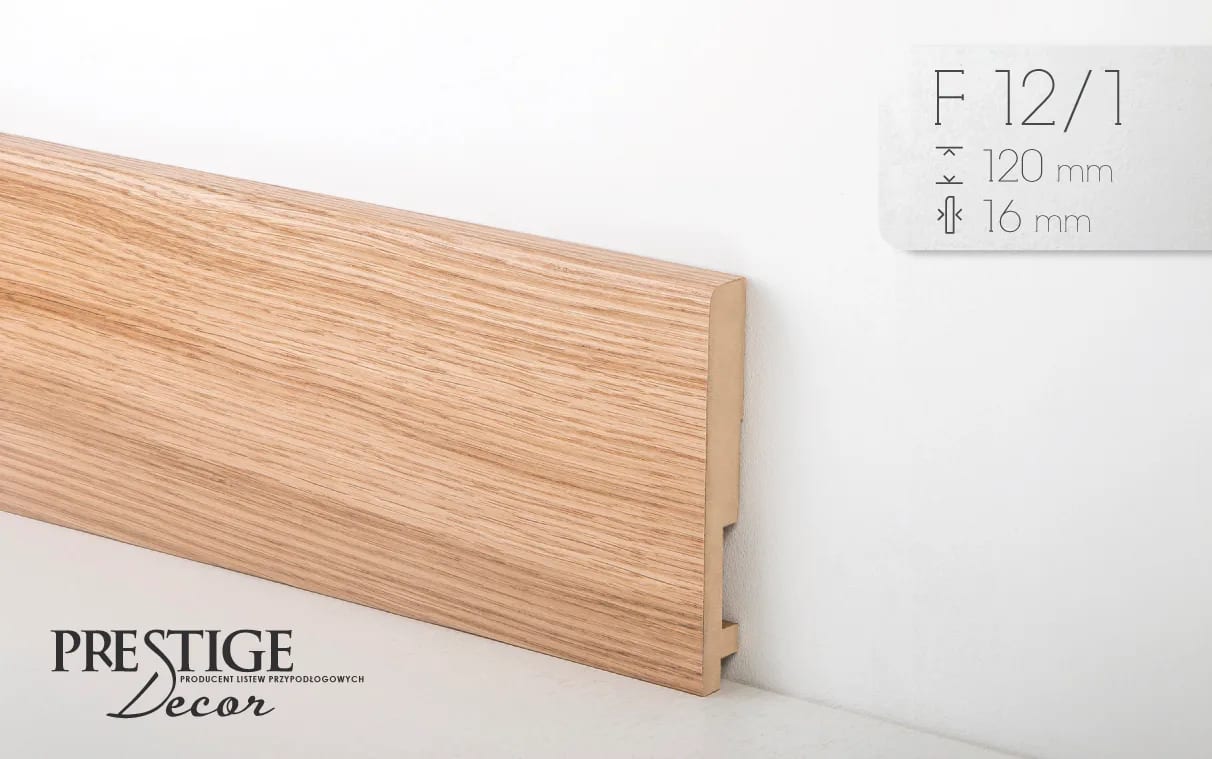

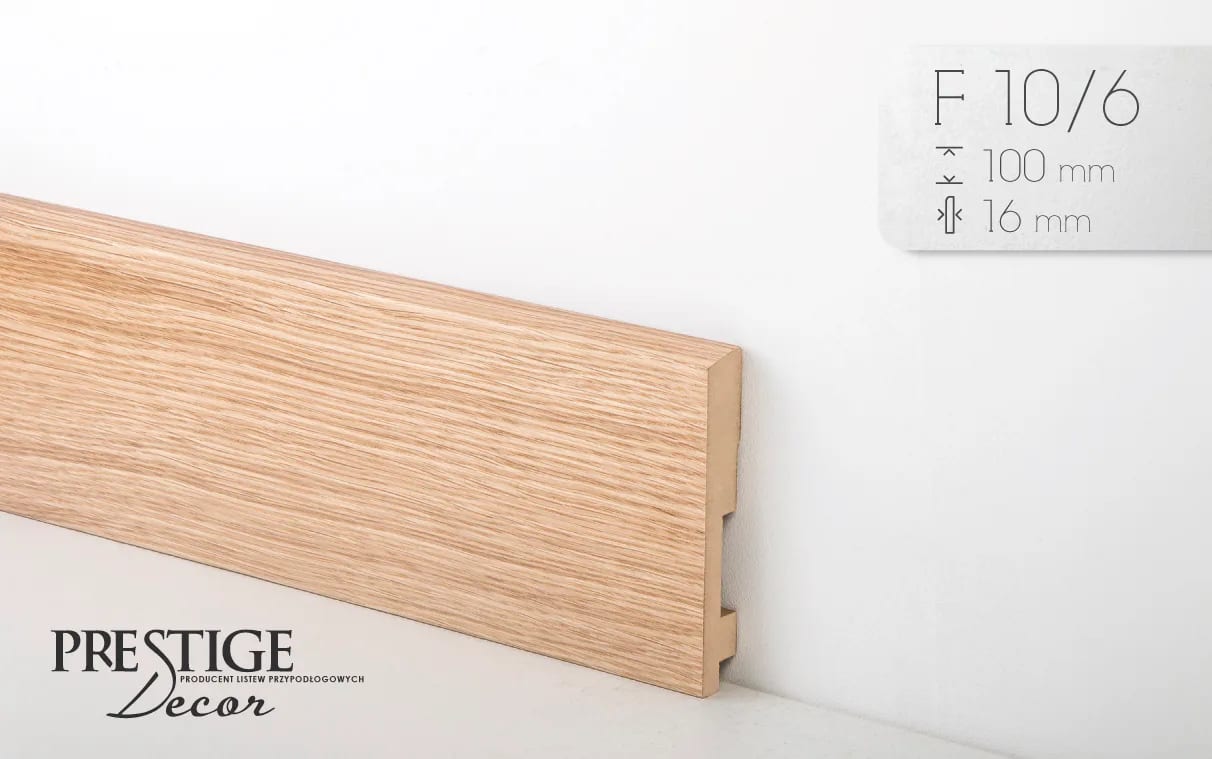

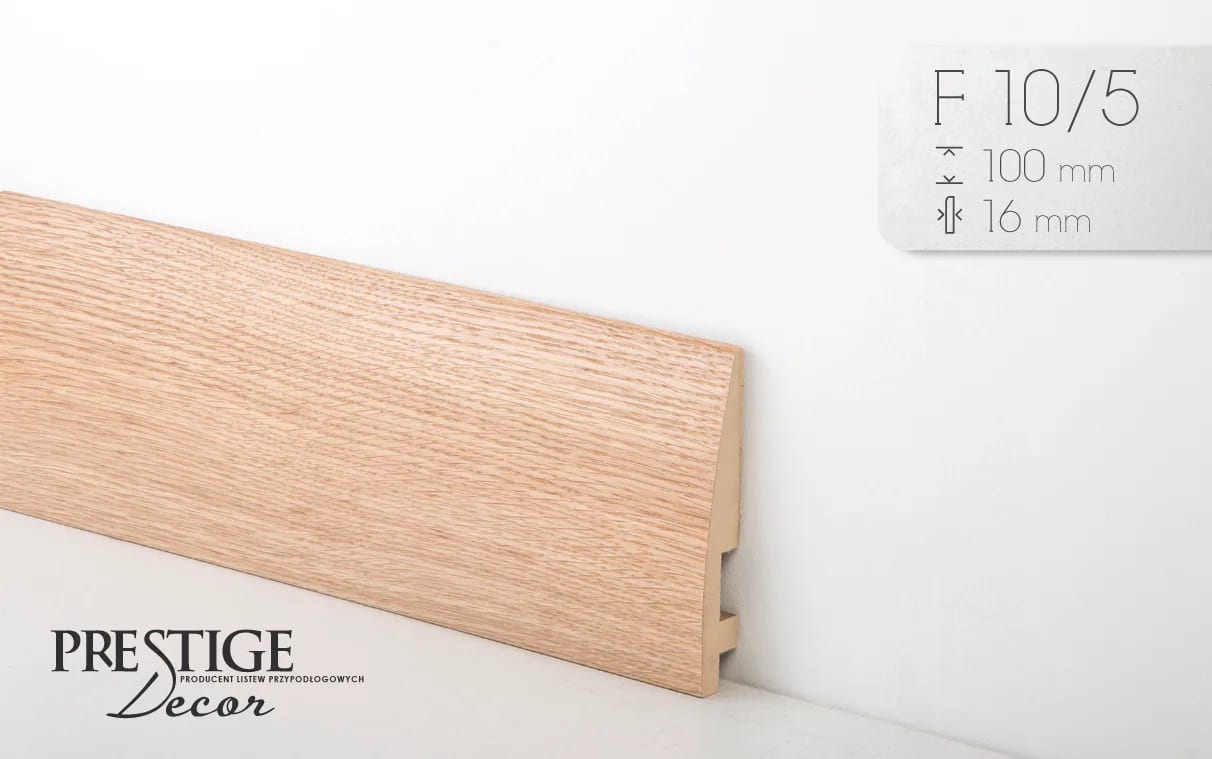

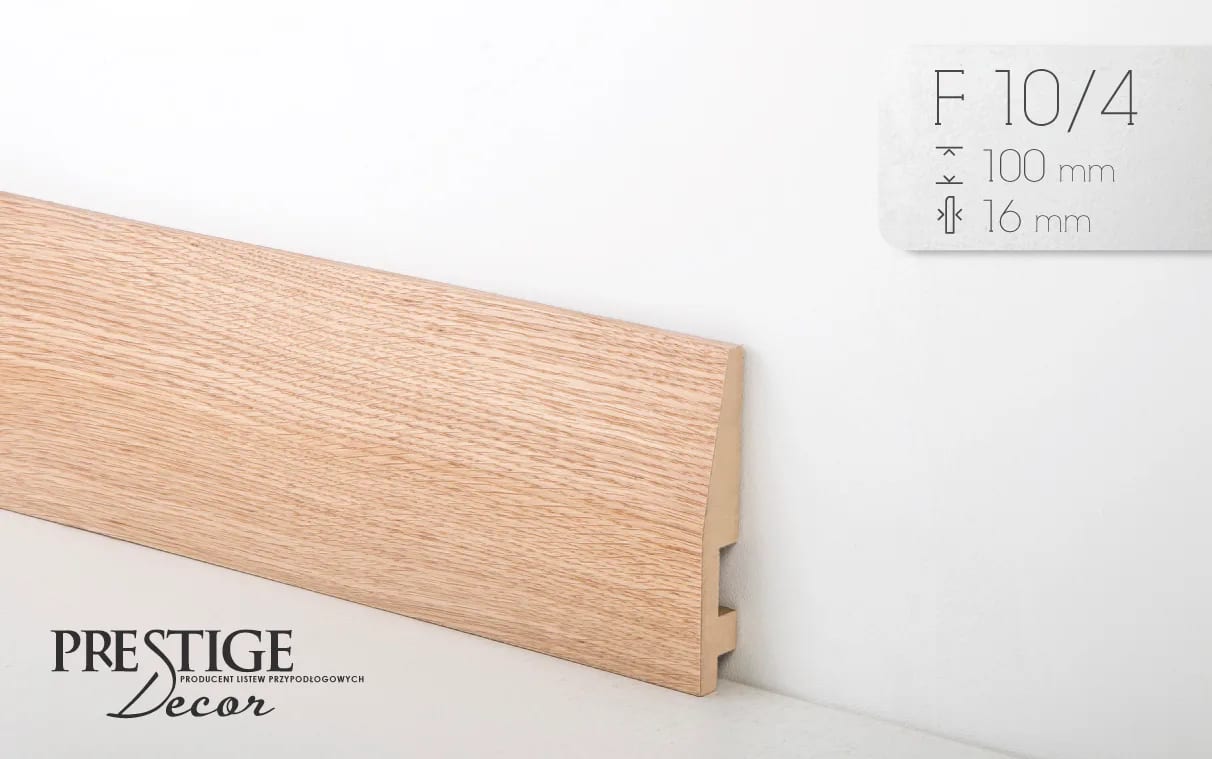
The Skirting and accessories category finishes the floor neatly against the wall and decides whether, after a renovation, you’re left with a clean line or a mark from the old finish. The choice usually comes down to the width of the expansion gap, that is the gap at the wall, as well as the condition of the wall and the profile size. This category is dominated by lacquered MDF skirting boards, with veneered MDF models and a smaller number of PVC skirting boards added in. On the page you’ll see, among others, FORTINO 80 White – Arbiton, FORTINO 80 Black – Arbiton, Prestige Decor F10/1 and Prestige Decor F12/1.
Skirting and accessories are chosen to suit the floor material, the width of the expansion gap and what needs to be covered at the wall. With light floors and light walls, lacquered MDF profiles are often chosen because they give a straight, even line. For wood floors, veneered MDF is often considered, and for layouts with a clean line at the wall — lacquered MDF; the final choice depends on the profile, colour and fitting method. If there’s a mark from the old skirting on the wall, a low profile simply won’t cover it.
The second filter is the shape of the room. If the floor cut at the wall came out uneven, or the expansion gap is wider, a thicker skirting board – one with a deeper base – will cover more. The height of the profile decides how much it covers on the wall. If a cable needs to run along the floor, check straight away whether the profile leaves space for it. With a floating floor, the skirting should cover the expansion gap, but it mustn’t stop the floor moving, so it is fixed only to the wall, never to the floor. If underfloor heating is used in the home, compatibility with that setup should be confirmed in the product sheet.
This category is dominated by lacquered MDF skirting boards; veneered MDF skirting boards are described separately, and the range is completed by Arbiton PVC skirting boards, including FORTINO 80, available in several colours.
When choosing a profile, it’s not just the colour that matters, but also how the wall behaves at the top edge of the skirting. A smooth, straight section helps keep a neat line. With a wavy wall, a gap at the top shows up faster, so before buying, compare the condition of the wall with the height of the skirting and the thickness at its base, which needs to cover the expansion gap at the floor.
Before buying, check the room perimeter, the number of corners, the widest expansion gap and the short runs by architraves, pipes and thresholds. These measurements show not only the number of skirting boards and accessories, but also whether the chosen profile thickness will cover the floor edge.
When fitting with adhesive, the condition of the wall also matters a lot. Fresh paint or a dusty surface weakens the bond (adhesion), and the problem usually shows up at the joins and at the ends of the runs.